



I found that the French novelist Alexandre Dumas traveled there in 1858 and described his adventures in the book “The Caucasus.” It is a fictionalized travel diary presented in the style of documentary prose.
Read more Lithuanian football’s golden equation: which favorite has the hardest path to triumph?
Similarly, but later, the interwar journalist and traveler Matas Šalčius described his travels in “Visiting 40 Nations”.
“The Caucasus” has not been translated into Lithuanian. I don’t really like reading digital books, there is no smell of paper – no “direct contact” with the described events, but when the content is more important than habits, you have to change them.
Azerbaijan, a former Persian province, later a Soviet republic, seems to have something in common with the Transcaucasian republics Georgia (Sakartvelo) and Armenia, but it is different, more refined, more contrasting, more conservative, and perhaps more mysterious.
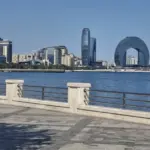
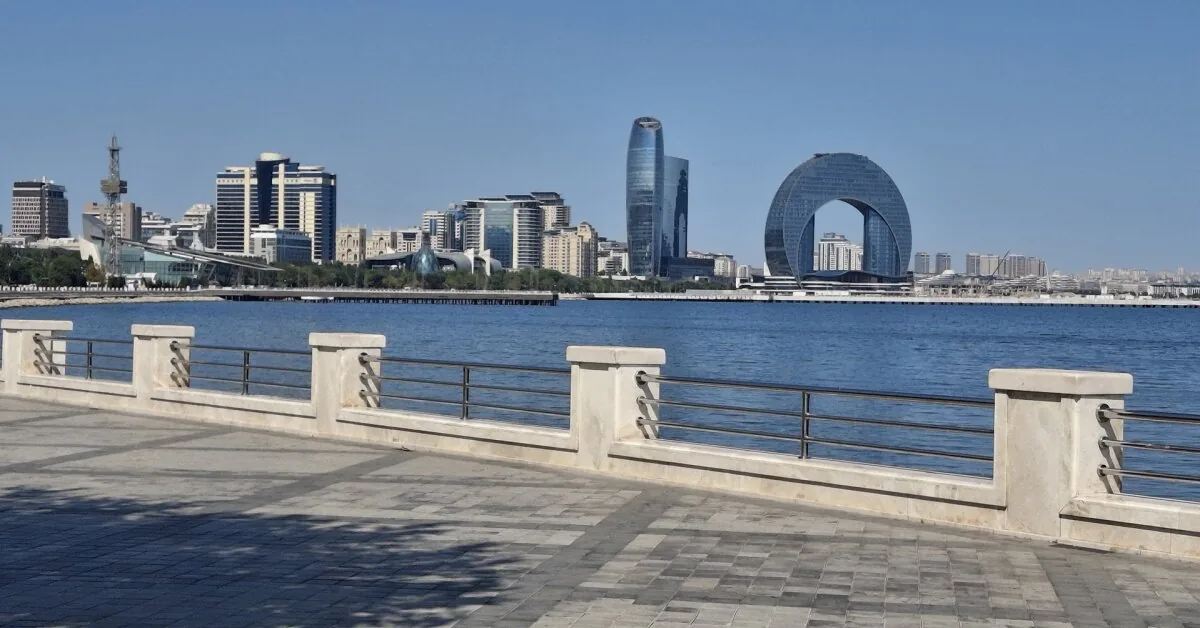
Baku amazed me with its modern buildings and luxury.
These three republics created the Transcaucasian Federal Democratic Republic in 1918, which lasted only a month, collapsing due to internal disagreements and external pressure.
Baku amazed me with its modern buildings and luxury – skyscrapers designed by the best architects in the world, no traffic jams on the central streets – six lanes on both sides, navigating with GPS to the right road, when you want to turn, you get it on the third try… Baku is called the Dubai of the Caucasus.
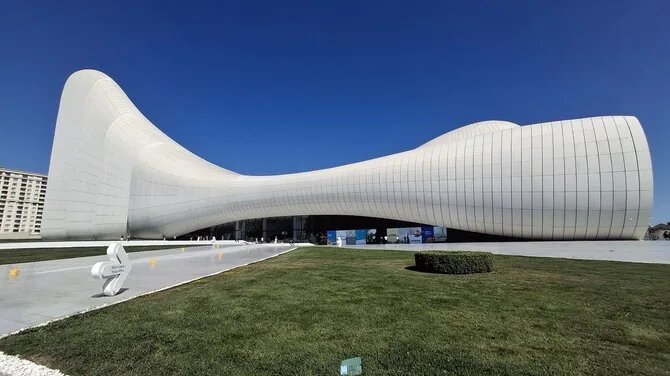
The city stretches over a large part of the Absheron Peninsula. Baku lives in the 21st century, but once you leave its borders, you go back a whole century.
Baku is called the Dubai of the Caucasus.
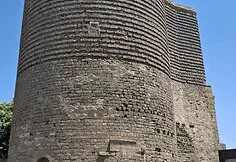
We arrive at Baku’s old town – it is included in the UNESCO World Heritage list. Here we are surrounded by a crowd of guides, insistently offering their services. They push business cards on us, telling us to write down their phone numbers.
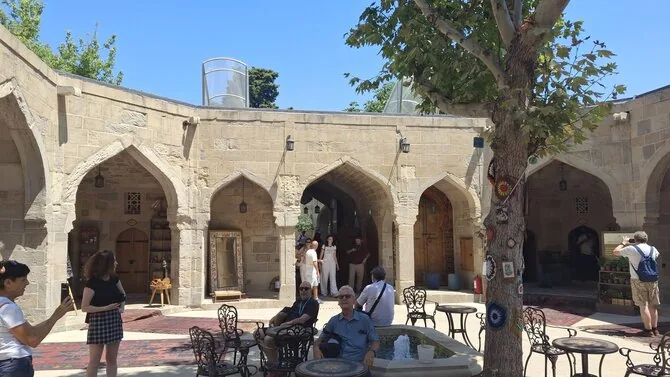
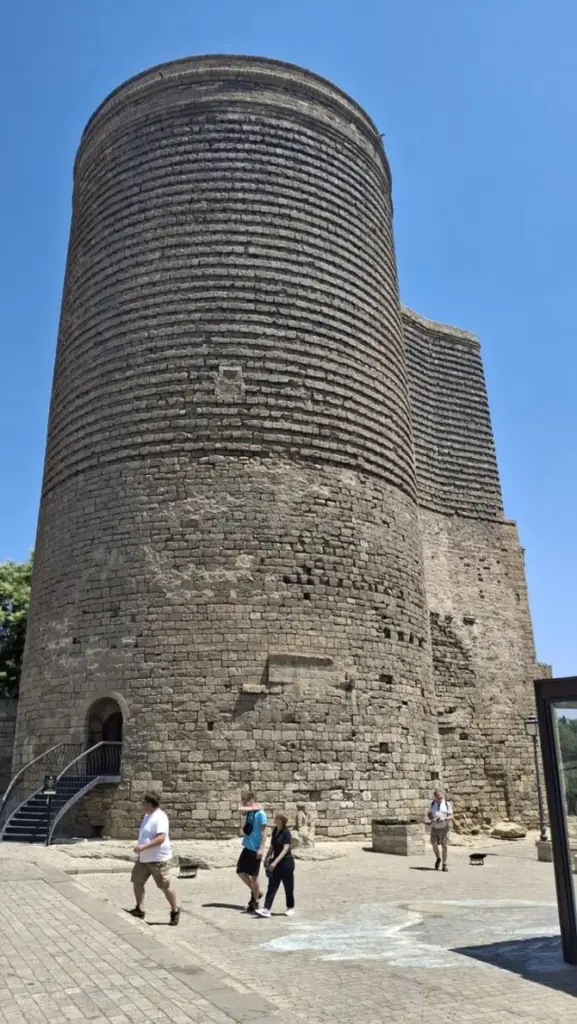
It is surprising that there are no discounts for tickets to the Maiden Tower for journalists or seniors, only a price three times lower for locals.
The old town is polished, reminiscent of Tbilisi, prices in cafes are high. The authentic Persian bath Agha Mikayil Bath from the 18th century invites you in, but when the heat outside is like in a bathhouse, it is better to stay in the shade.
It is surprising that you can no longer communicate in Russian. The youth do not know it, and their English is weak as well.
It is surprising that you can no longer communicate in Russian.
The Shirvanshahs’ Palace – a 15th-century complex included in the UNESCO heritage list – so we expected something special, but unfortunately, it is unimpressive, modest, reminiscent of old Central Asian buildings.
In the old town, I look for the place where the film “The Diamond Arm” was shot and where actor Yuri Nikulin slips and falls, supposedly breaking his arm. For the current youth, this film is unknown, but for our generation, it is funny and cult.
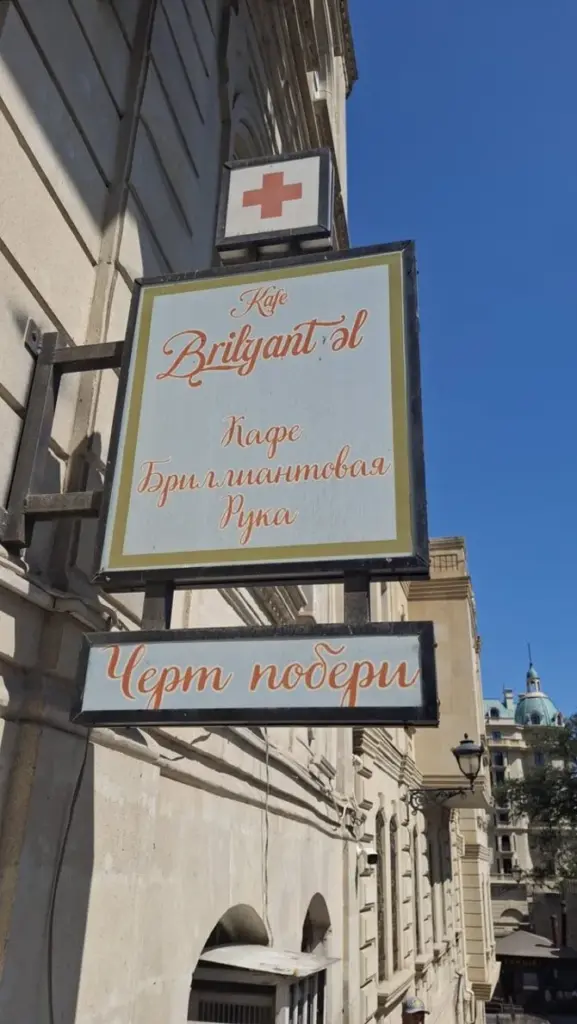
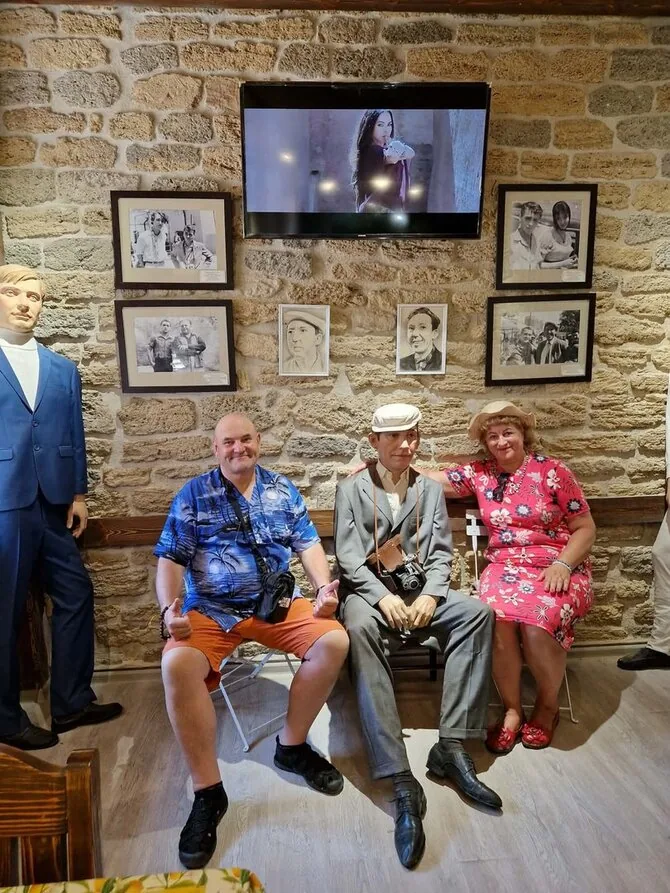
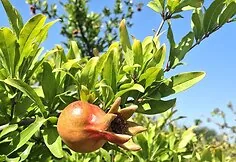
We also visit the tavern “Čiort poberi” (Devils take it), where this phrase sounded as a secret password. After drinking pomegranate wine, we can take photos with recreated film actor mannequins. Many older tourists visit this place.
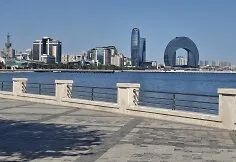
The heat in Baku in August is overwhelming. After walking around the old town, we head to the coastal promenade, where in the shade we can admire a mini “Venice” – boats floating on a canal, eat ice cream, admire the world’s tallest flag fluttering in the distance and Baku Bay. This is the Caspian Sea or the largest lake in the world.
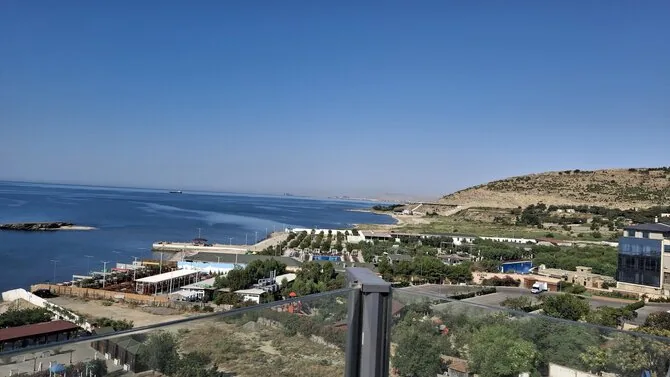
Here is how A. Dumas described it: “The Caspian Sea opened before me. It was the color of blue sapphire. Not a single tiny wave was visible on its surface. The sea was calm like the steppe, which seemed like its continuation. […] Someday, the gradually shrinking sea will finally turn into a large sand lake or at least one of those salty white salt lakes we encountered in the steppes of Kyrgyzstan and Nogai.“
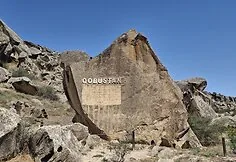
Already in the 19th century, the sea was slowly receding, as A. Dumas also writes – having visited the Gobustan State Historical and Artistic Reserve, where in the national rock park there are over 6,000 prehistoric petroglyphs dating back 40,000 years. From the plateau, it is clearly visible how the Caspian retreats every year, leaving dried rocky coastal areas.
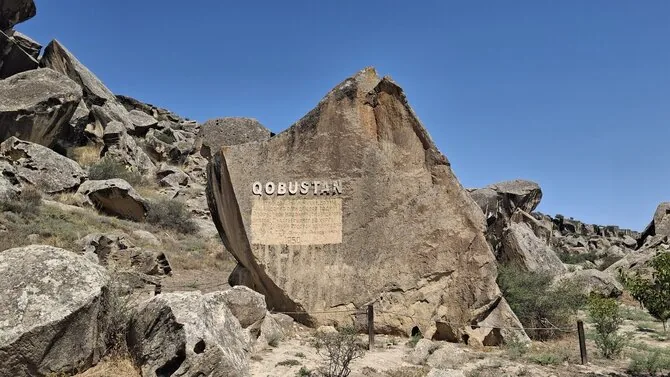
The guide, talking about the UNESCO-protected petroglyphs, confides that the sea may be shrinking due to cavities formed by oil pumped from the earth’s depths, or due to the reduced water level of the main Caspian tributary, the Volga, but this is clearly visible to the naked eye…
The second book I read, which accompanied me on the trip, was Julė Pranaitienė’s “From Travels in Europe and Asia.” In 1911, Julija Pranaitienė, together with Banaitė’s daughter Salomėja, traveling to Central Asia to visit her brother, priest Justinas Bonaventūra Pranaitis, visited Samarkand, Bukhara, Baku, Tbilisi, sailed the Caspian Sea, and traveled the Georgian Military Road. All the adventures were described in the book “From Travels in Europe and Asia,” illustrated with her own photographs.
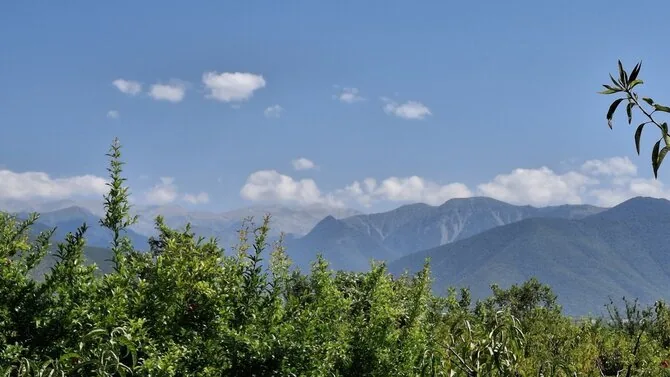
Thus, Julija Pranaitienė became the first Lithuanian female traveler-writer: “Baku is one of the oldest Persian cities and only later came under Russian protection. Here, the Eternal Sacred Fire, which has been burning since the time of Zoroaster, was recently extinguished. According to legends, Zoroaster lived before Cyrus the Great, the founder of the Persian empire, i.e., more than 600 years before Christ. Zoroaster established the religion of fire worship, which gradually spread widely among Eastern peoples. This religion in Persia was honored between the sixth and seventh centuries. In 635, the Arabs conquered Persia with the sword and forced the fire worshippers to accept Islam.”
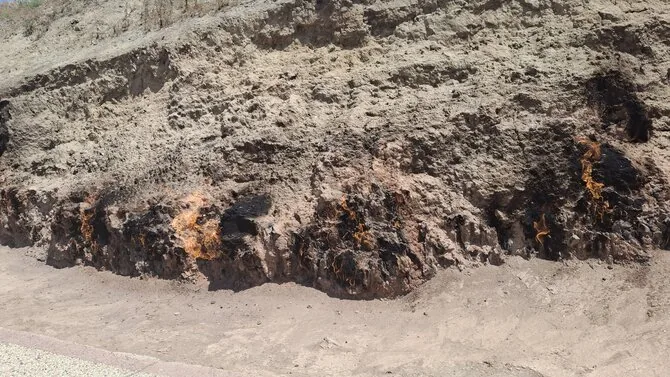
The Ateshgah Fire Temple is a very interesting site, preserving the archaic spirit of Zoroastrianism, where time seems to have stopped – neither Islam nor the Soviet era changed its essence. Pilgrims from all over the world still come here to bow to the Fire, burning from the depths of the earth for centuries.
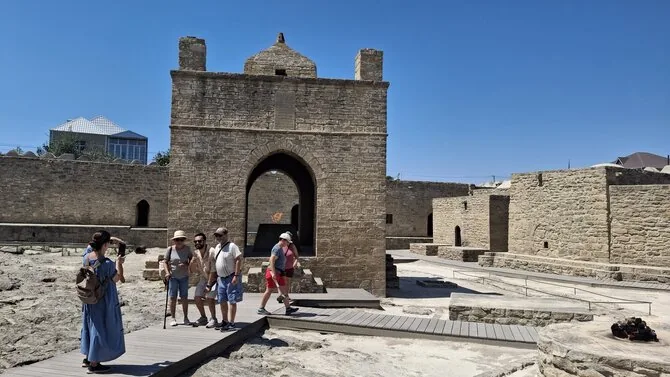
The name Baku comes from the old Persian words Baga, Bagavan, meaning God, which became established during the Sasanian rule. The Ateshgah syncretic temple today houses a museum, but along with the flickering flame in the air floats the sacred Fire, which according to legends was a gift from Prometheus to humanity.
There is a big gap between the elite and the working people.
We eat watermelon bought at the market, carefully chosen and bargained for a long time. And what a delicacy it is: unripe, so crunchy – crunch, crunch and sweet, even melting in the mouth. People are good, communicative, though language is worse, but all the older ones speak Russian. They say, now there is no work, before there was everything – a heard song…
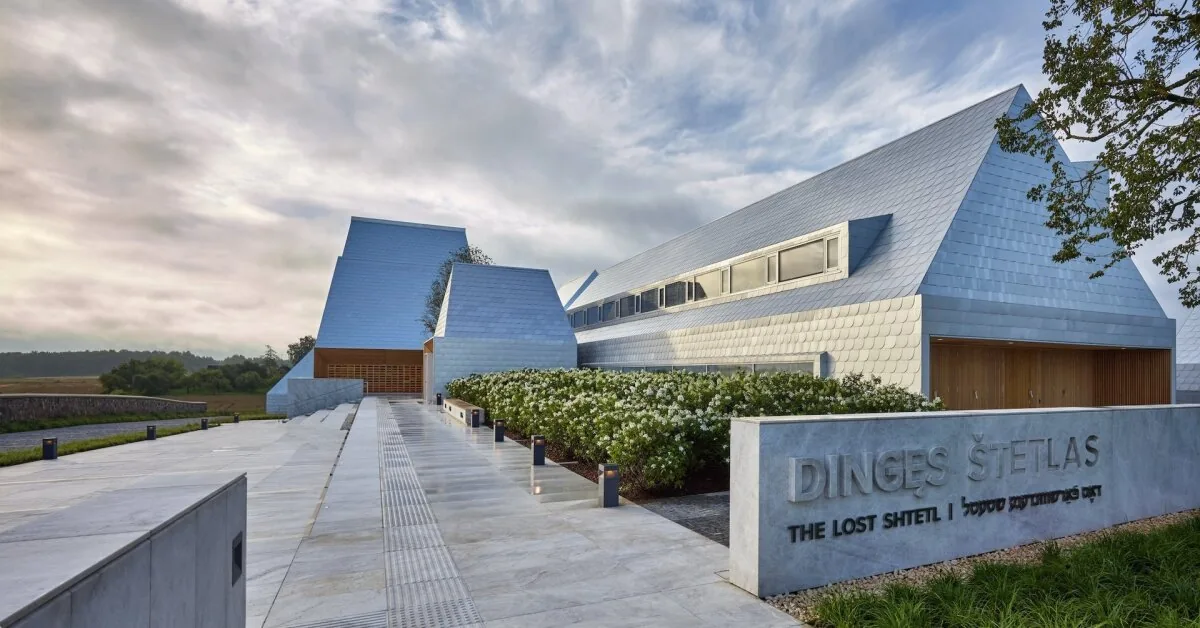
Read more Over the years, «Lost Shtetl» in Šeduva has been visited by over 100,000 people
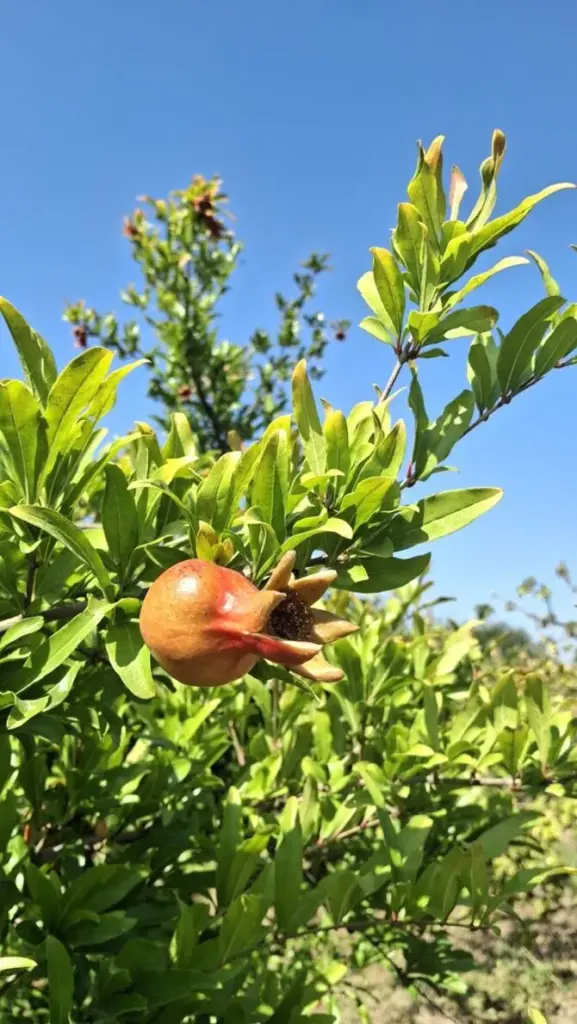
The social gap in Azerbaijan is large; there is a big chasm between the elite and the working people, so outside Baku, you see “Zhigulis” driving with very loud music as a protest against capitalist excessive welfare…
The third book I read just before leaving was Marius Abramavičius’s Neboisia “Azerbaijan: Notes of a Wanderer”.
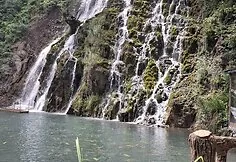
Marius and I traveled on an expedition through Algeria, shelling “sunflower seeds” of the journey together, enjoying the symphonies of the Sahara deserts and the blue turbans of the Tuaregs. There are no deserts here, but there are enough semi-deserts. Interestingly, Azerbaijan has a very sharp contrast: in one small country there are semi-deserts, subtropics, fertile plains, and even high Caucasus mountains.
Apparently, Marius had to describe his experiences in the mountains: “All the drivers I had to drive with through the city held an average speed of 80 km/h at night in the rain, and during the day – according to the situation, often using brakes, with them you more often wanted to vomit than drive. Here the driver knows everything and enjoys pressing the accelerator.”
In one small country there are semi-deserts, subtropics, fertile plains, and even high Caucasus mountains.
A recommended site was the Heydar Aliyev Center, which exhibits the most famous collections of modern art. The building was designed by the Iraqi-born British architect Zaha Hadid, and the complex opened in 2012. Two years later, the center won the prestigious “London Design Museum” Design of the Year award.
This building stands out with its sleek architecture and flowing, convex style, avoiding sharp corners. The center has a conference hall, gallery hall, and museum.
Located near the city center, this site plays an important role in Baku’s cultural life. When Marius Abramavičius visited, the center was already standing, but it is not mentioned in the book, as wanderers care about other things. This center left a very good impression on me, all the day’s fatigue disappeared, and my friends felt as if rocked on a ship.
Accompanied by the authors of three books, on the trip through Azerbaijan I felt complete fulfillment: I looked at this country through a triple filter of 2017, 1911, and 1858, not only the time span but also the experiences of the authors, trying to imagine how Baku looked at one or another period.
The events described and the sights seen by my contemporary Marius, who traveled through this country quite recently, already differed from mine, and the elapsed time span is only less than a decade. When J. Pranaitienė traveled here, the Nobel brothers had already begun exploiting oil fields, and when A. Dumas traveled here, there were only a few wooden oil derricks in this place.
I tried to imagine how Baku looked at one or another period.
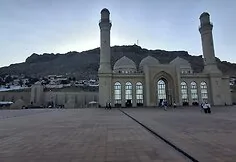
While traveling through Azerbaijan, I also kept a diary: “I visit the Bibi-Heybat mosque near our hotel. It houses the tomb of a descendant of the prophet Muhammad. A. Dumas writes: “This mosque is a pilgrimage site for infertile women who come there on foot, spend nine days in prayer, and return home confident that they will give birth within a year.”
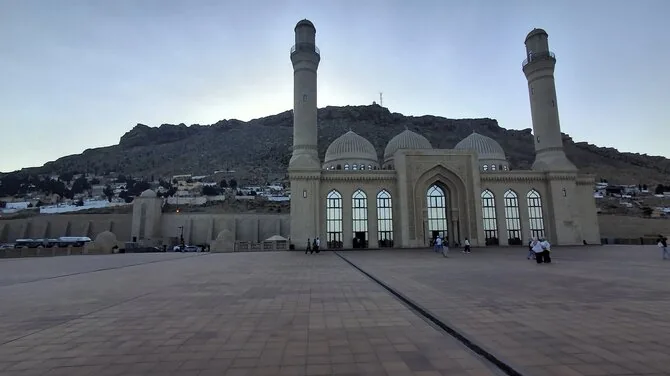
I take off my sandals and go to the mausoleum. In the chapel, several sarcophagi are visible, women walk and pray around, men and children sit in the corners of the square room. Photography is allowed. I ask a young man where to find the mullah. The guy with a black beard calls and leads me to another building – the mosque office. There sits an older bearded man who asks what I need? I am a journalist, I would like the seal of the holy place – the mosque – and I show my travel diary…”
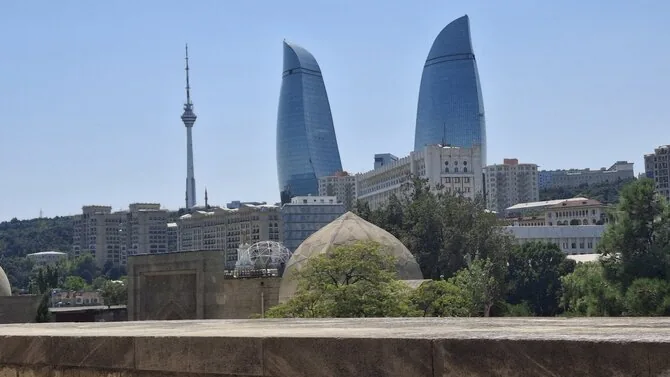
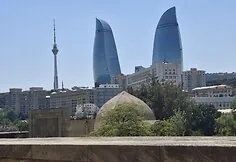
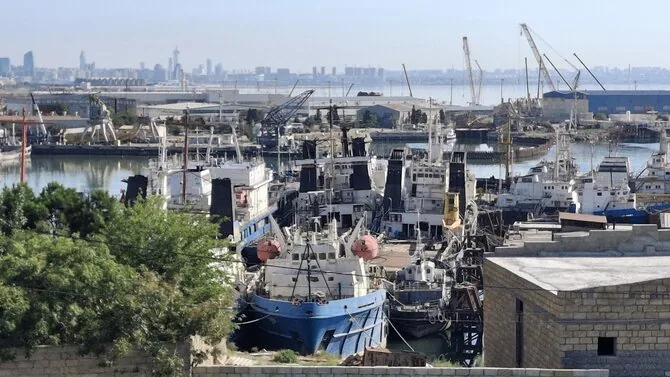
I did not get the seal that time – they explained that it would only be possible tomorrow, the safe was locked, the keys were with someone… I look from the mosque’s observation deck at Baku Bay: the port, the Flame Towers skyscrapers sticking out on the hill in the distance.
The country is trying to get rid of that period.
Impression of Baku and Azerbaijan: the country is interesting, with a deep historical imprint that the Soviet era did not erase. The country is trying to get rid of that period – Cyrillic was replaced by the Latin alphabet in 1991, following Turkey’s example, as these peoples are very close.
The cult of personality is very strong – when buying postage stamps, four out of five had Heydar Aliyev’s image. The currency – manat – is stable, officially pegged to the US dollar.
Fuel is cheap, we traveled by rented car to the old Azerbaijani capital Shamakhi and the mountains.
There is a lot of police on the roads, it is said that this restrains the Caucasian driving enthusiasm. The main roads are good, but in the provinces, especially in the mountains, anything can happen. The food matches the price – tasty and varied.
Travel and books are inseparable for me, so before the trip, I recommend not to be lazy and visit the library. If that is impossible, you can find popular and fiction literature about the desired country online in your language. And also – about dangers on the trip.
A. Dumas writes in the book “The Caucasus”: “Danger is a strange companion on the road, at first we fear it, try to avoid it, then we get used to its presence and finally desire it. It is a stimulator that doubles the value of everything. Danger arises and we rejoice in it; then gradually it recedes, leaves us, disappears, and then we miss it, constantly remember it, and even if we are forced to turn off the road, we are ready to go to its lair. We would rather not say goodbye to it completely, but just say ‘see you soon’.”
Danger is a strange companion on the road.
In our times, compared to the 19th century, we are accompanied by different dangers – will the plane take off or not, will I make the connecting flight, or will I have to spend the whole day at the airport? Then, taking a book out of the backpack, you can use this time very purposefully – for reading. You can also start writing…
I remember on one trip my friends had multiple transit visas in their passports, and I had a single one, so I had to spend the whole day in a closed airport room. I was so angry that I took a sheet of paper and started writing something… It was the introduction to my first novel “Mr. Zy”…
Read more The era of perfect interiors is fading: 2027 home trends are emerging