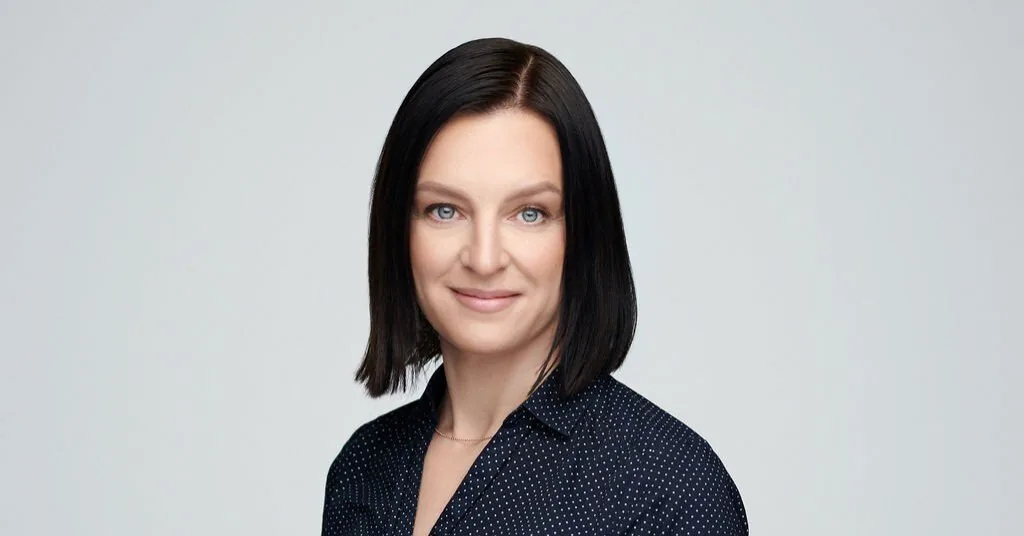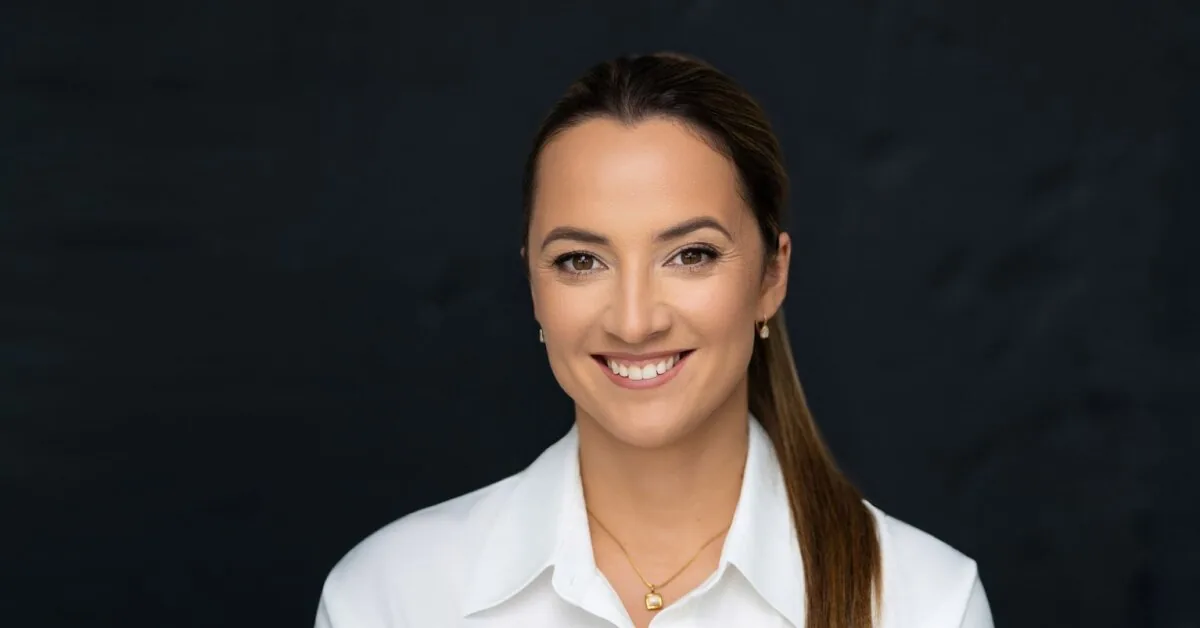
– Germante, tell us about the beginning of your sharpshooting activities: how did you become interested, how did you start on the path of sharpshooting?
Read more Moscow: Russian ambassador to the UK no longer performs his duties
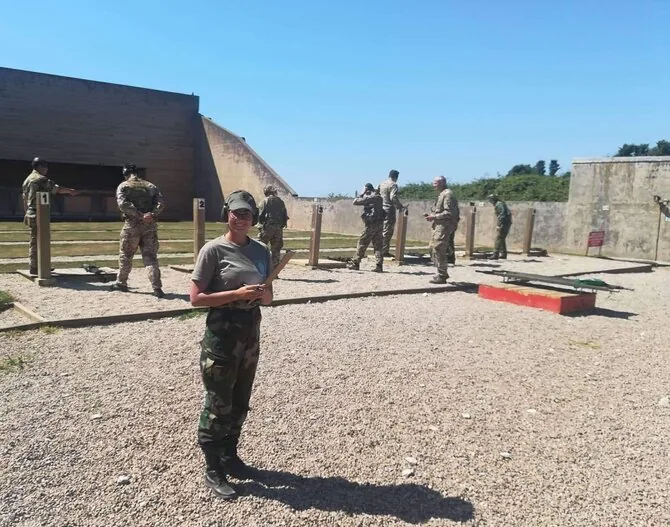
– I joined the Lithuanian Riflemen’s Union while still a student. I was looking for material for my thesis about militarized organizations in Lithuania. At that time, I visited the Union’s headquarters out of academic curiosity, but the meeting with the people working there unexpectedly changed my direction. I was fascinated not only by the organization’s history, the meaning of its activities, or clear goals, but also by the sharpshooting spirit itself – community, values. I won’t hide it, but at that time the uniform also had its symbolic weight.
Until then, I knew little about the riflemen, so, as I say, it was a kind of coincidence. Soon I started working at the Lithuanian Riflemen’s Union as a coordinator for young riflemen, later as deputy commander of the riflemen. It was truly an intense and growing period. Since I was not a young rifleman during school years and had no military experience, I had to learn everything from scratch – quickly integrate into the organization’s life, understand its internal culture and operating principles.
I remember – already in the first month of work, I rushed to camps and exercises organized by the Riflemen’s Union. There I saw and experienced up close what is often surrounded by certain legends – life in barracks, discipline. It was all new, sometimes difficult, but very engaging. Thus, sharpshooting became both my daily routine and leisure; I worked in this organization for five years.
Later, I somewhat changed the nature of my work and my active participation in sharpshooting activities decreased. But it never disappeared – I still remember that time with a smile, highly value everything it gave me, and often talk about it. It was an experience that greatly contributed to my personal growth. Therefore, this organization will always remain a very important part of my life.
– Sharpshooting and physical culture, (non)professional sports – how do you view this relationship?
– I think sharpshooting and physical activity are directly related. Sharpshooting is not just about defense preparation – it is also discipline, endurance, the ability to work in a team, responsibility for oneself and others. All of this is directly connected to physical activity. The discussion is not necessarily about professional sports or high athletic achievements – much more often it is about basic physical fitness, a healthy body, and the habit of moving.
From my experience, I can say that it is precisely through sharpshooting activities that many young people discover the joy of movement for the first time, not as a mandatory physical education, but as a meaningful, interesting activity. Hikes, camps, exercises – these are not sports in the classical sense, but all these things develop physical capacity and, most importantly, inner motivation. And that is often more important than any result.
– As far as I know, your professional work also involves sports and wellness issues. If we compare Lithuania with other neighboring countries – what is our situation in the context of sports for all?
– Leading the Lithuanian Association “Sports for All,” I see this field quite broadly. If we talk about the Baltic countries, after regaining independence, all three countries had a very similar direction – to create a club-based sports system, increase sports accessibility for everyone, and move towards the Scandinavian model. This is a model where sports are not just medals or competitions – it is part of everyday life, a foundation of societal well-being.
It is very unfortunate, but in Lithuania, we have not achieved this in 36 years. We talk about it, declare it, but in reality, there is still quite a strong focus on high-performance sports – medals, competitions, results. Sometimes it seems that physical activity, as a basis for public health, remains secondary. We would like more balance so that “sports for all” would not only be a declaration but also a clear priority.
– You know, I asked because Estonia has chosen “nation’s health improvement” as one of the state development directions in its national strategy…
– Estonia clearly identified “nation’s health improvement” as a strategic priority, and this allows consistent decision-making – from policy to practice, which we unfortunately do not have in Lithuania. This is well demonstrated by the fact that physical activity is not singled out as an independent strategic priority in the National Progress Plan. Although public health and well-being are mentioned, we do not have clearly defined goals, indicators, or desired outcomes related to population physical activity or sports accessibility for all. However, we do have a very clear strategic task “to strive to increase Lithuania’s highest sports achievements” – i.e., to increase the number of medals won in Olympic sports events.
In my opinion, this is where the “secondary plan” appears – when high-performance sports, medals, and competitions still receive more systemic attention. If we talk about public health, physical activity in Lithuania is still just an additional direction, not a foundation. I would very much like Lithuania to follow Estonia’s example, where movement becomes not only a recommendation but also a state and societal priority.
– What are the health improvement problems of Lithuanian citizens? How do you see it? Are we on the right path or a dead end?
– To be very honest – I think today we are not yet on the path that would truly lead to a healthy society. Lithuania still focuses too much on the sports elite – medals, results, international achievements. This is important, but it is only a very narrow part of sports. The majority of society remains outside this picture. The biggest problem, in my eyes, is that we still do not fully understand sports as a foundation of public health. So far, it often remains an “additional activity,” not a necessary part of everyday life.
I am especially concerned about the situation of middle-aged and older people. This is the fastest-growing part of society but also the most forgotten. Children still have a system – schools, sports schools, attention from federations. But what remains for middle-aged and older people? Very often – almost nothing. Limited opportunities, lack of accessible activities, encouragement, clear state direction.
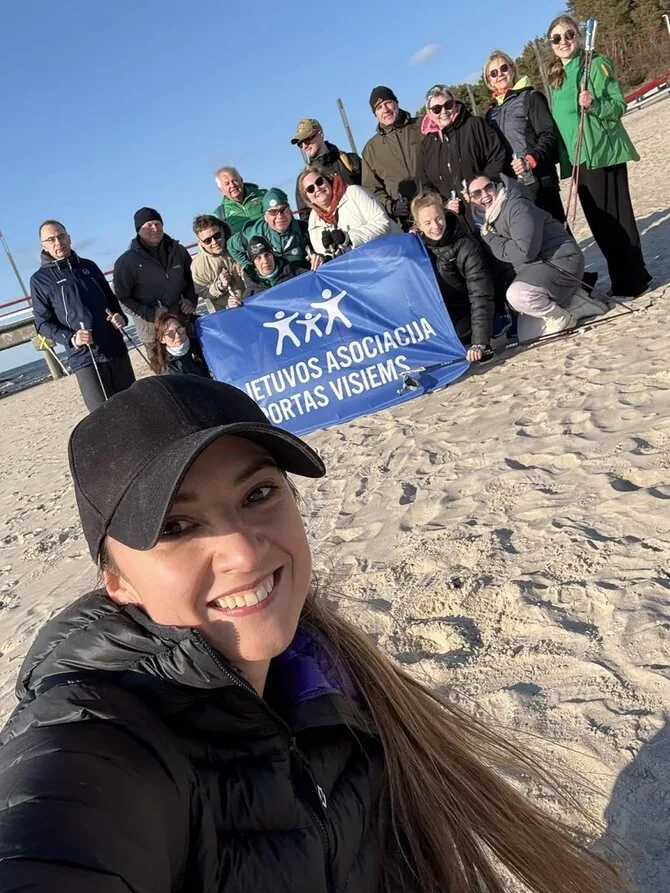
We talk about an aging society, but in reality, we do not create conditions for these people to move. And physical activity is most important for them – not for results, but for health and quality of life. Sometimes it seems that we live in two realities: in one – we celebrate sports victories, in the other – an aging, physically inactive, tired society quietly grows.
– We talk about general things, but maybe in vain? After all, everyone decides for themselves? I live as I want. Although with riflemen, maybe it’s different because we are all members of a bigger “organism.”
– On one hand – yes. Everyone lives their own life. But on the other – we feel each other very much. It is enough to have people nearby who move, invite, involve – and that “I live as I want” gradually becomes “let’s do it, move together.”
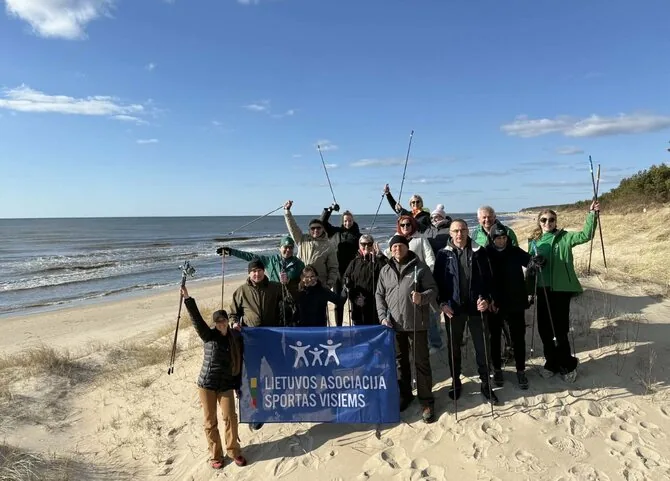
I am very close to what I saw in the Lithuanian Riflemen’s Union activities. There, this community is not artificial – it arises naturally. People gather for hikes – some younger, some older, with different experiences, but all walk the same path. And those hikes are not just a physical challenge. It is time together, conversations, a common goal.
Working there, I saw how it affects young people. We organized sports camps, Young Riflemen’s sports games, where the most important thing was not the results. The most important thing was the feeling that they themselves wanted to participate, wanted to test themselves. Hikes with equipment, obstacle courses, endurance tests – all this not only strengthens physically but also brings people closer.
Maybe that is why the rifleman’s command closest to me is “Strengthen will and body.” Because ultimately, it speaks not only about sports.
– And do you yourself do sports? Where do you get your strength?
– Of course, sports are not only part of my daily life; it is more like a backbone that maintains balance. I exercise every day, so my mornings start quite early – I get up around 5:30 a.m. to have at least an hour for myself and sports before work. My routine is quite varied: I play outdoor tennis, work out in the gym, run, ride a bike. The most important thing for me is consistency, not numbers. If we talk about strength – I get most of it from here. Sports help not only to feel physically stronger but also to organize thoughts and prepare for the day.
I think the real pleasure comes when you start looking at physical activity more broadly – not as a means for appearance but as a process that itself brings joy. In my opinion, over the past ten years, people’s habits and needs related to sports have changed a lot. Not everyone wants to exercise alone, so they gather in communities, support each other. Today, people increasingly seek connection and community.
I see a very similar community and movement culture in sharpshooting activities, which brings together very different people – from youth to older participants. Such hikes as “Along the paths of Klaipėda insurgents,” running in the traditional respect run “The Road of Life and Death,” and other memory and respect hikes are not only physical challenges but also meaningful time together.
– Many riflemen complain that there is no opportunity to engage in physical culture. Sometimes there are no halls, sometimes no time, and the desire is not very big either. What would you say to such a person?
– I would say simply – if a rifleman can find time to complain, it means they can find 20 minutes to move.
The article was prepared as part of the project “Resistance Code: Riflemen 360° and Awareness in the Face of Information Threats.” The project is partially funded by the Media Support Fund.
Read more First time in Lithuanian cinema history: a Lithuanian film presented in New York’s Times Square!
More articles in the Lithuanian Riflemen’s Union magazine “Trimitas.”