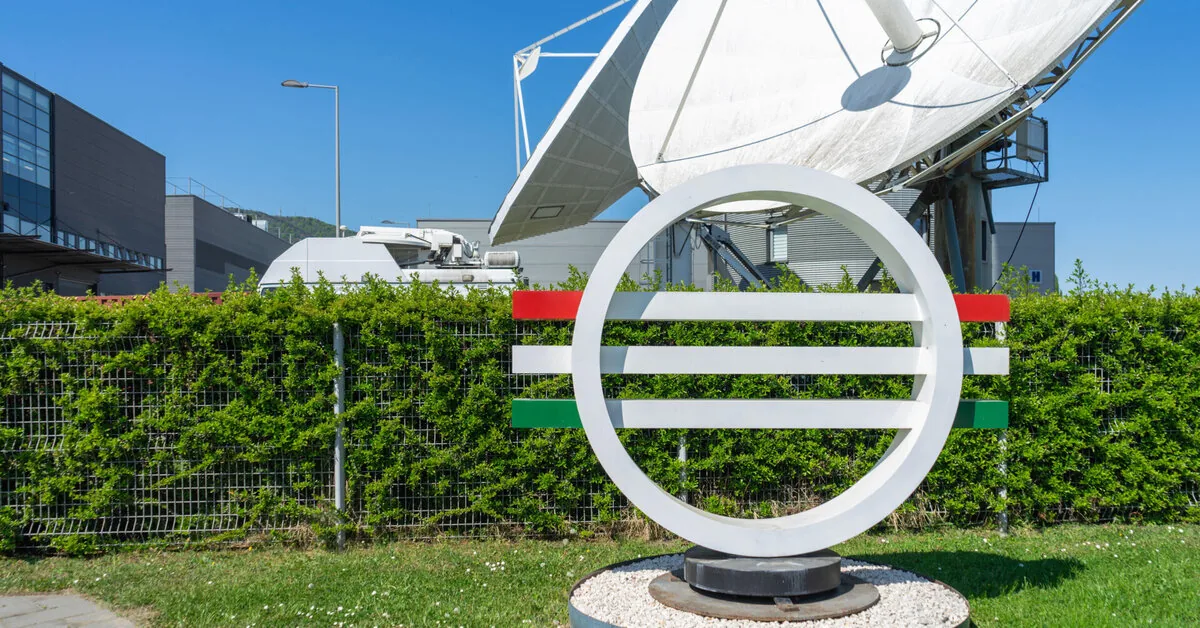
According to the speakers, before losing the elections held in April, V. Orban’s camp strictly controlled public media reports.
Read more Daugai – a true discovery in Dzūkija: here awaits what is nowhere else
“After all these years, a simple change of leadership may no longer be enough. We need to rethink the entire operation,” said 46-year-old A. Szavuly. She worked in public television for more than a decade until her contract was terminated after she staged a hunger strike in protest.
Earlier in May, Prime Minister Peter Magyar, whose party overwhelmingly defeated V. Orban’s political force in April, ordered a full audit of the operations and financing of state media, which he called a “factory of lies.”
Leaked documents, recordings, and testimonies from former employees showed that editors demanded one-sidedness – the media defended V. Orban’s government policies and demonized his opponents and foreign critics, including the European Union (EU).
After the elections, the public broadcaster has already changed its tone, and in the influential private broadcaster “TV2,” owned by businessmen associated with V. Orban, key news anchors were replaced and the news director was removed.
Becoming neutral
A week after the elections, almost all news reports broadcast on public television adopted a neutral tone, according to an analysis by the liberal-leaning analytical center “Republikon Institute.”
It noted a sudden break from the previously observed bias in favor of V. Orban.
“Everyone went from being rascals to receiving their first sacraments,” a journalist who wished to remain anonymous told the news agency AFP.
He said many journalists disagreed with the previous media tone but “could not ignore” management’s instructions – until they stopped in recent weeks.
Employees of the news agency MTI rushed to act after V. Orban’s election defeat, demanding the restoration of “editorial autonomy” in an internal communication petition, the content of which AFP reviewed.
Although management dismissed their concerns, political censorship ceased, according to three current employees who spoke on condition of anonymity.
“MTI was freed and works freely (…). Topics and organizations that were previously banned have returned to our reports. Propaganda was pushed out,” said an editor of one media outlet.
Old habits
During the campaign, P. Magyar, who came to power with promises of “regime change,” pledged to restore the independence of state media, whose annual budget exceeds 430 million euros.
Read more 50+ noteworthy books: what 15min will read this summer
P. Magyar has repeatedly emphasized that he respects press freedom, although critics say he can sometimes clash with independent journalists.
Under V. Orban’s rule, the public broadcaster was turned into a propaganda machine, says the media monitoring organization “Reporters Without Borders” (RSF), which ranks Hungary among the worst-performing EU countries in its annual press freedom index.
Hungary’s state television channels, radio stations, and news agencies were merged into one institution called MTVA, a year after V. Orban’s return to power in 2010.
Strict V. Orban control over the media also spread to private media outlets owned – or later acquired – by business partners close to him.
Journalists at the public broadcaster complained that political control has intensified even more in recent years.
Censorship also penetrated the news agency MTI, which lost its already limited autonomy during the 2015 reorganization.
“Drafts related to certain topics were sent outside MTI to political circles and returned with instructions on what to cut or whether it could be published at all,” said 69-year-old Janos Karpati, who worked at MTI for three decades.
He was dismissed in 2015 after, as a correspondent in Brussels, he asked V. Orban a question without coordinating it with his superiors.
J. Karpati said his former colleagues are “fully capable of performing their duties” if allowed to work without any political interference.
But old reflexes still remain.
“Recently, an editor got scared when I described a foreign party as far-right,” said a journalist, claiming this was previously a forbidden description. “He said it was better not to label them.”
Read more Famous composer Benhardas Calzonas has died: he created for the grandmasters of the Lithuanian stage