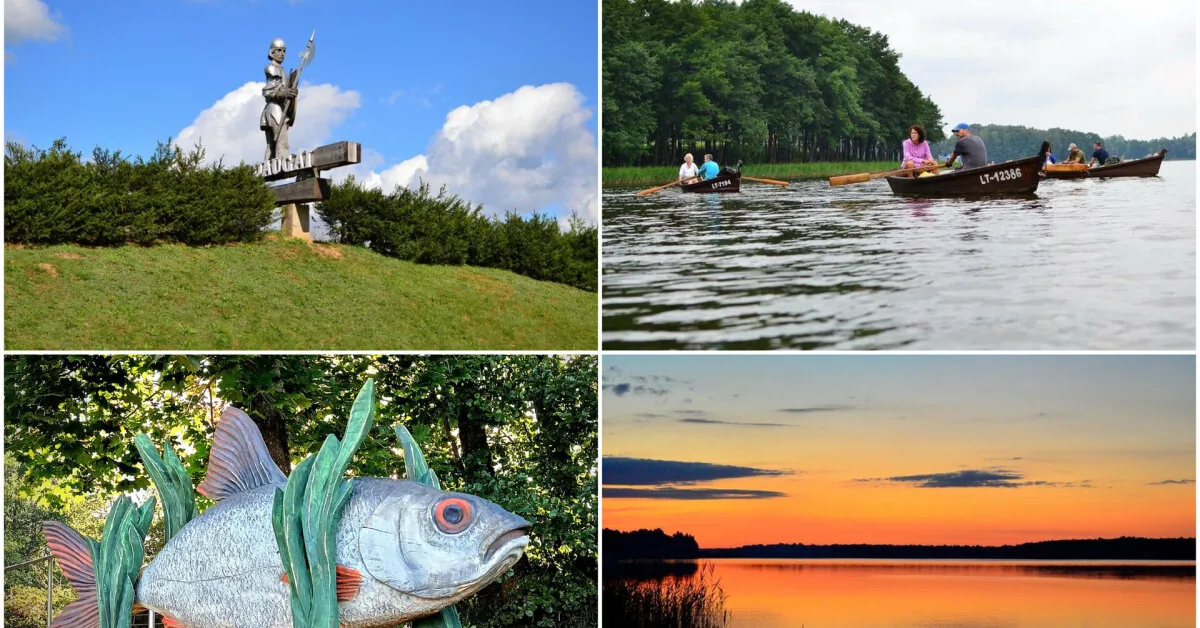
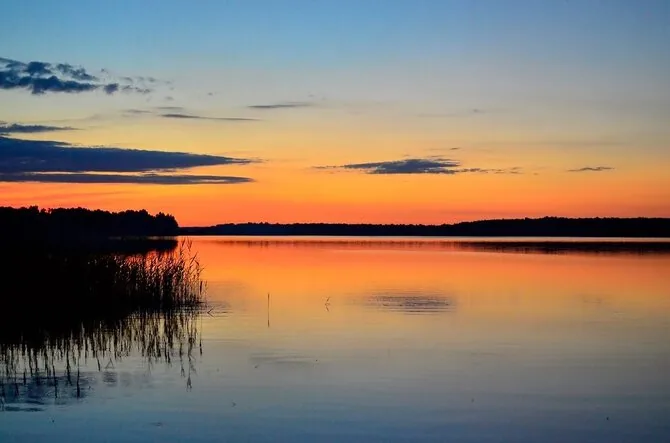
Peace reigns in Daugai – here life does not rush and invites you to slowly immerse yourself in it through a unique identity. Here awaits something that cannot be found anywhere else: a path of fish sculptures telling the story of the region and the relationship of people with lakes, nature, and history.
Read more 50+ noteworthy books: what 15min will read this summer
“What do the people of Daugai talk about? First of all – about fish. Are they biting? He is not a true Daugai resident who does not fish,” says Robertas Ožalinskas, the elder of Daugai, an artist, and founder of the cultural club “Kitaip.” According to him, this is exactly how the idea to “settle” the fish and fishermen of Daugai lakes on the shore was born.
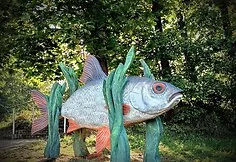
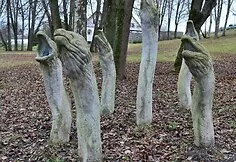
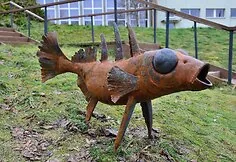
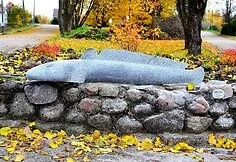
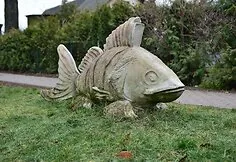
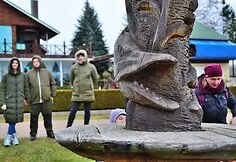
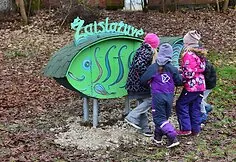
Scattered in various parts of the town are about 10 sculptures – each with its own story, which can be heard during approximately hour-long tours called “Fishy Streets of Daugai.”
Daugai is adorned with fish sculptures
According to R. Ožalinskas, the first – a wooden fisherman sculpture – appeared back in 2009, created by Kęstutis Benedikas. A few years later, the town was decorated with a sculpture-carousel by Vidas Steponavičius, depicting a pike chasing other fish. It recalls a legend that Queen Bona Sforza, who sailed on Daugai lake, was attacked by a fish-monster.
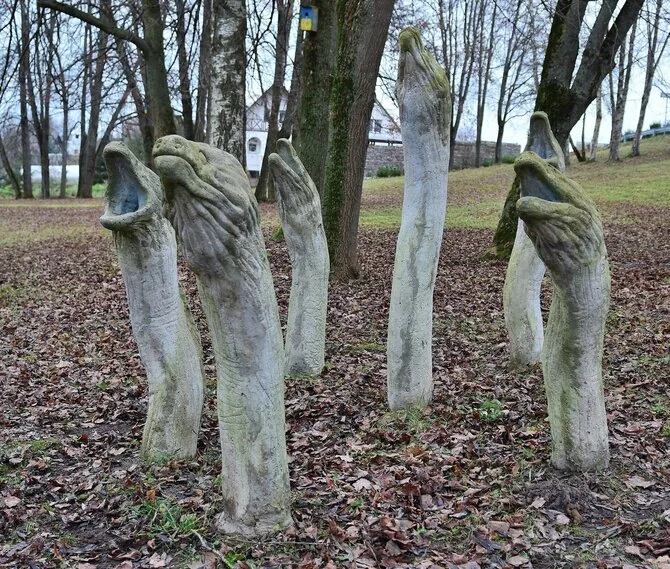
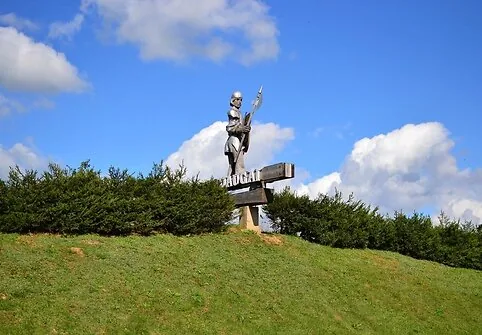
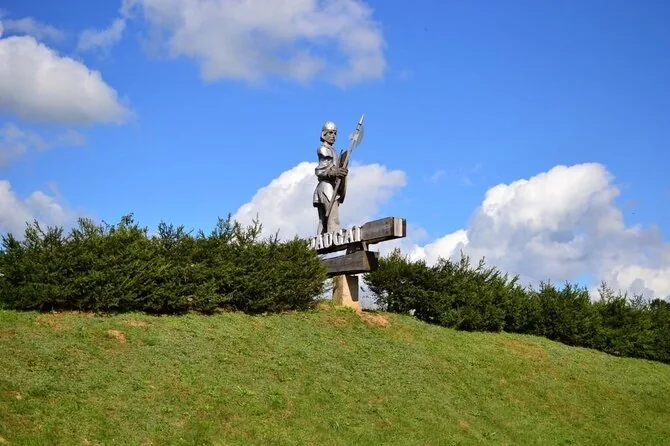
One of the highlights in Daugai is the concrete eels by sculptor Mykolas Sauka, winding up the slope near Lake Didžiulis, close to the cemetery. According to historical sources, it was here that a hunting manor from the time of Vytautas the Great once stood. This history is closely linked with the legend of Duke Daugis and the warrior sculpture greeting visitors entering the town.
The first – a wooden fisherman sculpture – appeared back in 2009, created by Kęstutis Benedikas.
The “Eels” are widely known also because a similar sculpture decorates the area near the MO Museum in Vilnius, but not everyone knows that this artwork was originally created in Daugai – only later was its version made in the capital.
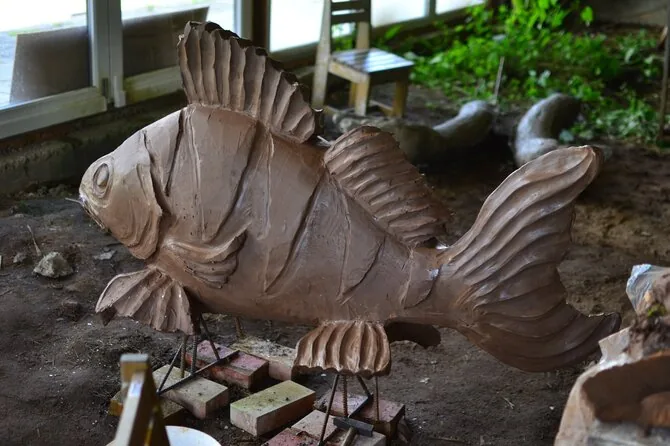
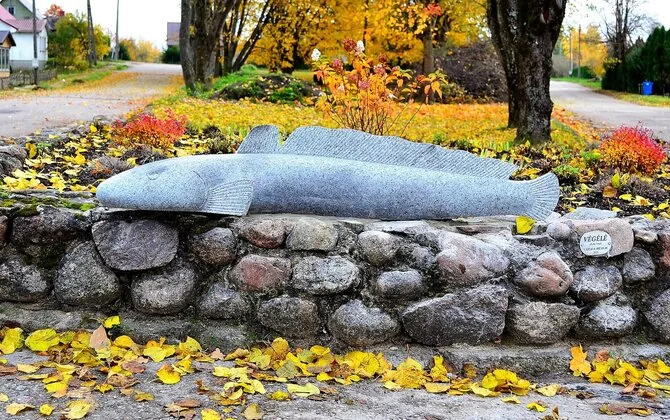
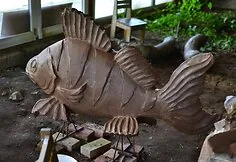
The fish company was supplemented by a perch created by Robertas Ožalinskas himself, which you can even ride on. Soon after, a stone “Vėgėlė” created by Vaidas Kartanas “swam in,” the most mysterious lake fish, very rarely seen and fond of cold and darkness.
The fish that swallowed toys
One of the most playful fish in Daugai is the steel “ragulka,” as local fishermen call it. Officially, it is a three-colored stickleback – tiny but the most “armed” resident of the lake. It was forged by sculptor, gunsmith, and antique weapons restorer Adomas Sviklas.
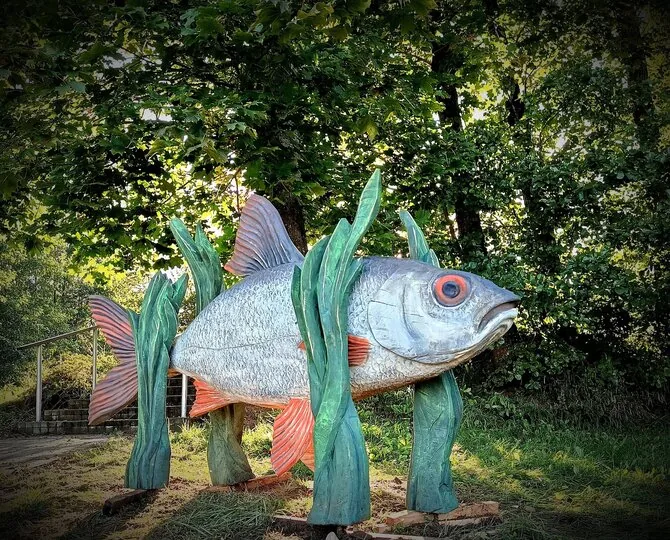
Last year, the fish collection grew. In open workshops, everyone interested could help R. Ožalinskas craft a “mekšra” – that’s what the people of Daugai call a roach. “There are simply no roaches in Daugai lake; all roaches are mekšras. A passerby who asks a fisherman about roaches risks being misunderstood – what kind of ‘legs’ are we talking about here,” the sculpture’s author smiles.
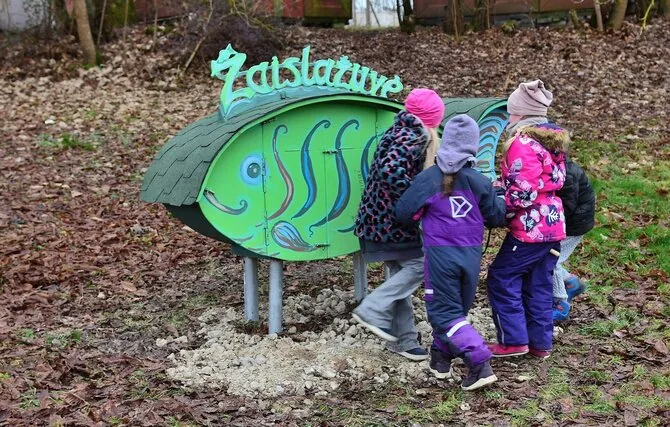
One of the most original fish in Daugai is the “Toyfish,” which swallowed toys. It resembles an exotic aquarium inhabitant, and inside it you can leave unwanted toys or take those already inside – you just need to open the fish’s belly door.
Read more Famous composer Benhardas Calzonas has died: he created for the grandmasters of the Lithuanian stage
Carps – this summer’s novelty
This summer, a whole group of carps is promised to “swim ashore.” According to R. Ožalinskas, few of the carps released into Daugai lake more than three decades ago remain, but those that occasionally surface to graze in the warmer water surface command respect and admiration from fishermen.
“We hope to continue this fish sculpture initiative, collaborating with various creators. We are always open to ideas and authors’ concepts about fish, fishermen, and lakes,” assures R. Ožalinskas.
“Čaikos” – the fast boats of Dzūkija
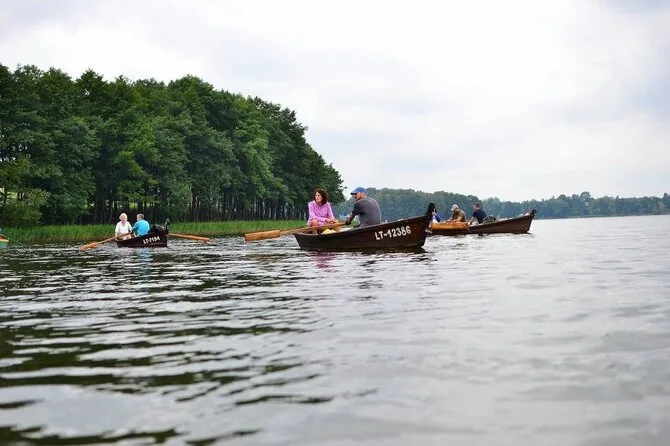
Since time immemorial, fishermen in Daugai have caught fish from wooden boats, which are still called “čaikos.” It is likely that this word came from the old Slavic languages, where “čajka” meant a light, fast-sliding boat. So this boat is the entire world of the people of Daugai, a little-changing strong tradition, a way of life, and a unique, unhurried rhythm.
Since ancient times, the boats made by the people of Daugai were praised, and their good reputation has not faded to this day. In the town, a few craftsmen still make “čaikas,” continuing the old tradition of the Daugai fishermen’s craft.
A glorious past and Hollywood shine
Today, Daugai looks like a quiet lake haven, but its history is much more colorful. Here, among hills and water, in the 14th–15th centuries, stood the hunting manor of the Grand Dukes of Lithuania. Vytautas the Great was a frequent guest here, and by his will, the first Daugai church was built. In such residences, not only rest was taken – politics were discussed, campaigns planned, and decisions made that shaped the history of the Lithuanian state.
Daugai was also known to later rulers. King Władysław Vasa, other nobles, and clergymen visited here. However, over time, the manor decayed, and the area lost its former strategic role.
Nevertheless, in the interwar period, the name of Daugai returned to the public space. The town was favored by President Antanas Smetona and his wife Sofija – they were brought here by friendship with Vladas Mironas, a signatory of the Act of Independence of Lithuania and a priest. This prominent statesman had a modern, ahead-of-its-time Bukaučiškiai manor near Daugai.
And a few decades later, the name of Daugai echoed all the way to Hollywood. The movie star Rūta Lee-Kilimonytė, originating from this region, visited her kind of parents’ homeland here in the mid-1950s.
The name of Daugai echoed all the way to Hollywood.
She arrived in winter, and the town was rushing by with sleighs pulled by swift horses. The local people silently watched the beauty wrapped in furs – the scene looked like from a movie, but this time Hollywood was real and right here, on the streets of Daugai.
Much in Daugai reminds one of a quiet movie frame. Fish frozen in sculptures, “čaikos” drawing a path through the water, and the shadows of ancient rulers mixed with the rustling of trees. Here, past and present are inseparable. It seems the town itself creates its own film, each time different, emerging from the mystical lake water.
Read more Here’s what happens to cholesterol when you eat bananas