









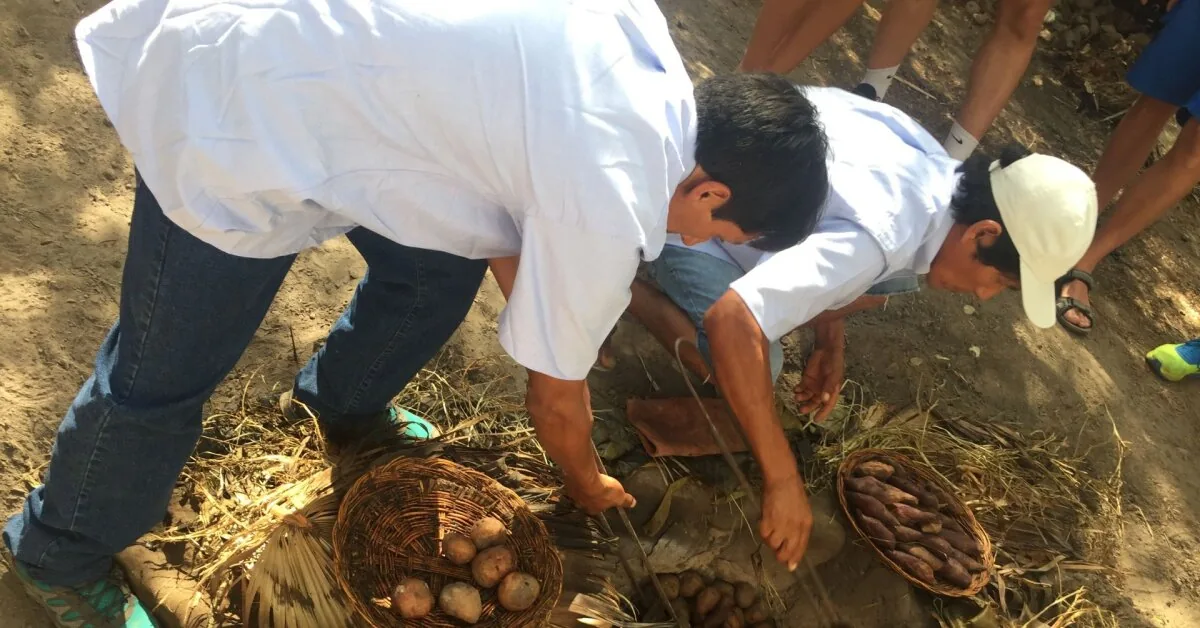
An international team of scientists, led by the University of California Los Angeles (UCLA) and the University at Buffalo, studied the genetic material of the Andean region’s inhabitants. The research results were published in the prestigious scientific journal “Nature Communications.”
By analyzing DNA, scientists found that the Andean inhabitants have an unusually high number of AMY1 gene copies. This gene is responsible for the production of salivary amylase – an enzyme that breaks down starch.
This enzyme helps the body efficiently break down starchy food and convert it into energy. Due to the higher amount of the AMY1 gene, the Andean inhabitants can digest potatoes and other starchy foods much faster and more effectively.
The study showed that, compared to 83 other populations worldwide, the Peruvian Andean inhabitants have two to four additional copies of this gene.
Diet can change human evolution
According to the study’s co-author, scientist Abigail Bigham, the Andean highlands have long been considered an important place for studying human adaptation to the environment.
Until now, most attention has been focused on how people adapt to oxygen deficiency at high altitudes, but the new study shows that human evolution can also be shaped by the daily environment – in this case, diet.
Scientists emphasize that human evolution does not stop: the body continues to adapt to living conditions, and over time such changes can become encoded in the genetic code. In this case – regular potato consumption likely helped the Andean inhabitants develop a biological advantage in more efficiently extracting energy from their main food source.
Read more “Tour of Lithuania” triumphed by an Italian, Rokas Adomaitis who achieved the goal – sixth
It is important to emphasize that the Andean inhabitants did not suddenly “gain” new genes after they started eating potatoes. According to scientists, natural selection occurred over time: people with more copies of the AMY1 gene could more efficiently digest starchy food, so they likely survived better and had more offspring. Meanwhile, those with fewer copies of this gene gradually disappeared from the population.
Co-author Abigail Bigham notes that human metabolism is not just a legacy of the Stone Age. According to her, biological adaptation is happening today, and the body can evolve by adapting to the food consumed daily.
Potato – an important food source for millennia
Potatoes originated from the Andean region and have been considered one of the most important food products for local inhabitants for thousands of years. They are rich in:
vitamin C,
B vitamins,
potassium,
fiber.
Potatoes are quite low in calories, but due to their high complex carbohydrate content, they provide a feeling of fullness for a long time.
However, potatoes can also be dangerous
Nevertheless, specialists warn: in certain cases, potatoes can be toxic. They naturally contain the glycoalkaloid solanine, which in excessive amounts can cause nausea, vomiting, and other digestive disorders.
The German Federal Institute for Risk Assessment recommends not eating potatoes if they:
Read more A wonderful day in Ramūnas Vyšniauskas’s life: shared a photo
have sprouts longer than 1 cm,
are green,
are damaged or starting to rot.
In such potatoes, the solanine content can be significantly higher.


