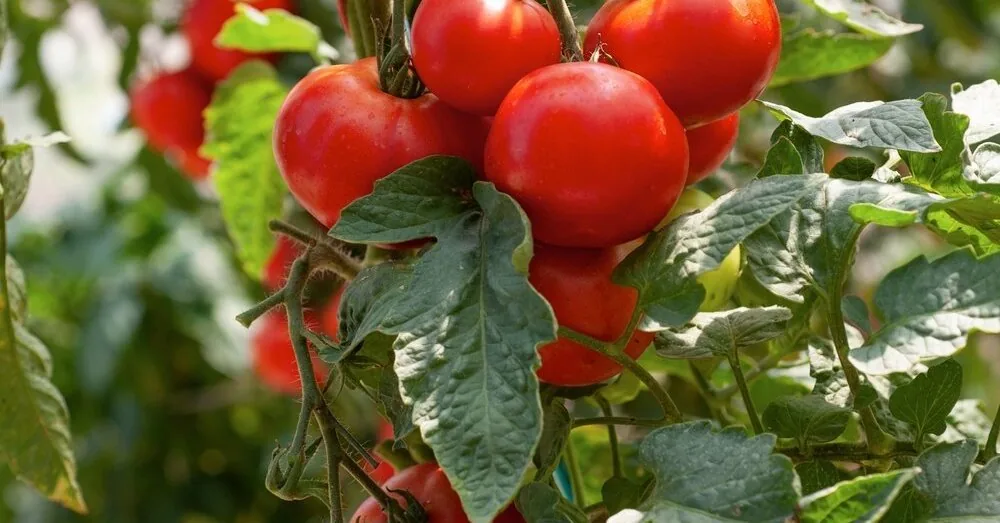
In August, growing tomatoes often turns from a pleasant summer project into serious work. The plants bend under the weight of the fruit, the harvest begins to overwhelm kitchen capacities, and what seemed unnecessary in June suddenly becomes very necessary.
Read more Work is underway at a popular swimming spot: residents suspect illegal activities
It is best to stock up on the necessary tomato care supplies at the beginning of the season, when the plants are still small and summer seems easily manageable. However, when the vining tomato grows to almost two meters, intertwines, and becomes laden with fruit, it quickly becomes clear what is missing.
Fortunately, most of the late-season tools are neither expensive nor complicated. They simply help keep the plants upright, safely harvest the crop, and manage the tomato surplus.
1. Strong tomato cages or supports
Thin wire tomato cages, which are abundant in stores in spring, often become too weak by August. A tall, fruit-laden tomato branch weighs much more than such a support can bear.
If the plant falls during a storm, stems can break, and the fruit can end up on wet ground and start to rot. Also, tomatoes lying on the ground become easy prey for slugs.
Therefore, in late summer, it is worth choosing sturdy metal or modular supports. The latter are especially convenient to install around an already grown plant. If the tomato is already leaning, it can be tied to a strong stake driven at least 30 cm into the ground.
2. Fertilizers with more potassium
It is often thought that tomatoes do not need fertilizing in August, but plants still setting fruit consume a lot of potassium. This is especially relevant for tomatoes grown in pots, where soil nutrient reserves may already be significantly depleted by mid-summer.
If the plant has stopped flowering for a while due to heat, additional nutrients may be important for the early autumn harvest.
When choosing fertilizers, it is worth looking for those with more potassium than nitrogen. Potassium is important for fruit formation and quality.
It is important not to forget that blossom end rot is usually related not to calcium deficiency in the soil, but to uneven watering. Therefore, consistent moisture often helps more than additional treatments.
Granulated fertilizers are best sprinkled not right at the stem but around the plant’s root zone and then watered well.
3. Sharp pruning scissors
When picking tomatoes by hand, the plant can sometimes be damaged. If the fruit is hard to detach and is twisted strongly, an entire branch can break off.
This is especially undesirable in August, as the plant is already holding many fruits and does not have much time to regrow damaged stems.
At this time, it is also worth removing the lower leaves, especially those touching the ground. Such leaves can create more favorable conditions for diseases to spread upward.
Read more Putin – Kadyrov’s secret stab
Sharp bypass-type pruning scissors make a clean cut and damage tissues less than blunt scissors or tearing by hand.
After each plant, it is worth cleaning or disinfecting the blades so that diseases are not transmitted from one tomato to another.
4. Harvest basket
When many tomatoes ripen, carrying them in a shirt pocket or a deep bucket is not the best solution.
Fruits at the bottom of the bucket can be crushed by tomatoes piled on top, and ripe fruits bruise very easily. Damaged tomatoes usually need to be consumed the same day.
A more convenient choice is a wide, sturdy harvest basket with a flat bottom. Even better if one part is perforated like a colander – then tomatoes can be washed outside and drained immediately.
5. Water bath canning pot
Tomato harvest often ripens almost all at once. Even a few healthy plants can produce so much fruit in a couple of weeks that the family simply cannot eat it all.
When there is no more space in the freezer, one of the simplest ways to preserve tomatoes is to can them in jars using a water bath.
A large canning pot with a special insert for jars is useful for this. It allows safely placing and removing jars from boiling water.
6. Frost protection agrofilm
The average date of the first frost is just a statistic from previous years, not a guarantee. One unexpected cold night at the end of September can destroy a plant still holding several dozen green tomatoes.
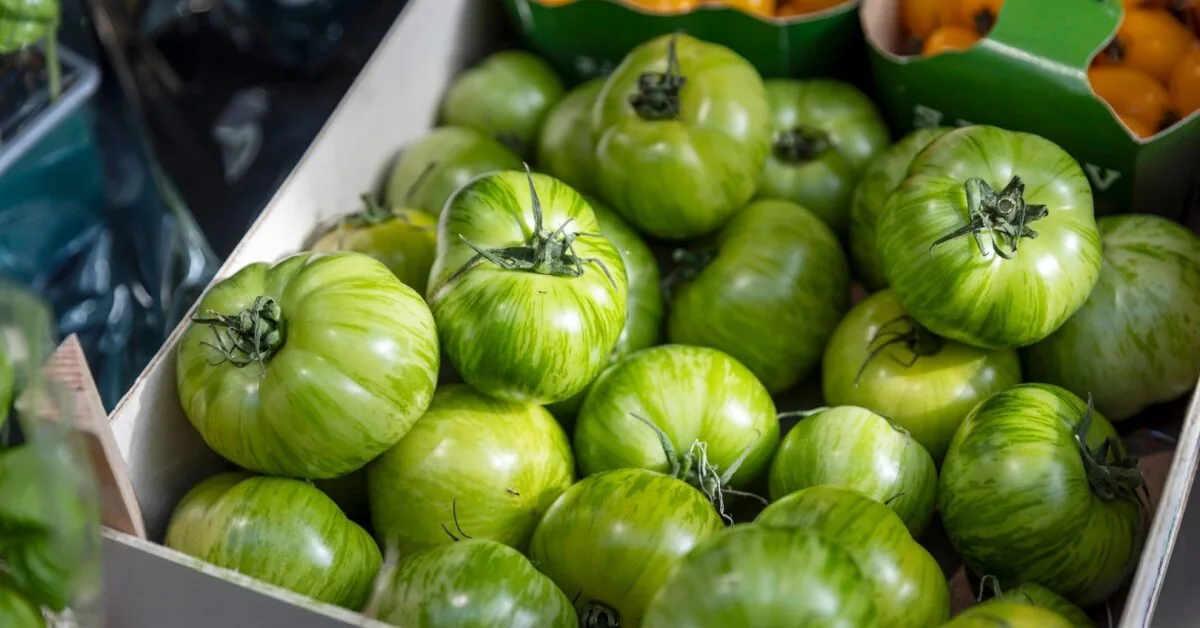
Green tomatoes can be picked and ripened indoors, but their taste often does not compare to those ripened on the plant.
A light agrofilm or special frost cover can help protect plants during a short cold snap. It is best to cover before dusk and remove in the morning, as heat accumulated under the cover during the day can be as harmful as the cold.
Such protection can extend tomato harvesting by two or three weeks – and at the end of the season, this can mean quite a few additional ripe fruits.