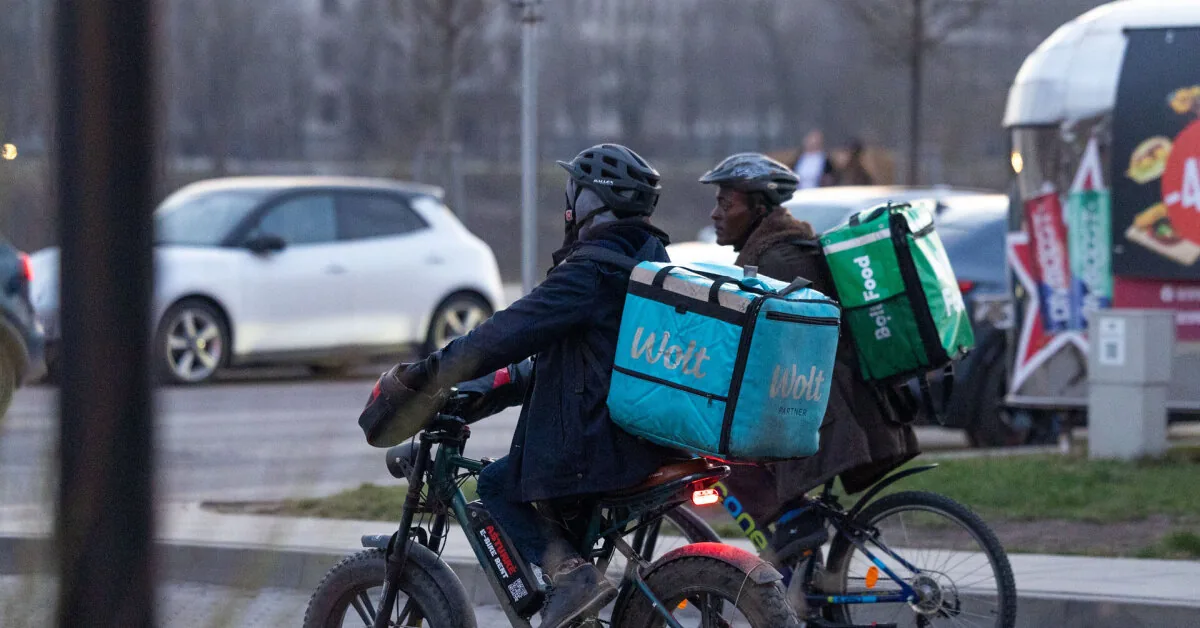
“We aim for people working through platforms in Lithuania to feel safer – their rights protected, data secured, fair working conditions ensured, greater transparency, and the right to challenge algorithmic decisions. I believe that these proposals submitted to the Government will help achieve the set goals,” says Inga Ruginienė, Minister of Social Security and Labour.
The amendments to the laws aim to create conditions for correctly determining the employment status of persons performing work on a platform (whether they are employees or self-employed), to promote algorithmic management transparency, fairness, ensure human oversight of algorithms, greater safety and accountability when performing work on a platform.
Current situation and problems
Some people working on digital work platforms face poor working conditions and insufficient social protection. In many cases, fictitiously self-employed persons suffer, i.e., those whose employment status is incorrectly classified. Such workers have neither national nor EU labour law protection, nor autonomy or a stronger position in the labour market – i.e., what many self-employed persons enjoy.
It is estimated that about 28 million people work on digital platforms in the EU. It is believed that 22.5 million of these individuals are correctly classified as employees or self-employed (the vast majority are classified as the latter). However, 5.5 million out of 28 million people may face incorrect classification. Due to such incorrect classification of work status on digital platforms, more than 100 court decisions and 15 administrative decisions have been adopted across the EU.
Some people working on digital platforms experience a certain degree of control, as platforms use algorithms for task allocation, supervision, evaluation, and drawing conclusions, which can affect them. This algorithmic management can negatively impact some of their working conditions and increase the risk of incorrect classification, as complex digital arrangements can conceal subordination and discrimination.
People working on digital platforms must understand how their behaviour affects access to future work opportunities determined by algorithms. The ability to perform tasks affects their income, regardless of employment status. Thus, algorithmic management issues are relevant to both employees and self-employed persons on digital platforms.
Proposed innovations
Determination of employment status. When determining how to decide whether a person working on a platform should be considered an employee or a self-employed person, factual circumstances will be assessed first, rather than what the contracting parties stated in the contract. The criteria of the Labour Code and additional characteristics are applied when determining the appropriate employment status.
Characteristics of employment relationships are established when there are signs of subordination and when a person working on a platform does not have at least one of the following rights: 1) to freely choose whether to provide these services, at what time to provide them, or to choose the maximum amount of such services (tasks); 2) to independently provide similar or identical services to third parties; 3) to agree on the price of the service or to have the opportunity to accept and reject it without negative consequences, as well as to familiarise oneself with the essential terms of service provision (rate, specific address, location, distance, etc.) before providing the service.
Right to data protection. To ensure the right of platform workers to data protection, it is proposed to prohibit platforms from collecting sensitive, private, or work-unrelated data (e.g., emotional state, conversations, data outside working hours). Platforms that evaluate employee activities or make decisions using algorithms will be required to perform a data protection impact assessment.
Read more Lavrov awaits a meeting with Trump’s man: «It’s good to ask questions and get answers»
Right to know. Digital work platforms will be required to clearly inform persons working through them, their representatives, or the State Labour Inspectorate (VDI) (at their request) about the use of any automated monitoring or decision-making systems, their operation, criteria, and impact. The information must include: what data is collected, what decisions are made, according to what criteria and why, to whom the data is transferred (including group companies), on what grounds decisions are made to restrict an account, not pay for work, change status, etc.
Right to receive an explanation. Persons working through digital platforms will have the right to demand an explanation for any automatic system decision.
Right to challenge decisions. Persons working through a digital platform will have the right to request a review of decisions automatically made by the platform’s systems, and the platform will be required to respond within a specified time and rectify violations.
Right to human intervention. Final decisions of automatic systems that affect an employee’s rights, e.g., regarding the dismissal of a platform worker or the blocking of their account, must be made by a human, not an automated system.
Right to non-discrimination and supervision. Automated systems of platforms and the decisions they make must be regularly checked to prevent discrimination.
Right to data portability. Persons working through a digital work platform will have the right to receive and transfer their work data to another platform (e.g., ratings).
Right to information and consultation. Before implementing or changing automated decision-making or automated monitoring systems, the digital platform must inform the employee directly if they do not have their representatives on the platform. Information must be provided in a clear, understandable, and easily accessible form so that employees know how algorithms can affect their work.
Read more Fourth Vice-Minister of Finance – Lineta Jakimavičienė