The story is based on an anonymous source claiming that before sending the 160th brigade soldiers to the Sumy region, their DNA samples were taken. It is also reported that the collected biological material was packed into boxes labeled with the names of foreign clinics performing organ transplants.
This publication continues a disinformation narrative circulating in the Kremlin’s information space for many years about alleged organ trafficking in Ukraine.
Fake news about alleged organ trafficking has existed in the Russian information space since the annexation of Crimea in 2014 and the emergence of the separatist Donbas and Luhansk republics.
The Security Service of Ukraine denied such rumors at that time.
With the start of the large-scale Russian invasion of Ukraine, fake news about supposedly thriving illegal organ trafficking has increasingly been linked to the Ukrainian army and Ukrainian soldiers fighting on the front lines.
Technically impossible
Although stories about the alleged removal of Ukrainian soldiers’ organs and their transportation to foreign clinics sound dramatic, they ignore several essential aspects of transplant medicine that cast doubt on their authenticity.
Experts emphasize that the “black organ market” often depicted in popular culture, where organs are supposedly mass-extracted and sold as ordinary goods, has little to do with real transplant practice.
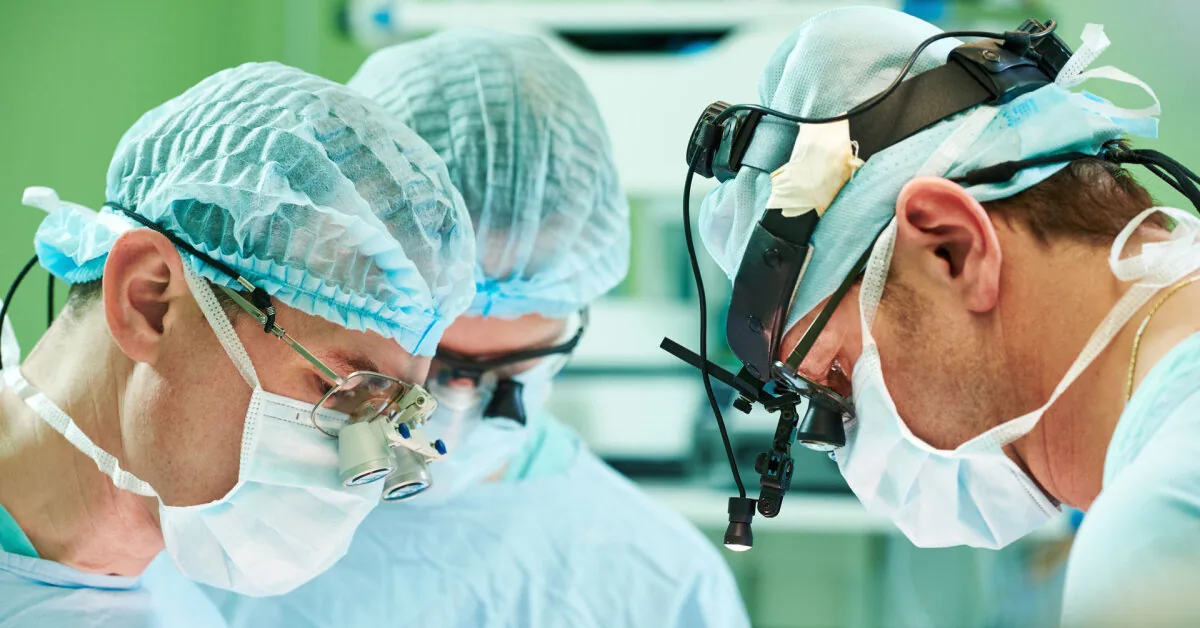
Organ transplantation requires complex medical infrastructure, compatibility testing, strict time limits, and a large team of specialists, making secret operations of this kind extremely difficult.
Mindaugas Šerpytis, head of the intensive care unit at Vilnius University Santaros Clinics, has previously explained to 15min that the organ donation process across Europe is so expensive and complicated that it would be impossible to organize it bypassing official medical institutions.

“Very expensive immunological tests are required to determine which specific recipient a particular organ might fit. Operating rooms are needed, where two large teams of various specialist doctors must work. Ensuring that a specific organ donor matches a specific patient is a very meticulous and complex process,” the doctor explained.
According to M. Šerpytis, transporting organs by train or car from Ukraine would be an impossibly difficult process, as explanted organs, even when connected to special devices that prolong their viability, are suitable for transplantation only for a very short time.
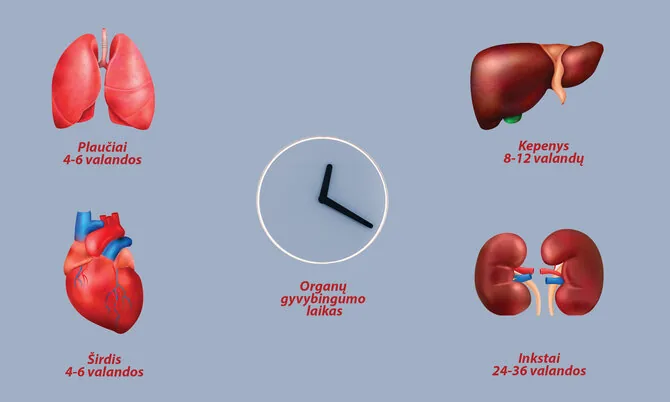
Extracted organs must be stored under special sterile conditions.
The initial selection of organ donors and recipients is performed by an information system—based on blood type, height, weight, recipient waiting time, and disease severity.
Therefore, neither a person’s social status nor their financial means will help them receive an organ donor faster or recover more quickly.
Also, not all individuals are suitable to be donors—it is necessary to conduct detailed tests in a certified laboratory and know the person’s health status and past illnesses.
Barriers to becoming a donor may include age, organ failure, positive virological test results, oncological diseases, postoperative complications, prolonged hypoxia, HIV and hepatitis infections, and more.
Legal safeguards and medical algorithms
M. Šerpytis emphasized that donation is so legally protected in various countries that illegal transplants become practically impossible.
“Many people are involved in the transplantation process—doctors, nurses, laboratory technicians, transplant office teams. Performing any illegal action is practically impossible, and it would be even more impossible to conceal such things.
According to M. Šerpytis, organ removal in battlefield conditions is impossible—for a person to become a donor, their death must occur not on the battlefield but in a hospital.
“A person who is so injured that brain death occurs usually has other organs damaged as well, so it is impossible to determine whether they would be suitable for transplantation at all.
The heart can stop very quickly because the brain participates in the entire circulatory process.
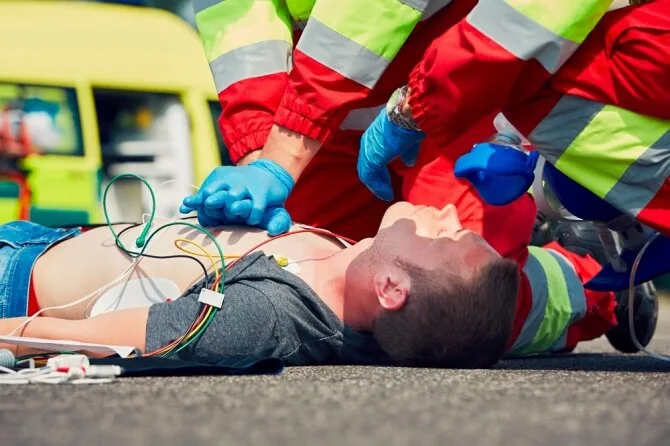
To diagnose brain death and remove organs, more than one doctor’s decision is needed. First and foremost, the patient is attempted to be saved and fought for.
Only when it becomes clear that the situation is hopeless is brain death declared. After that, there is very little time during which intensive care tries to keep the organs viable because the heart stops very quickly.
In field conditions, the person would simply die if not given help, so the donation process would become impossible,” the doctor explained.
The law prohibits taking organs from the deceased
In January 2025, Ukrainian President Volodymyr Zelensky signed a law that, among other things, prohibits taking organs for transplantation from deceased soldiers and persons who died due to armed aggression against Ukraine.
The explanatory note to the law states that anatomical materials for transplantation and/or bioimplant production are prohibited from being taken from orphans and children deprived of parental care, persons declared incapacitated, unidentified persons, persons who died due to law enforcement or security agencies’ use of force, as well as members of defense and security forces who died in the line of duty, and persons who died due to armed aggression against Ukraine.
Therefore, the latest story about the alleged transfer of organs from deceased Ukrainian soldiers to foreign clinics not only contradicts the principles of transplant medicine but also does not align with the legal regulations in force in Ukraine.
15min verdict: false. Claims that DNA samples are collected from Ukrainian soldiers before being sent to the front so that their organs could later be transferred to foreign clinics for transplantation are unsupported by any evidence. The story relies solely on an anonymous source and repeats a narrative spread for many years in Kremlin propaganda about alleged organ trafficking in Ukraine.
Medical experts emphasize that such a scheme would be practically impossible due to strict transplantation procedures, donor selection, and the very limited viability time of organs. Moreover, Ukrainian laws clearly prohibit taking organs for transplantation from deceased soldiers and persons who died due to armed aggression.
The publication was prepared by 15min in cooperation with Meta, aiming to stop the spread of misleading news on social networks. More about the program and its rules – here.
Read more New from June: a lawyer answered whether an employer can say, «your colleague Rasa earns 2300 Eur»