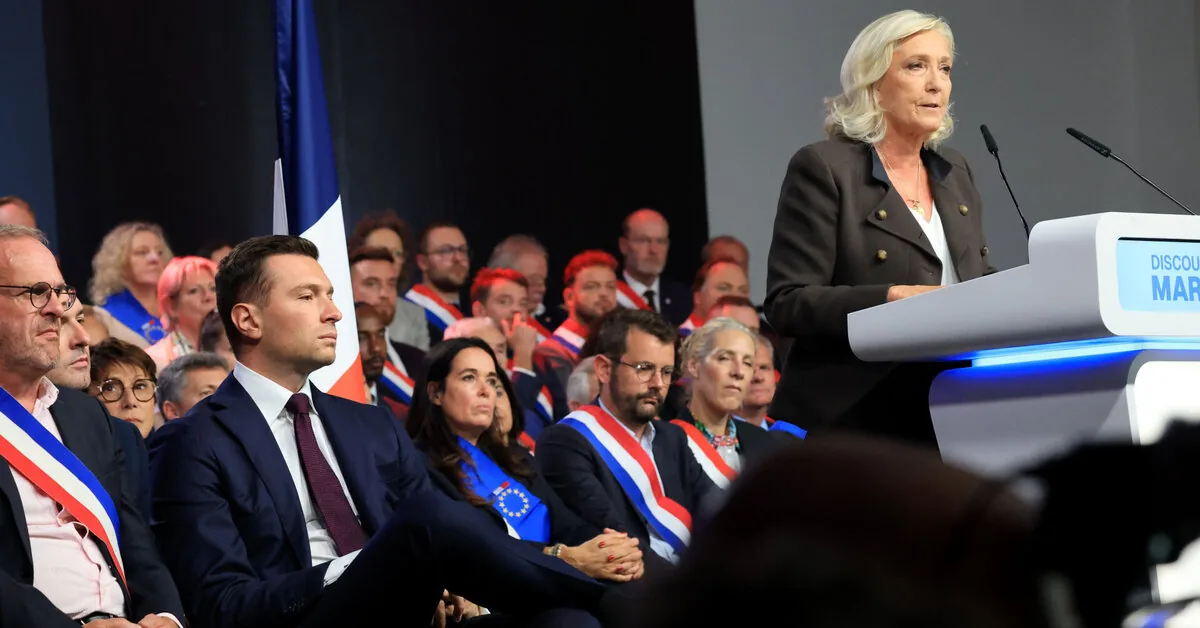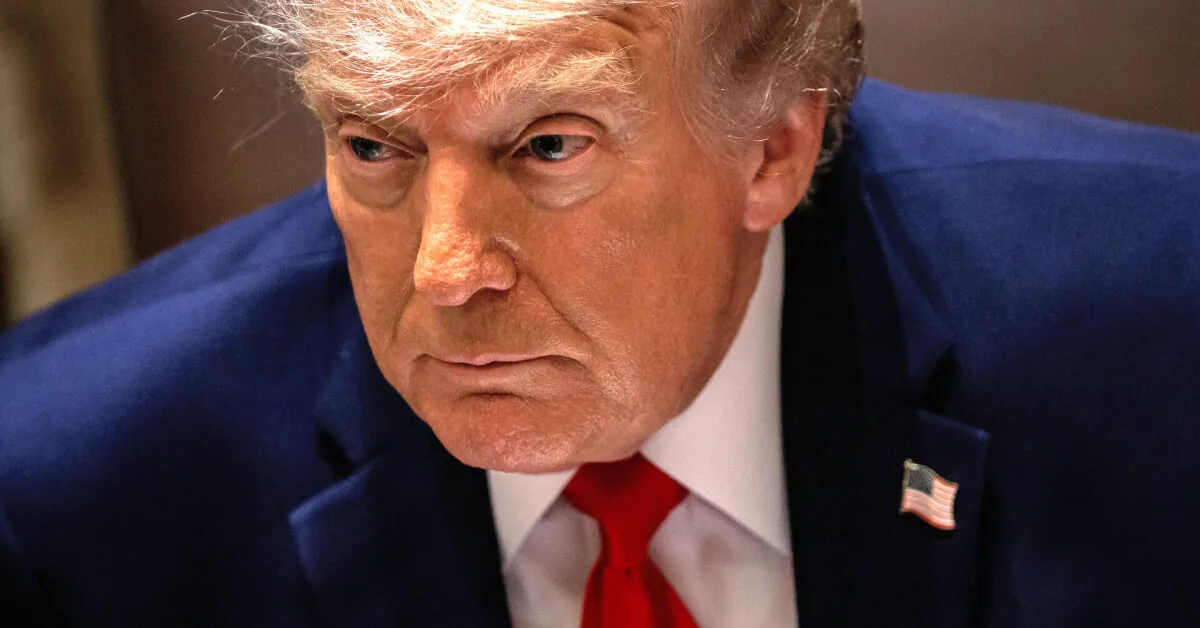
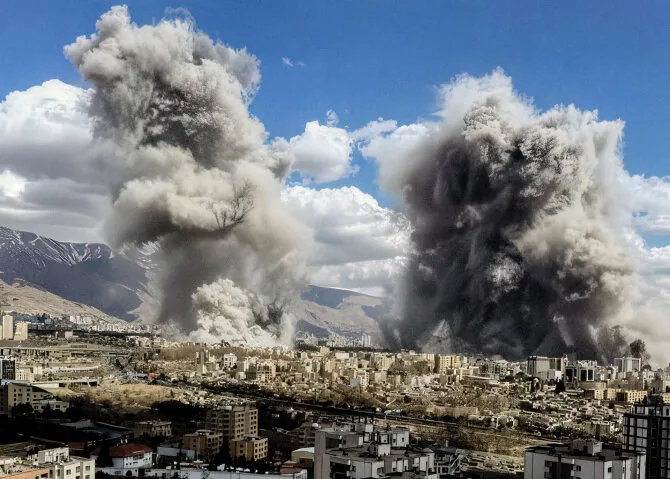
On his desk in the Oval Office are models of B-2 bombers, which nearly a year ago in one night took out three Iranian nuclear sites. In the first weeks of the war against Iran that began this year, D. Trump often spoke about repeating his success in Venezuela. “The perfect scenario,” he said. In other words, this means – overthrowing a problematic leader with a quick paratrooper raid and replacing him with a compliant, US-friendly successor.
But now D. Trump has hit a dead end. It is clear that the war against Iran is precisely at this stage. On April 7, after announcing a ceasefire, the US president stated on social media that the end of hostilities would depend on whether the “Strait of Hormuz is fully, immediately, and safely opened.” That did not happen.
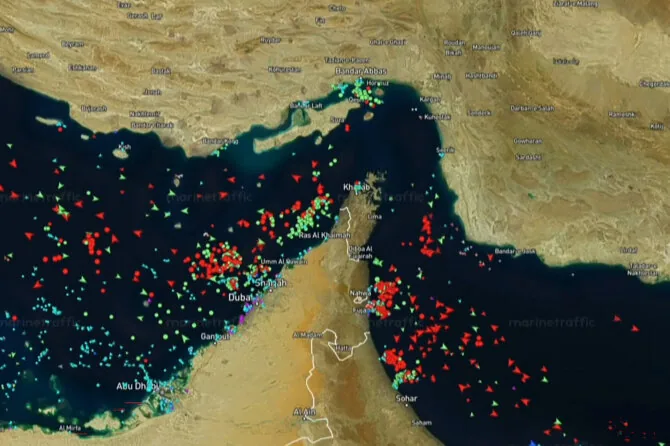
Even if trade through the strait were now resumed according to the memorandum of understanding still being negotiated, the future of Iran’s nuclear and missile programs would remain at the same point as in February: stuck in further negotiations, which the administration claims will be time-limited – probably up to 60 days.
The Iranians feel a strong reluctance from D. Trump to renew combat operations, which are particularly unpopular in the United States, so most Iranian experts speculate that Tehran will try to drag out negotiations for months or years, as it did with previous administrations.
And then there is the war in Ukraine. D. Trump boasted that he would end the five-year-long war in just 24 hours. Sixteen months have passed since his presidential inauguration. He rarely mentions the war in Ukraine anymore. Meanwhile, US Secretary of State Marco Rubio recently complained about being tired of wasting time on endless discussions, hinting that he would be quite happy if another country wanted to intervene and take over America’s role.
Meanwhile, the Russians quietly implied that they are fed up with the periodic visits of the president’s special envoy Steve Witkoff and D. Trump’s son-in-law Jared Kushner, sources familiar with the negotiations revealed. According to them, the Kremlin wants a stable, diplomatic process with regular meetings and working groups organized. They also desire a US ambassador to Russia – a position that has been vacant for almost a year.
There is also the Gaza Strip. When D. Trump flew to Israel to commemorate the release of the last living hostages after the October 7, 2023 terrorist attack, he enthusiastically spoke about a 20-point plan. That plan began with disarming Hamas, creating international stabilization forces, and ultimately rebuilding the Gaza Strip, which would be adorned with gleaming glass office towers and seaside complexes.
Eight months after this trip, Hamas still has not disarmed, except for fake, AI-generated videos. (In one of them, shared by D. Trump, he and Prime Minister Benjamin Netanyahu are shown sunbathing).
Although more aid is entering the territory, Palestinians still sleep in tents, and rats scurry through rubble-filled streets. At the end of May, B. Netanyahu announced that the Israeli army would expand its control and take over about 70 percent of the Palestinian enclave.
Perhaps all this is just an inevitable clash between a president with grand ambitions and reality. Or maybe it is just a broad plan inspired by the success of the first two military adventures – in Iran and Venezuela. Because of this, D. Trump seems to think there are simply no too big challenges for the US military.
According to some experts, this situation arose due to a fundamental misunderstanding of American power. As one of D. Trump’s close aides said, destroying nuclear sites from the air is what America does best, while controlling political events in countries like Iran, Russia, and Ukraine is what the United States does worst.
“Foreign policy usually takes a lot of time and is complicated,” noted Richard Fontaine, former chief aide to Senator John McCain and now head of the Center for a New American Security.
“Trump is not the first president to fantasize about quick and simple solutions to complex and long-term international problems. But often it is not grand and dramatic statements that matter, but consistent governance and follow-up actions,” he said.
Continuity and plan implementation have never been D. Trump’s strong suits. To confirm his bona fides for the Nobel Peace Prize, he liked to collect testimonials about achievements, invite world leaders to the White House, and hold signing ceremonies for them. If fighting resumes, he is unlikely to consider the consequences.
The Russia-Ukraine war is an exception. D. Trump has admitted several times that he underestimated the complexity of the problem and possibly overestimated his powers of persuasion.
“There have been cases where Putin did everything, and Zelensky did not make a deal, and that shocked me,” D. Trump said in a January interview with The New York Times.
“There have been cases where it was the other way around. I think now they both want to agree, but we will see,” he added.
Almost five months have passed since this interview. During that time, the US president has repeatedly predicted that an agreement is near, and repeatedly everything has gone south.
Read more Vladimir Laučius causing a «drunken scandal» – strict reaction from famous people
Today, Ukrainians feel much bolder. Their long-range drones and homemade rockets reach deep into Russian territory, attacking key energy facilities, factories, and laboratories where main weapon components are produced, and sometimes targets in Moscow.
One of the heads of the UK intelligence services, Anne Keast-Butler, recently indicated that in the conflict, which Vladimir Putin believes will end in a few weeks, nearly half a million Russian soldiers have died.
Nevertheless, M. Rubio, who left negotiations in the hands of S. Witkoff and J. Kushner, recently spoke as if he had lost hope that either side would soon come close to an agreement.
“The US is ready and prepared to do everything we can to help facilitate the end of this war,” he told reporters a week ago. “We hope that someday there will be an opportunity to take on this role again.”

Some experts who have tried behind the scenes to encourage negotiations believe the administration’s mistake was relying too much on episodic phone calls or special envoy visits, rather than activating traditional diplomacy daily to keep negotiations moving forward.
“This conflict is ripe for an end,” said Thomas Graham, a longtime American diplomat who worked in Moscow before the collapse of the Soviet Union and led strategic dialogue with the Kremlin during the George W. Bush administration.
“The mood in Moscow has changed. The battlefield is different: the Ukrainians have frozen the front line. Economic problems are accumulating in Russia, and there is some political dissatisfaction. Inside the Kremlin, conversations are revolving around ‘How to sell this as a victory?’.
However, the expert noted that a “necessary negotiation process” is still lacking.
“I think they would like this process to be institutionalized,” added T. Graham, “so that it is more than just a few envoys talking to Putin.”
The dead end that the war against Iran has led to is especially complicated.
During negotiations with Iran in Geneva in February, S. Witkoff explained in an interview with Fox News that D. Trump was “curious why they – I don’t want to use the word ‘surrendered’ – but why they did not surrender.”
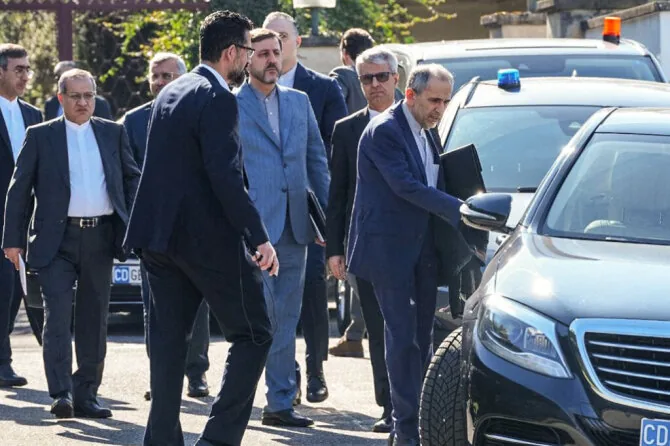
D. Trump asked the same question in the first weeks of the war. He stated that the only acceptable outcome for him would be Iran’s “unconditional surrender.”
That did not happen. When I asked D. Trump in mid-May during a flight from China to the United States why he thought renewed military actions would bring him closer to political goals than the first phase of strikes on Iran, he listed targets the military had hit, talked about destroyed Iranian air and naval forces, but did not answer why Iran had not abandoned its enriched uranium or missile programs. Instead, he called me and The New York Times “traitors.”
That was two weeks ago. Now D. Trump is trying to force the country to start negotiations like those in February before he and B. Netanyahu started the war, using a combination of incentives, threats, and clarified demands.
“He tried bombing Iran, tried blockading Iran, tried scaring Iran, and he got stuck,” recently said President Joe Biden’s national security advisor Jake Sullivan, one of the key Obama-era negotiators with Tehran.
If D. Trump and Iran’s spiritual and military leadership agree on a deal, a new phase of negotiations will begin, which could be prolonged.
“The problem of Iran’s enrichment could have been solved by a bombing campaign, at least in the medium term,” noted R. Fontaine. “But the broader problem of the Islamic Republic cannot be solved that way.”
A similar realization may have come to D. Trump regarding the situation in the Gaza Strip. There he successfully mediated a ceasefire between Israel and Hamas: all hostages were released – alive and dead. But then everything got stuck, and D. Trump lost interest as his attention was taken over by the war in Iran.
The new Palestinian administration, which D. Trump said should appear in a few months, has not entered the territory to start leading the reconstruction of the cities. D. Trump’s “Peace Council,” which was supposed to oversee reconstruction and investment efforts, barely moved from the starting line. Meanwhile, Israel continues bombing almost daily.
Read more June 2 Horoscope: Astrologers Warn – This Day May Change the Coming Weeks for Some Zodiac Signs