During the reform of the packaging and packaging waste system in Lithuania, the Small Business Association raises a simple question: can environmental goals be achieved in a way that does not impose a disproportionately large administrative burden on the smallest businesses?
Read more The supercomputer calculated: who will win the Champions League and how will Dambrauskas do?
The issue is relevant to thousands of small shops, e-commerce operators, artisans, manufacturers, and importers.
The 500-kilogram threshold is important, but it does not mean “no obligations”
The current regulation provides an important exception: manufacturers and importers who supply no more than 0.5 tons of packaging to the Lithuanian domestic market during the tax period are exempt from the packaging waste pollution tax under certain conditions. However, proper packaging accounting is required.
This is precisely where the problem lies, which small businesses do not always understand.
Exemption from the tax is not the same as exemption from accounting.
The Ministry of Environment itself has acknowledged that in practice, the interpretation of obligations applied to entities releasing up to 0.5 tons of packaging caused uncertainties. In 2026, the Ministry informed that it is preparing legislative amendments and even urged such businesses not to rush to choose an organization representing manufacturers and importers for 2027 until the regulation is decided.
This is a very important signal: the problem is not fabricated – the lack of regulatory clarity is also seen by the state itself.
When a few hundred kilograms of packaging means not kilograms, but working hours for a business
In a large company, packaging accounting can be overseen by an accountant, an environmental specialist, or even a separate department.
The situation is completely different in a small shop.
The same person orders goods, serves customers, manages the online store, receives shipments, handles invoices, resolves employee issues, and also has to understand which type of packaging a box, film, bag, or other material belongs to.
Therefore, when talking about packaging reform, we cannot only evaluate how many euros the tax itself will amount to.
We need to calculate the administrative cost as well.
How many hours will the entrepreneur spend on accounting? Will an additional specialist need to be hired? How much will the accounting service cost? How much time will need to be devoted to GPAIS? And most importantly – is it reasonable to apply a system to a business that places a few hundred kilograms of packaging on the market per year, whose administration can be almost as complex as for a much larger market participant?
Almost 388 thousand tons of packaging per year in Lithuania
Data from the Environmental Protection Agency shows the true scale of the problem.
In 2024, 387,533 tons of packaging were supplied to the Lithuanian domestic market. Of these, 333,177 tons, or 86%, were managed, and 280,632 tons – 72.4% – were recycled.
These are huge quantities.
Therefore, the environmental goal is understandable and necessary. Packaging must be reduced, it must be recycled, and its manufacturers and importers must take responsibility.
However, these numbers also raise another question.
What portion of the total 387 thousand tons of packaging flow is made up by the smallest businesses, placing several dozen or a few hundred kilograms on the market per year? And what real environmental benefit do we create by imposing complex administrative procedures on them?
The state should follow the principle of proportionality here.
Europe is changing packaging rules – but the problem is not just “Brussels requirements”
When discussing new requirements, it is very easy to call everything an “European Union requirement.”
However, two things should be distinguished.
The European Union Regulation (EU) 2025/40 indeed provides for major changes in the packaging area: greater attention to packaging reduction, reuse, recyclability, and waste prevention. Lithuanian legislation is also being aligned with this regulation. A new version of the Packaging and Packaging Waste Management Law was registered in the Seimas in June 2026.
The planned changes also include GPAIS: from 2027, procedures related to registration, accounting, and reporting under the draft would be carried out using the Unified Product, Packaging, and Waste Accounting Information System.
However, which administrative model we choose for the smallest Lithuanian businesses is also a matter of our national policy.
Europe sets environmental goals. Lithuania must ensure that the implementation mechanism is understandable and proportionate.
“We cannot apply the same administrative logic to a small shop as to a large importer”
The Small Business Association’s position is not a proposal to abandon environmental goals.
On the contrary – responsible waste management must be a common interest of the state, residents, and business.
Read more What did a nurse from Klaipėda experience while helping after the disaster in Venezuela?
However, responsibility must be proportional to the scale of activity.
“If a small regional shop or family business releases several dozen or a few hundred kilograms of packaging to the market per year, we cannot apply the same administrative logic to it as to a company releasing hundreds or thousands of tons. Environmental protection should not turn into a competition over who fills out more tables. We must assess the real environmental impact and set obligations accordingly,” says Airinas Jermolajevas, chairman of the Small Business Association.
Small business does not resist responsibility. It asks that responsibility be understandable, implementable, and economically justified.
One box can be simple. Its accounting – not necessarily
To an ordinary person, a cardboard box is just a cardboard box.
To a business, it can become an accounting object.
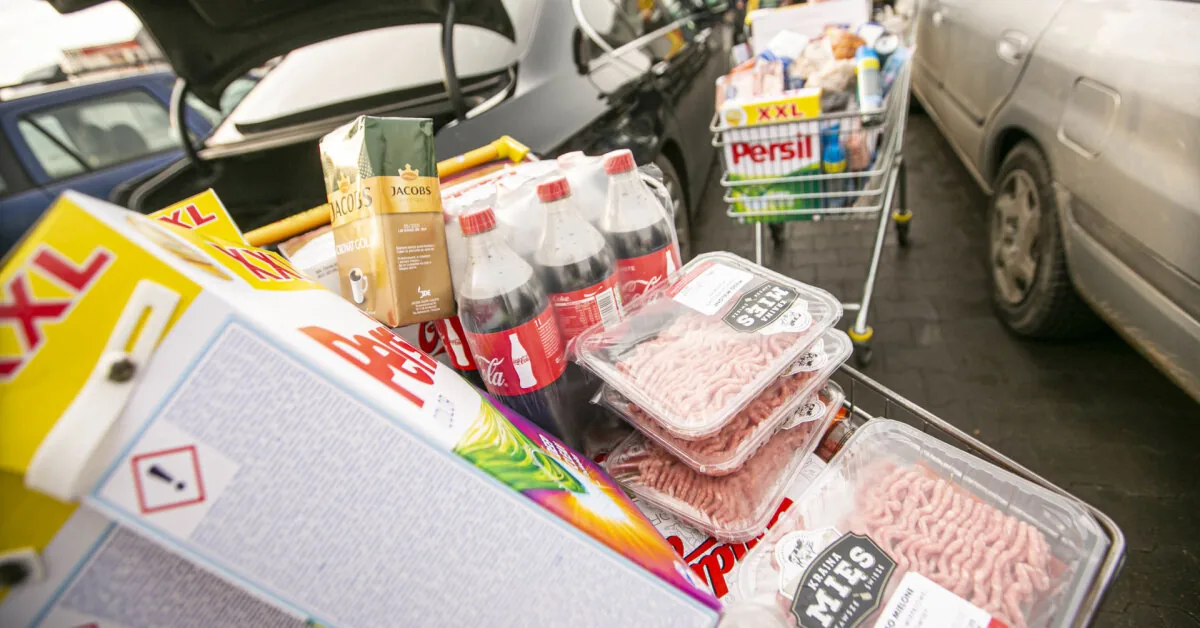
Depending on the business model, it matters whether the packaging is imported with goods, used for packaging products in Lithuania, whether goods are unpacked for own needs, whether the packaging is released to the Lithuanian market, or products are exported from the country.
And then questions begin.
Who is the manufacturer? Who is considered the importer? Which packaging is primary, secondary, or tertiary? How much does it weigh? When is it considered released to the market? What to register in GPAIS?
For a large business, this is a process.
For a microenterprise, it can be another profession the entrepreneur has to learn.
Small business should not fear fines for not understanding the system
One of the greatest dangers is when the environmental system becomes so complicated that the entrepreneur starts to fear not conscious violation, but a simple mistake.
The state’s goal should not be to catch a small entrepreneur for miscalculating a few kilograms of cardboard, but to create a system where it is easy for the entrepreneur to act correctly.
Therefore, before expanding requirements, it is necessary to ensure very clear methodology, simple accounting, and a real transition period.
What does the Small Business Association propose?
According to the Small Business Association, several principles should be followed when discussing the final model.
First – preserve a real relief for the smallest. If a business releases a very small amount of packaging to the market, its obligations must be simplified not only in terms of tax but also administration.
Second – simplify GPAIS accounting for microenterprises. The smallest market participants could apply a simpler annual declaration instead of complex continuous accounting.
Third – set a clear transition period. First consultation and assistance, then sanctions.
Fourth – provide clear information in one place. A small entrepreneur should not have to hire a consultant just to understand whether a specific requirement applies to them at all.
Fifth – assess the administrative cost before making decisions. We must calculate not only the state’s revenues or collected packaging but also how many working hours and money the new obligation will cost the business.
The Green Deal cannot mean more paperwork
Lithuania needs less waste, more recycling, and more responsible consumption.
However, environmental policy will be effective only when people and businesses understand its meaning.
If the owner of a small shop spends evenings counting kilograms of cardboard boxes and plastic bags instead of looking for customers, developing e-commerce, or creating new products, we must ask ourselves – have we really chosen the most effective way to achieve the environmental goal?
Small business today does not need privileges.
It needs proportionality, clarity, and stability.
Because there is a big difference between a company releasing a few hundred kilograms of packaging per year and a company whose packaging is counted in hundreds or thousands of tons.
Environmental responsibility must apply to everyone. But the administrative burden must not be the same for all.
And it is precisely this difference that the state must hear when making final decisions about the packaging system.
Read more Flight from London to Kaunas disrupted by a Latvian who lost sober mind: officers met at the plane