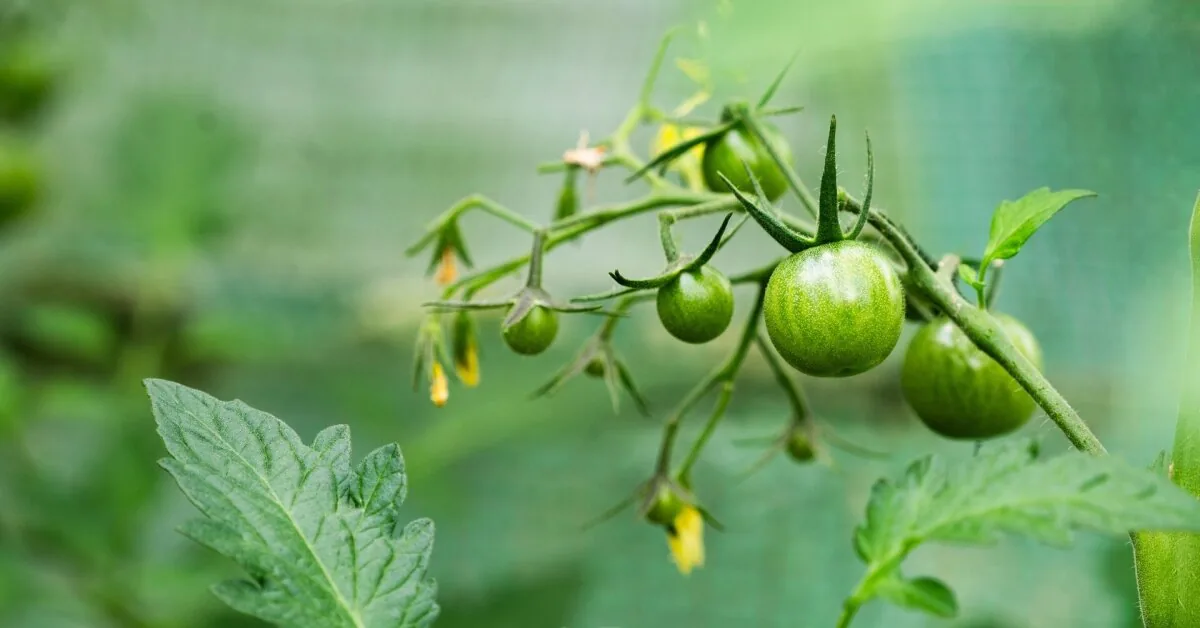
When the first flowers appear on low-growing tomatoes and the first cluster forms, it’s time to shape the bushes.
Many gardeners believe that such tomatoes do not need to be touched at all because they grow short. However, if you leave everything to chance, the tomatoes will be small, and their ripening will take much longer. “Glavred” explains in more detail how to properly prune low-growing tomatoes.
As told on the “Namai ir sodyba” YouTube channel, low-growing tomatoes stop their growth on their own. However, if too many branches grow on the bush, the plant simply will not withstand the load.
“Will such a short tomato be able to feed all 24 clusters? Therefore, if we do not remove some of the axillary shoots, the bush will naturally drop the fruit set, as it simply will not be able to withstand such a load,” explains the video’s author.
How to properly shape low-growing tomatoes
For the bush to develop correctly and ripen many large fruits, it is worth taking a few steps.
Remove the lower axillary shoots. These are shoots growing in the axils of the lower leaves. When you cut them, leave a small “stump” (about 1–1.5 cm). Then a new shoot will not appear in that spot.
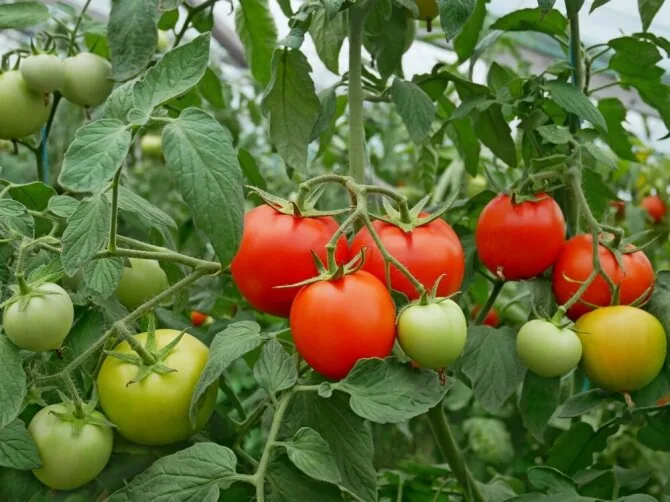
Trim the lower leaves. All leaves that lie on the ground or touch it must be removed. This will improve the ventilation of the bush.
Read more Adoptees born in South Korea sued Denmark for the right to know their biological families
Leave the right shoots. For a bush up to 80 cm tall, it is best to leave 3–4 strong stems. Be sure to leave the shoot that grows immediately after the first flower cluster.
Do not touch the top. Shoots growing at the top above the cluster do not need to be removed. They will form fruits themselves and stop growing.
Why you shouldn’t prune everything indiscriminately
The main mistake is to shape low-growing tomatoes as intensely as tall ones. This should not be done, as the majority of the harvest forms precisely on the side shoots of low-growing tomatoes.
“The best way is partial pruning, where we remove the lower shoots and thin out overly dense branches inside the bush,” say the channel’s authors.
The authors also advise making sure that the leaves do not touch the ground: “All fungal spores are found in the soil.” By getting rid of excess greenery at the bottom, you will help protect tomatoes from phytophthora (blight).
Prune tomatoes only on a sunny day, preferably in the morning. Then the sun will quickly dry all the “wounds” on the stems, and the plant will not get sick.
Read more In courts – chaos and anxiety: the updated system works at a snail’s pace and stalls