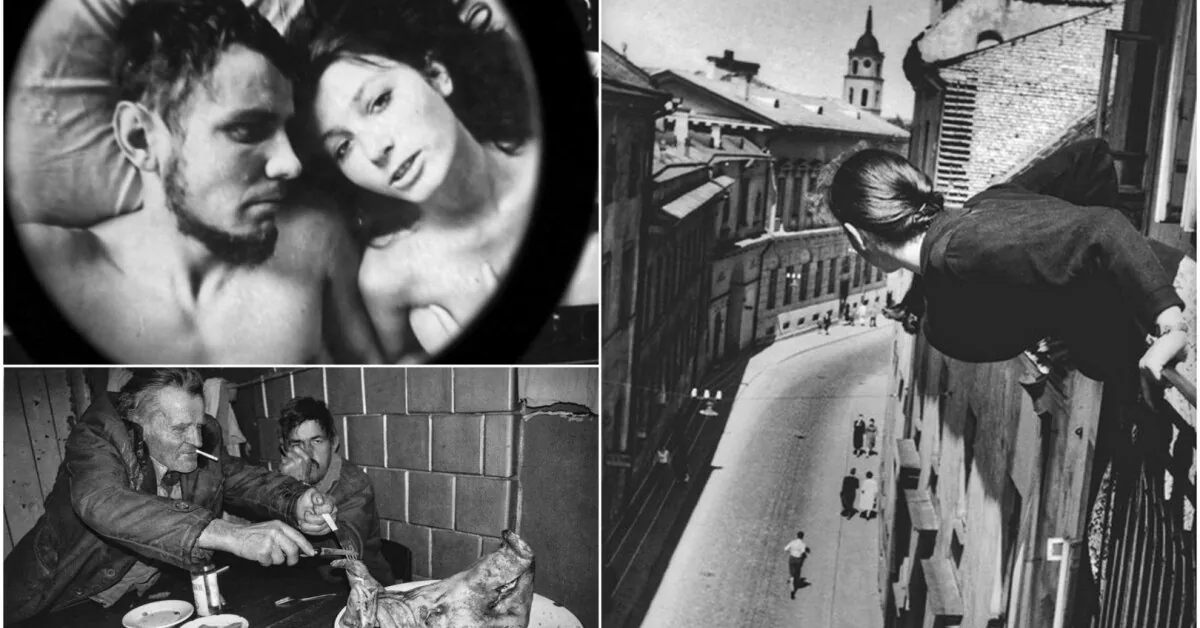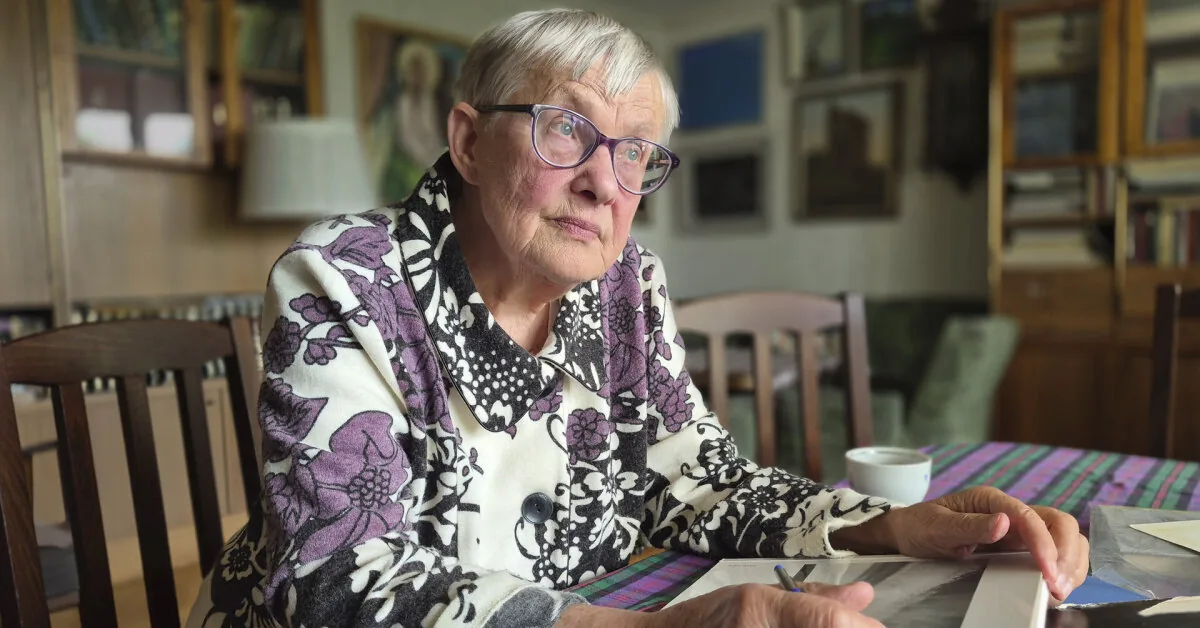
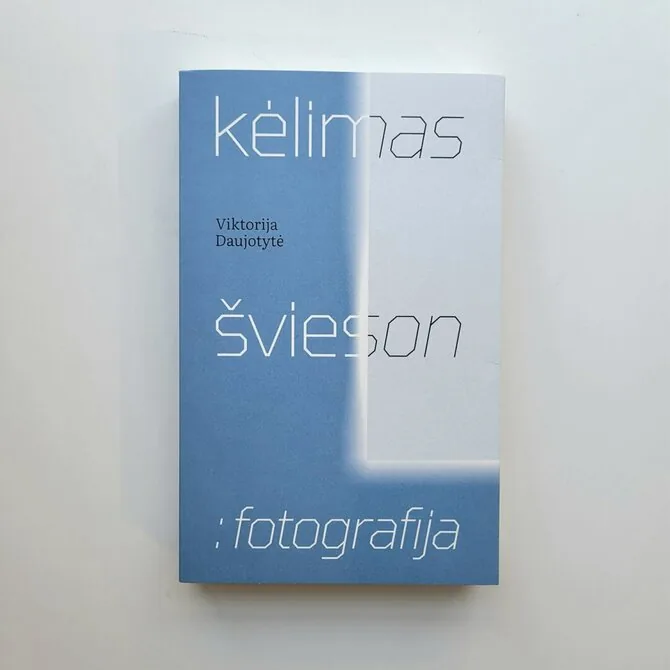
„Bringing to Light: Photography“, according to the author herself, is a philological study of photography, born from careful observation and reflection. At its center is the humanistic tradition of Lithuanian photography and its continuation today. It is no coincidence that the book often mentions masters such as Antanas Sutkus, Algimantas Kunčius, Romualdas Požerskis, Aleksandras Macijauskas, but also includes less discussed and relatively new names.
Read more Do you know at least 8 out of 10 films directed by Steven Spielberg?
V. Daujotytė presents a very distinctive view of the phenomenon of photography, looking, as she herself admits, not from the perspective of literature or photography, but from a point where both photography and literature converge. „Life is a simple miracle. The most amazing quality of this miracle is that it allows itself to be seen. The most important thing is to wait for the moment when that miracle flashes,“ V. Daujotytė writes in her book. This conversation is about the manifestations of that miracle in photography.
– Viktorija, for so many years you lived among literature books, especially poetry – you read, taught, wrote, analyzed… And now, unexpectedly, your book has appeared, centered on Lithuanian photography. Something similar happened a few decades ago with the philosopher Arvydas Šliogeris – having thought and written about philosophical ideas all his life, he eventually also turned to photography and even started taking photos himself. So why photography for you?
– I began to feel that my main activity – poetry – is just one branch of culture. Of course, it is much broader and deeper, as it stems from language. In general, everything human comes from language, because man is a speaking being.
However, I see that graphics, music, and photography also run alongside it. There are many commonalities between these things – in their beginnings, their development, and their internal structures. Eventually, you realize that all these branches come from one common trunk, from those essential questions – what is this life, what is man, what is this reality surrounding us? And – what is an image and a representation?
I wonder: perhaps the first image noticed by man was a tree reflected in water? And although today we live in a reality overflowing with images, I am still moved by the sight of a forest reflected in deep water. And that is magical. Going further and thinking about the problem of the image, it becomes obvious that today it is most reflected in photography.
Of course, this realization came to me quite late and became the final push to look deeper into the phenomenon of photography. Indeed, I started noticing photographs already in childhood. My mother and aunts – that generation of independence – had not only their songs or poems, but also photographs. I remember my own great astonishment in childhood, looking at a photograph of my five-year-old mother. It turns out that through a photograph you can see what was, meet your mother-as-a-child, see how much you have in common…
How else but through photographs can I see my father – a soldier of the Lithuanian army, a uhlan, wearing a handsome uniform. You look at that bright face and see how he himself rejoices and is proud of this moment. All this is a testament to life, a bright time before the terrible times that would soon befall this generation and our entire land…
Such is the effect of those old photographs: it seems that you are not looking at them, but the people immortalized in them are looking directly at you…
– I have noticed that quite a few of our poets are also photographers. Perhaps the most prominent and active now is Sigitas Parulskis, who not only publishes books illustrated with his photographs but has also released a photography album and organizes exhibitions, eagerly participating in art fairs with his works. Does this mean there are some commonalities between photography and poetry?
– It seems to me that what is common, first and foremost, is thinking and seeing. After all, much in S. Parulskis’ essay book „Naked Clothes“ comes from seeing – he is very observant, sees in detail, subtly, precisely. This means that a unique aesthetic of gaze lies in his nature. And after all, photography is primarily done with the eyes.
Apparently, Sigitas was strongly captivated by the technical side of photography, that concreteness, the iron of the cameras, the manual work of developing films and printing photos himself. According to his character, literature was probably already quite tiresome…
I would say that Sigitas’ current enthusiastic and firm approach to photography better suits his character and nature. It seems that now he feels more in his element. And it’s not so important whether he will stop writing altogether, or write less, but the newly discovered path will be a refuge and freedom for him.
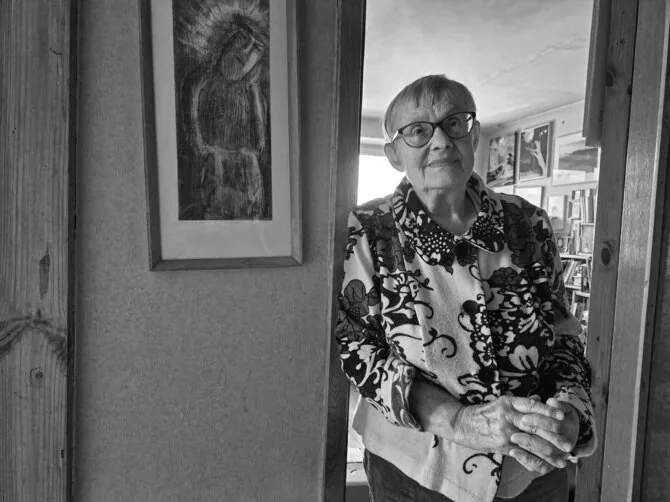
– And if we return to you: are there any differences between reading a poem and carefully observing a photograph? Or perhaps similar skills and tools are useful here?
– My language is the same whether writing about literature or photography. It is an attempt to think, understand, and articulate – from what, how, and what it is. I will say it quite riskily: I am a dependent of the Lithuanian language, a recipient of its aid: language supports and sustains me. Moreover, I also have a certain dependence on language. So I cannot, and do not want to, leave it.
This study of photography of mine should, first and foremost, be considered a philological study. Of course, this does not mean that I look at photography from the perspective of literature. No. I look from a point that is both beyond literature and beyond photography. It is a common point from which one thinks about this world and man. After all, even when I talk about literature, I don’t speak entirely literarily – life also participates here, not fitting solely into the problematic of literature.
In my book, I do not touch upon technical questions of photography; I am essentially interested in the problematics of the image. So these writings, this thinking about photography, arise from a careful, slow contemplation of the image, returning to it after some time, and new reflections. To look and to think – nothing more, and yet – so much…
When I talk about literature, I don’t speak entirely literarily – life also participates here, not fitting solely into the problematic of literature.
– Do you often fall silent before a photograph, so much so that no words, no interpretations are needed anymore?
– Not often. But falling silent before a poem or a painting is also quite rare. It is a rare and very precious moment in life. You cannot expect the world to consist solely of miracles…
So what remains for man – a careful gaze, reflection, posing questions, and an effort to find an answer, sometimes even imagining what image lies behind that representation. Of course, this is quite risky, so I stop myself and always try to return to the image.
And even when the photographer himself tries to describe the circumstances of the image’s creation, the specifics of the situation, I don’t listen very carefully, because it doesn’t seem that important to me. Now the image is destined to remain and live in this world. And what was beyond the image will remain important in the memory and experience of the participants of that specific situation. What concerns me first and foremost is the reality of the image.
– How would you define the essence of the phenomenon of photography?
– The essence of the phenomenon consists not of one thing, but at their intersection. First of all, photography testifies to this reality, and at the same time, the image can also function independently. For example, in documentary photography, a generalized image of reality can exist simultaneously, being very close to reality and significantly distant from it, characterized by very vivid features and transforming into a work of art. This is why there is no strict, insurmountable boundary between documentary and artistic photography. This can be determined by both the passage of time and the viewer’s gaze and interpretation.
For example, Romualdas Požerskis’ „Indulgences“. It seems to me that this theme captivated him so much that he did something he himself did not expect or plan. Perhaps at first he only wanted to capture what was happening, to make a reportage, as we would say now. But eventually, the photographer himself became not an observer, not a recorder, but was drawn into the element of indulgences, the tradition of old piety, the presence of people. Thus, he photographed while participating himself, being a part of it all. It seems to me that this is the main characteristic of a creator.
I highly value this cycle. And not only because R. Požerskis immortalized my places as well, but also because I myself participated, I saw such indulgences. In his works, the photographer not only captured people’s behavior, church tradition, attire, participants – not just people, but also horses, dogs – but also the very state of holiness, that which has no tangible form.
The Černiauskas brothers, photographers I highly value, have said that the phenomenon of photography is the ability to photograph what is invisible. It is like an aspiration, a task. Of course, it may never succeed, but just knowing that such a possibility exists is already a lot. And R. Požerskis has managed to do this in his indulgences.
I could say the same about Algimantas Kunčius’ cycle „Images of Distances“ – here too, what is photographed is neither near nor far, neither in a tree nor in the sky – nowhere. Yet it exists in these photographs. A miracle – nothing else… Like that photograph „The Road from Žemaičių Kalvarija to Šarnelė“. I have this photograph hanging in my room, so it is constantly before my eyes…
The past never passes completely, totally, leaving no trace, no hint. In every present there is a part of the past, as a certain beginning.
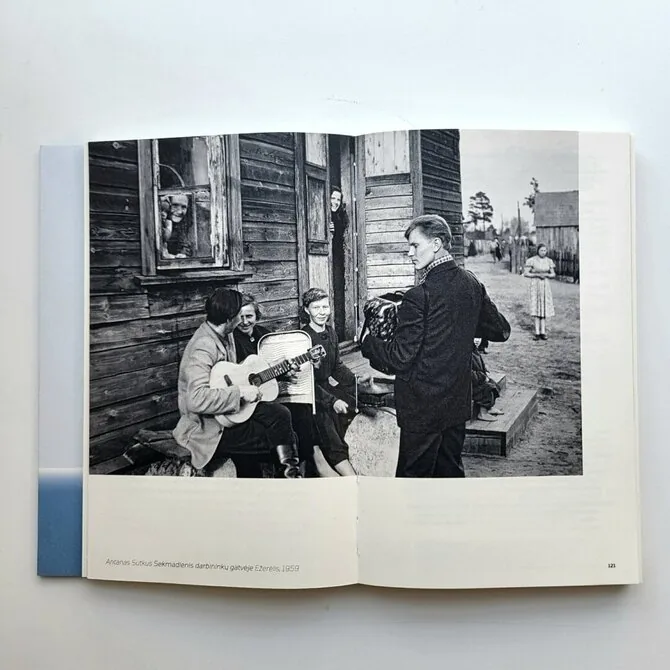
– The central axis of your book has become Lithuanian photography and its most famous names – Antanas Sutkus, Romualdas Požerskis, Algimantas Kunčius, Virgilijus Šonta, Arūnas Baltėnas, as well as middle-generation creators Tadas Kazakevičius and Artūras Morozovas. It is clear that you are an admirer of classical humanistic photography.
– Yes. And perhaps more so of that Lithuanian program, which in the late seventies and early eighties was put forward by our photographers as a way to gather, sustain, and seek human possibilities to endure even in the conditions and situations that existed during the Soviet era. I understand how and why this program worked then and how significant it was. But I also understand that everything changes, and with it – the understanding of humanity.
What most sustained me in thinking and writing about photography was the wonder that, according to Czesław Miłosz, nothing more is needed from life, it is enough that it exists. And honor for its continuation. So, for me, the Lithuanian humanistic tradition is about that honor and the continuity of life.
And this exists to this day – one only needs to look at Tadas Kazakevičius’ programmatic cycle „What Will No Longer Be“, by a completely different generation. It is interesting that this statement by the photographer also contains a contradiction – he claims that it will no longer be, but at the same time confirms that it still is.
The past never passes completely, totally, leaving no sign, no hint. In every present there is a part of the past, as a certain beginning. Be it a person walking, or sitting with hands folded in their small kitchen – all this still exists, and Arūnas Baltėnas feels, sees, and discovers it while traveling through Lithuanian villages in Dzūkija or Žemaitija. Everything still is, everything continues… This is precisely the tradition I would call quite Lithuanian.
There must also be a beautiful, ornate, orderly life. Because a beautiful life allows one to see a different one. Both belong to humanism.
Or A. Morozov’s photograph, with a boy holding a beetle. I recognize this image as one seen many times – both the child, and his concentrated gaze, and summer… Is this humanistic photography? Of course.
It is a careful observation of the manifestations of humanity in this time: from the young and beautiful, to the old and weary. It is interesting that photographers are more often drawn to weary life… But there must also be a beautiful, ornate, orderly life. Because a beautiful life allows one to see a different one. Both belong to humanism.
– However, let’s admit that many photographers remained unnamed, undiscussed in your book. For example, Rimaldas Vikšraitis with his „Homestead Laments“. Can it be said that, essentially, your focus is on idealistic, romantic, and sometimes even somewhat sentimental Lithuanian photography?
– I completely agree with you. By the way, in literature too, I am more drawn to such texts. Perhaps because I am not ashamed of sentimentality, sometimes I even defend it as a natural human emotion. I am not afraid of my sadness, longing, pity… These states are inherently close to me.
However, at the same time, I also deeply feel Žemaitė, and indeed some of her texts, especially autobiographical ones, could be juxtaposed with R. Vikšraitis’ photographs. For example, the story of a group of rebels cut down by Cossack swords. After the Muscovites retreated, village women flooded the field, stripping the young, mutilated rebels, quarreling among themselves over a mirror or better shoes… It is horrifying to read. And yet, we ourselves today shroud the uprising in a romantic veil, heroism, and do not see, do not want to see the harshness of life, primitive greed. But it truly exists…
I am not ashamed of sentimentality, sometimes I even defend it as a natural human emotion. I am not afraid of my sadness, longing, pity…
Well, as for „Homestead Laments“, I know that such photography exists, and if I tried, I could even find suitable words to describe it. But you know, in this cycle, I miss another perspective, at least a hint of it.
After all, Aleksandras Macijauskas’ „Lithuanian Markets“ is also a very earthy, rough, everyday cycle. Everyone here is immersed in ordinary daily life: counting money, buying, carrying, arguing, bargaining… And everywhere there are animals: cows, geese, horses, chickens – everything clatters, moos, bellows. But one serene face, one person who completely clashes with this environment, is enough. And that is a surprise, evoking wonder. Everything suddenly changes. In this sense, R. Vikšraitis is one-dimensional and perhaps somewhat predictable to me.
– Are there other interesting photographers who remained unnoticed because they seemingly fall outside the Lithuanian humanistic tradition?
– After preparing the book, I realized that I had overlooked Alfonsas Budvytis. Of course, he is an author of a slightly different kind, but his cycle „Silent Nature“, of which I had previously seen only individual works, and then saw much more, would have been perfectly suited for this study.
He seemed very close and familiar to me, reminding me of Algimantas Švėgžda’s graphics. Both of them, in their works, testify to the silent side of this world, which is composed of completely insignificant elements: a snail, a twig, an apple, a seed. No humanism, no image of the human world is reliable without this insignificant component.
– Today everyone who isn’t lazy takes photos, and we are simply overwhelmed with photographic images. What do you think will remain of the photographs of our time?
– I can’t imagine. But it’s obvious that these images disappear very quickly. Perhaps that’s natural: what is easily done is not valued, what is easily obtained becomes uninteresting. After all, in our daily lives, we ourselves are starting to move away from easily acquired things, a large abundance of clothes, food products, etc. It is becoming increasingly uncomfortable in this world overflowing with everything.
Therefore, it is becoming increasingly difficult for photographers to create. They have to reduce a lot, reject, and even refrain from photographing. But perhaps in the mind of a good photographer, these things work as if by themselves? How many professional photographers dare to photograph a blooming lilac bush or beautifully snow-covered fir trees? These images have been reproduced countless times, printed as postcards. All of this has already been seen and therefore seems devalued.
For us, amateur photographers, this is a golden age: we can photograph as we please, because it harms no one, bothers no one.
I remember A. Budvytis’ thought from his conversation with journalist Dalia Kutraitė. He says: when I see it, I photograph it. It seems he was talking about snow then… This means that it is not necessary to photograph what is beautiful, postcard-like; it is enough to notice it, feel it, remember it.
It’s similar in poetry: who, after Salomėja Nėris and Alfonsas Andriuškevičius, would undertake to write about lilacs? Risky, right? But that doesn’t mean it’s impossible…
For professional photographers, it might even be a bit harder, because they have to refrain from multiplying postcard-like images, constantly checking their states and intentions: what and why they are photographing. Well, for us, amateur photographers, this is a golden age: we can photograph as we please, because it harms no one, bothers no one.
– So you sometimes take photos yourself?
– Sometimes I can’t resist, especially when it’s beautiful… Truth be told, I photograph exclusively nature. Wild plants are my passion… This spring I photographed a slender, flower-filled wild apple tree, embraced by an old pine. I simply couldn’t pass by such beauty… Also – a blooming pear branch against a large blue sky.
What do I do with those photos? Nothing, absolutely nothing. I neither collect nor sort them. The most important thing, it seems, is the desire to have that image for myself.
What do I do with those photos? Nothing – I neither collect nor sort them. The most important thing, it seems, is the desire to have that image for myself. We have talked a lot about this with A. Šliogeris; he claimed to photograph out of greed. And when he returned from photographing in Dzūkija, he was happy to bring it back with him.
What is that it? A moment, a memory, an image, an impression? After all, an image contains not only a depiction of reality, but also a part of yourself – of the one who sees and thinks, feels and notices not only the grandest, but also the most insignificant magnitudes of this world.