Since the 1979 Islamic Revolution, which overthrew the US-backed Shah Mohammad Reza Pahlavi, the United States and other Western countries have imposed asset freezes and wide-ranging sanctions on Iran.
Read more Syrskyi: Russia concentrated more than 140,000 troops in three southern front directions
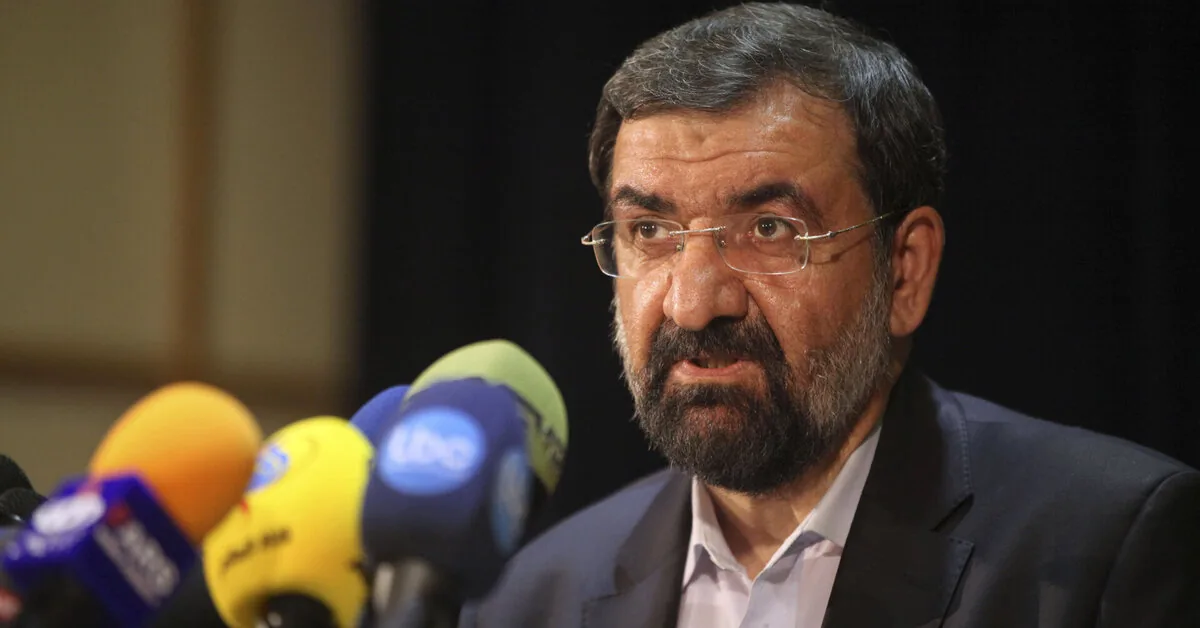
In an interview broadcast on Friday, Mohsen Rezaei, former commander of the Islamic Revolutionary Guard Corps and adviser to Iran’s supreme leader, said that negotiations were failing over the release of Iranian assets.
“If he (D. Trump) wants to reach an agreement with Iran, these $24 billion (20.4 billion euros) are a test of the trust Iran wants to have with D. Trump,” he told CNN, according to the channel’s English translation of his remarks.
“This is a test that the Americans must pass, and the way will be opened,” he said, adding that “this is our own money, not the Americans’.”
Although there are no official figures on the total amount of frozen Iranian assets, media reports estimate it to be between $100 billion and $123 billion (85 billion to 104 billion euros).
Iran links an agreement to end the war to several demands, including the release of frozen funds.
Read more The biggest World Championship of all time: numbers that will turn into stories
Fighting began on February 28, when the Israeli-backed United States attacked Iran, killing former supreme leader Ayatollah Ali Khamenei and several high-ranking military commanders.
These attacks led Iran to launch retaliatory missile and drone strikes against Israel and US allies in the Persian Gulf.
A ceasefire came into effect on April 8, but diplomatic efforts to permanently end the war have so far yielded no results.
Among its conditions, Iran also demanded a cessation of hostilities on all fronts, including Lebanon, where Tehran-backed Hezbollah fighters are battling Israel.
Despite the ceasefire, tensions between Tehran and Washington remain high.
M. Rezaei warned that Iran would “expand the war” beyond the Persian Gulf if the United States resumed hostilities, thus giving “the war another dimension.”
Read more After the decision to remove from the coalition – Žemaitaitis’s reaction: „We will be able to relax“
However, he added that “the probability of war is low.”