1248 players – that’s how many have been invited to the great summer spectacle.
Team coaches have already selected 26 footballers each, with whom they will embark on this special journey, although injuries may still slightly adjust the lists. Minor changes can still be made 24 hours before the start of the first match, but the outlines are already clear – the world football map is spread out on the table.
Read more After the decision to remove from the coalition – Žemaitaitis’s reaction: „We will be able to relax“
Everything fits on this map: young faces, veterans, legends. For some, this will be their first major appearance. For others – the last dance.
The club map of the 2026 championship will expand to an unprecedented scale. Footballers belonging to 449 clubs (from 71 countries) will play in the championships.
At the top of this geographical atlas is “Manchester City”. The English giant is sending as many as 19 players to the World Cup, who will defend the honor of 12 different national teams.
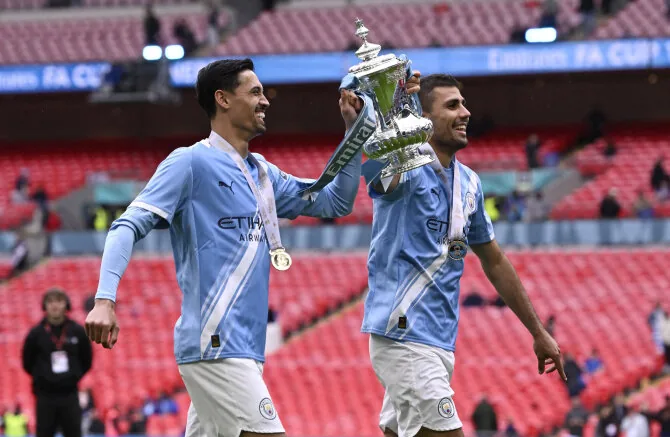
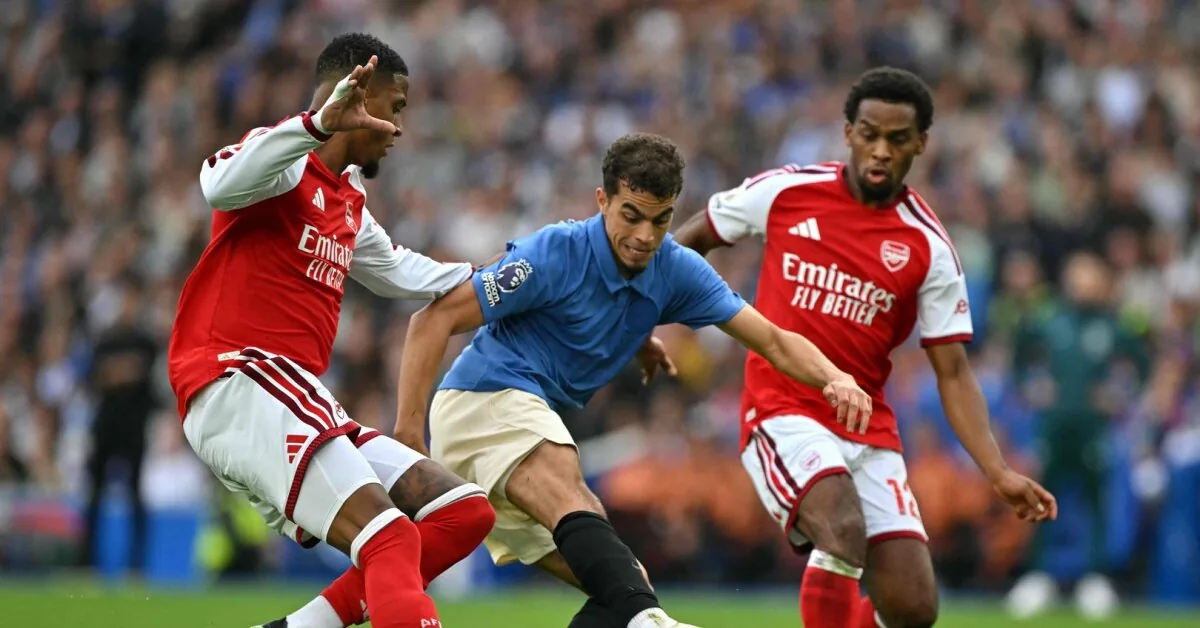
18 players were delegated by Munich “Bayern”, and next to them – the aristocracy of club football. “Paris Saint Germain” and London “Arsenal”, fresh names from the Champions League final, sent 16 players each to the tournament.
If we look not at clubs, but at leagues, the answer would be easily predictable.
The English “Premier” League – the richest, brightest, and most magical tournament – sent 154 players to the championship. This is 60 players more than its closest “pursuer” – the German “Bundesliga”.
In total, as many as 200 players come to the championship from various levels of the English football pyramid. This pyramid is so wide that it encompasses both the lights of elite stadiums and the muddy evenings of the sixth division. One such example is New Zealand representative Tommy Smith, who played for the English sixth-tier club “Braintree Town” last season.
The first five places in terms of player count are occupied by the five major European leagues – the so-called “big five”.
The name might be a bit cliché, but the numbers don’t contradict it. Behind them is the Saudi Arabian “Pro” League, which has heavily invested in stars and prestige since the last World Cup. It is sending 47 players to the tournament.
However, this number should be read carefully. As many as 25 of them are Saudi Arabian citizens. This means that Saudi Arabia, along with Qatar, has the largest proportion of players competing in their home country’s league.
The other side of the coin is even more telling. As many as five countries will play in the World Cup whose clubs will not delegate a single representative to the planetary championships. These are – Ivory Coast, Senegal, Curaçao, Cape Verde, and the Democratic Republic of Congo.
You can read more about the tournament’s geography here.
Every championship has its elders and its teenagers, its last tangos and first steps.
In 2026, the title of the oldest teams goes to Panama.
Panamanian footballers have played an average of 57.8 international matches, which is also the most solid indicator in the tournament.
Immediately behind the top five oldest teams is Argentina (29.1). The current world champions arrive at the tournament with the feeling that this might be the last great attempt for this generation.
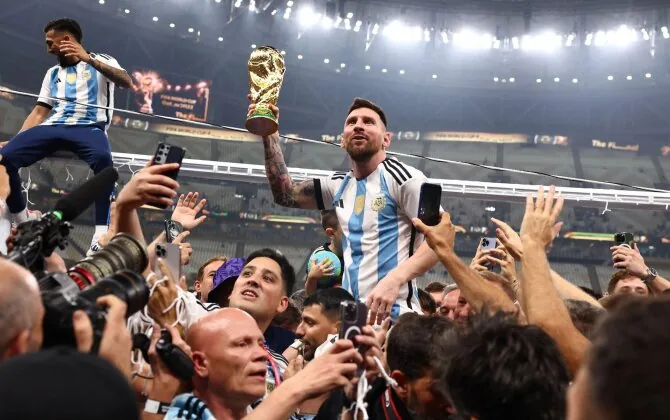
The story of Lionel Messi and his teammates is already written in golden letters, but footballers, like good writers, sometimes still want to add a final sentence. And very often, it’s not needed at all.
When Argentina triumphed at the World Cup in Qatar four years ago, their average age was 27.9 years.
| Team | Average age | |
|---|---|---|
| 1 | Panama | 30,4 |
| 2 | Colombia | 30,1 |
| 3 | Cape Verde | 29,6 |
| 4 | Brazil | 29,2 |
| 5 | Scotland | 29,2 |
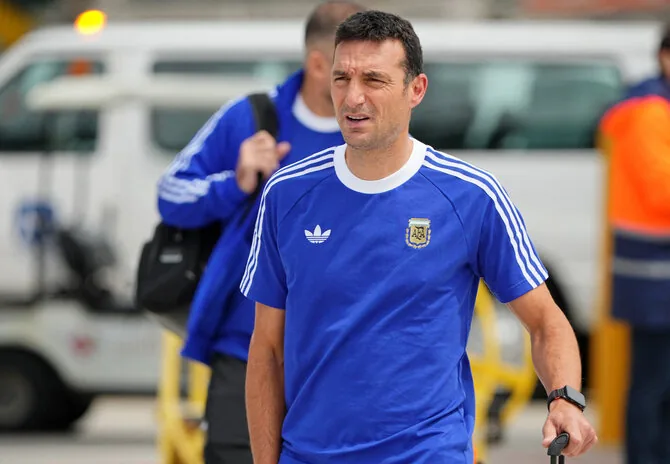
By the way, Lionel Scaloni, who coaches the Argentine national team, will be one of six Argentine coaches in this championship. No other country will have as many of its strategists in this tournament.
Argentinians will also lead Paraguay (Gustavo Alfaro), USA (Mauricio Pochettino), Ecuador (Sebastián Beccacece), Uruguay (Marcelo Bielsa), and Colombia (Néstor Lorenzo).
France will have five coaches in the championships, Spain four, and Germany and Italy (who will not play in the championship) three each.
At the other end of the age spectrum is Ivory Coast. The youngest team in the tournament, with an average age of 25.8 years. This is a team that will bring not memories, but hunger to the field. Such teams sometimes don’t know what they should be afraid of, and that’s precisely why they become dangerous.
| Team | Average age | |
|---|---|---|
| 1 | Ivory Coast | 25,8 |
| 2 | Ecuador | 26,1 |
| 3 | Morocco | 26,4 |
| 4 | Bosnia and Herzegovina | 26,4 |
| 5 | Tunisia | 26,6 |
On the level of personal stories, the championship will be like moving through a football time machine.
38-year-old Lionel Messi will be the 11th oldest player in this tournament.
Scottish goalkeeper Craig Gordon, if he appears on the field, could become the second oldest player in the history of World Cups.
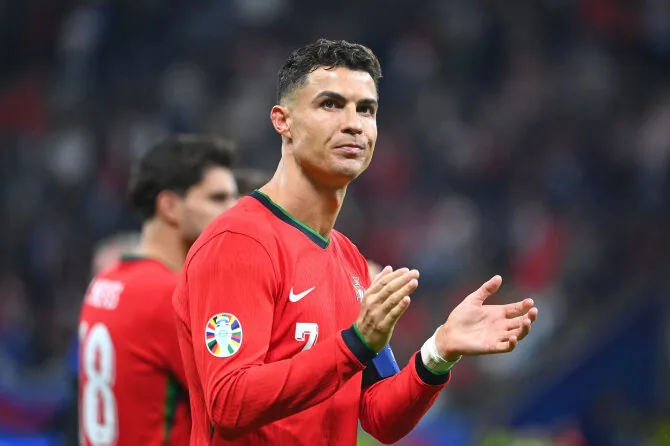
Cristiano Ronaldo is also preparing for another page of records.
He could become the second oldest outfield player in the history of World Cups, surpassed only by the legendary Cameroonian striker Roger Milla.
1 | Craigas Gordonas | Scotland | 43 |
2 | Cristiano Ronaldo | Portugal | 41 |
3 | Guillermo Ochoa | Mexico | 40 |
4 | Luka Modričius | Croatia | 40 |
5 | Edenas Džeko | Bosnia and Herzegovina | 40 |
6 | Manuelis Neueris | Germany | 40 |
7 | Vozinha | Cape Verde | 39 |
8 | Fernando Muslera | Uruguay | 39 |
9 | Yuto Nagatomo | Japan | 39 |
10 | Hernanas Galindezas | Ecuador | 39 |
C. Ronaldo brings the most international match experience to the World Cup – 226 matches.
L. Messi (198) and L. Modrić (196) are also approaching the historic 200-match mark.
But the World Cup is never just a museum of nostalgia. It always opens a window to those we didn’t know yesterday.
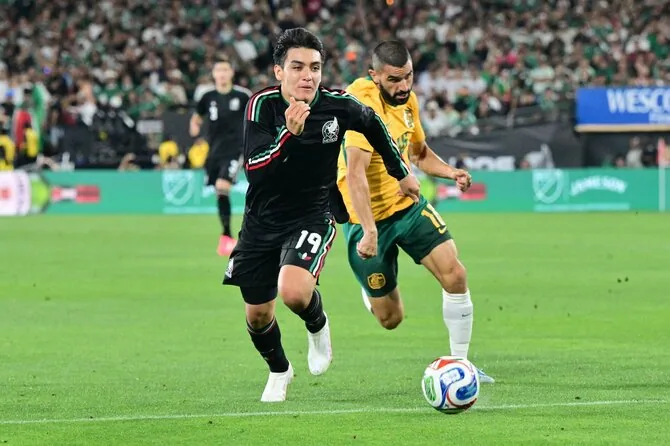
17-year-old Mexican Gilberto Mora will be the youngest and one of the freshest faces of the tournament.
| 1 | Gilberto Mora | Mexico | 17 |
| 2 | Hugo Sochůrekas | Czech Republic | 17 |
| 3 | Lennartas Karlas | Germany | 18 |
| 4 | Ibrahimas Mbaye | Senegal | 18 |
| 5 | Hamza Abdelkarimas | Egypt | 18 |
| 6 | Bara Ndiaye | Senegal | 18 |
| 7 | Mladenas Jurkas | Bosnia and Herzegovina | 18 |
| 8 | Ayyoubas Bouaddi | Morocco | 18 |
| 9 | Kerimas Alajbegovičius | Bosnia and Herzegovina | 18 |
| 10 | Rayanas Elloumi | Tunisia | 18 |
Even birthdays will have their own drama in this tournament. As many as 149 players will celebrate them during the championship, and three of them can dream of the perfect gift: Swiss Manuel Akanji, German Deniz Undav, and Ivory Coast representative Jean Michael Seri will blow out their birthday candles on July 19 – the day of the final.
In football, numbers sometimes lie, but the goal column – much less often.
If we evaluate the number of matches accumulated by footballers with goals scored, the most impressive statistics are brought to this tournament by the leader of the Norwegian national team and “Manchester City”, Erling Haaland.
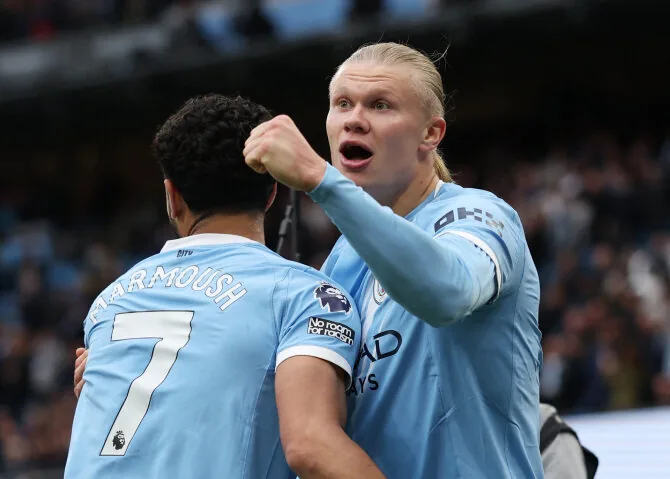
He is the only footballer who has scored more goals for his national team than he has played matches.
In 49 matches, he has scored 55 goals, or an average of 1.12 per match.
Cristiano Ronaldo, with 0.63 goals per match, is sixth in this honorable ranking.
Read more The sea turned red again: this tradition shocks the world
| Player | Team | Goals per match |
|---|---|---|
| Erlingas Haalandas | Norway | 1,12 (55/49) |
| Koki Ogawa | Japan | 0,73 (11/15) |
| Romelu Lukaku | Belgium | 0,72 (89/124) |
| Harry Kane’as | England | 0,7 (78/112) |
| Frantzdy Pierrot | Haiti | 0,67 (33/49) |