Do you also know what cobalt has in common with the mythical creatures called kobolds? And that geologists, while exploring the depths of the earth, discover ancient stories along with minerals?
Read more The powerful Blue Full Moon arrives: astrologer reveals what to expect for each sign
Kobolds – miners’ fear
For centuries, cobalt compounds have been used as pigments, giving a deep blue color. Ancient Persians, Egyptians, and Chinese dyed glass beads, ceramics, and glazes with cobalt. However, people long did not know that it was cobalt that gave this color. It was believed that the blue shade was caused by bismuth – one of the metals known at the time.
“It can be said that the official history of cobalt began in the medieval European mines. At that time, the true curse of German miners was kobolds,” say specialists from the Lithuanian Geological Survey.
In legends, these goblin-like creatures lived underground, played pranks, hid ores, caused collapses, and poisoned miners. When miners found a substance resembling silver ore but could not extract silver, they thought kobolds were at work.
The name of the chemical element cobalt also comes from these creatures. In the 17th century, German miners called such “bad” ore kobold ore. Later, scientists discovered that it contained a new chemical element and named it cobalt.
From cobalt blue to batteries
Today, cobalt is no longer a mystical substance. Its properties are well known, and its applications are very broad. Cobalt is an important component of some lithium-ion batteries used in phones, computers, electric scooters, and electric cars.
Superconductors containing cobalt are used in the aviation and space industries, turbine and jet engine manufacturing because they resist high temperatures and wear. Cobalt is also used as a catalyst in oil refining and the chemical industry.
Cobalt also has an artistic side. Cobalt oxide gives glass and ceramics a rich blue color. Famous painters loved cobalt blue – it was used by Vincent van Gogh, Pierre Auguste Renoir, and other artists.
Another important field is medicine. The radioactive cobalt-60 isotope is used to treat cancer and to sterilize medical equipment.
Cobalt is also essential for life: vitamin B12, important for nervous system function and blood formation, contains a cobalt atom in its molecule. People get this vitamin from animal products – eggs, fish, meat, dairy. Ruminant animals, such as cows, sheep, goats, or deer, get cobalt from plants, and bacteria in their stomachs help convert it into vitamin B12.
Read more Inga Ruginienė calls the investigation into contraband balloons unprecedented: this is not the end
When a valuable metal becomes pollution
However, old miners feared kobolds (now we would say – cobalt compounds) for a reason. Although cobalt is essential in small amounts, excessive amounts in the body can be harmful. The environmental impact is equally important.
“If cobalt-containing waste – batteries, accumulators, electronic devices – ends up in mixed municipal waste and later in improperly managed landfills or the environment, metals can enter the soil and water,” remind LGT specialists.
Heavy metals do not disappear like food waste or paper. They can persist in the environment for a long time, accumulate in the soil, enter plants, water, and living organisms.
What can we do?
The story of cobalt today has a very practical lesson. What began underground as a tale about kobolds now continues in our homes, drawers, and trash bins.
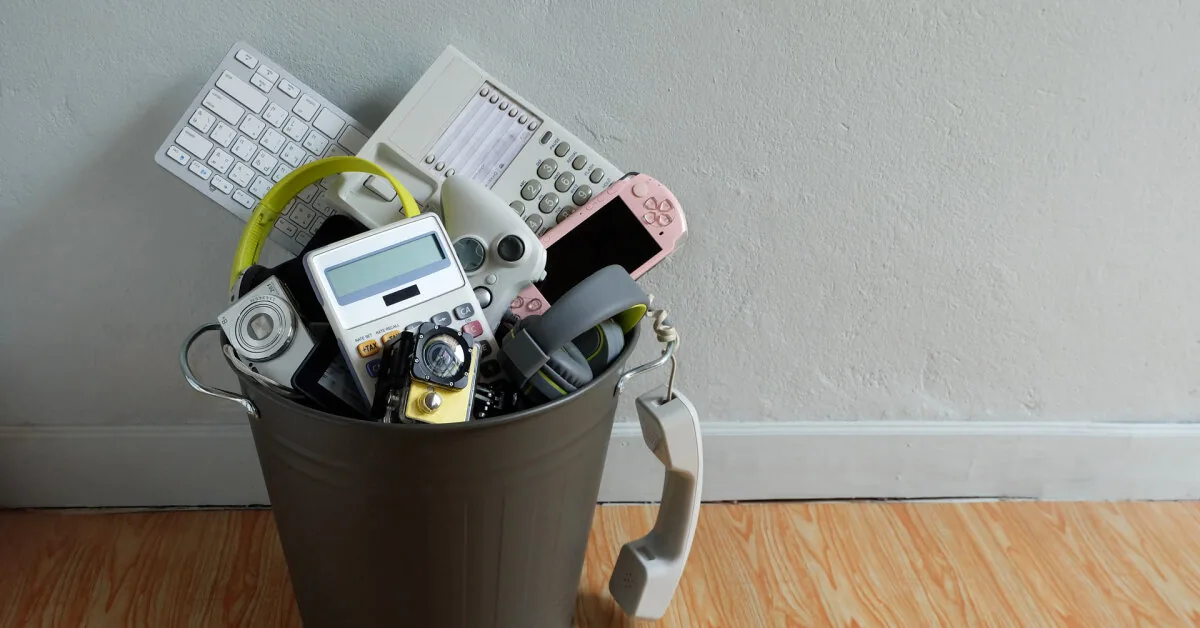
A broken phone or computer, a dead battery, or an electric scooter accumulator is not just ordinary trash. These are items containing valuable but environmentally sensitive materials.
To reduce the risk of pollution by cobalt and other heavy metals:
- let’s take all types of batteries to special battery collection points;
- bring old electronics to electronic waste collection points;
- hand over car and other vehicle batteries to specialized collection points;
- do not store old batteries, accumulators, and electronic waste in garages, storage rooms, or yards.
Cobalt reminds us that geology is not just about stones, ores, and minerals. It is also part of our daily lives. However, every metal extracted from the depths of the Earth has its price, so it is important that used metal does not become pollution.
We may not fear kobolds today, but irresponsibly discarded batteries can cause very real problems.
Project “Information on Environmental Pollution Prevention and Control”
Project partners: Environmental Protection Department, Environmental Protection Agency, Lithuanian Geological Survey
Read more After the drone strike, Romania expels the Russian consul general
Project implementer – Environmental Project Management Agency
Project funded by Cohesion Fund resources.