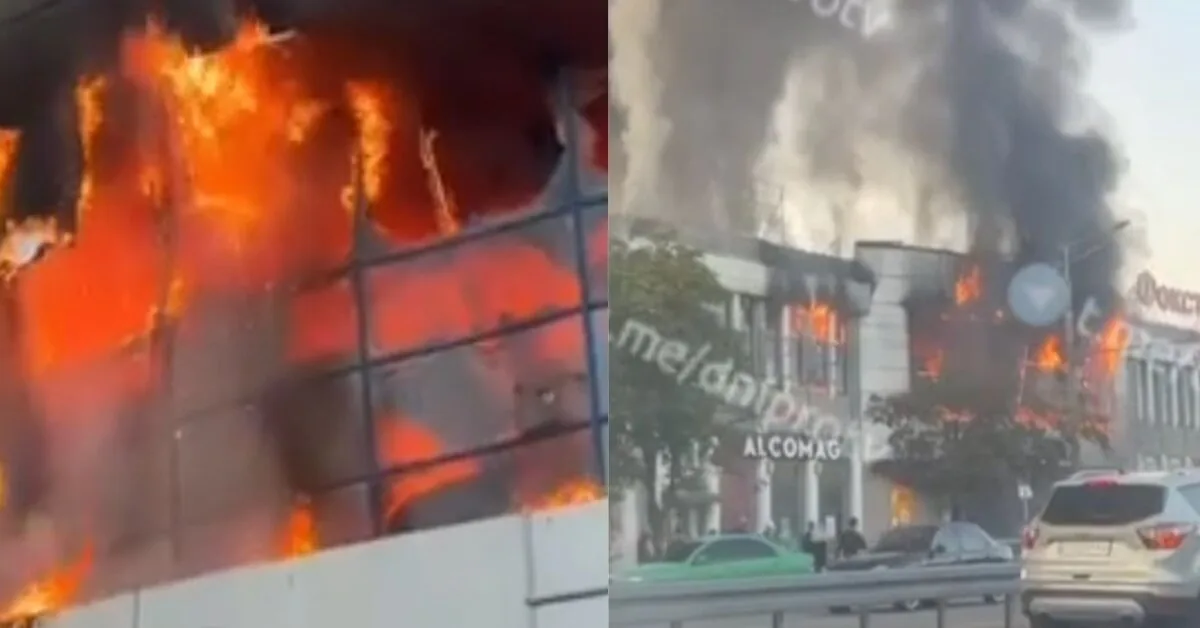
When Kai finally woke up in the hospital after a miraculous rescue, the survivor did not recognize his wife. Confused, he asked why she hadn’t given him the bed earlier.
Read more Unexpected news for fans of «Golden Mind»
Kabir was one of hundreds of hydroelectric plant workers believed to have been buried underground when a glacier collapsed over Nepal’s Trisuli Valley on August 26, unleashing a wall of mud and water that claimed more than 1,300 lives in Nepal and neighboring Tibet. Thousands more remain missing to this day.
K. Maharjan and mechanic-brigadier Sanjay Sah survived trapped in an air-filled chamber, said legislator Shri Ramas Neupane, an experienced tunnel engineer who helped lead the rescue operation.

Their rescue, despite all odds, gave hope to search teams that some of the 121 workers remained alive.
Reuters journalists reconstructed the survival story of these two men and the frantic efforts to save them, based on interviews with a dozen people including victims’ relatives, engineers, government officials, and rescuers, as well as examining documents, maps, and rescuers’ communications found on site.
“A corner at the edge of the tunnel”
On the day of the disaster, around 7:30 a.m. local time, K. Maharjan called his wife before his shift at the Upper Trisuli 3A hydroelectric construction site.
“I have to go into the tunnel,” he said. “There will be no signal there.”
About 60 minutes later, a glacier collapsed on Langtang Lirung mountain, about 40 km upstream, triggering such a powerful landslide that it formed a wall of water that swept away villages and flooded a network of 12 hydroelectric plants where nearly 900 workers were present at the time.
Meanwhile, officials at the electricity department in the capital Kathmandu were monitoring the project’s power resources on their screens. Suddenly, fields began to empty – stations disappeared one after another from control panels, toppling like dominoes.
Suraj Dahal, an engineer at Nepal Electricity Authority who led part of the rescue operation, admitted he was not immediately worried because “floods are common” in Nepal.
But soon they realized this time was different. The project manager of the Upper Trisuli 3A plant was abroad at the time, so it took officials another two minutes to contact about 40 workers believed to be inside. By then, the flood had already hit at least two hydroelectric projects upstream.
At 9:15 a.m., two minutes after K. Maharjan’s wife Hira Shova Maharjan unsuccessfully tried to reach her husband, officials gave an urgent order to the 3A plant: “Evacuate!”
S. Sahas, working in the plant’s control room, rushed from floor to floor trying to warn colleagues.
His coworkers outside the tunnels tried to escape the flood during evacuation but were not fast enough. Officials shared a video showing a group of about 30 workers swept away by a wave many times their height.
According to engineering drawings seen by Reuters, one of the four tunnel entrances stretched more than 180 meters to an underground electrical substation, but rescuers believed it was completely flooded and had no hope of finding survivors there. leaving no hope of finding living people.
Instead, Sh. R. Neupane focused on a shorter cable tunnel that rose upward and was less affected by floodwaters. That’s where K. Maharjan and S. Sahas were hiding. They were just 160 meters from the exit – “a corner at the edge of the tunnel,” as Maharjan later described the spot to his wife.

It turned into a prison
The air pocket that saved their lives during the flood became a prison over the next nine days. S. Sahas said he repeated Hindu mantras to stay brave. Meanwhile, K. Maharjan sipped the same muddy water they slept in to survive.
When his wife H. Sh. Maharjan first heard about the natural disaster that shook Nepal, she thought the plant would be a safe place. Still, she tried calling her husband, colleagues, anyone who might know something. But no one answered.
Photos shown to her later by officials showed the place where the entrance to the under-construction plant once stood. There was only a bare riverbank.
“He really can’t be alive,” the woman said then.
She admitted that deep inside she felt a terrible sense of hopelessness. But she had to stay strong in the eyes of her 10- and 15-year-old sons.
Read more Alekną mentioned Olympic champion negotiates with another Olympic champion
How they reached the survivors
Nepal’s rescue teams assumed that air pockets could have formed among the hydroelectric project debris, which could help workers survive.
Officials believed oxygen pockets scattered among the rubble could help some workers survive.
But they faced a problem. The debris was so waterlogged that there was no way to reach the site with heavy machinery.
“Anything you drop in there just sinks,” recalled Prakash Pokhrel, a geologist with Nepal’s disaster management service.


Serious excavation work began only three days after the disaster. All four tunnels were blocked – with mud, stones, wood, and debris. Some were buried under 15–30 meters of landslide layers. Rescuers began drilling, controlled blasting, and after building a stable platform, used heavy machinery to clear a path.
But the heavy rain worsened the situation. Prolonged rains filled the excavated shaft with water and debris, destroying hours of work in minutes.
According to Reuters, it took rescuers nearly six days just to reach the buried tunnel entrance.
The night before finding the survivors, rescuers faced a wall of mud and debris they could not move. Parliament member and engineer Sagar Dhakal’s team found a solution – they used a natural channel about 15 meters above the tunnel and released water through it at high pressure, which cleared 4–5 meters of the path in just a few minutes.
Then the rain started again, causing a partial collapse that briefly trapped several rescuers. The operation was stalled for hours until colleagues convinced them to return inside, and rescue teams reinforced the passage with sheet metal and wire baskets filled with stones.

In the early hours of the 10th day, S. Dahal received a call from a heavy machinery operator: rescuers heard something. Noise.
Gang Baral, who led the ground rescue team, said the sounds came as they began drilling the tunnel. They kept stopping their equipment to listen.
“We shouted: ‘Where are you?’ ‘Are you there?’” he said. “Sometimes it seemed like there was a living person trying to communicate with us.”
Although they still didn’t understand the words, rescuers estimated the source was just 15–20 meters away. By 7 a.m., the military managed to break a small hole. From inside came one word: “hunuhuncha,” which means “we are here.”

“Mom, Dad is back!”
When rescuers finally pulled the survivors from the tunnel, neither man could stand. S. Sahas, whose face was blackened with mud, had to be carried on the back of one of the rescuers. Meanwhile, K. Maharjan, who suffered more serious injuries, was carried on a stretcher.
“Mom, Dad is back!” his sons shouted when they heard the news.
S. Dhakal, who led the operation outside, cried when both men emerged: “I couldn’t hold back the tears.”
K. Maharjan had to undergo surgery. The wound on his leg was deep and infected. When his wife entered, he did not recognize her.
“Where am I?” he asked.
She admitted that at that moment she was just happy he was alive: “He was given another life.”
The next day, a Chinese citizen, Lu Haitao, was found in a tunnel of another Upper Trisuli-1 hydroelectric project.