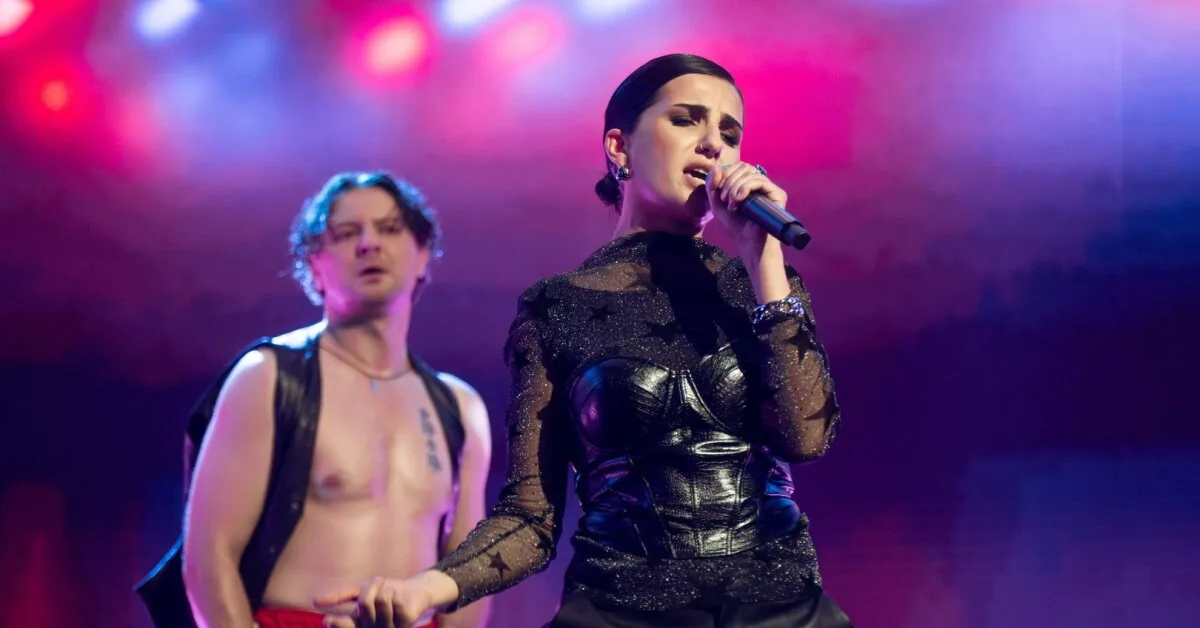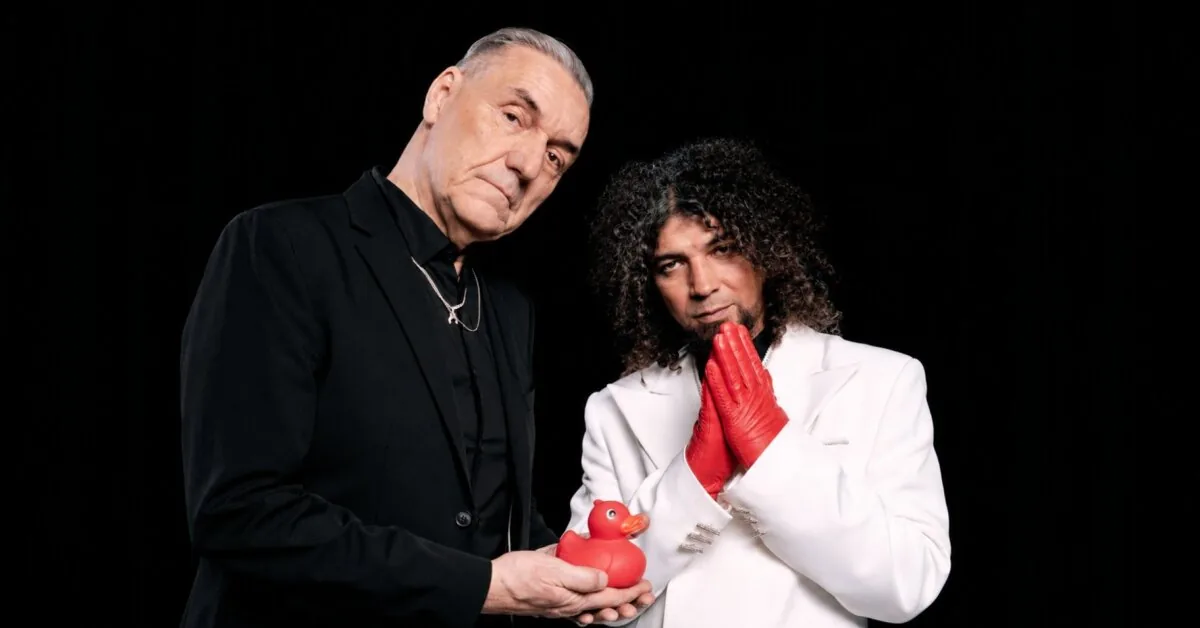
Born on June 4th at the Career Days hackathon of the Lithuanian Academy of Music and Theatre, the performance “Exposition: IV” will announce the start of the 32nd Kristupas Festival. The improvisation program created by young performers, which listeners and viewers will be able to see and hear in the former radio factory space – “gallery 1986”, particularly reflects this year’s festival theme “Algorithms”. The festival organizers state that the most important creative code lies not in artificial intelligence, but in human imagination, experiences, and emotions.
Read more Do you fear colonoscopy? A new alternative for colorectal cancer screening in the USA
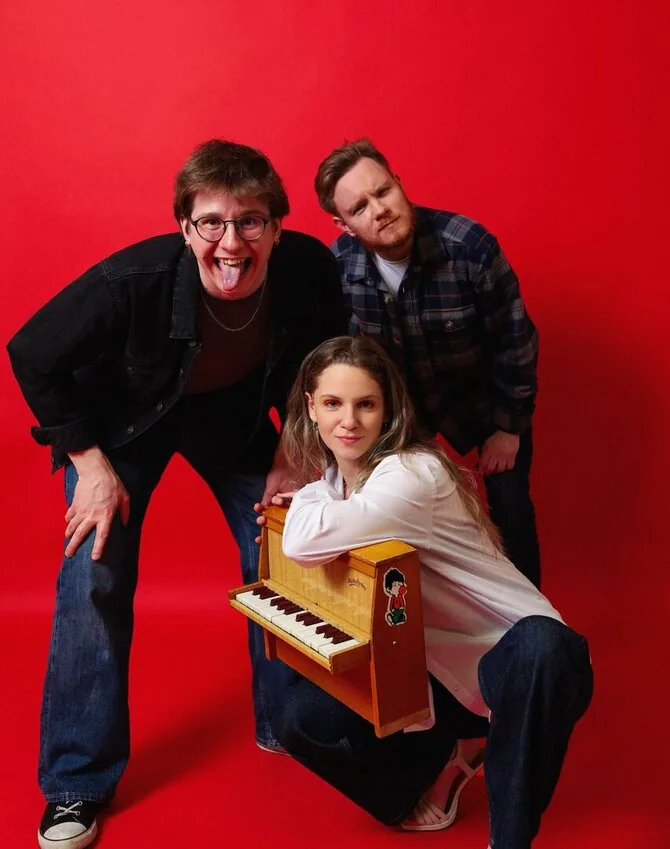
A little over a year ago, young creators and performers – P. Bagotyriūtė, A. Zalizko, N. Kiriuchinas accepted the Kristupas Festival challenge to rejuvenate the festival audience. The trio is convinced that the program “Exposition: IV” is just the first step they are taking towards collaboration with various festivals and music institutions.
“We stuck to the original idea of the event – to combine electronic dance music with acoustic instruments. It is like interpreting the spirit of boiler room club culture in our style. This is how the improvisational music event ‘Kristupas boiler room’ was born, which later changed its name and became ‘Exposition: IV’. We hope that in the future it could become an annual concert series,” says P. Bagotyriūtė about the project’s beginning.
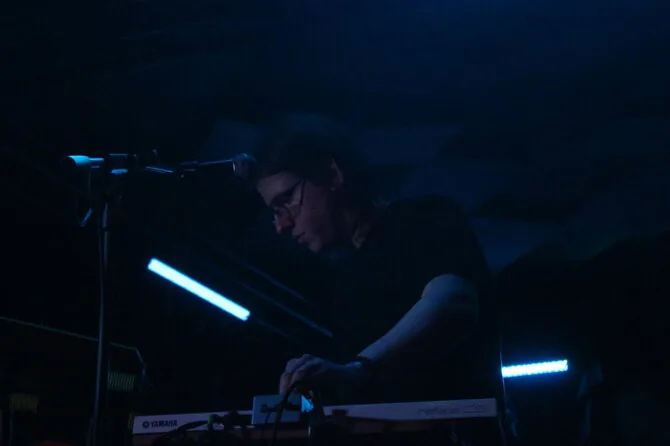
“Since we are already in the context of improvisational music, we respond to the conditions of the context. When we were given the task to create an event for the Kristupas Festival, we had the idea to include our beloved music directions – there should definitely be more major events dedicated to the synthesis of improvisational and electronic music. Usually, representatives of a different context appear in the club environment, and for us academics (all three of us studied at the Lithuanian Academy of Music and Theatre), it was interesting to reconceptualize club music, present it differently, play with its language, thus expressing our own visions of contemporary music,” says composer N. Kiriuchinas, who explores the possibilities of live electronic music.
The performers say that “Exposition: IV” connects two musical poles – electronic and acoustic music. The axis is improvisation – a certain music creation aesthetic, style. “We considered what name to choose for our program – there were ‘Delta’ and ‘Confluence’, but when we started thinking about the space and realized we would perform in a gallery, there was no doubt. We will hold four performances. Gediminas Stepanavičius’s performance will feature live electronic music and double bass, Paulius Večerka – LIVE electronics/voice/self-made instruments, our trio Bagotyriūtė/Zalizko/Kiriuchinas and Marija Paškevičiūtė’s DJ set,” presents the program P. Bagotyriūtė.
Although the project participants are friends, this is their first time performing together on the music scene. They say that the feeling of uncertainty is the greatest driver of creativity.
“The creative process is incredibly pleasant, inspiring, and charging with new ideas,” admits one of the most creative pianists and improvisers of the young Lithuanian generation, boldly called an interpreter of contemporary and experimental music, P. Bagotyriūtė.
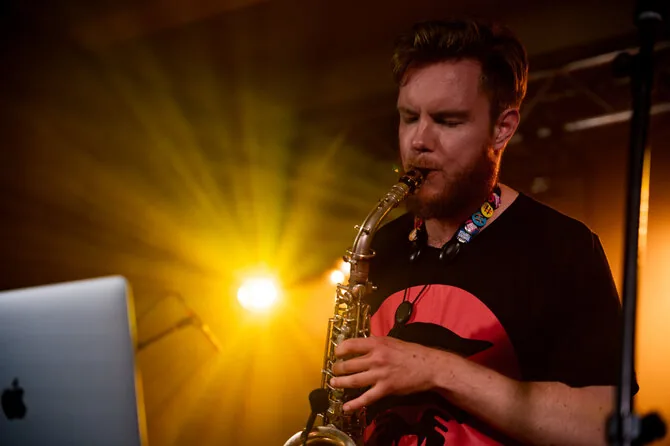
The spirit of community and democracy in rehearsals is also emphasized by music producer and saxophonist A. Zalizko, adding that the performance also becomes a kind of experiment: “None of us has played with such a lineup and instruments, and I have never heard anyone play like this. It is not easy to explore such uncharted waters, but the intrigue of what will come out of it, what other sounds we can produce, where we can use them, and to whom to show them is incredibly interesting.”
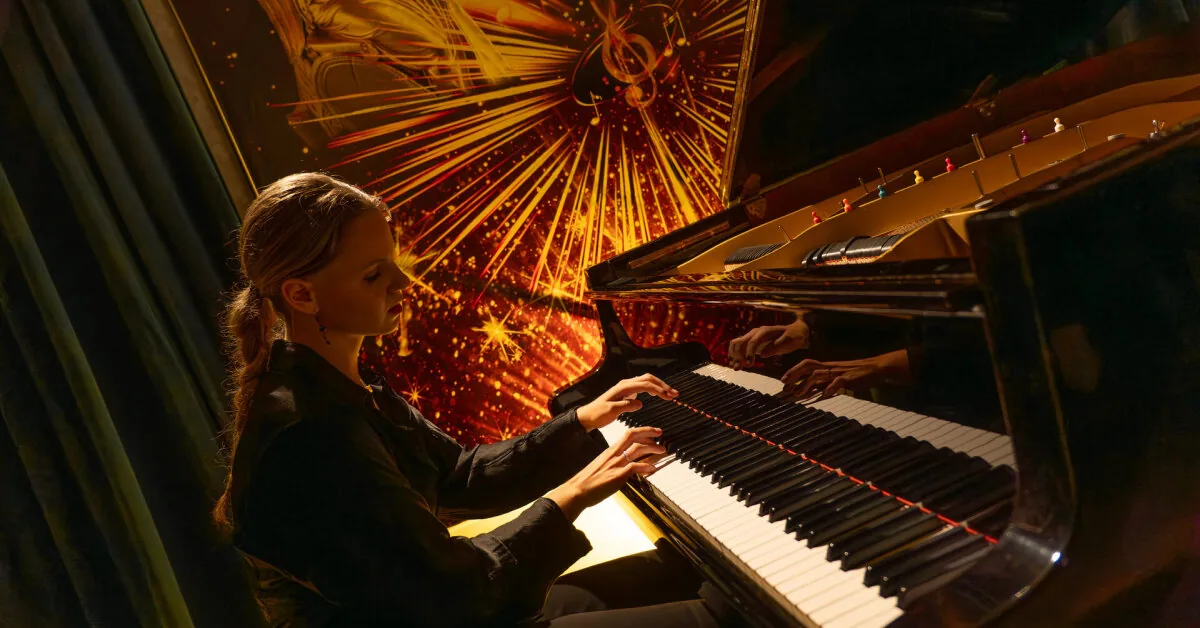
The friends created a project in which acoustic instruments will create electronic music. One of the most important highlights of the evening will be the prepared piano – an instrument whose sound is specially modified with various objects, changing the timbre almost unrecognizably.
Read more Ukraine: Turkish ship sailing from Odessa attacked by Russian drone strike
P. Bagotyriūtė says that the prepared piano has accompanied her for several years: “Sound modification is my specialty because I work with the instrument’s sound. A concertgoer does not know what to expect or how the music will sound. Preparation is a specific way of preparing the instrument: using various objects, the usual sound of the instrument is modified unrecognizably.
There are many ways to modify sound, but in my work, I mostly use magnets – I place them on the strings. This is the safest way to change the usual piano sound. Magnets of different sizes and strengths modify the sound differently – some imitate church bells, others give the sound a crooked, dirty intonation. Magnets make the piano sound like an electronic instrument. In this project, the piano will play the role of a rhythmic instrument, and in the overall musical context, it will not be easy to recognize where the electronics sound and where the prepared piano does.”
Equally important is the gallery space where the event will take place. The performers perceive it both as a concert venue and as an active participant in the musical event.
“We are interested in integrating the hall’s acoustics and energy into the performance as if it were another performer or instrument, diving into these ideas, searching for a magical musical moment,” says N. Kiriuchinas, admitting that the final result is always born only on stage, during the performance.
The idea of the performance “Exposition: IV” is to connect different audiences, to show that experimental music does not belong to a narrow circle of listeners.
“We would like listeners of our age and older to come. For people who listen to acoustic music, we want to show techno culture, and for those who like dance music – the improvisational, experimental side of music performance,” says A. Zalizko.
The pianist P. Bagotyriūtė agrees: “We can predict how the piece will develop, but we do not know the final result. Each of our sessions playing together starts spontaneously, from the moment and place where we are. It reflects what we hear and how we react to each other. And that is truly improvisation.”
The performance “Exposition: IV” at the Kristupas Festival – on June 4th, in Vilnius, at “gallery 1986”. The festival will take place from June 4 – to August 27 in Vilnius Bernardine Park, A. Mickevičius Library courtyard, St. Casimir’s Church. More information can be found at www.kristupofestivalis.lt. The festival is funded by the Lithuanian Council for Culture, Vilnius City Municipality, Kazickas Family Foundation.
Read more Jūratė Zailskienė: some child benefits increase from June