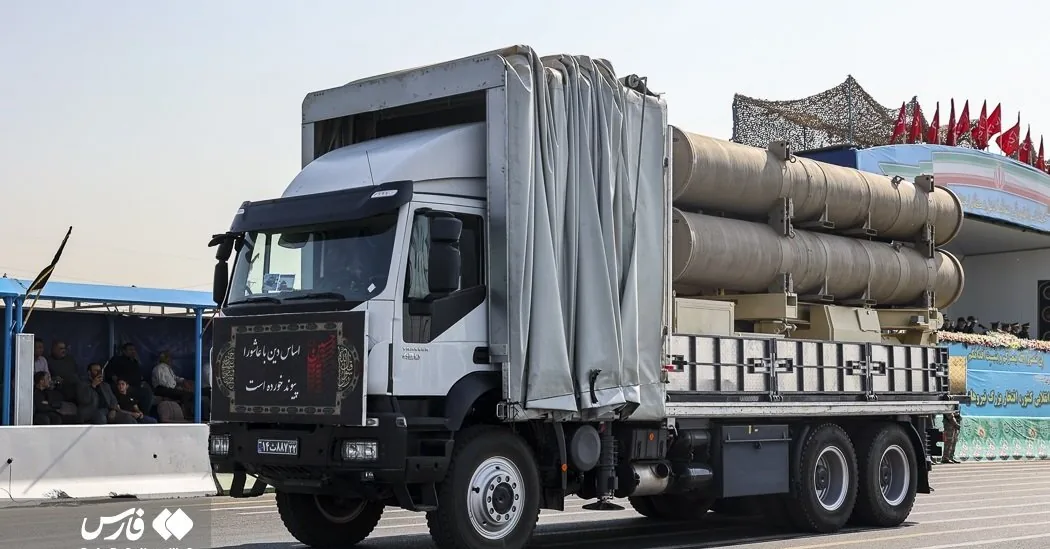
FT calls it one of the most significant known transfers of strategic military technology from Russia to Iran.
Read more Andrius Vyšniauskas. Germany before the political earthquake: will the far right come to power?
The secret program, codenamed C430L, began implementation in 2023. Its main goal is to help Iran develop a direct-flow jet engine that allows a cruise missile to fly at speeds several times the speed of sound. According to experts interviewed by FT, this technology is almost certainly intended for anti-ship cruise missiles and missiles designed for strikes against ground targets.
The program was organized by the Russian state company Rosoboronexport, which coordinated it with NPO Mashinostroyeniya – one of Russia’s main missile weapon developers. The contract for the C430L program with Iran’s Ministry of Defense and Armed Forces Logistics was officially signed in November 2023. Even before that, Rosoboronexport employees and key NPO engineers visited Iran several times.
Among the specialists involved in the program, FT mentions then-deputy head of NPO’s machine-building division Aleksandr Dergachyov, the chief designer of naval base missiles and cruise missile systems. Aleksandr Chebakov, head of NPO’s jet engine design department, also traveled to Tehran three times in 2023. Russian patents examined by FT show that A. Chebakov specializes in supersonic direct-flow engines for cruise missiles.
During the third trip in July 2023, Vladislav Kuzmichev, head of Rosoboronexport’s defense technologies and space department, joined the Russian engineers. Another NPO specialist, Yuriy Prokhorchuk, who leads the aerodynamics and ballistics department, worked on high-speed missile systems and was included in a delegation proposed to be sent to Iran in 2025. He is listed as the inventor of a direct-flow hypersonic cruise missile designed to destroy ships and ground targets in one of the patents.
By 2025, NPO Mashinostroyeniya had received a large amount of Iranian technical documentation on the direct-flow engine. Correspondence shows that Russia not only transferred documentation to Iran. Russian engineers analyzed flight test data conducted by Iran and sent a detailed list of questions about the system’s operation to Tehran.
The Kremlin, Rosoboronexport, NPO, and Iranian authorities did not respond to FT’s questions about the program.
The program continued even after the war began in Iran
The program continued after the US and Israel war against Iran began in 2026. Russia prepared technical reports for Tehran, and in June the countries were still discussing elements of the next C430L phase. FT was unable to determine whether this phase of the program started.
Iran has already produced and tested its direct-flow engine under flight conditions. However, there is no evidence that the hypersonic cruise missile developed with Russian assistance has been integrated into the arsenal.
Why this matters
“This is about the transfer of highly strategically sensitive military technology from Russia, which the Iranians have sought to obtain for decades,” British organization Conflict Armament Research senior analyst Fabian Hinz told FT.
Former CIA analyst on Iran issues Jim Lamson, now working at the James Martin Center for Nonproliferation Studies, believes that successful completion of development will give Iran “a qualitatively new strategic weapons system” capable of threatening US Navy ships.
Read more Hong Kong activist accused of collusion with foreign forces pleads guilty