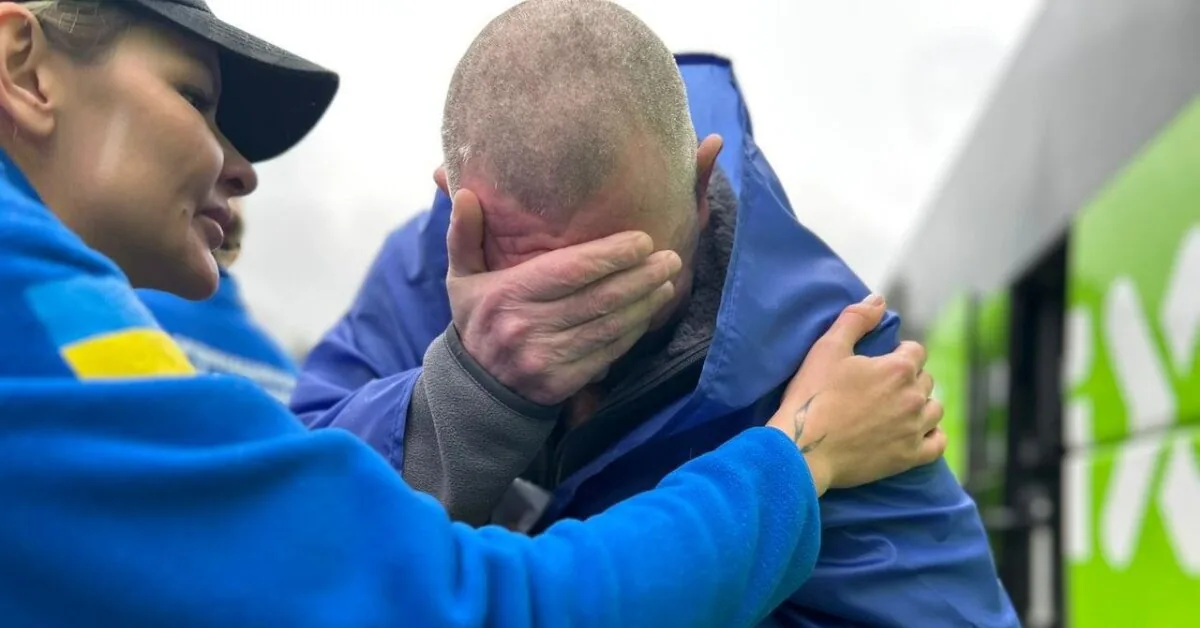
Russia rejected the accusations made at an informal United Nations (UN) Security Council meeting. Maria Zabolotskaya, Deputy Permanent Representative of Russia to the UN, called it a “disinformation campaign” and claimed that Russian prisoners of war in Ukraine allegedly suffer “torture, humiliation, and moral and physical abuse.”
Read more Operational searches in the river unexpectedly reminded of the woman who disappeared last spring
Juan Alberto Leyva Garcia, still actively serving in the Ukrainian army, said that during 1,183 days in captivity, Russian soldiers tortured him in every possible way, reports “TVP World”.
Methods of torture
“Yes… I was tortured,” he told journalists after the UN meeting. “Everything you can imagine – anything that can harm a person, humiliate them, anything anyone would do unwillingly. Everything that comes to mind: not only verbal, physical violence, daily beatings, electric shocks, exhaustion from overly intense exercises in severe cold, at subzero temperatures… sexual violence. Everything that can be used against a person to break them psychologically. All of this was applied to me and most of my friends.”
The man said he was lucky to survive, but two of his friends were killed in prisons in the Donetsk region. Prisoners of war were held in “overcrowded barracks without proper conditions,” where “almost all prisoners of war suffered from dysentery,” and many were starving, he said at the UN meeting.
The Ukrainian, whose father is Cuban, said that guards especially persecuted him because of his Latin name – accusing him of being a “mercenary and an American spy.”
Caught trying to visit a sick father
Crimean Tatar activist Leniya Umerova, released in 2024 during prisoner of war exchanges, said she was detained when trying to visit her seriously ill father in Crimea.
She recounted being transferred through “seven detention places” – what she called a “carousel of repression” – and accused Russia of torturing Ukrainian citizens.
Oleh Khushyn, a representative of the Ukrainian government’s Prisoner of War Coordination Headquarters, said that Ukrainian prisoners of war were “killed and tortured” in detention facilities.
He stated that Kyiv identified “more than 300 detention sites” in Russia and occupied Ukrainian territory, and although more than 9,000 Ukrainians were returned in exchanges, “thousands” remain in Russian captivity.
Ukraine’s acting chargé d’affaires Volodymyr Pavlichenko called for strengthening international pressure and ensuring accountability for Russia’s treatment of prisoners of war.
Widespread and systematic torture
Claudia Fuentes Julio, Deputy UN High Commissioner for Human Rights, said UN monitoring shows that “widespread and systematic torture and ill-treatment of Ukrainian prisoners of war and civilian detainees by Russian authorities continues” – including sexual violence.
Since February 2022, the UN High Commissioner for Human Rights office has recorded 129 executions of Ukrainian prisoners of war at the very beginning of captivity and 48 deaths in custody due to torture, lack of medical care, or other inhumane detention conditions, she said.
She said more than 95% of interviewed Ukrainian prisoners of war reported experiencing torture or ill-treatment.
Resorted to sexual violence
According to her, more than half also reported sexual violence, including “rape, gang rape, naked beatings, blows to the genitals, electric shocks to the genitals and nipple area, and humiliating sexual behavior.”
She said the UN received “consistent testimonies about severe beatings with objects such as sticks, heavy belts, and wood, electric shocks, dog attacks, staged executions, and other forms of torture.”
Claudia Fuentes Julio said the UN High Commissioner for Human Rights office also documented torture and ill-treatment of Russian and third-country prisoners of war held in Ukraine, but their scale is essentially different.
She stated that about half of the interviewed Russian and third-country prisoners reported abuse during the initial stages of captivity.
Read more Vilnius Municipality established an award for foreigners who have contributed to the city