- It became clear why Trump refused to transfer “Patriot” technology to Ukraine
- Warning signals to the Kremlin from allies
- British ambassador mocked Russia: even snails move faster
- These are ticking bombs: Russia devised a revenge plan for Ukraine
All news about Russia’s invasion of Ukraine can be found HERE.
It became clear why Trump refused to transfer “Patriot” technology to Ukraine
10:51
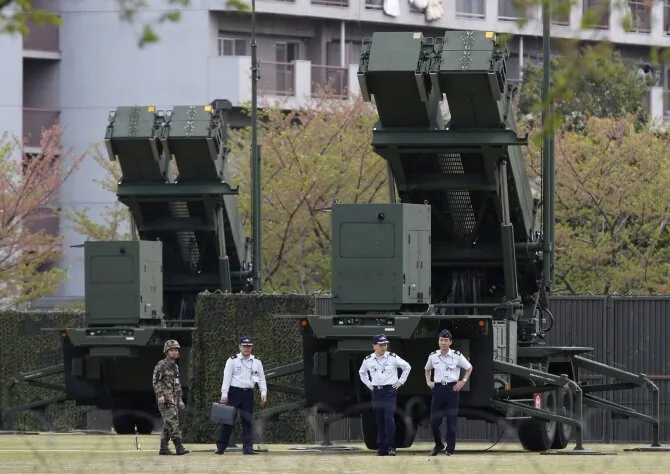
US President Donald Trump refused to allow Ukraine to produce “Patriot” missiles, fearing that highly sensitive technology could fall into Russian hands. This is reported by the British daily “The Telegraph”.
Read more Millions of Britons worried about holidays: here is what scares them in popular European countries
Previously, the American leader presented the secret transfer of the most modern American missile blueprints to Kyiv as a fairly simple matter.
“We will give you a license to produce ‘Patriot’,” Trump was quoted as saying to Ukrainian President Volodymyr Zelensky at the NATO summit in Ankara (Turkey) in July in a corridor conversation.
Trump then claimed that Ukrainian factories would be able to start producing their own missiles “quite quickly”.
At least that’s what he thought, emphasizes “The Telegraph”.
However, since then he has withdrawn his promise. Recently, he stated that “it is difficult to transfer such technology… and, you know, there are cases when you transfer technology, and those people later may turn against you”.
Fears that secret information will end up in Moscow if transferred to Ukraine
According to the publication, his change of position was caused by increasingly heated discussions about whether it is worth transferring technologies that, as aides and experts fear, could end up in Moscow’s hands.
At the center of Kyiv’s desire to obtain “Patriot” missiles is a radar produced in Alabama by Boeing. This technology is so advanced that Washington restricts its export even to its closest allies, writes “The Telegraph”.
The missile’s “eyes and ears”
The radar, known as the active “PAC-3 Ka-Band” range radar homing head (PAC-3 Ka-Band Active Radar Seeker), is the interceptor missile’s “eyes and ears”. It determines the target’s location in the last seconds of flight and guides the interceptor missile for a direct collision with it.
The article emphasizes that refusal to provide Ukraine access to this technology could become a matter of its survival.
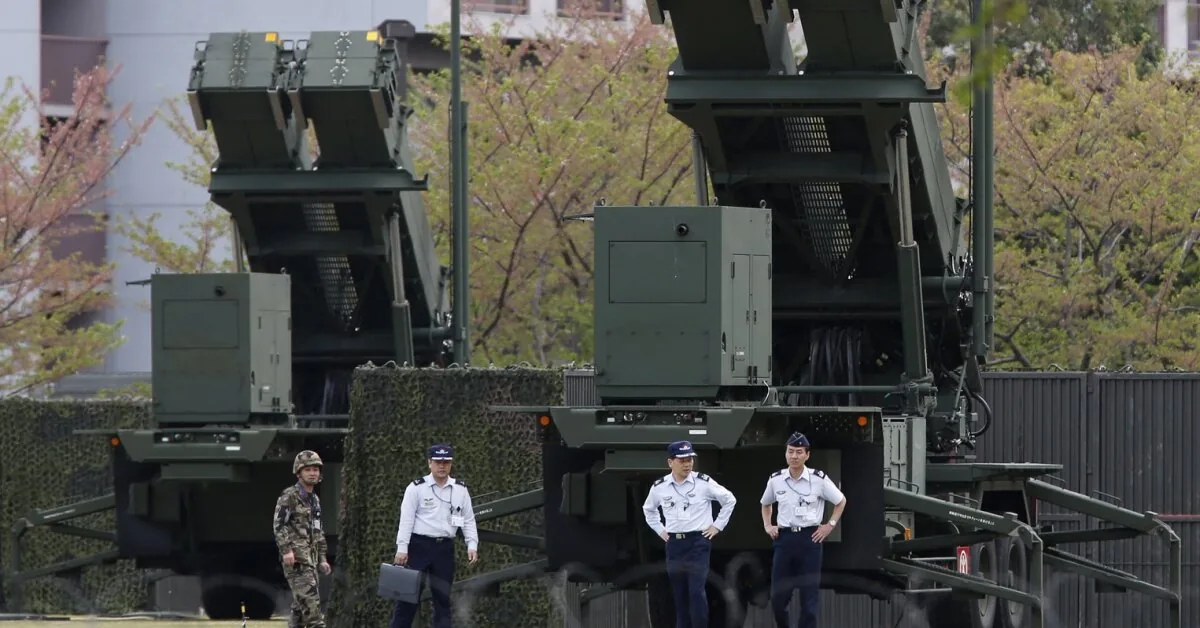
The US carefully controls the technical blueprints required for “Patriot” production and rarely allows manufacturing outside its borders. Germany and Japan are the only countries licensed to produce these missiles themselves. However, Washington did not allow Japan to produce the “PAC-3 Ka-Band” radar.
“The Telegraph” also notes that it took three years for the Japanese military to successfully test the PAC-3 missile. Analysts believe Ukraine may face similar timelines.
What America should transfer
Allowing Ukraine to produce its own missiles means transferring not only equipment but also blueprints, software, and specialized knowledge.
A high-ranking source in the UK government, well acquainted with the US decision-making process, indicated that these obstacles are the main reasons for the delay.
The United States would also need to identify every Ukrainian factory, every employee, and subcontractor who would have access to this technology.
And most importantly – they would need guarantees that these secrets will not be stolen or passed to the Russians, the newspaper emphasizes.
Additionally, a source close to the US president reported that the administration is aware of cases where weapons transferred to Ukraine by allies ended up on the European black market.
World arms giants scared of Ukraine
15min recalls that on Monday US media reported that global defense giants “Raytheon” and “Lockheed Martin” fear Ukrainian “Patriot” competition.
US manufacturers producing “Patriot” air defense system missiles fear that Ukraine could improve them, produce faster and cheaper if licensed to manufacture these weapons, says “The Atlantic” magazine.
Ukrainian President Volodymyr Zelensky announced on Saturday on social network “X” that Trump finally agreed to licenses for Kyiv to develop these technologies. Although the White House has not yet confirmed this, such a decision would signify a significant change in position.
For the first time, Trump spoke about Kyiv receiving a license to produce this highly important air defense system interceptor missiles during the NATO summit in early July. Later, he began to doubt, explaining that these munitions are needed by the United States for its own purposes.
A tunnel dug by migrants was found near the Latvia-Belarus border
10:54
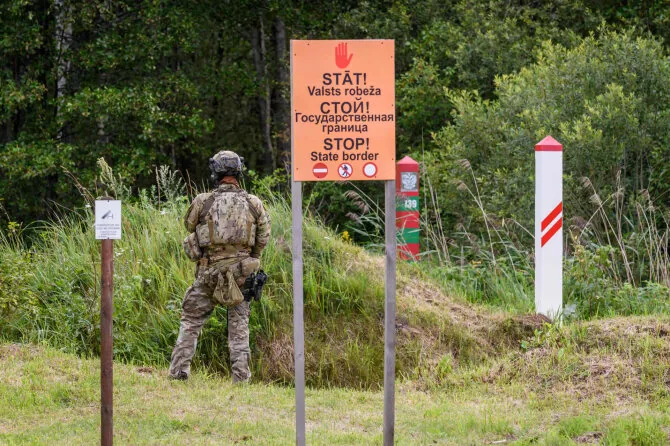
A tunnel dug by migrants was found near the Latvia-Belarus border last night, Interior Minister Janis Dombrava told journalists.
Border guards, cooperating with the military and police, found a group of migrants in Latvia, said the minister.
“While trying to trace more precisely how they entered the country, a secret tunnel was discovered,” said J. Dombrava, adding that this is the first migrant-dug tunnel observed in Latvia.
According to him, it will be investigated what preventive measures would be necessary. J. Dombrava instructed his ministry’s secretary to explore possibilities to scan the ground along the state border and take other measures to determine if there are other tunnels.
Drone raid in Moscow: airports closed
10:21
Moscow was attacked by drones last night; Russian officials say at least 13 drones were destroyed and flights at Moscow airports were temporarily restricted.
This is reported by the portal “Ukrajinska pravda”.
Moscow Mayor Sergei Sobyanin initially said that Russian air defense shot down seven drones flying towards Moscow. Later he said six more drones were destroyed. Emergency services worked at the sites where drone debris fell.
After the attack, the Russian Federal Air Transport Agency “Rosaviatsiya” restricted the operation of Moscow airports.
Due to restrictions on the use of Russian airspace, Domodedovo and Zhukovsky airports are allowed to accept and dispatch flights only with approval from relevant authorities.
Later, “Rosaviatsiya” announced that the restrictions were lifted.
British ambassador mocked Russia: even snails move faster
09:55
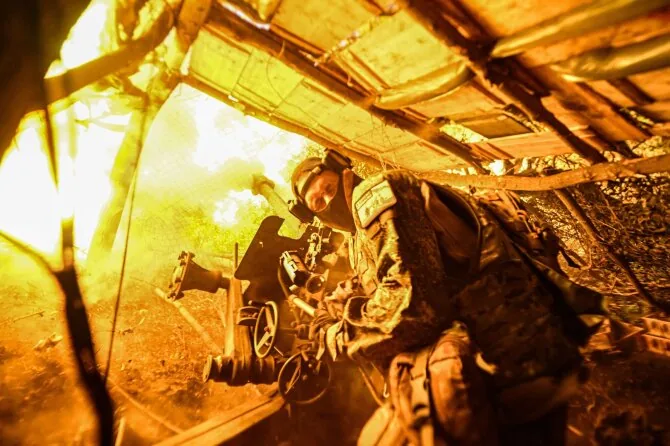
Russian forces are suffering huge losses in eastern Ukraine, and their actual advance pace turned out to be slower even than the speed at which a snail moves, UK Ambassador to Ukraine Sir Neil Crompton said in an interview with news portal “RBK-Ukraine”.
According to the diplomat, a war of attrition continues in eastern Ukraine, especially in the Donetsk region, where Ukrainian defenders inflict draconian losses on the Russians.
As shown by data from headquarters chiefs reviewed by the ambassador, the dynamics of Russian military losses look approximately like this:
– April and May: about 35,000 wounded and killed per month;
– July: 42.7 thousand wounded or killed.
“I think in June this number was slightly lower. When leaves unfold, it is somewhat safer for soldiers to move. But this is an extraordinary figure. If I search Google for information about Soviet losses during the Afghanistan war, it states that 15,000 people died,” the UK envoy noted.
Despite Kremlin master Vladimir Putin’s statements about the allegedly rapid Russian army advance, the real situation on the battlefield is the opposite, Crompton emphasized.
“Our former Chief of General Staff once said that a snail actually moves faster than the Russian armed forces. And the cost of that is enormous,” he said.
The British diplomat noted that the real large-scale change on the front is related to the increasing effectiveness of Ukraine’s medium and long-range strikes.
“For example, medium-range strikes in Crimea. President Putin was forced to declare a state of emergency. Russian vacationers do not go to Crimea. People are forced to leave. This causes real damage to military supply routes,” the ambassador listed.
In his opinion, Crimea is important to both Ukraine and Russia for various reasons. But for the Russians, it is the “crown jewel of the war”.
“Therefore, I think it is a politically difficult situation for Moscow. And, as we see from the news, all this is no secret,” the diplomat concluded.
These are ticking bombs: Russia devised a revenge plan for Ukraine
09:07
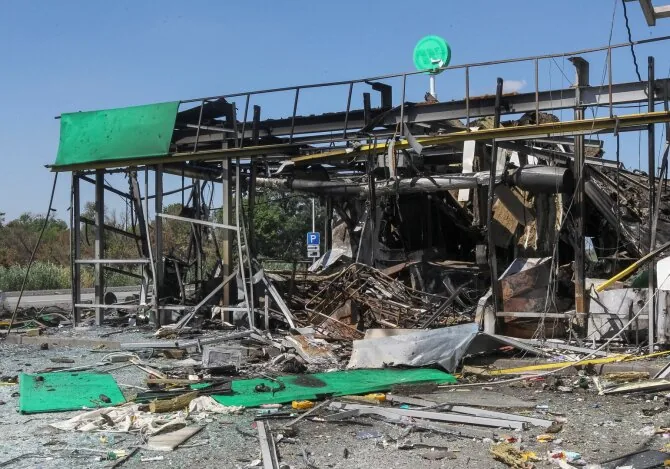
Sandbags lie at the entrances to most of them. Others show signs of debris and fire damage. Some remain only as piles of burnt rubble. Gas stations across Ukraine tell the same story – a new and deadly front of Russia’s war.
In recent months, Russian forces have attacked nearly 250 gas stations across Ukraine. Officials, analysts, and gas station operators say this is a systematic and deadly campaign in response to Ukraine’s strikes on oil refineries.
Gas stations, once a beloved and peculiar part of Ukrainian life, have become a source of anxiety and fear.
Ukraine claims that its long-range strikes on Russian oil refineries aim to cut off the revenue stream fueling Russia’s war machine and pressure the Kremlin to end the war.
Meanwhile, Russian state media reports that their strikes on gas stations in Ukraine aim to disrupt Kyiv’s armed forces’ transport logistics.
However, as Ukrainians point out, unlike attacks on Russian oil refining infrastructure, gas stations targeted by Russian drones are visited daily by many civilians.
Read more HERE.
Warning signals to the Kremlin from allies
08:54
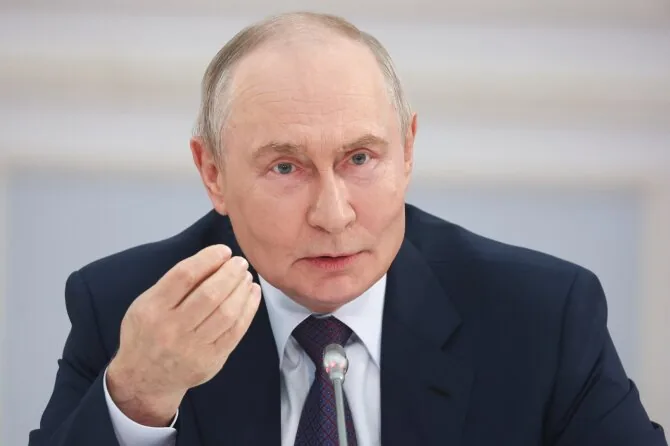
In recent weeks, the Kremlin has suffered blow after blow regarding its prospects to maintain global influence. In the Middle East – uncertainty about the fate of military bases, a loyal ally received Ukrainian President Volodymyr Zelensky, and a leader of a former Soviet republic began to show disobedience, writes “The Times”.
The article recalls that on Sunday Syria announced that Russia’s Khmeimim air force base and naval base in Tartus will no longer be exclusively controlled by Moscow. The facilities will be reorganized into joint exercise centers. These were the only official Russian military bases outside the former Soviet Union.
The Russian military supported former authoritarian Bashar al-Assad for 9 years, killing thousands of Syrian rebels and civilians. However, the Kremlin master ordered his troops not to intervene when rebels stormed Damascus.
Syria itself called the agreement on bases in the eastern Mediterranean a “reorganization of Russia’s presence,” which is said to open the way to “a new stage in Syrian-Russian relations”.
Russian foreign policy and Middle East expert Hanna Notte noted that the likelihood that Russia will be able to use Syrian bases for its military purposes in the future is decreasing, but it should not be completely ruled out.
“Russia is very cautious about how much Ahmed al-Sharaa will actually be able to maintain power and stabilize the situation in Syria. Russia probably thinks: ‘We’ll see what Syria’s situation will be in five or ten years. And we’ll just wait,'” the analyst assessed.
The agreement provides that Moscow will retain limited rights to refuel its warplanes at the Khmeimim base, but according to Nikita Smagin, an expert on Iran and Russian policy in the Middle East, Russia has little reason for optimism.
“The new Syrian government is gradually pushing Russia out of the country… At some point, they want to get rid of Russia’s presence. It just doesn’t happen instantly. The Syrian government acts quite pragmatically, and I would even say quite cleverly, so as not to harm relations with Russia during this difficult transitional, still unstable period,” he said.
A slap from Kazakhstan and Serbia
It is noted that although the Iranian regime, which provided military support for Russia’s invasion of Ukraine, has so far withstood US and Israeli bombings, the Kremlin has still failed to prevent the collapse of its other main allies.
Moscow failed to save B. al-Assad, and it was also powerless to prevent the arrest of Venezuelan leader Nicolas Maduro – an operation carried out by US special forces.
Hungarian Prime Minister Viktor Orbán’s government was also considered Putin’s “Trojan horse” in the European Union, but it suffered a crushing defeat in elections against Prime Minister Péter Márki-Zay.
Power in the South Caucasus also slipped from Russia’s grasp, where Armenia and Azerbaijan are now moving away from Kremlin influence.
The Kremlin is receiving worrying signals from other traditional allies as well.
Serbia, one of the few European countries that did not impose sanctions on Moscow after its large-scale war in Ukraine began, last week received Ukrainian President V. Zelensky. This was his first visit to the country since the invasion began.
One Ukrainian official called the talks between V. Zelensky and President Aleksandar Vučić “a slap” to V. Putin and part of efforts to “tear Serbs away” from the Kremlin.
“The Times” noted that V. Zelensky’s trip to Belgrade was organized after Kazakhstan’s President Kassym-Jomart Tokayev directly told the Kremlin master that Russia should end the war in Ukraine.
“It’s a pity that young people are dying,” the Kazakh leader said during talks in Omsk.
Reverse effect
In turn, V. Putin turned to North Korea for help with the war in Ukraine and is likely now relying even more on Pyongyang.
“A decision has been made to deploy from 30,000 to 50,000 North Korean residents on Russian territory. They are studying this war,” Zelensky reported on social networks over the weekend.
Although expert H. Notte guessed that the weakening of Russia’s influence might be welcomed by Western countries, she believes it may only give V. Putin more resolve to pursue Russia’s goals in Ukraine.
“If you have concentrated all your strength on this war, subordinated other foreign policy areas to it, and even accepted the loss of influence in other parts of the world – all for the conquest of Ukraine – then you will definitely have to come out of it a winner. The greater the pressure on Russia in other parts of the world, the more it will encourage further tightening of Russia’s position on Ukraine and possibly even preparation for conflict escalation,” the expert said.
Belarusian company supplied equipment for rocket engines to Russia through various countries, including Lithuania
08:34
A company based in one country, violating EU sanctions, supplied Russia with equipment for manufacturing EU rocket and fighter jet engines through various countries, including Lithuania.
Read more Karolis Čekauskas leads “Philip Morris Baltic”
The dismantled scheme was reported on Monday by the Austrian Ministry of the Interior.
The report states that the company forged certificates to supply sanctioned equipment, including special metalworking tools and CNC machines, which can be used to manufacture parts and tools.
It is noted that in May, a 28-year-old Belarusian company director was detained.
The company, whose name the ministry did not disclose, concealed its shipments through a network of cover companies in Turkey, the United Arab Emirates, Hong Kong, Belarus, Kyrgyzstan, South Korea, Poland, and Lithuania.
Read more about this here.
Zelensky: Russia preparing to deploy more North Korean troops and missiles
08:15
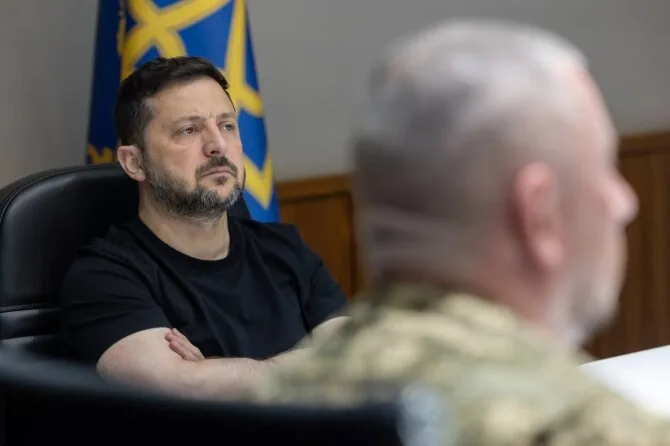
Ukrainian President Volodymyr Zelensky said on Monday that Russia is preparing to deploy more North Korean troops on its territory and has received more ballistic missiles from Pyongyang.
Zelensky has repeatedly warned about expanding military ties between Moscow and Pyongyang, often requesting more Western air defense systems.
“This is the first time they cannot fight without reinforcements from North Korea,” Zelensky said in his evening address, referring to Russian forces.
“Now they are preparing to deploy an additional Korean contingent on their territory. They have received, just imagine, additional ballistic missiles from North Korea,” he added.
The Ukrainian leader did not provide any evidence or timelines to support this claim.
However, he called on Japan and South Korea to provide airspace defense assistance, saying it is needed to curb Pyongyang’s forces, which are strengthening due to experience gained by helping Moscow.
Over the weekend, Zelensky said a decision was made to deploy from 30,000 to 50,000 North Korean troops on Russian territory. He did not explain where he got these numbers.
North Korea became one of Russia’s closest military partners after Russian President Vladimir Putin and North Korean leader Kim Jong Un signed a mutual defense pact in 2024.
Moscow used North Korean troops later that year in a counteroffensive that pushed Ukrainian forces out of the Russian Kursk region near the border.
Wildberries warehouse caught fire in Voronezh after attack
07:08
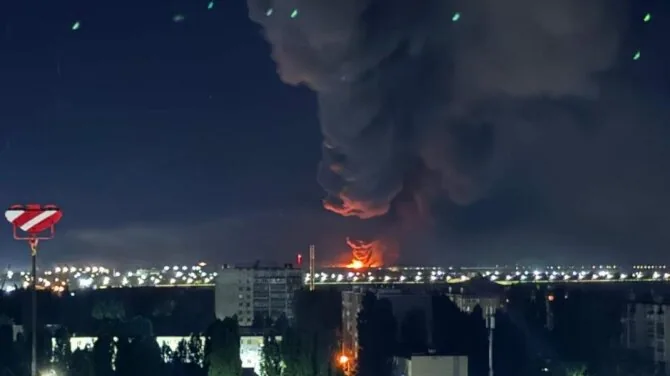
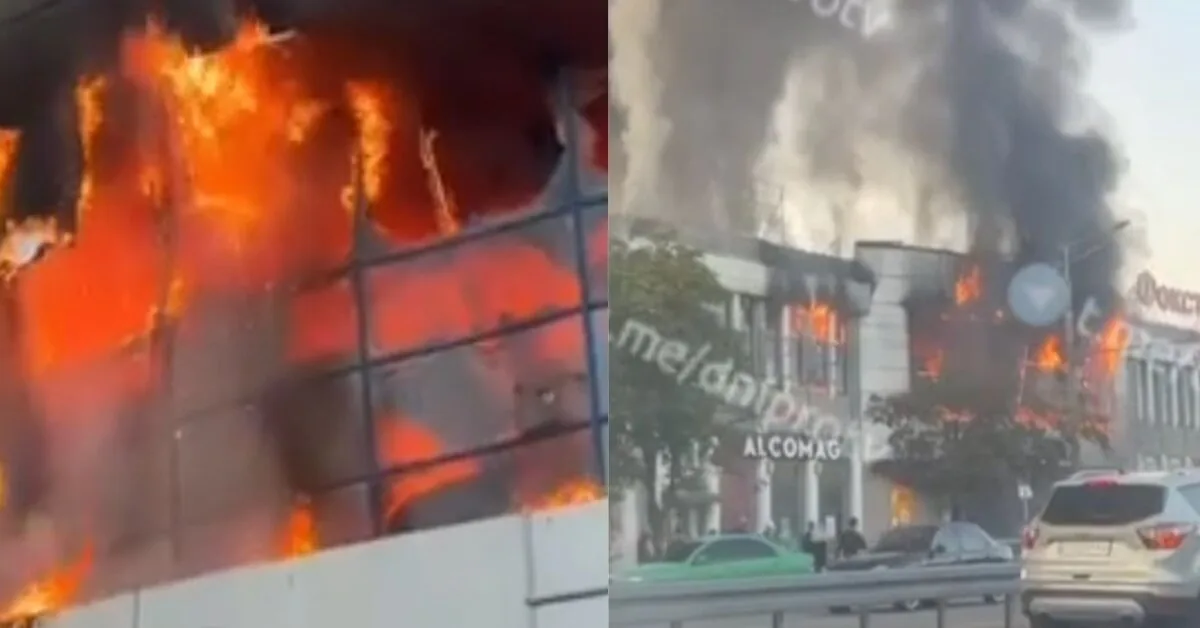
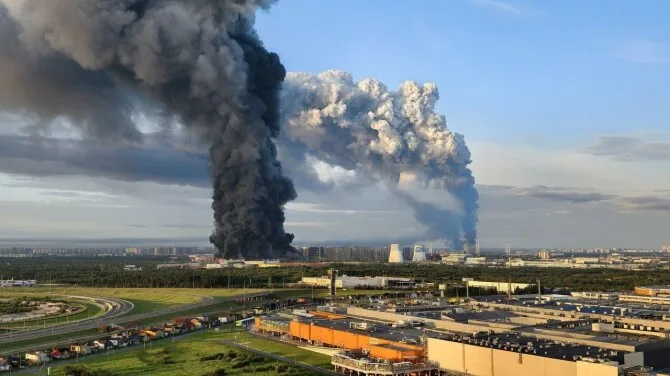
Wildberries logistics complex in Voronezh was attacked in Russia on Tuesday night. A huge fire broke out, and judging by videos posted on social networks and comments from local residents, the warehouse may have been completely destroyed.
Residents of Voronezh and the surrounding area reported hearing explosions. Later, Wildberries confirmed that its facility was attacked and employees evacuated.
“The company’s logistics facilities in the Voronezh region were evacuated in accordance with safety requirements,” said Wildberries press service.
According to the Telegram channel “Astra,” the Wildberries logistics complex territory in the village of Aleksandrovka near Voronezh is on fire.
Videos posted on social networks show the warehouse completely engulfed in flames. Local residents write that the facility appears destroyed.
“In short, you can’t order anything more through WB – WB no longer exists in Voronezh,” a local resident says in one video.
The Wildberries logistics complex in Aleksandrovka village began operating at full capacity in November 2025.
Its area is 152.9 thousand square meters, and storage capacity is more than 90 million product units.
About 11 billion rubles were invested in the complex’s construction.
Wildberries warehouses in Russia are constantly attacked
Recently, Wildberries warehouses in various Russian regions have repeatedly become targets of Ukrainian drone attacks.
On August 7, it was reported that Ukrainian drones reached the Urals and struck the Wildberries logistics complex in Yekaterinburg.
It is noteworthy that this facility is about 2,000 kilometers from the Ukrainian border.
On August 5, a strike also hit the Wildberries warehouse in Aleksin, Tula region.
This logistics center ensured the supply of goods to Tula, Kaluga, Oryol, Bryansk, Kursk, Lipetsk, Ryazan, and other central Russian regions, and partially reduced the load on logistics centers in the Moscow region.
5 people killed in Zaporizhzhia during Russian attack
06:53
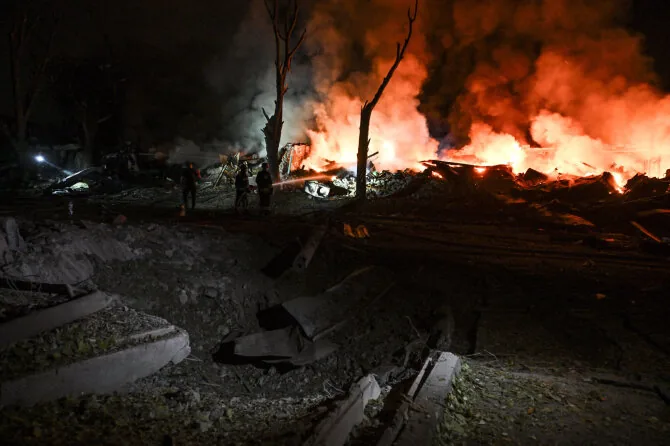
Five people were killed and 20 injured during a Russian attack in Zaporizhzhia in southeastern Ukraine, regional officials reported on Tuesday.
Meanwhile, explosions thundered in Kyiv during what officials said was a ballistic missile strike.
In recent weeks, Russia has increasingly used long-range missiles against Ukrainian cities, warning Kyiv that Moscow is intensifying its more than four-year war efforts with further North Korean support.
“Five people died, 20 more were injured: unfortunately, the number of victims continues to grow after the enemy’s attack in Zaporizhzhia,” said Ivan Fedorov, head of the regional military administration, on the Telegram platform.
After officials warned about incoming missiles, AFP journalists in Kyiv heard a series of loud explosions shortly after midnight.
Mayor Vitali Klitschko reported on social networks that the capital “is experiencing a ballistic missile attack”.
He said emergency services were sent to the Shevchenko district, and city officials reported at least one injured person.
Air raid sirens began sounding just before the explosions.
Earlier, I. Fedorov reported that Russian forces struck industrial facilities and infrastructure in Zaporizhzhia.
“The Russians attacked industrial facilities and infrastructure,” he said on Telegram. “A garage cooperative and residential buildings were affected.”
President Volodymyr Zelensky earlier said Russia is preparing to deploy more North Korean troops and has received new ballistic missiles from Pyongyang.
In recent weeks, Moscow has intensified ballistic missile strikes, which can only be countered by certain air defense systems, including the US “Patriot”.
Since February, when the US and Israel began a war against Iran, the shortage of PAC-3 interceptor missiles has increased further.
At the same time, Ukraine has intensified strikes on Russian cities far from the border.
Financial Times: This is Ukraine’s chance to force Putin to the negotiating table
06:46
After four and a half years of large-scale war, Russia’s war against Ukraine is increasingly moving into the air. With drones filling the front line, larger ground force maneuvers have become very difficult, writes the Financial Times (FT).
The publication notes that the war on land remains bloody, but the front line is essentially moving little. Meanwhile, both sides are increasingly using missiles and drones to try to wear down the opponent.
Last month, Ukrainian President Volodymyr Zelensky told FT in an interview that the war’s outcome may be decided by the “battle in the sky”.
Therefore, according to the publication, Ukraine’s allies must strengthen the country’s defense against one of the greatest threats – ballistic missiles – as soon as possible.
“One of the most notable changes this year is the effectiveness of Ukraine’s medium and long-range strikes,” writes FT.
Ukrainian forces are increasingly attacking Russian military targets in occupied Crimea and logistics routes connecting the peninsula with Russian territory. These strikes make it increasingly difficult for Moscow to supply and defend Crimea.
Kyiv is also increasingly using more precise long-range drones and missiles to strike Russian defense industry facilities, oil refineries, and warehouses.
FT assesses that such attacks not only weaken Russia’s war machine but also allow ordinary citizens to feel the cost of the war started by Vladimir Putin.
“Now is the time for Ukraine, with the help of Western allies, to maximize its advantage and force Putin to the negotiating table,” the publication states.
Ukraine’s weak spot – ballistic missiles
However, recent weeks have shown that Ukraine itself remains highly vulnerable to Russian ballistic missile attacks.
FT believes one reason is insufficient Western support in strengthening Ukraine’s air defense.
The publication notes that in 2024 and 2025, Russia significantly increased ballistic missile production. To do this, Moscow exploited Western sanctions loopholes and continued acquiring necessary components.
War analysts and Ukrainian intelligence estimate that Russia can currently produce about 70 ballistic missiles per month.
Last month alone, Russian forces launched 198 missiles at targets in Ukraine.
FT reminds that the most reliable defense for Kyiv against ballistic missiles currently remains the American “Patriot” systems.
However, their interceptor missile stocks are running low.
“Moscow strikes Ukrainian defense industry facilities, transport hubs, energy, and water supply infrastructure almost unhindered,” writes FT.
The situation was further complicated by the war with Iran, which significantly reduced the stocks of interceptor missiles available to the US and its allies in the Persian Gulf region.
The US has already taken measures to increase production, but significant results may take years.
Greater contribution expected from Europe
Therefore, FT says, the role of European countries becomes very important.
“Even more important is that European partners with large stocks, such as Spain and Greece, transfer a larger share of them to Ukraine,” the publication states.
The publication also urges the US to implement a plan to license Ukraine to produce “Patriot” interceptor missiles itself.
Such an agreement would eventually help increase global production capacity of these missiles.
However, this is not a quick solution. Technology transfer and creation of certified supply chains may take several years.
But according to FT, even an agreement on future production could encourage allies to share current stocks more boldly, knowing they will be replenished later.
France and Italy, the publication believes, should also accelerate the supply and expand production of interceptor missiles for the SAMP/T NG systems – the European alternative to “Patriot”.
FT notes that if Europe had invested more earlier in air defense production capacity, today both Ukraine and the continent itself would be less dependent on US technology.
In the long term, the publication says, Ukraine and its partners should cooperate more actively with defense technology startups and massively produce cheaper missile and drone interceptors.
However, defense alone is not enough, according to FT.
Ukraine’s allies should also provide Kyiv with financial resources and intelligence information to help strike ballistic missile production facilities and launch sites in Russia.
“The scale of Russia’s missile production and the shortage of interceptor missiles mean that Ukrainian forces must strike not only the ‘arrow’ but also the ‘archer’,” FT concludes.
Read more Nine illegal migrants turned back at the border with Belarus