“I am firmly convinced that if more exceptions are granted, they will apply to specific countries, not all,” S. Bessent told members of the House Budget Committee.
Read more Eurostat: employment growth in Lithuania over the quarter – the largest in the EU
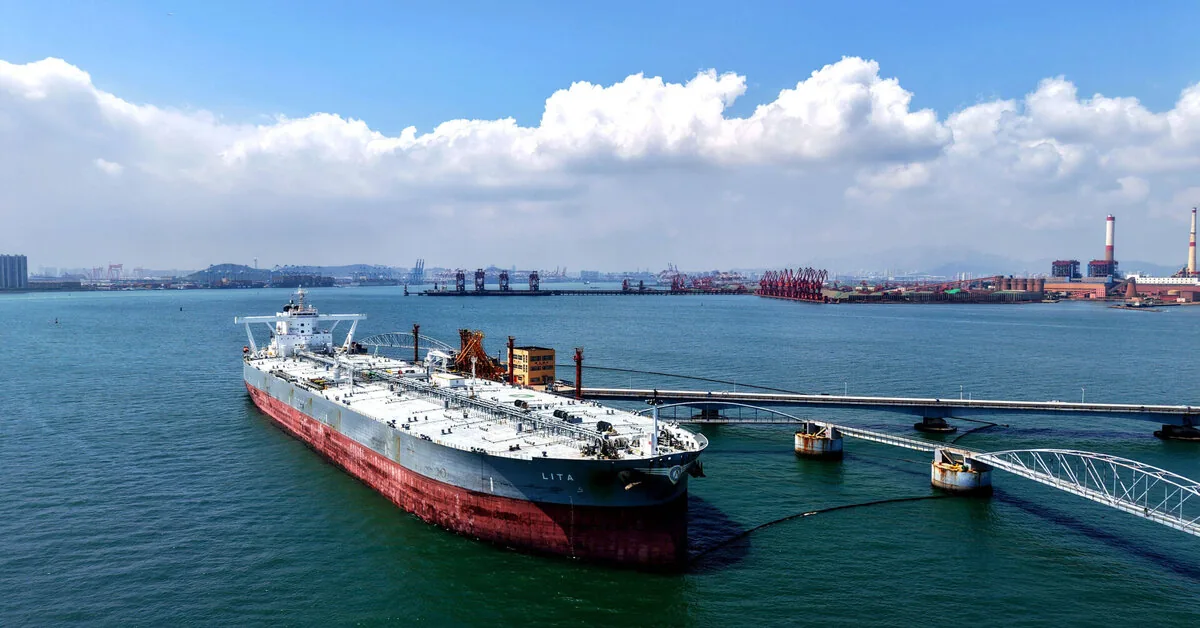
The administration of US President Donald Trump has already twice extended the decision not to apply sanctions to Russian oil already at sea due to energy prices caused by the war in the Middle East. These measures were intended to address the problem of oil supply shortages.
“Due to these exceptions, the Russian Federation received very little additional revenue. Its oil has always been exported to China, and now it can be exported to our allied countries,” S. Bessent said on Thursday.
Tehran has blocked the strategically important Strait of Hormuz, through which approximately one-fifth of the world’s oil and gas is transported in peacetime. As a result, energy prices have soared, putting energy-vulnerable countries in a difficult position.
Read more US envoy: EU should support Washington in an ‘AI war’ with China
On Thursday, S. Bessent answered questions about the justification for such mitigation measures, responding to concerns that they could benefit Moscow during the war in Ukraine.
In May, the US Treasury Department extended the non-application of sanctions to Russian oil at sea for 30 days. In March, the Treasury Department also temporarily lifted sanctions on Iranian oil already loaded onto ships, aiming to curb a global supply crisis.