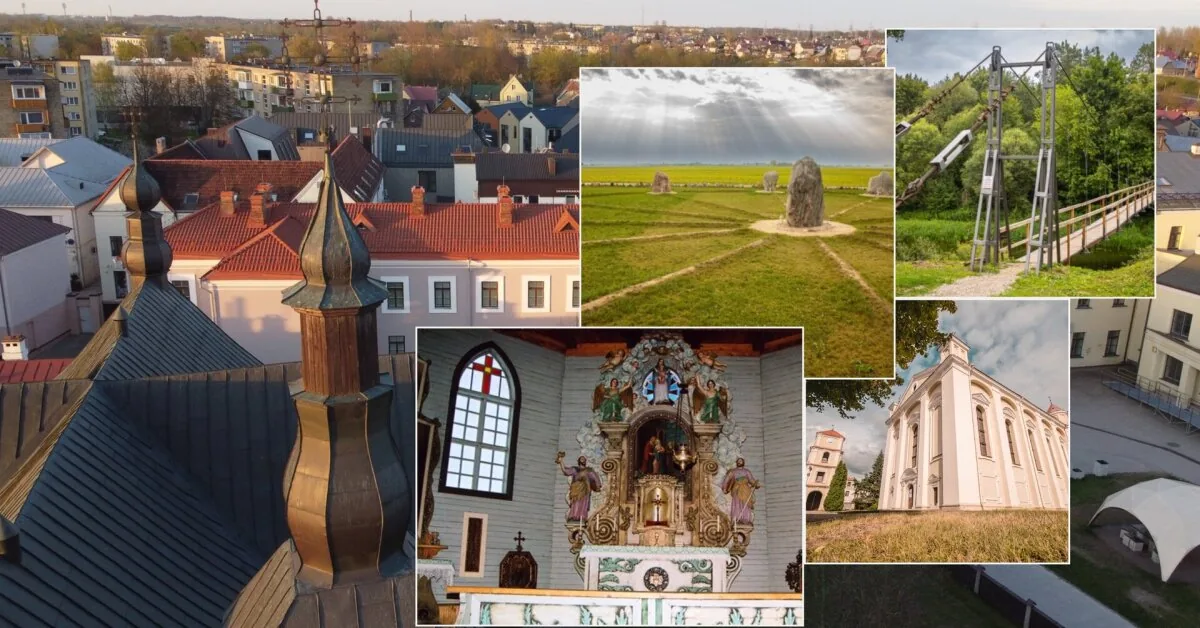
On August 1st, the largest family picnic and a free open-air concert by music stars will take place here, in the city park. For those attending the Family Day, the Kėdainiai Tourism and Business Information Center has prepared a memo on what else can be visited in the city and its surroundings during the same trip.
Read more Kongo DR after 754 deaths from Ebola fever, more medical workers are striking
The memo includes not only memorable places and museums but also special offers for August 1st. Some require prior registration.
Museums
Kėdainiai Regional Museum
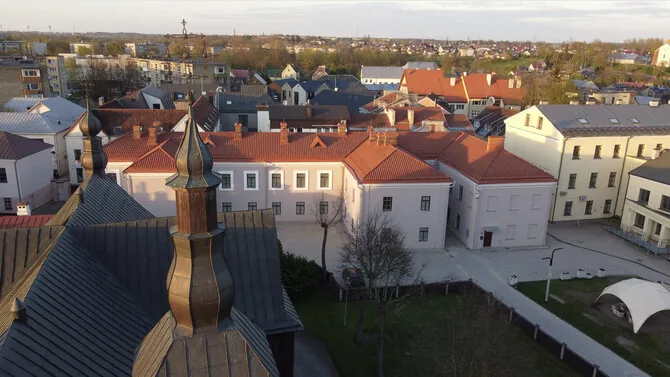
Founded in 1922, the Kėdainiai Regional Museum is one of the oldest in Lithuania.
In 1991, the Kėdainiai Regional Museum was reorganized into the Regional Museum by merging the M. Katkus Memorial Museum in Ažytėnai, the J. Paukštelis Memorial Museum, the Town Hall Art Gallery, and the concert hall in the Evangelical Lutheran Church.
In 2000, the Regional Museum moved into the former Carmelite monastery building on Didžioji Street.
Visiting the museum, you will see unique several-meter-high crosses and chapels carved by self-taught woodcarver Vincas Svirskis (1835–1916), admire the museum’s decoration—19th-century horn furniture made by English masters and awarded a gold medal at the Paris exhibition. The exhibition “Czeslaw Milosz – the genius born in the Kėdainiai region” offers more information about the Kėdainiai native, the brilliant poet, writer, and Nobel Prize laureate Czeslaw Milosz.
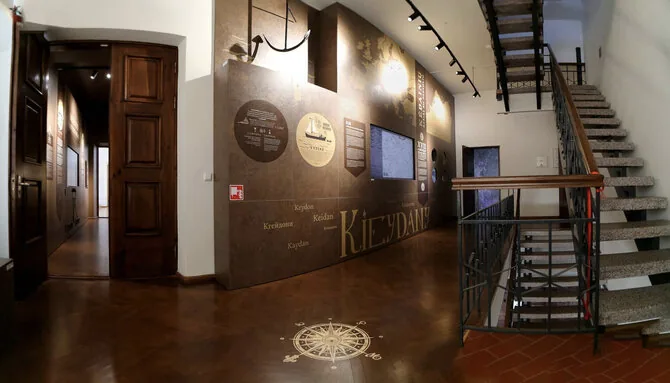
The exhibition “Kėdainiai’s connections with the world” will not only reveal Kėdainiai’s ties with the world in the 17th–18th centuries but also invite you to try an interactive game that lets you experience being a 17th-century merchant.
The exhibition “Kėdainiai – a multicultural city of the Polish-Lithuanian Commonwealth” transports visitors to Kėdainiai’s golden age. The basis of this exhibition is an interactive model. Thanks to it, seven characters—17th-century Kėdainiai residents—will tell you about the main objects that once existed in the city. You will have the opportunity not only to hear true, historically documented stories but also to see images of Kėdainiai on screens, recreated using modern information technology solutions—computer 3D animation.
The exhibition “City owners” introduces all the owners of Kėdainiai and reveals the history of our city’s coat of arms.
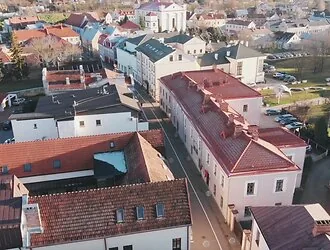
Radvila Dukes’ Mausoleum Evangelical Reformed Church
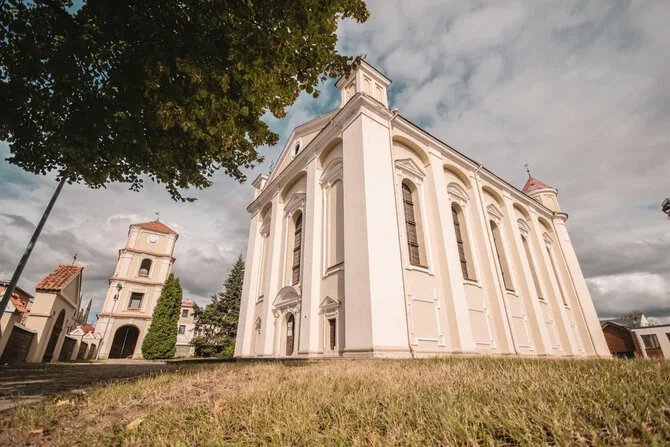
The Kėdainiai Evangelical Reformed Church is one of the oldest and largest Protestant churches in Lithuania.
The church’s construction was started by Kristupas II Radvila in 1629 on the elevation of the Great Market Square. However, he did not live to see its completion, dying in 1640 when the church was only halfway finished.
In 1652, the building was completed by his son Jonušas II Radvila.
The church interior was modest and tasteful, without ornate altars, saint paintings, or statues typical of Catholic sanctuaries. The altar consisted of the “God’s table” standing by the eastern wall with a 1563 Bible published in Brasta, Lithuania, placed on it.
Behind the God’s table stood a cross, and above it on the wall was the Latin inscription Soli Deo Gloria (Latin for “Glory to God alone”), proclaiming the fundamental Christian rule: to have no other gods but Him alone.
The most significant interior decoration was a large openwork forged chandelier hanging in the center of the high vault, Mannerist-style carved oak wall panels, the pulpit, the priests’ lodge, and the Radvila dukes’ throne. The church interior remained unchanged until the end of World War II. It was not destroyed even by Napoleon’s army, which set up stables in the church in 1812.
The greatest damage was caused during the Soviet era. The church was turned into a grain warehouse and later a children’s sports school. The unique pulpit, priests’ lodge, Radvila throne, panels, and benches were broken; the sarcophagi in the mausoleum were vandalized, and the remains of dukes and honorable townspeople were desecrated.
Between 1986 and 1991, the church was restored. After Lithuania regained independence, the church and the mausoleum became a branch of the Kėdainiai Regional Museum.
Multicultural Center
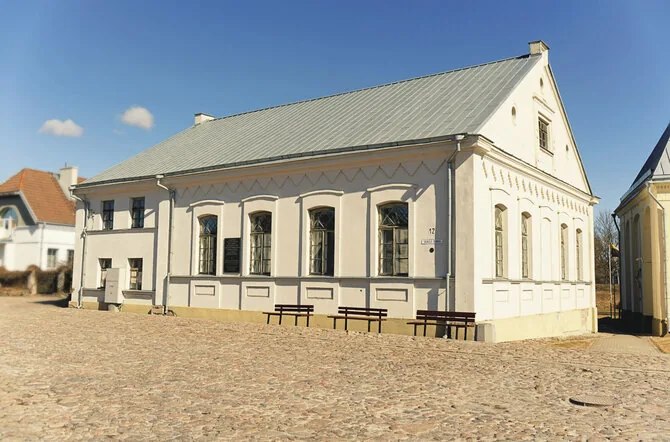
In 2002, the Multicultural Center was established in the restored former 19th-century small winter synagogue. The synagogue (Greek synagoge – assembly, gathering), meaning a gathering place and also Jewish prayer houses, is dedicated to three purposes: religious ceremonies, studies, and community meetings.
Next to the Great Synagogue (now housing the Kėdainiai Art School), from 1837 to 1857, the heated Small Winter Synagogue or the large beit midrash (house of study) was built. The building has 12 windows, with a vestibule on the west side leading to the men’s hall on the first floor and to the galleries on the second floor, where women prayed.
The main room in the synagogue is the men’s prayer hall; the most important features are the aron kodesh and the bimah located among four large columns.
Next to the Small Synagogue stood a house that served as a prison and where the shochet (ritual slaughterer) lived. This house was connected to the Small Synagogue by white gates leading to the synagogue courtyard, on which a sundial was installed. Thus, a complex of three buildings was formed.
Unfortunately, during World War II and the Soviet era, the slaughterer’s house with the gates was demolished, and only the two synagogues—the Great Summer and the Small Winter—have survived to this day.
J. Monkute-Marks Museum Gallery
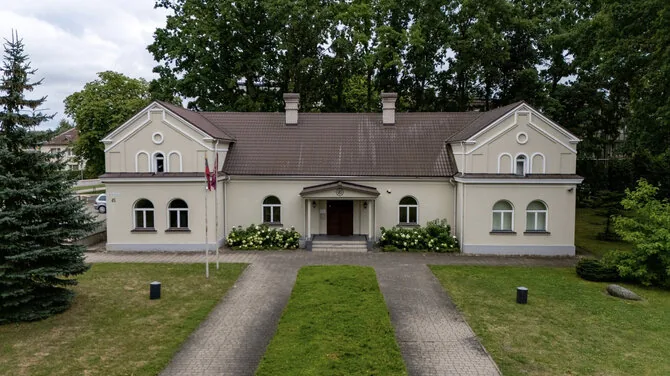
Janina Monkutė-Marks was born on September 21, 1923, in Radviliškis, Lithuania, and died on November 13, 2010, in Chicago.
According to art historian Danas Lapkus, “With her work, the artist managed to occupy a bright and distinctive place not only in the context of Lithuanian-American but also all American textile art. Her success was confirmed by constant invitations to participate in invited American and international exhibitions, but the best proof is Janina Monkutė-Marks’ multifaceted, sincere art, combining irony and tragedy, deep religious feeling and freethinking, reflections of primitive art, and bold modernist statements.”
On October 20, 2001, the new Janina Monkutė-Marks Museum opened its doors to visitors.
In 2000, Janina Monkutė-Marks established a non-profit organization and acquired the former regional museum building. The museum gallery was reconstructed from a one-story two-wing building, which from the early 20th century until World War I was part of the Juozapava manor estate. In the interwar period, the building housed a notary office; in the first decades of the Soviet era, it was a student house, and from 1967 to 2000, it was the Kėdainiai Regional Museum.
On August 12, 2007, Janina Monkutė-Marks was awarded the title of Honorary Citizen of the Kėdainiai Region. The emigrant artist earned this title for her special contribution to the cultural life of the Kėdainiai district and all Lithuania, fostering professional art, educational activities, constant attention to Kėdainiai residents, strengthening the community, and promoting Lithuania’s name worldwide.
In 2022, when the Janina Monkutė-Marks family decided to sell the museum, in 2023 it was acquired by the Kėdainiai District Municipality, and the museum gallery became a branch of the Kėdainiai Regional Museum.
Around Kėdainiai
The geographical center of Lithuania and the Lithuanian Stonehenge
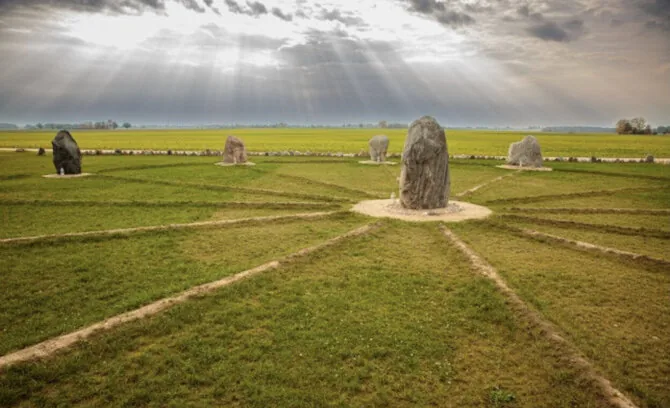
In 1995, the geographical center of Lithuania was officially established in Ruoščių village and marked with a large field stone (55°19’N latitude and 23°54’E longitude).
According to architect Vytautas Kundrotas’ project, two more stones symbolizing Žemaitija and Aukštaitija were brought. In 2009, a new sign was installed. A granite plaque with the coordinates of the geographical center was placed on the stones.
In 2021, near the geographical center of Lithuania, the “Flower of Love and Peace” was created, resembling Stonehenge—a circle of twelve large field stones, 36 meters in diameter, with the thirteenth stone standing in the center.
Dotnuva Manor and Park
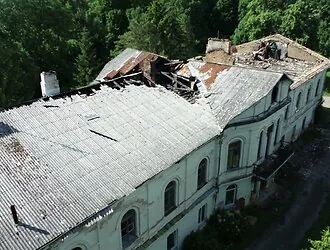
Akademija is about 15 km northwest of Kėdainiai. Dotnuva was first mentioned in written sources in 1372. Dotnuva Manor has been known since the 16th century.
The manor estate gradually came to be called Akademija. Dotnuva Manor Park is considered one of the richest in Lithuania in terms of dendrological value.
Currently, families live in the former manor house, surrounded by preserved ponds. The park has monuments to agricultural scientists and liberators of the Klaipėda region. A stone commemorates the march of Dotnuva Agricultural Technical School students and teachers in 1923 to liberate Klaipėda.
Paberžė Church of the Visitation of the Blessed Virgin Mary, Rectory, and Sacred Art “Sanctuaries”
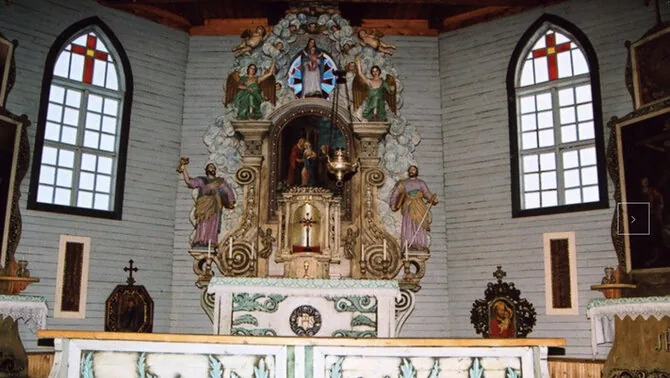
The owner of Paberžė Manor, Count Schilling, built a wooden church that soon burned down. In 1858, the wooden Church of the Visitation of the Blessed Virgin Mary was built (still standing today).
One of the leaders of the 1863 uprising, priest Antanas Mackevičius (1828–1863), served here. On March 20, 1863, he read the uprising manifesto in the church and led a group of insurgents to fight against the tsarist oppression. In 1966, a Capuchin monk, priest Algirdas Mykolas Dobrovolskis – Father Stanislaus – was assigned to Paberžė.
The priest repaired and decorated the church, arranged the village cemetery, and built original monuments in the churchyard and cemetery. He established a unique museum of church and folk art in the rectory and the nearby granary. The church houses very valuable paintings, and you will see a cross by the most famous Lithuanian woodcarver Vincas Svirskis. It is said that he also created the church’s altar.
Paberžė Manor (Museum of the 1863 Uprising)
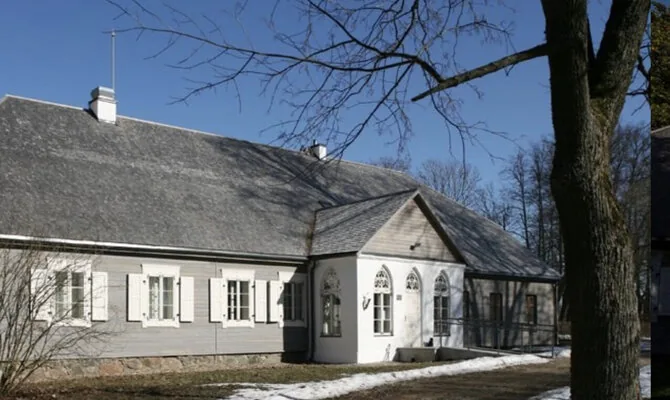
The Paberžė church village is located at the confluence of the Liaudė and Nykis streams, 32 km from Kėdainiai. Paberžė Manor was established several centuries ago. It is believed that the manor house was built in 1793 by Baron Stanislovas Schilling of German origin.
The manor owner was an active supporter of the 1863 uprising. After the uprising was suppressed, Count Schilling was exiled to Siberia, and Paberžė Manor was given to the tsarist official I. Tichejev. The latter did not live here and rented out the manor, using his funds to support students and, before World War I, enabled local peasants to buy the manor lands.
The manor house is wooden, elongated, and rectangular in plan. It has been repaired many times but retains its original exterior appearance. The central part of the facade has a porch that not only decorated the building but also protected the entrance from precipitation. The symmetrical plan of the two-wing building with two gables has been preserved to this day.
In 1993, the Museum of the 1863 Uprising opened its doors in Paberžė Manor. The museum features a memorial exhibition dedicated to the uprising leader, priest Antanas Mackevičius (1828–1863), who worked in Paberžė from 1855 to 1863. It reflects the leader’s childhood, education, and work years and introduces the fights of Antanas Mackevičius and his group of insurgents. There are personal belongings, furniture, documents, the leader’s last letter, his manuscript, and more.
All exhibits remind visitors of the 1863 uprising, its course, and suppression. The museum also displays works by the most famous Lithuanian graphic artists and painters, reflecting the insurgents’ fights and commemorating their memory. Events and art exhibitions are held at the Museum of the 1863 Uprising.
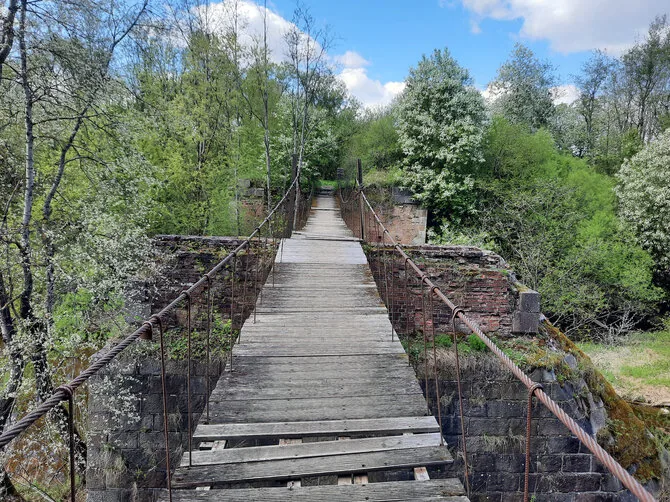
Josvainiai (Josvainiai Hanging Bridge)
Babėnai Quarry and Observation Deck
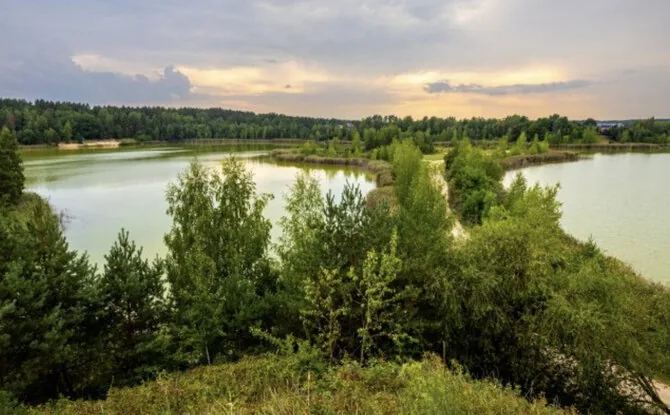
Babėnai Quarry was excavated between 1950 and 1953 and exploited as a sand and gravel deposit. The southern banks are steep, cliffy, and overgrown with Babėnai forest. The eastern banks are steep, overgrown with forest and reed beds. The western banks are also steep, overgrown with a wide (>10 m) belt of reed beds. The northern banks are gentle, also overgrown with reed and bulrush beds. The length is about 500 m, width about 400 m. Depth is 2–3 meters, with shallow shores.
In summer, Babėnai pond becomes a popular swimming spot.
The bathing area has been renovated: stairs, piers, a beach supplemented with new sand, new changing cabins, new benches, and bicycle racks have been installed.
Pelėdnagiai
Although the settlement is primarily associated with the Soviet-era established Melioration Construction Board, its history dates back to the 16th century or even earlier. Pelėdnagiai village was first mentioned in 1659. By 1674, Pelėdnagiai already had 42 “chimneys” (households)!
After the troubles at the beginning of the 18th century, only eleven farms remained in Pelėdnagiai; the village then belonged to the Kėdainiai county, managed by Jeronimas Florijonas Radvila.
In the 19th century, a water mill was built on the Nevėžis River bank, and a tavern operated. At the end of the 19th century, a factory producing wood pulp for cardboard manufacturing operated here. It is said that there was a brickyard, which was restored in 1921. Brick stables were built on the Nevėžis bank.
The Ašarėnas pond is a particularly popular swimming spot in summer.
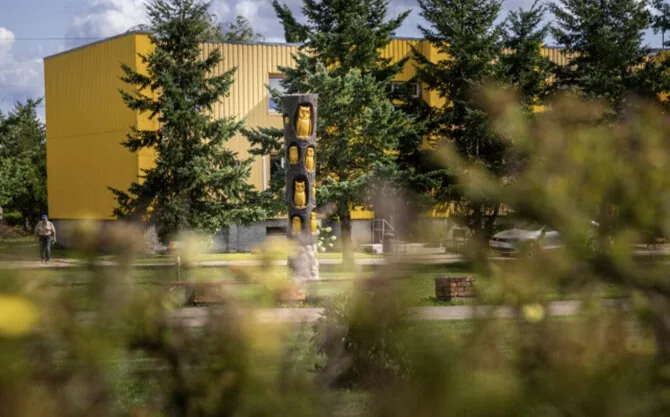
Travelers in Pelėdnagiai like to book an educational program in the Owl Village. You will hear stories about owls, the settlement’s history, make a bracelet, and taste an owl egg…
Pelėdnagiai loves owls. They perch in village squares, yards, near houses, and roads. Village guests will have fun counting them: there are as many as 40 owl sculptures!
Šventybrastis Oaks
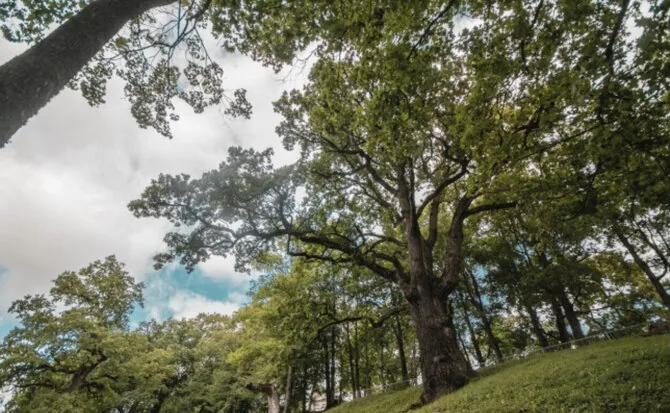
The Šventybrastis oaks grow in Šventybrastis village, on the bank of the Nevėžis River, near the Brasta stream. It is said that where the Šventybrastis church now stands was once a place of ancient Lithuanian pagan rituals, surrounded by oaks.
Today, only four remain. The trees are 21–24 m tall, with diameters of 1.2–1.8 m. In 1960, the oaks were declared natural monuments; since 1987, they have been considered monuments of national significance, and since December 20, 2002, they have been state-protected natural heritage objects.
In October 1863, battles between insurgents led by A. Mackevičius and the tsarist army took place here. The fallen fighters are buried in Šventybrastis. Nobel Prize laureate Czeslaw Milosz was baptized in the Šventybrastis church, and his great-grandparents are buried in the cemetery.
Bakainiai Hillfort
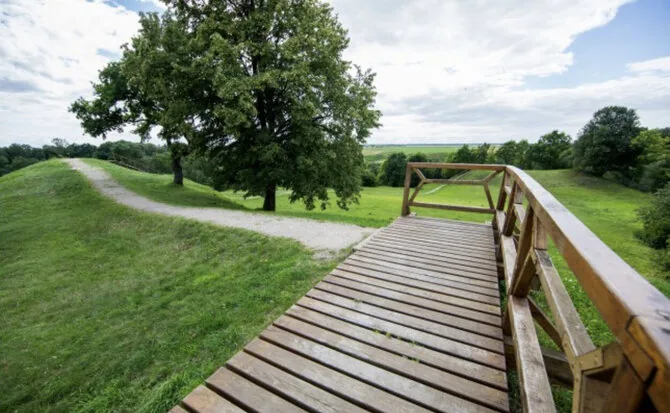
The Bakainiai Hillfort complex – a castle mound with two baileys and defensive ramparts – is one of the largest hillforts in our district, offering excellent natural views. The Liaudė River surrounds it on three sides, with a rampart protecting it from the north.
In 1372, the Teutonic Knights mentioned a well-fortified hillfort. The hillfort dates from the 2nd millennium BC to the 15th century AD. It is located within the Krekenava Regional Park. Currently, it is well adapted for visitors: there is a parking area, stairs, and outdoor furniture.
A newly installed glass stand takes you centuries back to the lost world. There you will see how the hillfort fortifications might have looked.
Pilsupiai Outcrop
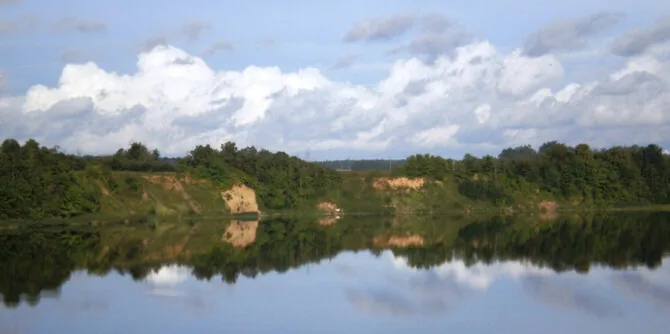
The Pilsupiai outcrop is located in the Krakių area, in Pilsupiai village. It is an outcrop on the bank of the Šušvė River. After the construction of the Angiriai dam, a significant part of it was submerged underwater. The outcrop’s moraine layers are vertically eroded in an interfluve ridge.
Studies of moraine formation help reconstruct glaciomechanics. In 1974, the outcrop was declared a geological natural monument, and since 1985, it has been considered a monument of national significance.
Since 2000, it has been a state-protected natural monument.
Surviliškis Hanging Bridge
Special offers (with registrations):
Radvila Dukes’ lunch with a guide’s story in Kėdainiai Old Town
Activities offered by Alma Chaab
Free evening tour of Kėdainiai Old Town
Observatory of famous silence and educational programs
The highlight of the day – the nationwide FAMILY DAY
“We have been celebrating and inviting all ‘Lietus’ listeners to celebrate Family Day for several years now, and at first, we did not even think it could turn into a huge event. Well, maybe we secretly dreamed about it. It all started with encouraging families to simply meet – in their yard, maybe at grandma’s garden, somewhere in the countryside, where there is space, at some hospitable relative’s place. Meanwhile, we took care of good music, playing a special playlist on ‘Lietus’ all day. We saw that there was real interest, and Family Day became a tradition, with families gathering because on that day we received many calls to the air, song requests, and greetings to pass on. Last year, this celebration grew to the point where we gave one Lithuanian family a stage and a fun ‘Žemaitukai’ concert. This year, we are growing further and inviting all families, no matter where or how big they are, to gather for a huge picnic under the open sky in Kėdainiai city park,” says Gintas Vaičikauskas, program director of one of the most listened-to radio stations, “Lietus.”
During the free event, music stars such as Justinas Jarutis, Donata Gutauskienė-Laisva, Simona Čėsnaitė-Matkevičienė, who became famous from “Road to the Stars,” and “Group 2. Karolis and Donatas” will perform on the large stage set up in the park.
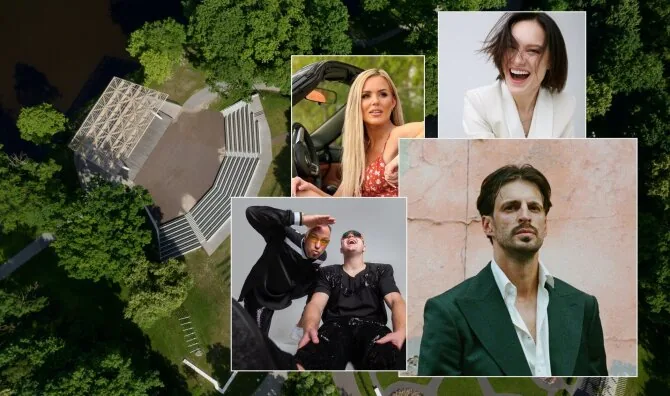
“I am very happy to be part of this beautiful celebration. I think Family Day reminds us how important it is to nurture relationships with our loved ones and find time to be together. Of course, I will invite my family too – it’s always nice when loved ones can support. I hope it will be a warm and cozy celebration for all families,” says Laisva.
“I will definitely invite my relatives to Family Day because it is another great opportunity to meet and be together. Especially since there will be a concert during the event, so no need to worry about the musical background. Family Day is truly a beautiful tradition, and I am very proud that it is initiated by my favorite radio station. Of course, an even greater joy is that I will have the opportunity to sing here, giving people both old hits and my newest creations. I am really looking forward to this celebration and sincerely invite everyone to come to Kėdainiai city park on August 1st to meet and be together,” says performer and “Lietus” radio show host S. Čėsnaitė-Matkevičienė.
Families are invited to bring not only each other and good mood to the one-day family festival but also, if they have them, family coats of arms, flags, and to dress in special T-shirts with symbols dear to them. Visitors will enjoy an adventure-filled day outdoors: a free concert by famous performers, special entertainment for children and adults, dancing, and a fun time together.
Working closely with the Kėdainiai Municipality, the Family Day organizers promised to prepare a special memo for guests on what memorable places and museums can be visited in Kėdainiai and its surroundings if arriving a little earlier.
Family Day, inviting all families not only to sing from the heart but also to celebrate from the heart – will take place on August 1st in Kėdainiai city park.
Read more Special concert in Vilnius: famous Sylvain Cambreling and Eldbjørg Hemsing will perform on one stage