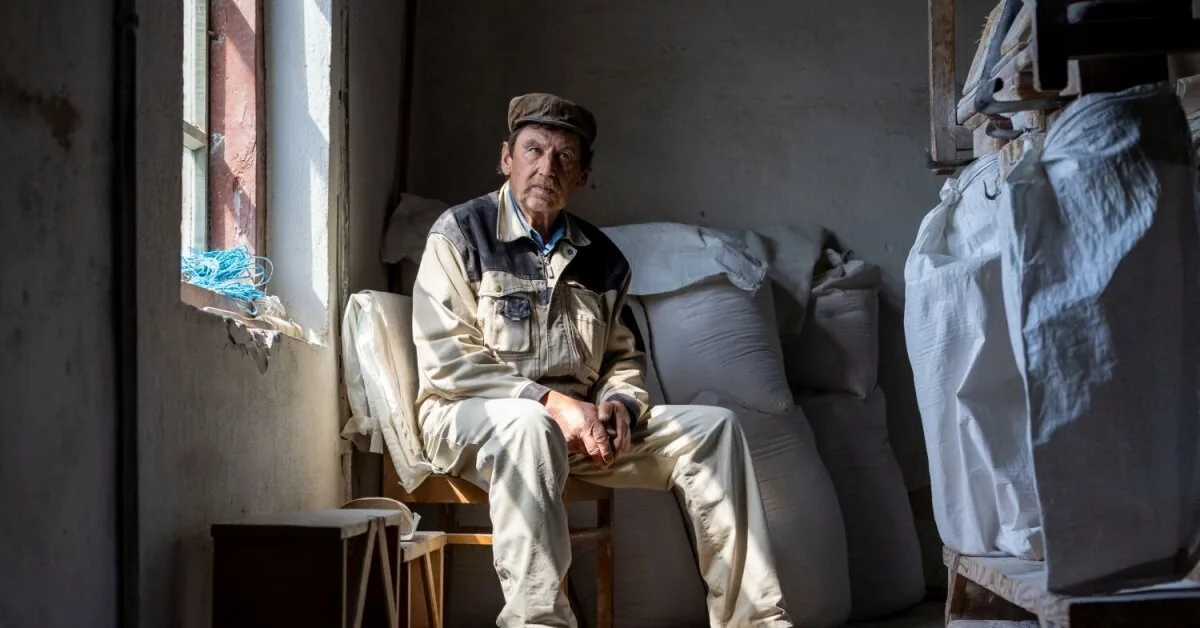
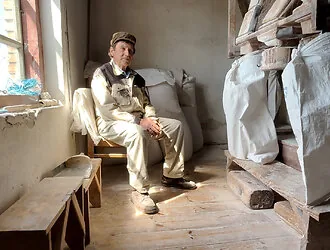
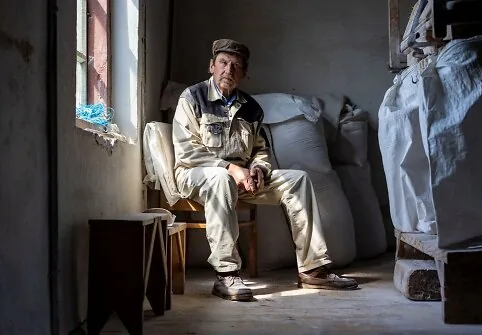
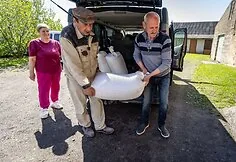
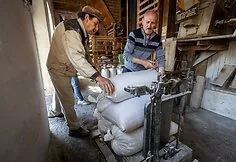
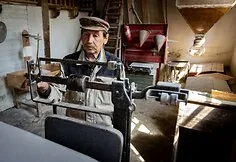
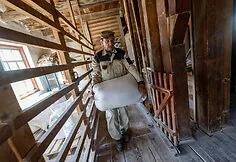
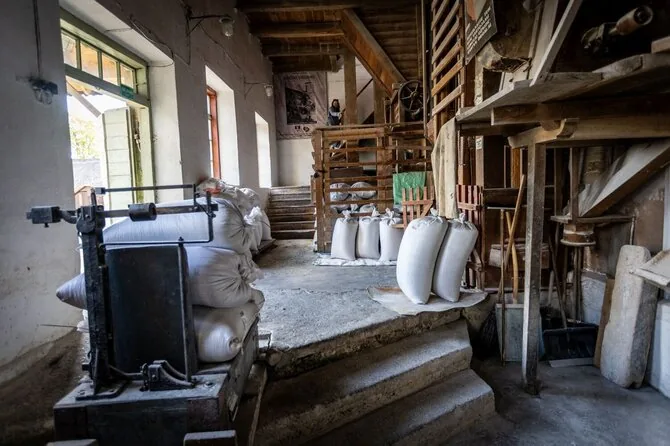
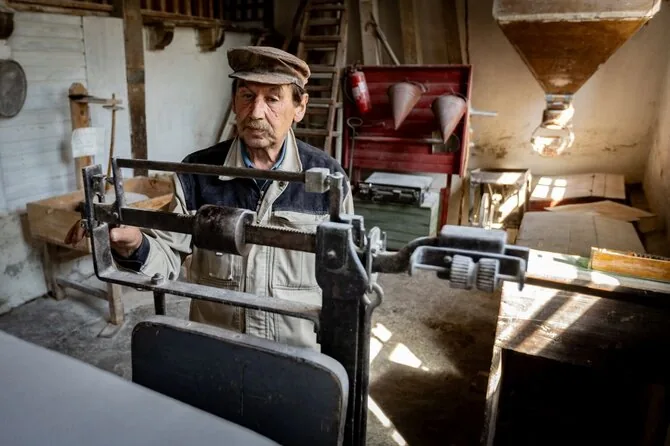
Upon our arrival, we find the doors wide open, and daily work in full swing. Jonas, together with a man who came from Šiluva, takes bags of grain from his car and carries them to the mill to be weighed.
Read more Champion was frightened: «I almost died this week»
“That’s how our work begins every time. And it ends similarly, only from the mill we carry out bags not with grain, but with flour,” Jonas, who has been working here for almost three decades, begins his tour of the impressively sized and historic mill with a cheerful smile.
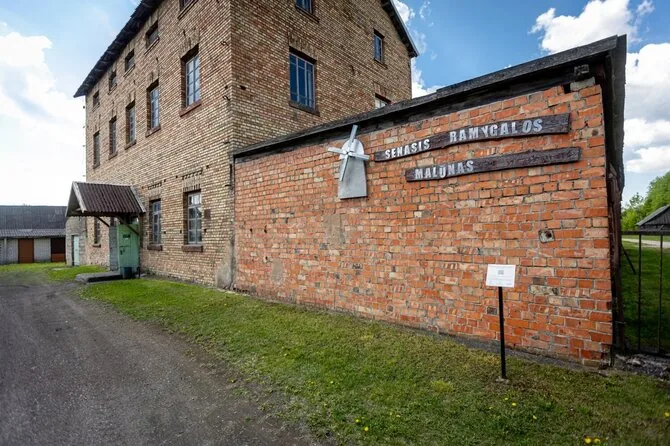
The most modern building in the entire area
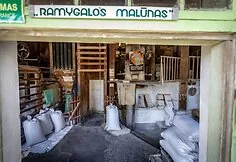
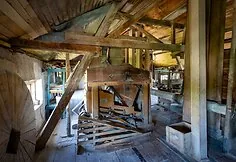
The history of this mill began in 1925, when two Lithuanians who returned from America, Arieška and Masiokas, and a local Jew, Variakojis, undertook its construction. The work took as long as four years: the most advanced mechanisms of that time, brought even from Sweden, were installed here. Opened in 1929, the mill, named “ArMaVa” – after the first letters of the owners’ surnames – was the most modern building in the entire area.
At that time, it was the third mill in Ramygala. The other two – Marozas’s windmill and the so-called Jew’s mill – unfortunately, have not survived to this day.
From the very beginning, four people worked in the new mill: two at the rollers, one at the millstones, and a senior miller who supervised order, mechanisms, and received grain from peasants. The first miller was Alfonsas Ryliškis, who was not even twenty years old, and not only started this mill but also worked in it for several decades.
From the stories of old Ramygala residents from the interwar period, it is known that there was considerable competition among Ramygala millers, so it was not easy for the “ArMaVa” mill to survive. “Masiokienė was a very strong woman – she practically managed the new mill. When farmers with bags of grain would go to grind flour – some to Marozas, others to the Jew’s mill – Masiokienė would go out into the street, take the horse by the bridle and turn the cart towards her mill,” J.Plučys recounted.
True, the services at this mill were more expensive, as more grinding was done with rollers. However, the quality of the flour was incomparably higher as a result. Masiokienė tried to entice farmers with significant discounts – for the first time, they would grind grain at the usual millstone price.
The economic situation of the mill began to change only after the 1940s, but the reasons for this were tragic. When the Soviets began deporting Lithuanian residents, some of the millers from the Ramygala area were also sent to Siberia, and after the Germans destroyed most of the Jews – one of the co-owners of this mill, Variakojis, was killed – Masiokas remained its sole owner.
“Old Ramygala residents remember that during the war years, this mill worked day and night – so great was the people’s need for flour,” J.Plučys recounted.
However, the miller’s successful life in Ramygala did not last long: when the Soviets returned and repressions began, Masiokas, who had American citizenship, left for America with his wife and a relative’s daughter, where he settled in Chicago and lived a long and beautiful life.
After Lithuania regained independence, the sole heiress, a relative’s daughter of the Masiokas family, renounced her right to the mill, and it became UAB “Ramygalos malūnas” (Ramygala Mill Ltd.).
“Nothing stolen or drunk away”
Unlike the other two former old Ramygala mills, this brick one became part of the Household Services Combine during the Soviet era – where people could grind various types of flour for their personal needs.
“This mill was very lucky, as careful and tidy millers always worked there. That’s why nothing here was stolen, drunk away, or broken,” said J.Plučys, the fifth miller of this mill in its entire history.
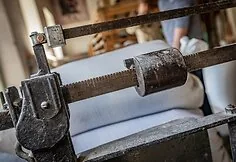
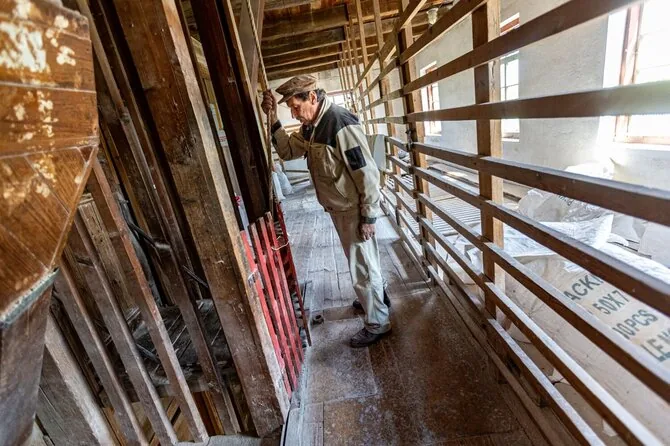
For almost a century, the original mechanisms constructed by Swedish engineers have been working flawlessly, and most importantly, according to the interviewee, the mill is not allowed to “starve.” That’s why three times a year he carefully and meticulously inspects all mechanisms and lubricates their bearings – from the largest to the smallest.
True, over almost a century, several parts of the mill were nevertheless replaced. In the early 1960s, a 10-ton diesel ship engine was installed instead of the original gas engine. And in 1963, the mill was electrified and the old engine was replaced with an electric one, which still operates today.
Read more Lukas Uleckas – about emotions, Kurtinaitis’s attention and the fight with Žalgiris
Also, according to J.Plučys, the not-so-durable linen belts were replaced with ones made of rubberized fabric and have been serving for more than six decades. Another change is strong capron sieves instead of less durable silk ones.
“These three changes were inevitable, and thanks to them, the work became much simpler and easier,” said J.Plučys, who has been managing the mill for almost three decades.
“I really like all kinds of old things, restoring them and bringing them back to life. So this job is just for me – I can’t imagine my life without the mill,” says the miller, who moved to Ramygala from Zarasai in 1981.
Flour – for gifts and tastier baking
Currently, according to J.Plučys, there are only three operating mills in Lithuania – Šlyninkai in Zarasai district, Pranciškus mill in Kaunas, and Ramygala. When asked if his own mill sometimes lacks work, the interviewee stated that he receives clients from all over Lithuania – from Šalčininkai and Skuodas, Žagarė and Prienai, Utena and Šilutė.
After harvesting, many rush to grind flour immediately so they have it for the holidays. So for those three months, similar to Palanga entrepreneurs, we work without any days off.
“Now everyone comes with cars loaded with bags, and before – with horses. Unfortunately, the last horse-drawn cart stopped at our mill seven years ago. Strange things – now in all of Ramygala you won’t find a horse, a cow, or a pig, only a few goats and chickens. But you’ll find plenty of dogs and cats. But they don’t need flour…” the miller joked.
According to him, the most intensive work at the mill takes place from October to December. “After harvesting, many rush to grind flour immediately so they have it for the holidays. So for those three months, similar to Palanga entrepreneurs, we work without any days off. After the New Year, work decreases, we start the mill two days a week. And before Easter, a new wave of work comes, which gradually calms down again. Around Midsummer, we go on vacation, and upon returning, we start a new season,” J.Plučys revealed the dynamics of the mill’s work.</p
Although today there is no problem buying flour in a store, according to the miller, people value flour ground from their own grown wheat. According to him, there is even a tradition among farmers to reward their workers with their own flour before Christmas.
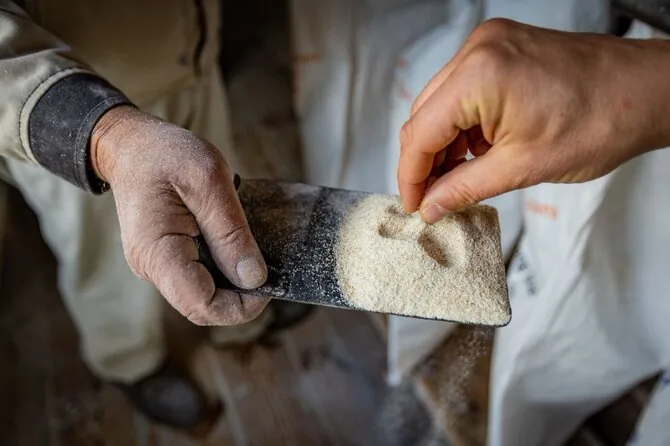
“People also give this flour as gifts to relatives or their children living abroad. Small business owners who make bread or other baked goods also grind flour. They come once a year, grind the amount they need, and we say goodbye until next year,” says J.Plučys, who has been grinding grain at the Ramygala mill for three decades.
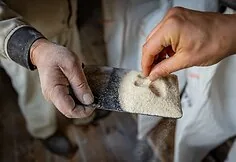
Today, the mill produces as many as nine types of flour – from the finest to coarse, whole grain and premium, as well as bran and semolina flour. However, according to the miller, young housewives no longer have a great need to bake – everything they need can be found in the store.
“You can also buy our ground flour from us, it’s not necessary to come with bags of grain. For ordinary people, 10 kilograms is enough for their needs. And before, they used to buy 50 kilograms: grandmothers used to bake everything themselves at home – bread, ragaišiai (a type of traditional Lithuanian bread), and bandas (another type of baked good)…” the miller said.
For now, the rollers of the Ramygala mill continue to turn, with the old mechanisms carefully maintained by Jonas, the fifth miller of this mill.
When asked about the future of the historic Ramygala mill, J.Plučys stated that he has no replacement and is very worried about it. “Before, there were one or two younger assistants, but they didn’t stay long. This kind of work seems hard to them, not worth it… Young people, of course, want to go to the big city, where computer jobs attract them. And here – many kinds of worries, nobody is interested anymore,” the miller said.
True, his hope is his son-in-law, who is interested in and values antiques. “Maybe someday he will establish a museum here, but that he would start grinding flour – I would highly doubt it.” However, for now, the rollers of the Ramygala mill continue to turn, with the old mechanisms carefully maintained by Jonas, the fifth miller of this mill.