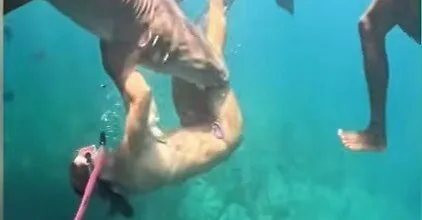
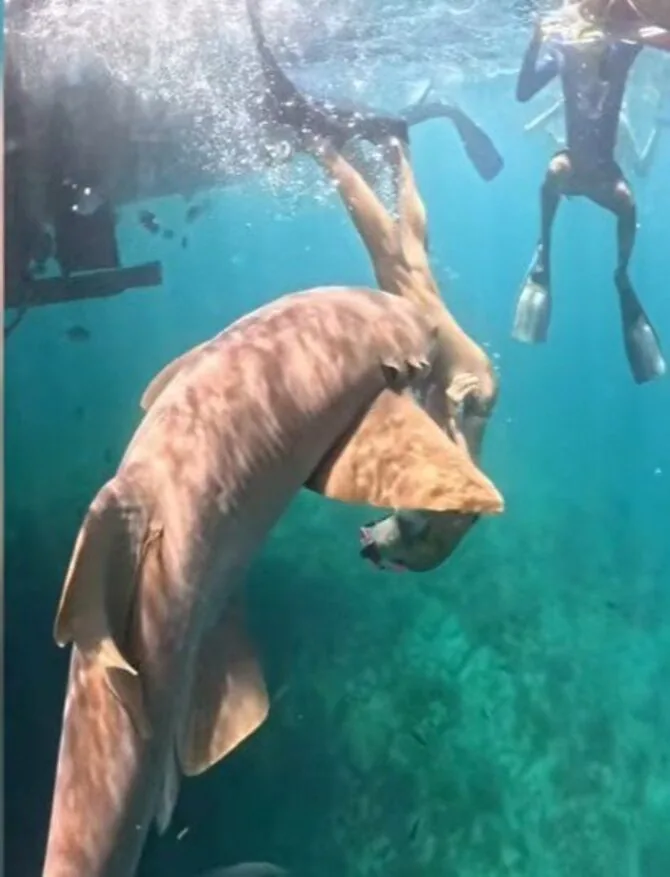
A famous Brazilian lawyer was dragged underwater when a shark about 2 meters long bit her leg. 37-year-old Tayane Dalazen was enjoying a shark diving trip off the coast of Brazil when a huge nurse shark bit her thigh and dragged her underwater.
Read more 258 foreigners detained in Pakistan during a raid on a phone scam center
Social media creators were left with painful wounds on the leg after the horrific incident. It is claimed that the accident happened when the organizers allegedly fed the sharks to make them come closer to the tourists.
Recalling the frightening moment, Tayane told the BBC: “I realized something was wrong because the sharks were at the surface. There were a lot of them.
When the shark bit me, the pain was very intense. I stayed calm because I knew I couldn’t fight the animal.”
The resident of São Paulo posted a video of the incident online, which quickly received tens of millions of views.
Although the woman insisted that “it wasn’t for social media” and that she consciously did not provoke the predator, she admitted she got too close.
This gruesome bite happened at a time when more and more influencers worldwide are risking their lives for the so-called “perfect selfie.”
Experts are now sounding the alarm about the increasing number of videos showing reckless thrill-seekers petting, touching, “riding” sharks, or swimming dangerously close.
In July, a fishing content creator almost lost his leg when a reef shark attacked him during spearfishing. In December, a Chinese influencer was bitten in the Maldives.
Elsewhere in the Caribbean, a tourist tragically lost both hands while trying to photograph a bull shark in shallow water. Marine experts warn that people chasing social media attention are playing a deadly game with wild animals.
Read more Tomas Pribušauskas became the CFO of IAE
Shark scientist Kristian Parton, host of the YouTube channel “Shark Bytes,” said: “Now I see such videos every week, and there are many more than before. We will see people getting into very serious incidents with sharks.”
He added: “We are talking about a true top predator, a very large wild animal. You wouldn’t go to Serengeti National Park and try to put your hand on a lion’s snout.”
Despite the worrying increase in the number of bites, some famous influencers continue to defend touching animals, claiming it is done for “educational” purposes.
Controversial shark diver 38-year-old Ocean Ramsey said her content is meant to inspire people to protect nature.
“I observe their behavior, and they choose to interact with me. They always come closer first. The general public also needs to be given some responsibility,” she said.
However, scientists criticize influencers and warn that invading a shark’s personal space causes huge stress to the animal and increases the risk of defensive bites to people.
Dr. Jack Cooper said: “I really can’t explain how approaching a shark, touching it, or riding it could somehow help conservation. All you do is show a shark being harassed by a human.”
Marine biologist Eric Clua said: “The message sent by influencers is: ‘Look! Touch the shark, nothing will happen to you.’”
With shark diving tours rapidly gaining popularity in holiday destinations like the Maldives, experts issue a strict warning: chasing social media attention can come at a very high cost.