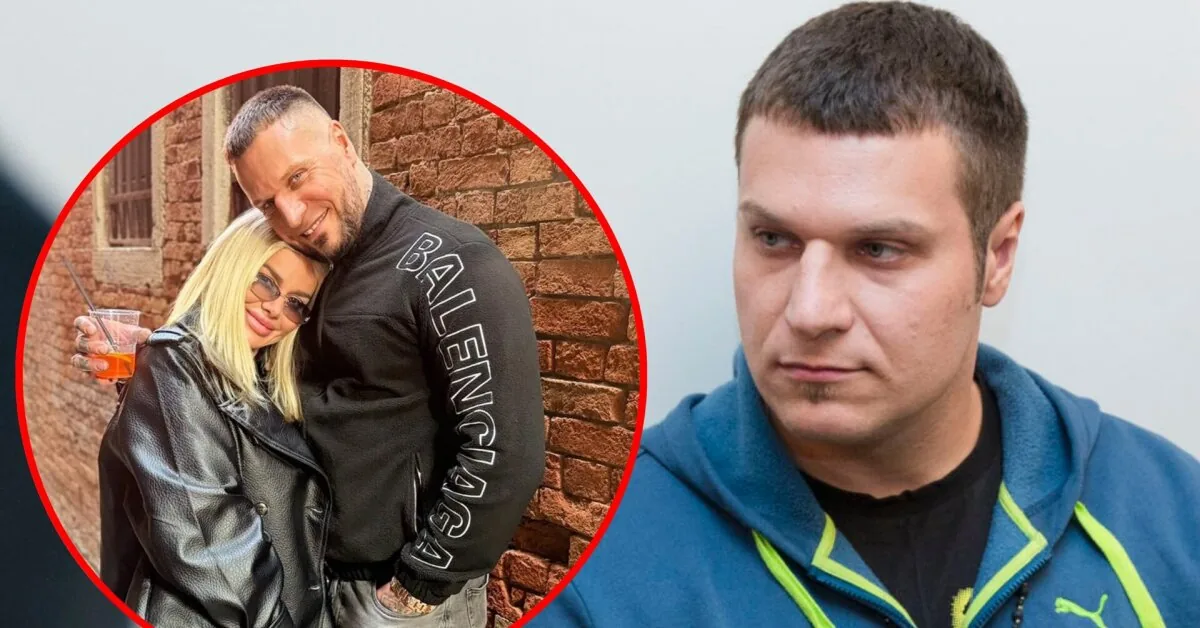
This weekend, the wedding of Laimonas Lapinskas, leader of the “Lapinai” gang, who was imprisoned for 20 years and released last January, and beauty specialist Aliona Lapinskienė will take place. After the man was released from prison, the couple actively shares moments of their life in the public space, and also publicly announced their upcoming marriage.
Read more Victoras Wembanyama blamed himself after a fatal mistake: «I messed up»
The editorial office of 15min/Žmonės.lt decided not to prepare a report from the wedding, as such lifestyle texts would create an impression of heroizing people from the criminal underworld.
Followed by 20 thousand people
Experts agree – by publicizing their “glamorous” personal lives and gathering followers on social networks, criminals often seek to promote themselves and present their lifestyle as attractive.
“People are curious and interested in various phenomena, events, especially those related to mafia structures – that’s already a classic. Not everyone, but some people are curious,” former Lithuanian Police Commissioner General Vytautas Grigaravičius told Žmonės.lt.
Laimonas Lapinskas has more than 20,000 followers on Facebook.
V. Grigaravičius, interviewed by Žmonės.lt, said that following specific figures from the criminal underworld, as well as an interest in the “true crime” genre (Eng. true crime – ed. note), can be an innocent hobby, but there is always a risk of being tempted by the lifestyle and notoriety promoted in such content.
“As everywhere in the world, so in Lithuania, people are interested out of curiosity – they read books, watch movies. But there is a part of those who are infected by this bug and they also choose such a (criminal) path,” said V. Grigaravičius.
All publicity is good publicity?
According to the official, although people are interested in reading about the lives of various figures from the criminal underworld, covering their personal events is publicity for them – and this can quickly become dangerous.
“In this way, they can also attract new people to their gangs. This shows not only their cruel deeds, but also a kind of romance, beautiful events – that they know not only how to kill, extort, but also how to celebrate. And how to celebrate – with big money and so on.
If we take the Daktarai gang, local people knew about them, but the Lithuanian public didn’t know until the media started writing. The same applies to the “Vilnius Brigade” and other gangs.
They started writing interviews about them, and look – their authority began to rise,” said V. Grigaravičius.
The former police chief added that he believes the line between covering a situation and romanticizing a gang is extremely thin: “If articles start being written about a certain gang, they are gradually heroized in this way. And it doesn’t matter if the article is negative, it’s still publicity. In this way, they are, as it were, elevated to a higher level.”
The former Commissioner General stated that criminals sharing moments of their lives is far from new. The legendary mafia boss Al Capone also used public attention and the media to spread his lifestyle, as did gangs that raged in Lithuania in the 1990s.
“In our time, we observed a phenomenon where a journalist communicated with a gang leader. He would give his created text to the leader to read, and the latter would cross something out, or ask to add something. That article would then be published positively,” said the interviewee.
Calls for responsibility
V. Grigaravičius emphasized that members of organized crime seek notoriety for several reasons – it influences not only victims, but also competitors and those around them.
“Their desire to become known is for several reasons. One thing is because of competitors: if they are written about, they feel a head taller than their competitors. Because of the businessmen they extort. Once famous, they feel that they are invincible and unpunishable.
And another thing is young people who look at them and then decide to follow in their footsteps, join those gangs,” V. Grigaravičius is convinced.
The former Commissioner General also recalled a case when excessive publicity almost severely harmed a police operation.
“I remember a case in my service when Gedeminas Kiesus (then head of “Mažeikių nafta”), his son, and driver were murdered in Mažeikiai. He left, picked up his son who had returned from England, and disappeared.
We had already found a lead, and a journalist called me, asking for photos of the suspects. I asked him to be a human, because it would ruin the operation. After me, he contacted the prosecutor of the Prosecutor General’s Office, who also replied negatively.
The next day, an article came out saying that we were already detaining people, and our photos were included. It could have ruined the operation, the suspects could have gone abroad or killed an accomplice. The responsibility of journalists is enormous,” V. Grigaravičius is convinced.
However, he sometimes sees a light at the end of the tunnel – according to the interviewee, there are also several situations where a former active member of a criminal gang, having left prison, completely changes his life and becomes a good example for society.
“I know more than one person who was a member of organized gangs and, after leaving prison, some went into business, some went abroad to work. I still communicate with some of them. They returned to a normal life, severed ties with crime. Not all, unfortunately, but there certainly are such cases,” assured V. Grigaravičius.
“One wants to bask in the light of recognition”
Meanwhile, criminologist Gintautas Sakalauskas told Žmonės.lt that how people who have committed crimes are reflected in society and the media often depends on the level of the crime they committed.
“There are all sorts of minor crimes, but here (in Lapinskas’ case) we have organized crime.
Read more 5 exercises for men over 50 that will stop age-related muscle loss
There are many people who have been convicted and are now, for example, involved in politics, are celebrities, live public lives.
The media writes about what people find interesting. And legal matters are not necessarily a priority. I wouldn’t condemn the media too much, nor those people who are interested in such things,” the interviewee added.
According to the criminologist, society is often fascinated by criminals’ ability to get rich, to achieve a certain status – and to do so not always by legal means.
However, G. Sakalauskas believes that not every criminal would manage to achieve such “fame” as some past gang leaders. And followers and attention are often increasingly drawn to them not by anything else, but by their already accumulated recognition and status.
“There are all sorts of criminals, who may not have so many followers, some of whom are called to be dealt with, to be burned in the middle of Lukiškės Square. And some, apparently, attract people’s attention in some way, gain recognition, and others want to bask in the light of that recognition, regardless of how it was achieved,” he pondered.
Unnecessary curiosity?
Aliona, the wife of the “Lapinai” gang leader released last year, is well-known from Lithuanian media and social networks. The woman owns a beauty salon in the capital, and she is invited to film entertainment television shows where she is introduced as the aforementioned criminal’s beloved.
According to the well-known criminologist, although society has the right to know what kind of people and with whom they are associated live among them, he sees a clear line in the dissemination of information about criminals’ relatives.
“A person has the right to privacy, and as long as those boundaries are not crossed, perhaps everything is fine. There is a very good recommendation from the Council of Europe to protect a person from unnecessary curiosity. The question always is, how significant are these things to society, and how much of it is unnecessary curiosity,” G. Sakalauskas told Žmonės.lt.
And are there cases when it is important to shed light on the life of a former criminal? G. Sakalauskas believes so – some people reconsider their actions and change after serving their sentence.
“I would see a line between a person’s crime, punishment and its execution, and life after punishment with the right to reintegrate into society. Every person has the right to integration and the right to live in society.
If a person has served their sentence and everything is normal, if the punishment had a positive effect on them, it can be expected that they can live in society like everyone else.
Then the question is, is it ethical to reproach a person for the rest of their life after serving their sentence for having committed that crime,” the interviewee pondered.
Advises to protect teenagers
The criminologist said he is not categorically convinced that the popularity of criminal underworld figures on social networks has a widespread influence on people’s desire to engage in illegal activities themselves – gangs often do not employ such strategies nowadays.
However, G. Sakalauskas stated that it is still necessary to protect teenagers from this – and their closest circle must do so.
“Teenagers always look for authorities. In our assessment, these can be positive or negative authorities. That person can be strong, rich, interesting, regardless of whether it’s in a legal or illegal sense.
Teenagers’ lives usually don’t unfold like those of their authorities, whoever they may be. It depends more on upbringing, social environment, and authorities present in their immediate surroundings,” Gintautas Sakalauskas explained to Žmonės.lt.
20 years behind bars
L. Lapinskas, nicknamed “Lopas” (Rag), repeatedly tried to be released early, but institutions rejected his requests. Nevertheless, last year his 20-year prison sentence expired.
“We inform you that the person you mentioned, having fully served his sentence, was released today,” Virginija Vervečkaitė, a representative of the Prison Service, told 15min on January 17, 2025.
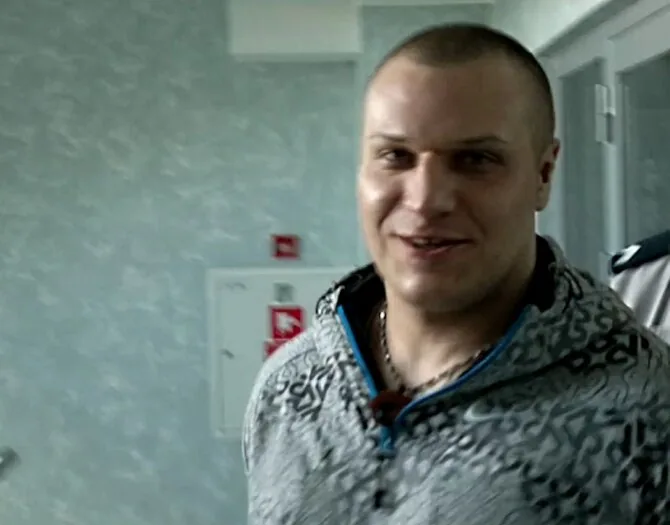
L. Lapinskas, convicted of various serious and very serious crimes, was arrested in 2005 and heard the court’s verdict three years later.
He was found guilty of murder, attempted murder, organizing a criminal association, as well as bodily harm to several persons, torture, disturbing public order in a capital club, large-scale drug distribution, and extortion.
The prosecution sought to imprison the man for life.
By verdict, the convicted person’s property was confiscated – 58 thousand 860 litas (more than 17 thousand euros).
Who are the “Lapinai”?
L. Lapinskas led a gang that engaged in extortion and self-governance, stored and distributed large quantities of narcotic substances – heroin, cannabis resin, methamphetamine – in rented apartments and garages.
The gang also illegally acquired and possessed various caliber rifles, pistols, and explosives. Two murders were attributed to this gang.
The main leader of the “Lapinai” is identified as Justas Belousovas, who successfully hid from law enforcement – it was for his cunning and ability to avoid capture that the man earned the nickname “Lapinas” (Fox), from which the entire gang’s name originated.