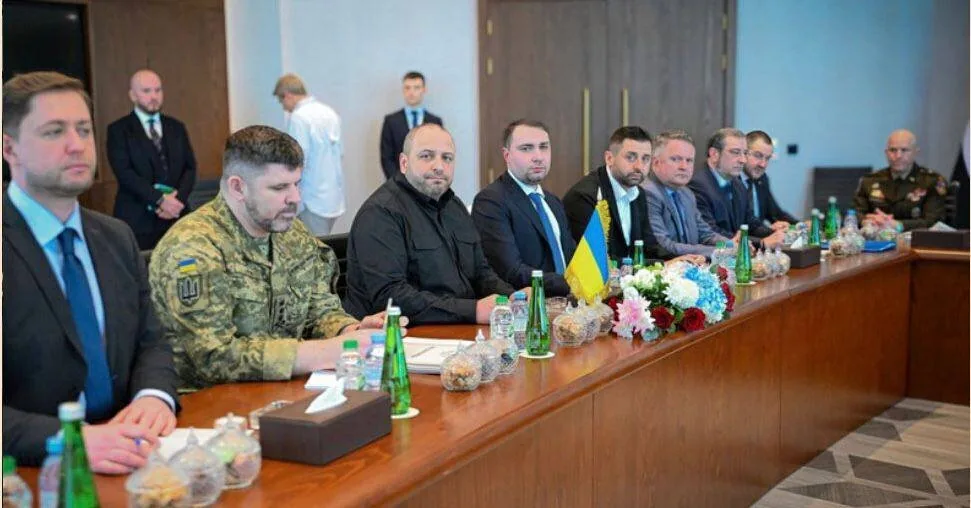
Russian state media and pro-Russian social media actors have started spreading a new manipulation claiming that the European Union (EU) is turning away from Ukraine and preparing to restore relations with the Kremlin.
Read more Maltas Labour Party won a historic fourth term
This narrative is based on a statement by the President of the European Council (EUC), António Costa, about the long-term European security architecture and a possible peace process in the future.
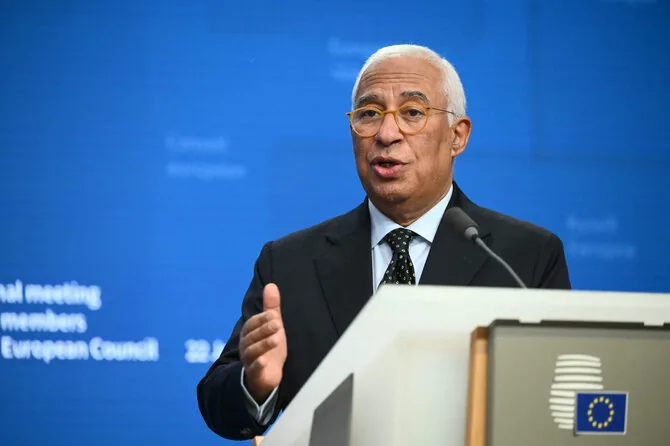
Propaganda spreaders present his words as alleged proof that European politicians previously encouraged Ukraine to abandon peace agreements, and now supposedly seek to start negotiations with Russia bypassing Kyiv.
However, such an interpretation does not correspond to either the context of A. Costa’s statement or the consistent position of the European Union that no decisions regarding Ukraine can be made without Ukraine’s own participation.
These claims spread after reports that EU leaders are considering what role the Union could play in a possible negotiation process regarding the war in Ukraine.
On May 7, the Financial Times reported that EU heads of state are discussing the possibility of direct contact with Russian President Vladimir Putin, amid declining confidence in the effectiveness of US mediation efforts.
At European Day events, the President of the European Council António Costa confirmed that the European Union is ready to engage in a diplomatic process if it helps achieve a just and sustainable peace.
However, he also emphasized that European leaders constantly coordinate their actions with the Ukrainian leadership.
In other words, the discussion was not about negotiations bypassing Kyiv, but about a possible EU role in a process where Ukraine remains the main decision-maker.
A. Costa also stressed that European leaders maintain constant contact with the Ukrainian authorities, thus refuting the claims spread by Russia.
“That is why we support Ukraine, that is why we impose sanctions on Russia, and precisely for that reason we can participate in all peace negotiations aimed at a just and sustainable peace in Ukraine.
We maintain contact with our Ukrainian friends to support them, and, of course, when the right moment comes, we will have to negotiate with Russia to resolve common security issues.
We do not want to contradict President D. Trump’s initiative, but at the same time we are ready to do what is necessary, because we also have to address issues related to Ukraine’s security,” – emphasized A. Costa.
The President of the European Council A. Costa stated that the European Union can play an important role in future negotiations with Russia. This position was also supported by Ukrainian President Volodymyr Zelensky.
On May 17, 2026, both leaders discussed possible peace negotiation prospects and Europe’s role in achieving long-term security in Ukraine and the region.
The Ukrainian president emphasized that Europe must participate in any negotiations to end the war.
“Europe must be at the negotiating table. It is important that it has a strong voice and real representation in this process. It is also necessary to decide who specifically will represent Europe,” said V. Zelensky.
A similar position is held by the EU High Representative for Foreign Affairs and Security Policy Kaja Kallas.
She previously reported that possible negotiations with Russia will be discussed at an informal EU foreign ministers meeting in the “Gymnich” format in Cyprus on May 27–28.
K. Kallas has also noted that one of the main European security problems remains Russia’s aggressive policy towards neighboring countries.
The “Gymnich” format is an informal meeting of EU foreign ministers where the most important foreign policy and security issues are discussed. No official decisions are made at these meetings, but they often help align member states’ positions ahead of later formal EU decisions.
The fate of the country is not decided behind its back
A. Costa expresses a moderate opposing position. On February 24, 2025, at the international high-level meeting supporting Ukraine, he stated that no reliable and successful negotiations, no long-term peace are possible without Ukraine and without the European Union. Only Ukraine itself can decide when the conditions for negotiations are ripe.
At the December European Council press conference, he reiterated: the only way to bring Russia to the negotiating table is to strengthen Ukraine.
This position is also reflected in official EU decisions. On December 18–19, 2025, the European Council emphasized that the path to peace cannot be determined without Ukraine, and the EU will continue to actively participate in peace efforts.
“No word about Ukraine without Ukraine” – a widely used principle in international politics, meaning that no decisions about Ukraine’s future, territorial integrity, security, or peace conditions can be made without Ukraine’s participation.
This provision is based on the sovereignty and right to self-determination of states. Its importance became especially clear after the 2014–2015 Minsk agreements, which were acceptable to Russia and Ukraine’s partners France and Germany, but did not receive sufficient support in Ukraine because some of the country’s interests in the negotiations were sidelined.
Due to this experience, Western countries have consistently emphasized since Russia’s large-scale invasion in 2022 that any negotiations to end the war must take place with Ukraine’s direct participation.
The European External Action Service has repeatedly warned that a peace agreement made ignoring Ukraine’s position could give Russia the opportunity to regroup, restore military capabilities, and renew aggression in the future.
15min verdict: false. Russian media and pro-Russian social media channels misleadingly interpret the statements of European Council President A. Costa, creating the impression that the European Union intends to renew relations with the Kremlin and negotiate Ukraine’s future bypassing Kyiv. However, A. Costa spoke about a possible EU role in the upcoming peace process and clearly emphasized that European leaders constantly coordinate actions with the Ukrainian leadership.
The publication was prepared by 15min in cooperation with Meta, aiming to stop the spread of misleading news on social media. More about the program and its rules – here.