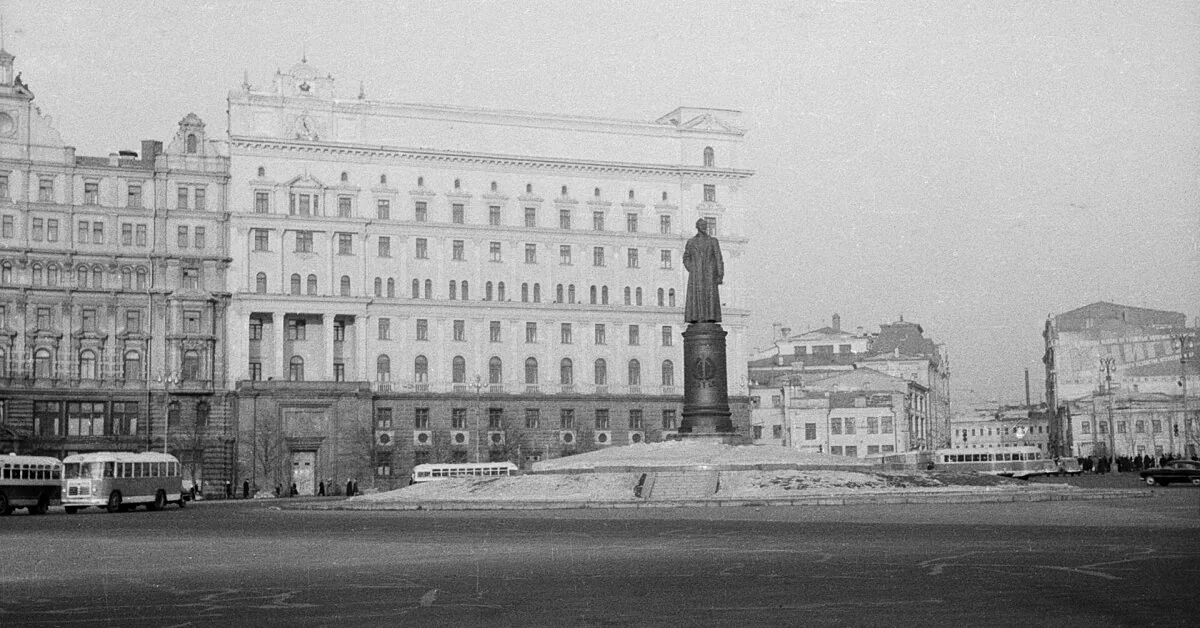
Reconstruction work on Lubyanka Square in the center of Moscow has been underway for several months, wrote opposition Russian journalist and author of historical books Mikhail Zygar in his column “Spiegel”.
Read more Masiulis after the step to the final: «The result is satisfying, the game is not»
“However, it seems that Lubyanka Square will not resemble Provence for long. According to my sources, a political decision has already been made – Dzerzhinsky will return to his place,” he said.
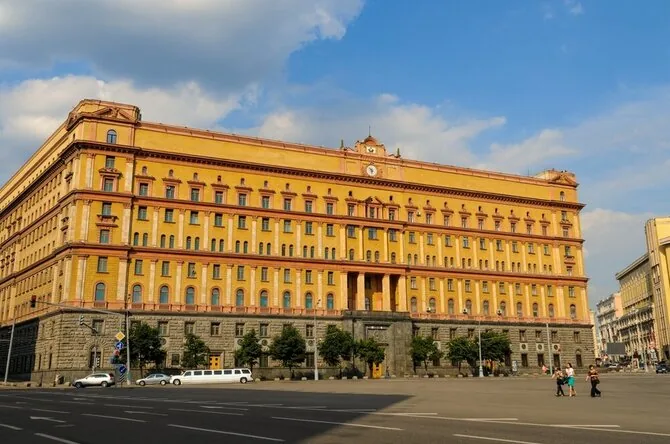
The journalist did not disclose which sources he relied on. Officially, neither the Russian federal government nor the Moscow city administration has yet announced plans to return the monument of Felix Dzerzhinsky to Lubyanka Square.
According to M. Zygar, the return of Felix Dzerzhinsky’s monument to Lubyanka Square should have not only historical but also symbolic significance.
After the collapse of the August 1991 coup, the monument to the founder of the Soviet special services was toppled from its pedestal. According to M. Zygar, at that time it became one of the symbols of the collapse of the totalitarian system, and now its return would be marked by the symbolic restoration of the Soviet legacy.
The idea of returning the monument has been raised several times by the Communist Party of Russia. In April this year, Yuri Afonin, first deputy chairman of the party’s Central Committee, stated that this initiative remains relevant. This statement came after Russian President Vladimir Putin gave the FSB academy in Moscow the name of Felix Dzerzhinsky.
“I believe that the president’s decision further strengthens our initiative,” J. Afonin said at the time.
The monument stood in Lubyanka Square from 1958 to 1991. Footage showing ropes being attached to the monument created by sculptor Yevgeny Vuchetich, and later it being toppled from the pedestal by a crane, became one of the most vivid symbols of the peaceful anti-communist revolution’s victory and the beginning of a new chapter in Russian history.
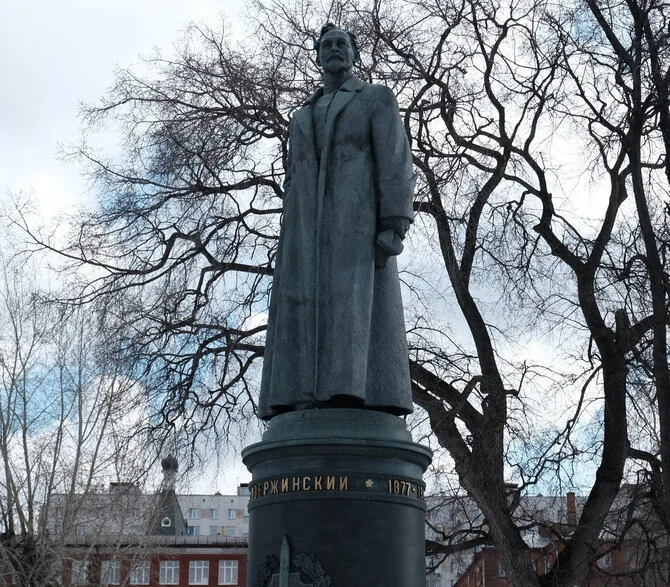
Creator of Bloody Terror
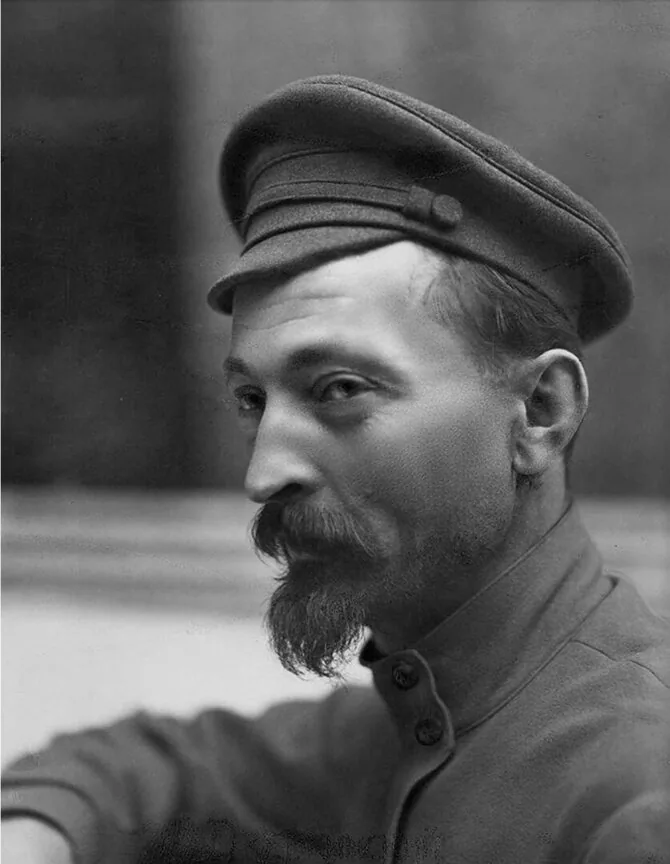
Felix Dzerzhinsky, considered the father of the Russian Special Commission – Cheka – commonly referred to simply as the CK, or “Iron Felix,” the “first Chekist,” is one of the most famous and bloodiest Bolsheviks, whose origins are linked to Lithuania.
After the Bolshevik coup in 1917, he founded the Soviet secret police and led it until his death in 1926. The institution he initiated became one of the main pillars of the early Soviet Union’s repressive apparatus.
The CK operated with almost no legal procedures – it carried out arrests, took hostages, organized executions, and fought regime opponents. Dzerzhinsky himself did not hide that he considered terror measures justified to achieve the revolution’s goals.
According to historians, his most important legacy was not his personal qualities but the system he created, in which state interests were placed above the rule of law. During the so-called Red Terror from 1918 to 1920, tens of thousands of people fell victim to the CK, although the exact number of deaths remains a subject of debate.
The organization founded by Dzerzhinsky is considered the predecessor of later Soviet security structures – from the GPU and NKVD to the KGB. The current Russian Federal Security Service (FSB) is regarded as the successor to these institutions’ traditions.
The Myth of “Iron Felix”
Russian special services still consider Dzerzhinsky their institutional predecessor. The current Federal Security Service (FSB) traces its origins to the Cheka he founded, and its central headquarters is still located in the same Lubyanka Square complex in Moscow where Soviet security structures operated.
On August 23, 1991, after the failure of the coup against the Soviet Union’s reform process, a crowd in Moscow toppled the 15-ton statue of Dzerzhinsky in front of the KGB headquarters.
These images became one of the most vivid symbols of the Soviet Union’s collapse. For many Russian residents, the monument embodied the state’s repressive power – from the Cheka’s founding after the 1917 revolution to the USSR’s collapse.
Historians note that the monument’s toppling was not only a protest against a specific figure but also a symbolic distancing from the entire chain of repressive institutions – from the Cheka to the NKVD and KGB.
However, in recent years, calls to return Dzerzhinsky’s memorials to public spaces have become more frequent in Russia. Critics view such attempts as part of a broader Kremlin-led rehabilitation of the Soviet past, where creators of the repressive apparatus are presented not as organizers of terror but as symbols of a strong state.
They argue that this trend also reflects a changing official attitude toward the crimes of the Soviet regime and the role of state violence in politics.
For the same reason, initiatives periodically revived in Russia today to return his monument are seen not only as a matter of historical memory but also as a sign of political course and attitude toward the Soviet repressive legacy.
Read more Emmanuel Macron: nothing justifies escalation in Southern Lebanon