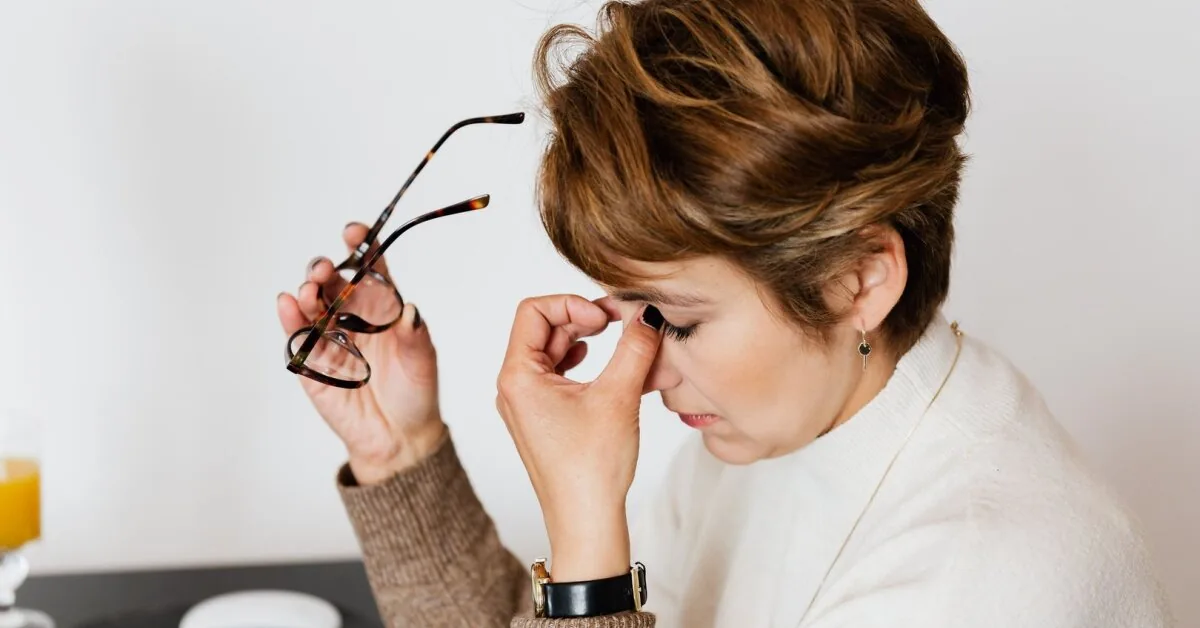
But how to understand when a headache is just a headache, and when migraine can be suspected? And why is it worth paying more attention not only to treatment but also to sleep for those who experience it?
Family doctor, head of the New Town Primary Health Care Center Irmantas Aleksa says that migraine differs from the usual tension-type headache not only in the intensity of pain.

Its nature, accompanying symptoms, and impact on a person’s well-being differ. And one important everyday factor that may influence migraine attacks is the quality and pattern of sleep.
Not every headache is a migraine
According to I. Aleksa, it is important to distinguish migraine from the much more common tension-type headache.
“The intensity, nature, and symptoms of migraine are completely different from tension headaches, so it is important to diagnose it as early as possible,” says the family doctor.
One characteristic sign of migraine is a pulsating pain often felt on one side of the head. It may be accompanied by nausea, vomiting, general malaise, and sensitivity to environmental stimuli. Some people experience aura – neurological symptoms such as flickering in the eyes or other visual disturbances, which usually appear before the headache starts.
However, migraine can manifest differently in different people, so recurrent severe headaches should not be self-diagnosed.
Rūta Trakšelė, creator of SHIZURI, pharmacist, and certified endobiogenics specialist who has been interested in sleep quality and its impact on daily well-being for many years, draws attention to another aspect – sleep is not just the number of hours spent in bed.

It is also important under what conditions we rest, whether the body can relax at night, or if the sleep environment interferes. This very idea – that the entire sleep environment is important for quality rest – became a key part of the philosophy behind SHIZURI’s sleep products.
Stress, skipping meals, and poor sleep – common triggers
A migraine attack does not always start due to one clear cause. Often several everyday factors combine.
“The most common triggers are stress, insomnia, skipping meals, dehydration. Every person is different, so the same triggering factors may affect people with migraine differently,” explains I. Aleksa.
That is why, according to the doctor, one poorly slept night does not necessarily cause a migraine attack by itself. But if sleep deprivation is combined with a stressful day, missed meals, a large amount of coffee, and too little water, the risk may increase.
Sleep is important in the context of migraine even once an attack has started. The doctor notes that at such times, people are often advised to rest or sleep in a quiet, dimly lit environment.

What can be done “here and now”?
Not every headache means migraine, and its causes can be very diverse. However, when feeling a headache, it is worth first remembering simple things that are often forgotten during a busy day.
Pharmacist R. Trakšelė highlights three simple steps that can be tried “here and now” if there are no worrying symptoms.
“First – a glass of water. Even slight dehydration, fatigue, or long work at a screen can contribute to headache. If you have not eaten for a long time, it is also important to eat – hunger and glucose fluctuations can also trigger headaches in some people,” says R. Trakšelė.
If the pain is pulsating, she suggests trying a cool or cold compress on the forehead or temples. The third tip is to reduce environmental stimuli at least briefly.
Read more Military: Russian informational pressure remained low in August, focus on Kaliningrad, elections
“Give yourself 15–20 minutes of calm. Close your eyes, consciously relax your jaw and shoulders. Sometimes the nervous system just needs to reduce the amount of stimuli,” advises the pharmacist.
However, these methods do not replace migraine treatment or a doctor’s consultation, especially if headaches recur, worsen, or other unusual symptoms appear.
Migraine occurs much more often in women
Women should pay special attention to migraine. According to I. Aleksa, they experience migraine several times more often than men, and for some women, the frequency of attacks may be related to hormonal fluctuations.
“Hormonal fluctuations and the menstrual cycle can influence migraine, especially if the woman herself notices a clear connection between attacks and certain cycle phases. However, this is not the same for everyone – hormonal changes may have a greater impact on some women and less on others,” says the family doctor.
Therefore, during pregnancy, perimenopause, or other significant hormonal changes, the course of migraine may also change individually.
Not only the hours slept matter
When talking about migraine and sleep, attention is often focused on one number – how many hours a person has slept. But I. Aleksa says that the sleep pattern itself is no less important.
“First of all, the best possible sleep pattern is important. If a person goes to bed and wakes up at similar times, falls asleep well, and wakes up rested, the body has a steady rhythm. With poor sleep hygiene and constantly changing sleep duration, the brain may not rest properly,” explains the doctor.
From R. Trakšelė’s perspective, regular sleep is only one part of quality rest. Equally important is whether a person truly rests comfortably at night – factors such as temperature, light, noise, mattress, pillow, and head and neck support matter.
Therefore, when talking about sleep, it is worth evaluating not only how many hours we spent in bed but also how well we slept those hours.
The sleep environment is not a trivial matter
At this point, the views of both the doctor and R. Trakšelė, who develops sleep quality solutions, coincide.
“During a migraine attack, it is recommended to create the most comfortable conditions possible – to be in a dark, quiet, pleasantly tempered environment. A suitable pillow and mattress can help ensure better sleep and proper neck relaxation,” says I. Aleksa.
The doctor emphasizes that no direct link has been established between a specific sleeping position and migraine attacks. However, overall body position and comfort during sleep are important. Sleeping on the side or back with proper head and neck support can prevent unnecessary neck muscle tension. Therefore, a suitable pillow is very important.
When can a headache no longer be simply “slept off”?
Although rest during a migraine attack can help, I. Aleksa warns – there are situations when waiting or trying to overcome a headache at home is not possible.
“You should be concerned if the pain is much stronger than previous migraine attacks, if limb weakness, fever, inability to bend the neck to the chest, unusual visual field disturbances appear, or if the migraine attack lasts longer than 72 hours,” lists the family doctor.
Asked which three everyday habits he would first recommend changing to a person experiencing migraine, I. Aleksa starts exactly with what has been discussed in most of the text – sleep.
“First – sleep properly. Second – exercise and eat a balanced diet. Third – avoid stress,” summarizes the family doctor.
Read more Three new apartment buildings will be built in the capital: about 150 apartments will be offered