The author’s travel films can be found on YouTube. More news – Facebook and Instagram.
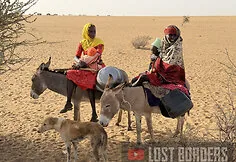
Looking at them, I keep thinking about one thing. For many children living here, life is almost predetermined from birth. This boy, who today herds camels, will probably do the same in ten years. And in twenty – as well. His world fits between a few wells, pastures, and the desert horizon. Many of them will never fly on a plane, see a university or a big city.
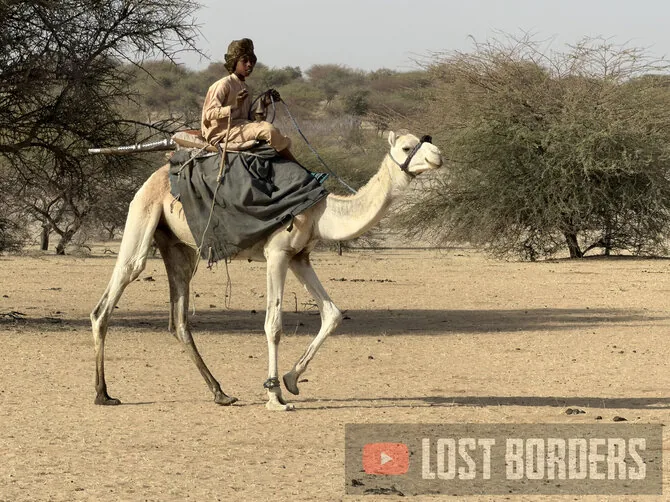
The deeper I travel into Chad, the more it seems that I am leaving the 21st century. Life here flows according to rules that have hardly changed for centuries.
However, there is less romance in this land than it might seem at first glance.
The deeper I travel into Chad, the more it seems that I am leaving the 21st century.
The Sahara is the largest hot desert in the world. Its area is about 9 million square kilometers – almost as much as the entire United States of America.
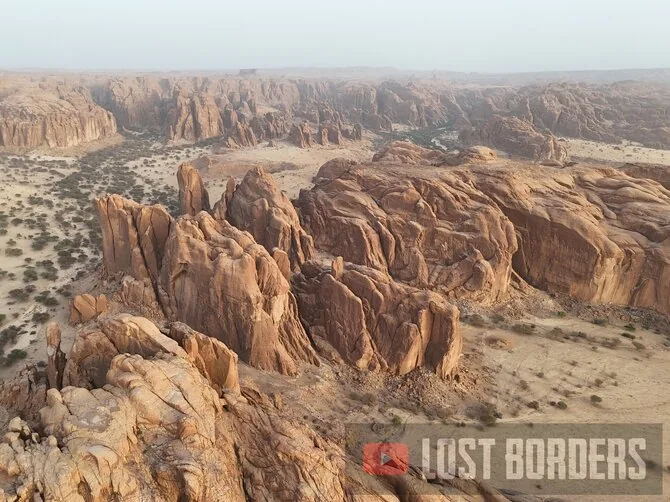
And yet the most interesting thing is that thousands of years ago there was a completely different world here. Rivers flowed in the Sahara, lakes shimmered, elephants, giraffes, and hippos lived. To this day, drawings can be found on rocks depicting animals that would look like something out of a fantasy movie in today’s Sahara.
Today, all this is hard to even imagine.
Around me, I see only stones, sand, and heat. It seems that life should not exist here. But people have adapted.
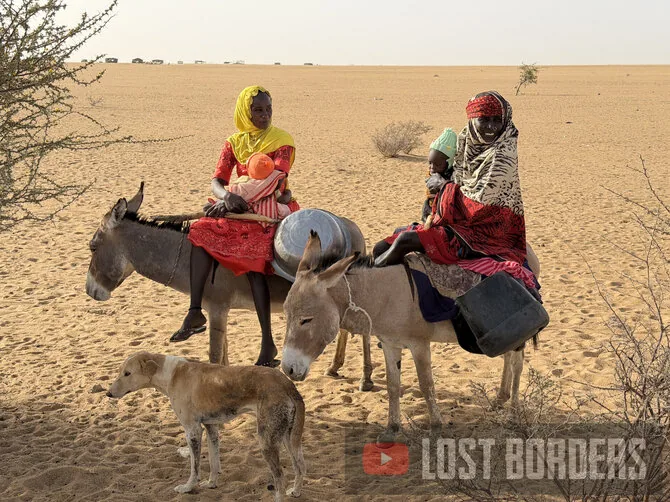
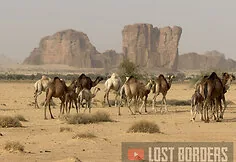
During droughts, locals sometimes travel tens of kilometers with camels, goats, and sheep just to reach water. Some animals do not survive such journeys. Weakened, they simply remain in the desert. And this entire huge territory comes to life for just a few weeks a year when the rain comes.
And it is precisely water that is the reason why today I am heading to one of the most important sites in the region.
After a few hours of travel, a well appears on the horizon.
It seems that life should not exist here.
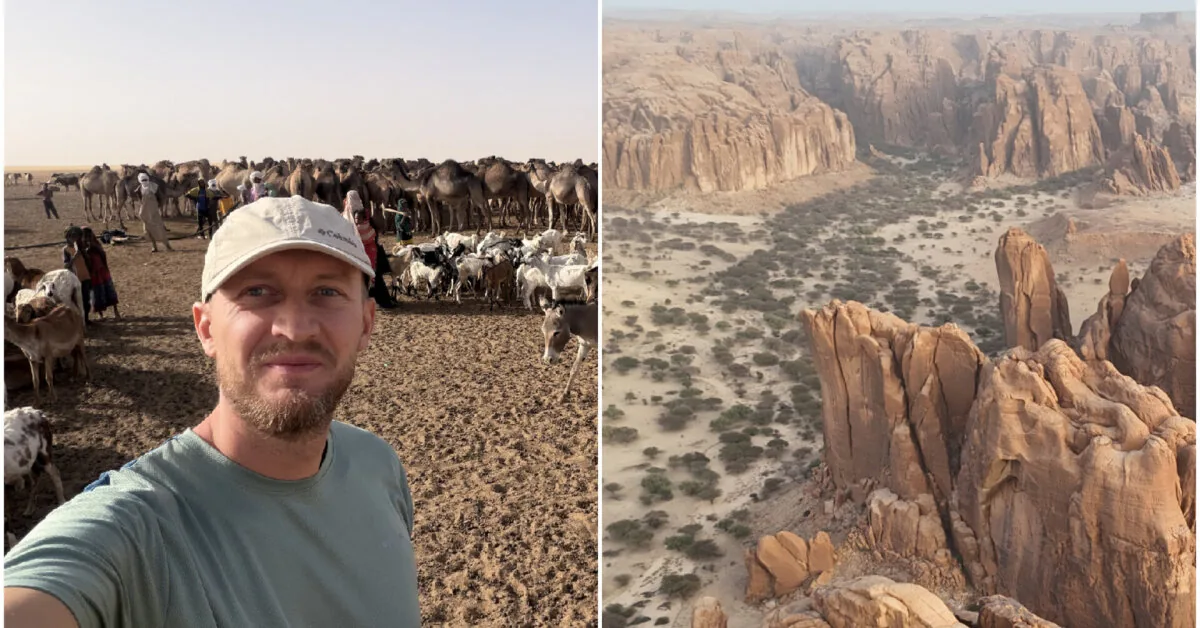
At first glance, it does not look special. But within a radius of tens of kilometers, it is the only water source. Hundreds of animals and people gather here. You can hear the roaring of camels, the bleating of goats, the shouts of people, and the creaking of ropes.
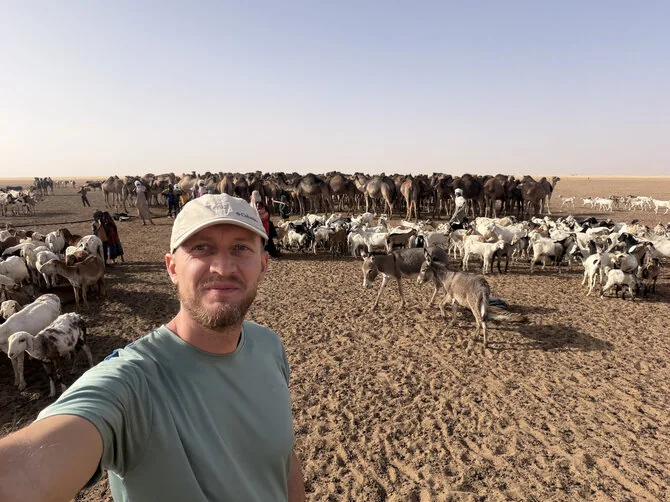
Water here is more valuable than money.
What surprises me the most is how the water is extracted. Animals walk in circles around the well and pull heavy containers from a deep underground shaft. This method has been used for centuries and in some parts of the Sahara has hardly changed to this day.
Watching this process, I understand one simple truth: if the well dried up, all life around it would disappear.
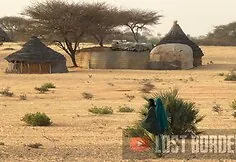
Nearby, I discover a small village.
Houses here are built from clay, mud, and straw. Some walls are woven entirely from dry grass. Wood is so rare that even a simple stick is considered a valuable item.
Locals talk about the rain.
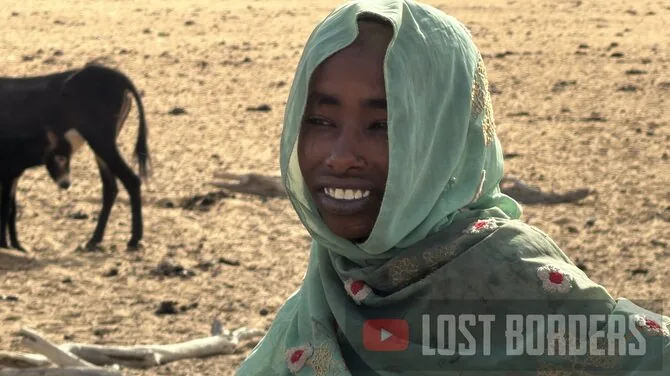
Rain often ruins our plans. Here it is celebrated.
When clouds appear on the horizon after a long drought, people come out of their homes and wait for the first drops. Children jump in puddles, and adults look at the sky as if watching a miracle.
But rain has another side.
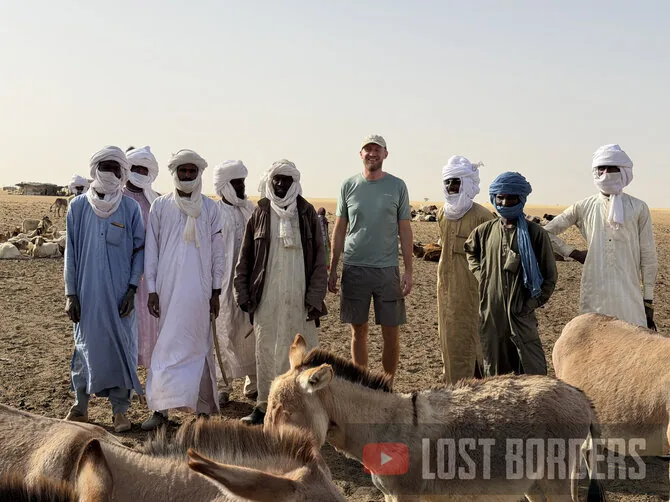
After rains, standing water appears, and with it – millions of mosquitoes. Malaria in these places is one of the greatest threats. In some regions, it claims more lives annually than drought.
Malaria is so common here that it is talked about almost as much as we talk about the flu. The only difference is that this disease often ends in death.
Read more Changes in the Neringa Council: a new council member was sworn in
Older men have several wives, dozens of children, and even more grandchildren.
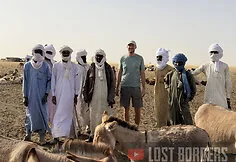
Many villages consist of large families. Sometimes an entire village is essentially one family. Older men have several wives, dozens of children, and even more grandchildren. Over several generations, this forms an entire community.
Continuing my journey through the desert, I see what I came here for.
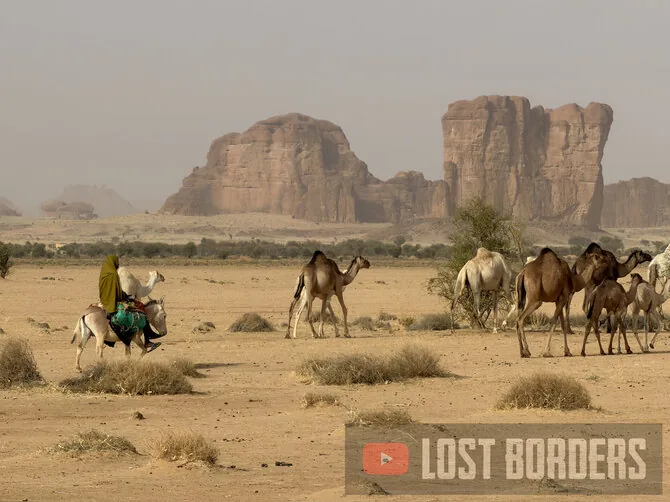
A caravan.
A long line of camels slowly moves through the sand. All the people’s belongings are piled on them – food, water, fabrics, tents. Everything needed to survive.
Looking at them, I feel as if I have entered another era.
It’s hard to believe, but such caravans still exist in the 21st century.
For hundreds of years, they connected villages, wells, and trading places. In some parts of the Sahara, they still serve the same function. And looking at them, I feel as if I have entered another era.
But then another sight appears on the horizon.
A huge truck.
Then a second.
Another one.
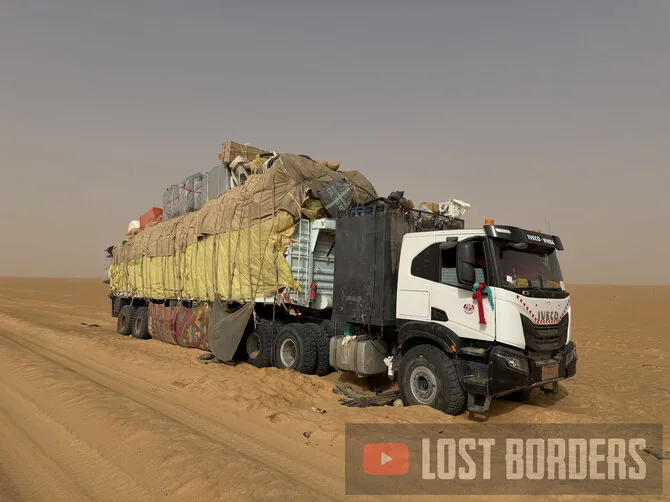
These monsters move from Libya to Chad and back. They look like modern caravans. Loaded so high that it seems they might tip over at any moment.
They carry everything: food, fuel, motorcycles, generators, building materials, and even furniture.
Most drivers travel at night. During the day, the temperature can rise to a level where metal parts become almost untouchable by hand.
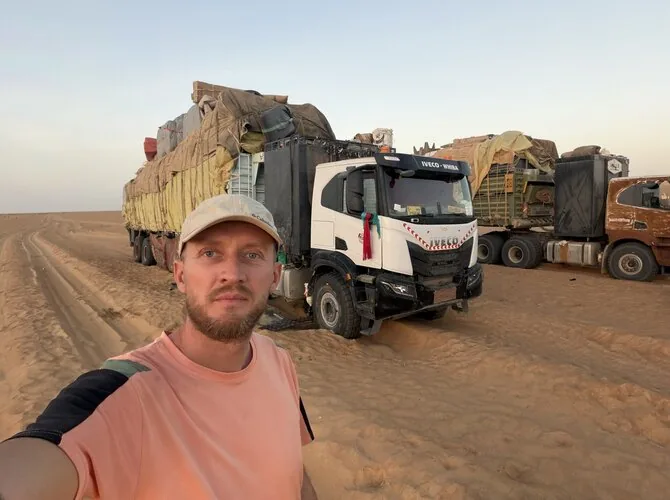
If a truck breaks down, a real test begins.
Help may be hundreds of kilometers away. Water is limited. Communication is often unavailable. In such places, even a minor malfunction can turn into a survival struggle.
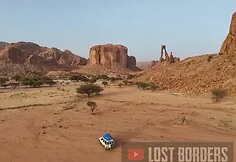
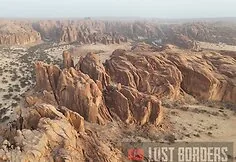
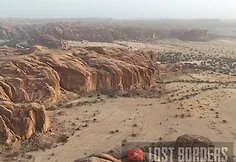
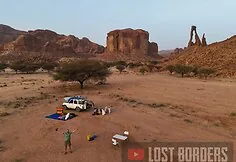
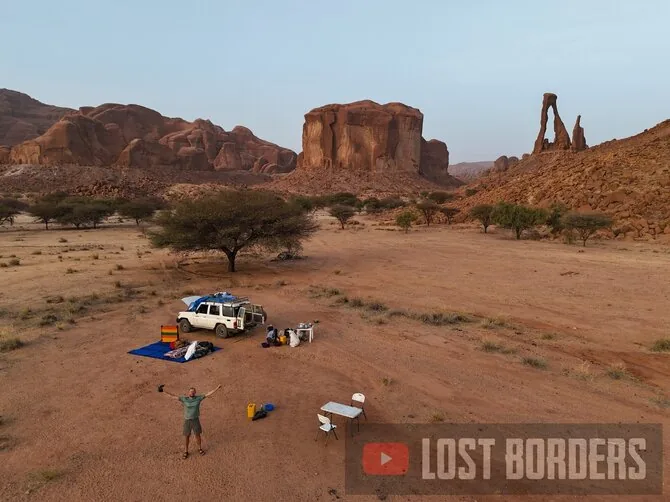
As evening approaches, the Ennedi Plateau cliffs begin to stand out on the horizon.
This place is often called one of the most beautiful parts of the Sahara. Huge stone arches, canyons, and fantastic-shaped cliffs look like the landscape of another planet.
The sun sets.
From all sides, herds of animals return to the camps. Children hurry to gather the goats, men check the camels, women make fire for dinner.
It seems that the entire desert comes to life for a short time. But as soon as it gets dark, a completely different world begins. During the day, the desert looks empty. At night, it becomes full of life.
Scorpions, poisonous spiders, snakes come out. All those that hid from the heat during the day. That is why I zip up my tent as if my life depends on it. And, to be honest, sometimes it does.
Sitting by the fire, I look at the starry sky. There are no city lights, no noise, no civilization. Only the desert.
But that is exactly why such places attract.
They remind us how vast and diverse our world is. They remind us that beyond paved roads, airports, and skyscrapers, there are still people living as their ancestors did hundreds of years ago.
The author’s travel films can be found on YouTube. More news – Facebook and Instagram.