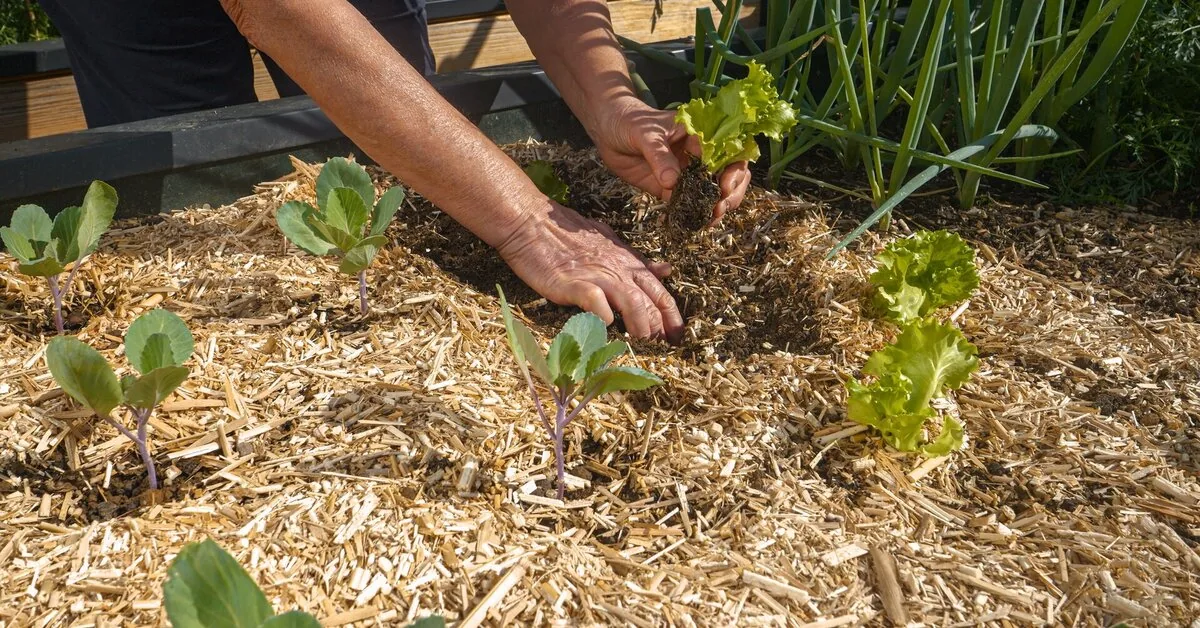
Why is it worth mulching vegetables?
Properly used mulch provides many benefits to the garden:
- Helps retain moisture in the soil
Mulch reduces water evaporation, so the soil stays moist longer, and the beds need to be watered less often. - Suppresses weed growth
A thick layer of mulch prevents weed seeds from germinating and penetrating the surface. - Protects the soil from overheating
On hot days, mulch protects the soil from direct sunlight and helps plants endure the heat more easily. - Improves soil quality
Natural mulch gradually decomposes and enriches the soil with organic matter.
However, even the most beneficial mulch can become a problem if used improperly.
Read more Tapinas reviewing the latest on «Žalgiris»: «We are in the deepest pit»
Mistake 1 – mulching too early in spring
One of the most common mistakes is mulching beds early in spring. Although it seems like it protects the soil, mulch actually prevents it from warming up quickly.
Heat-loving vegetables such as tomatoes, peppers, or cucumbers need sufficiently warm soil. For example:
- the minimum soil temperature for tomatoes should be about 12 °C;
- for peppers and cucumbers – no less than 15 °C.
If these plants are planted in soil that is too cold, they experience stress and start growing more slowly.
Therefore, mulching should only be done when the soil has warmed up enough.
Mistake 2 – mulching just-sown beds
Mulch is excellent at suppressing weeds, but it can also stop vegetable seeds from germinating.
For this reason, you should not mulch beds immediately after sowing. First, wait until the plants have sprouted and grown to at least 10 cm tall.
At first, it is best to spread mulch only between the rows, leaving a few centimeters of space around the young seedlings.
Mistake 3 – mulch around just-planted seedlings
Freshly planted seedlings are very sensitive to moisture and lack of air. If a thick layer of mulch is spread around them immediately, the plants may start to rot.
Read more Mexico announces talks with the US on free trade agreement review
Mulch retains moisture longer and reduces air circulation, making young shoots vulnerable to diseases.
It is best to wait until the seedlings strengthen and take root before mulching the beds.
Mistake 4 – improperly chosen mulch
Not every mulch is suitable for vegetables. What looks great in decorative flower beds can cause damage in the vegetable garden.
It is not recommended to use for vegetables:
- pine bark;
- large wood chips;
- decorative gravel or pebbles.
Such materials are too heavy and unsuitable for the delicate stems and leaves of vegetables.
The best mulch for the garden is light, natural, and quickly decomposing.
The best mulch for vegetables
Cut grass
One of the best choices is cut lawn grass. It:
- retains moisture well;
- decomposes quickly;
- is easy to spread between beds.
It is important to use only grass that does not contain mature weed seeds.
Cardboard
If you don’t have grass, cardboard works well, for example, torn egg cartons.
Cardboard:
- suppresses weeds;
- gradually decomposes;
- enriches the soil with organic matter.
Eggshells
Crushed eggshells not only enrich the soil with calcium but also help protect beds from slugs.
It is important to use clean and disinfected shells.
Straw
Straw is one of the most versatile mulches for the garden. It:
- lasts a long time;
- protects the soil from drying out;
- is perfect for strawberries as it protects the fruit from contact with the ground.
Properly chosen mulch can significantly improve the harvest, but the most important thing is to be patient and avoid the most common mistakes.
Read more Psychiatrists debunked 10 popular myths about antidepressants: it’s nonsense
Prepared based on poradnikogrod.niczy.pl