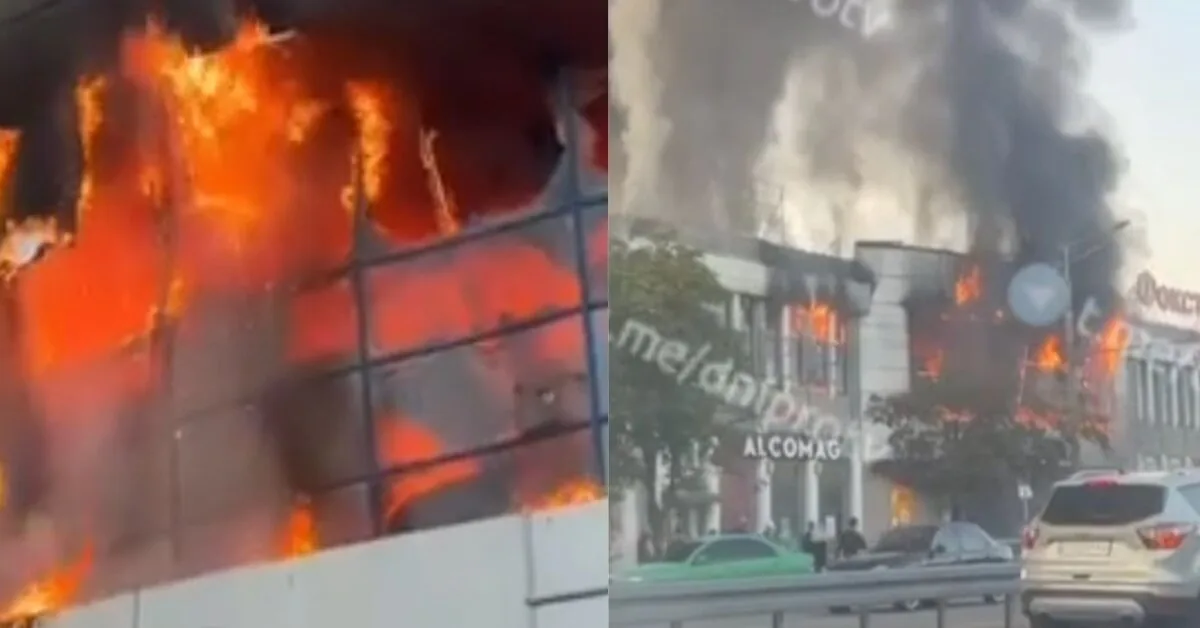
In recent weeks, Moscow has launched several waves of attack drones at the Ukrainian capital, paralyzing the city due to almost constant air raid alerts.
Ukrainian President Volodymyr Zelensky condemned the “horror in the sky in recent days” on Sunday as a new tactic by Russian leader Vladimir Putin and promised a response.
The new drones challenge the relatively effective and cheap Ukrainian air defense shield against drones, hastily built after Russia’s 2022 invasion.
Ukraine quickly became a global leader in drone defense and made agreements with several Western and Middle Eastern countries to share technology.
However, its praised network of drone interceptors – which shot down the vast majority of more conventional drones built with internal combustion engines and propellers – finds it harder to cope with the new jet-powered devices.
Experts say they are equipped with Chinese-made aircraft-type mini jet engines and can fly at 5 km altitude at speeds of 400–600 km per hour – up to three times faster than previous versions based on Iranian Shahed drones.
The latest model can carry up to 90 kg of explosives, nearly twice as much as previous versions, and is much larger – 6 m long with a 5.5-meter wingspan.
Due to such altitude and speed, they are unreachable by the current Ukrainian interceptor fleet and “wipe out the progress we have made in the fight,” Ukrainian war expert Serhiy Zgurets told AFP news agency.
From an air defense perspective, analysts say the new drones resemble cruise missiles more than conventional drones.
It is estimated that Russia launched 2,800 jet drones in August, compared to 1,500 in July and just a few hundred in June.
A Ukrainian Air Force spokesperson said about 60% of them are destroyed, compared to more than 90% of slower, lower-flying drones.
Paralyzed city
The new attacks come as Kyiv already suffers from a sharp increase in Russian ballistic missile strikes, which have claimed dozens of lives since early summer.
On Friday, a jet drone crashed into the Ukrainian security service headquarters in historic central Kyiv – a highly symbolic strike carried out in broad daylight.
Ukraine accused Russia of this strike aiming to disrupt the visit of US envoys Steve Witkoff and Jared Kushner last weekend to Moscow and Kyiv, which sought to revive stalled peace talks.
Read more Minister of Energy: «We will be ready for the next storm»
The wave of Russian attacks sometimes almost completely paralyzes Kyiv – with up to ten air raid alerts sounding daily.
During alerts, many businesses and institutions do not operate, metro traffic is limited, causing traffic jams on roads, and people gather in the streets.
Many schools, which returned from summer holidays last week, reported switching to remote learning.
This situation has so disrupted social and economic life that officials announced a rare easing of security protocols so that the city, with about 3 million inhabitants, could continue to function.
Half a year of waiting
Kyiv officials have faced criticism for not anticipating this threat.
Analysts say Russia began producing jet drones a year and a half ago and can now produce about 3,000 per month.
Moscow “has a window of opportunity with these jet drones,” said Ukrainian blogger “Nikolayevsky Vanyok,” who maintains close ties with the country’s air defense community and has more than 2.6 million followers on Telegram.
Faced with this threat, V. Zelensky convened his military cabinet last week to accelerate the production of faster drone interceptors.
Prototypes have already been created and work is underway “to bring this new weapon to the required level of effectiveness,” he said.
One major Ukrainian weapons company producing interceptors for conventional drones told AFP it is “actively seeking a solution.”
Defense Express analysis center head S. Zgurets emphasized that Ukraine needs a more comprehensive response than just better interceptors.
A full response would include aviation, surface-to-air systems, electronic warfare, and more strikes against launch and production sites on Russian territory, he said.
“The Russians have gained an advantage in this technological cycle,” he said, warning that Ukraine may need “up to six months” to develop effective countermeasures.
Read more No suitable bids received in the tender for train purchase for the «Rail Baltica» project