





And Jesus said to them, “Truly, truly, I say to you, unless you eat the flesh of the Son of Man and drink his blood, you have no life in you. Whoever eats my flesh and drinks my blood has eternal life, and I will raise him up on the last day.
For my flesh is true food, and my blood is true drink. Whoever eats my flesh and drinks my blood abides in me, and I in him.
As the living Father sent me, and I live because of the Father, so also the one who feeds on me will live because of me. This is the bread that came down from heaven, not like the bread the fathers ate, and died. Whoever eats this bread will live forever.”
(From the Gospel according to John 6:51–58)”
“I am the living bread”
After the miracle of the multiplication of the loaves, Jesus spoke about the living bread from heaven, which would be his body: “I am the living bread that came down from heaven. Whoever eats this bread will live forever. And the bread that I will give for the life of the world is my flesh” (Jn 6:51). The people, listening to these words, were confused, and as the evangelist John notes, many even turned away from Jesus; they said, “This is a hard saying; who can listen to it?” (Jn 6:60). Other people probably understood these words of Jesus as a parable, which Jesus often used in his speeches.
Celebrating Corpus Christi – the Feast of the Body and Blood of God, we remember the Last Supper before Jesus’ passion. The Gospel of Matthew recounts: “While they were eating, Jesus took bread, and after blessing it broke it and gave it to the disciples, and said, “Take, eat; this is my body.” Then he took a cup, and when he had given thanks he gave it to them, saying, “Drink of it, all of you, for this is my blood of the covenant, which is poured out for many for the forgiveness of sins” (Mt 26:26–28). Having instituted the Eucharist, Jesus commanded his disciples to do this in remembrance of him.
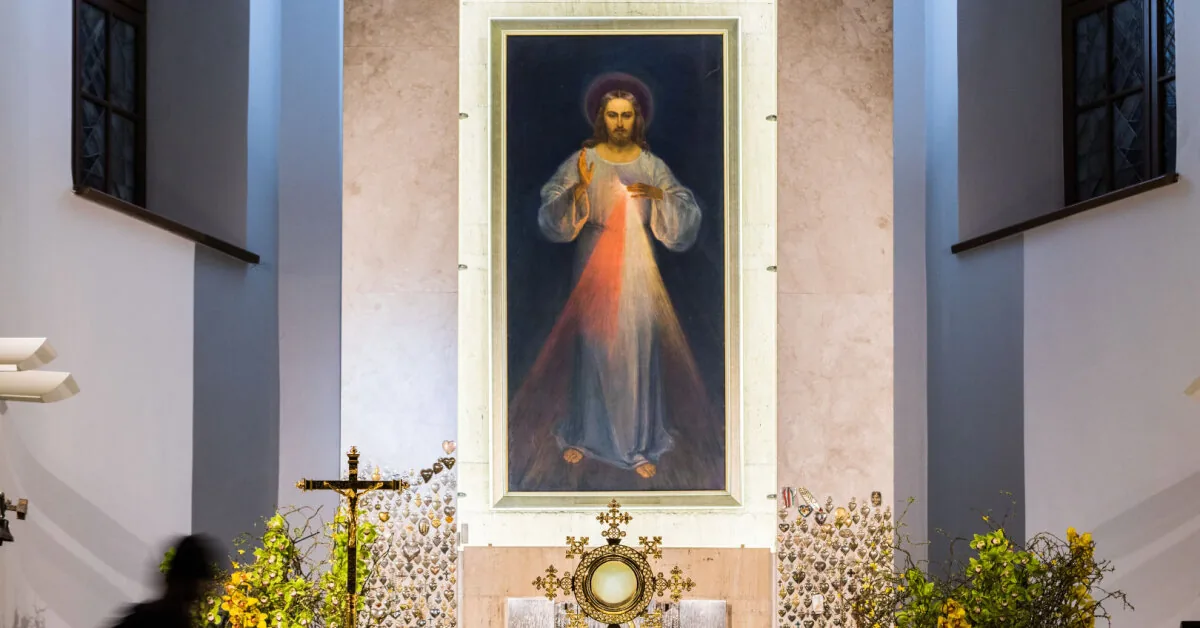
The Church, celebrating the Mass, carries out Jesus’ command to do this in remembrance of him. In the liturgy of the Mass, prayers are offered, Holy Scripture is read, and the most important moment is the transformation of bread and wine into the Body and Blood of Jesus. The Eucharistic bread is the most precious gift of God to us, pilgrims on earth. By feeding on it, we draw strength to walk the difficult paths of this earth towards ultimate union with God in heaven.
The Eucharistic bread is the most precious gift of God to us, pilgrims on earth.
We particularly feel the effect of the Eucharist when we have to endure suffering or other difficulties. I remember the years when I was in captivity. At that time, no one could help but the Lord alone. I secretly offered Mass in a KGB prison, and later in a camp; the Lord’s presence, which I experienced during Mass, gave me strength to endure all the trials of that time.
Read more How many kilograms should an employee’s health weigh? About parcels, boxes and when you can say «no»
To learn to properly appreciate the Eucharist, the example of the priest celebrating Mass is very important. I remember a very beautiful example of a priest from my childhood. In my parish, Father Antanas Skeltys, the head of the Salesian order, was hiding from the NKVD. He celebrated Mass in a small room, and I occasionally served him. I was deeply impressed by the great reverence with which this priest celebrated Mass. He encouraged me to always receive the Eucharist when participating in Mass. The priest’s example and timely words about the Eucharist determined my later decision to pursue the priesthood.
The Feast of the Body and Blood of God is an opportunity to check what place the Eucharist holds in each of our lives. First, we must answer the question: how much do we value the sacrifice of the Mass?
If we participate in Masses celebrated in the parish church on Sundays and holidays, it means that we value the Eucharist. However, if the celebration of Mass is merely a difficult duty for us, then it is very doubtful how much benefit we will gain from this celebration. Great respect is due to those faithful who participate in Mass even at unscheduled times.
Another way to honor the Eucharist, besides Mass, is adoration, which can be performed in any church where the Eucharistic Bread is kept in the tabernacle. When we pass by a church, it is advisable to stop for a moment and greet the Lord. If the church is closed, then we can at least visit the Eucharistic Jesus in our thoughts and, like the Apostle Peter, say: “Lord, you know that I love you!”
On Corpus Christi, let us examine our relationship with the Eucharist, and, if necessary, renew it.
Read more Justinas, a father of many: «The biggest risk in life is not taking risks»
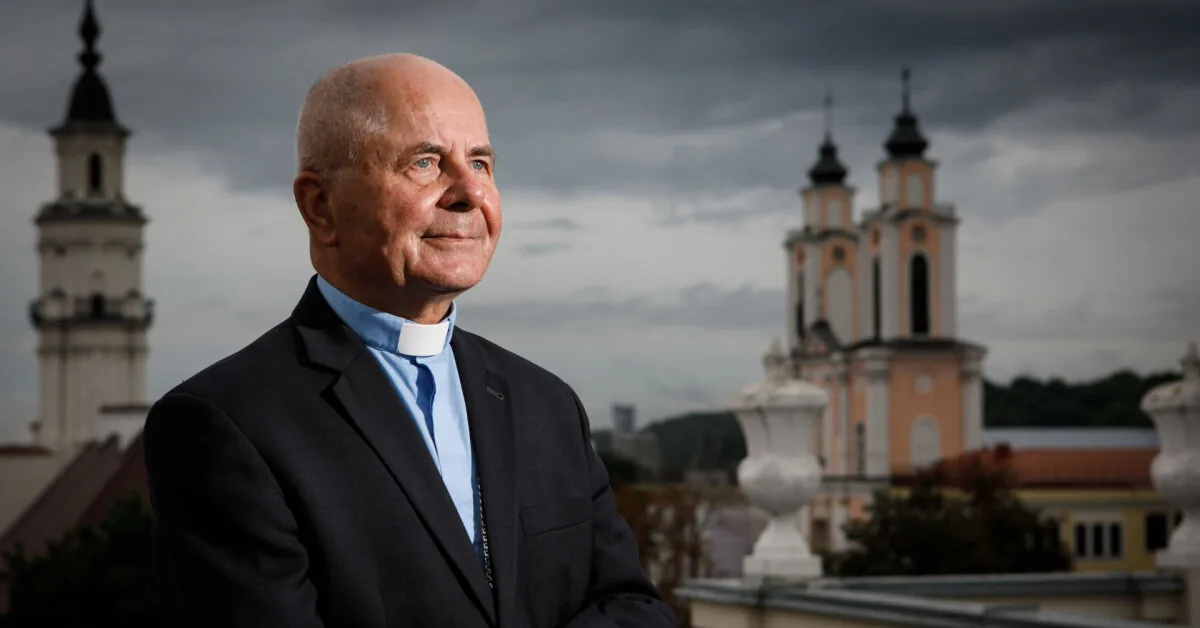
Cardinal Sigitas Tamkevičius