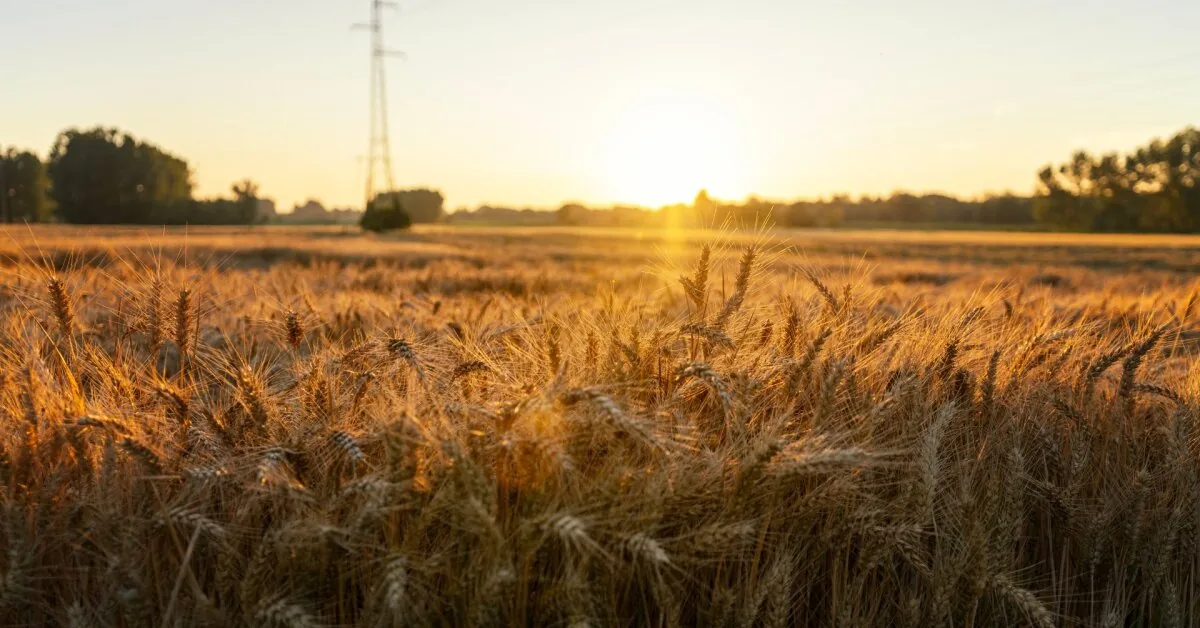
He answered, “My enemy did this.” The servants offered, “If you want, we will go and weed them out.” He replied, “No, lest while you weed out the tares, you also uproot the wheat with them. Let both grow together until the harvest. At harvest time I will tell the reapers: First gather the tares and bind them in bundles to burn, but gather the wheat into my barn.”
Read more Butter sponge cake with mandarins – perfect with coffee or tea
(From the Gospel according to Matthew 13:24–31)”
The Blessing of Patience
There are people who seem to be born to cause discord. Their words hurt, disturb peace, and leave bitterness in the hearts of others… Often, one would just want to withdraw, avoid their company, and keep them as far away from one’s life as possible. Unfortunately, this is not always possible.
Sometimes we have to face people who persistently spread bad thoughts, stir suspicion, undermine fellowship, and sow discord with their words. Then it may seem that the best solution is to take strict measures: cut ties, remove them from the community, or at least from the environment where we are called to live and serve. Otherwise, it seems we cannot get rid of them, like weeds that overshadow our fields and gardens…
However, in the Gospel, Jesus apparently does not rush to uproot the tares. It seems He does not act like a careful farmer who, upon seeing a weed, immediately pulls it out. The Lord acts seemingly illogically, allowing the tares to grow together with the wheat. His argument is clear: while weeding out the tares, we might also uproot the wheat. From a human perspective, one might object: if the tares continue to grow, they will take life from the good plants, overshadow and suffocate them, so perhaps it is better to sacrifice some wheat so that evil does not spread.
Sometimes we would like to act similarly with people who sow discord in the community, trying to remove them so they do not harm others, so good people do not get tired, disappointed, or withdraw.
But the Lord chooses a different path here as well… If there are those in the community who disturb peace, weaken Christian fellowship, and hurt the unity of the Church, He calls not to rush to judge but to show patience. The time of harvest will come, the time when everything will be revealed and handed over to God’s hands…
Why does the Lord choose this path—the coexistence of good and evil, patience, and tolerance—instead of quick and strict decisions? After all, looking at what is happening in the world, seeing wars, violence, injustice, and many wounds, we often want God to intervene immediately: remove evil, stop the wicked, free humanity from darkness, and ensure a peaceful future at least for the coming generations. But God’s action does not always coincide with our impatient desire for justice.
The reason for the Lord’s choice lies in His patience and mercy. God looks deeper into a person than we can. Good and evil are not as clearly separated as we sometimes think. People are not divided into two camps, one of which contains only the righteous and the other only sinners. Good and evil usually live in the same place—the human heart.
In each of us there are both seeds of God’s grace and wounds of sin.
There is no person who is only a tare, and there is no person who is only wheat. In each of us there are both seeds of God’s grace and wounds of sin. We are capable of creating and destroying, building and tearing down, bearing good fruit and at the same time carrying a harvest of bitterness. Only God can rightly know hearts and judge without error. He is the God of patience, the God of mercy, the God of hope, who, as the Book of Wisdom reminds us, gives the sinner a chance to repent.
Read more Natural makeup for summer 2026: makeup artist urges to get rid of old habits
Therefore, God does not recklessly uproot evil from the world, perhaps also because uprooting evil would mean touching the person themselves. God knows human frailty but never stops loving it.
That is why the Lord chooses the path of patience and tolerance. This is not indifference or acceptance of evil, but a firm hope that the human heart can open, good can overcome evil, and even where sin seems to have overshadowed everything, God’s grace can awaken new life.
For this to happen, we need to learn patience from God. The Lord, having absolute right to judge us, first gives time for repentance and another chance to do good. If He, being holy and righteous, does not rush to condemn us, how can we so quickly condemn another person?!
Our calling is not to multiply evil with our words and decisions, but to do everything possible so that good blooms in place of evil, and where we do not yet see it, to maintain hope, trusting in God’s work.
If we had even a fraction of God’s patience, if we could give up the desire to immediately uproot all the tares, if we trusted more in the work of grace in the human heart, perhaps we would complain less about the darkness of the world and ourselves become sowers of light.
After all, wars, violence, and injustice do not begin only in the great events of history, but first of all in the heart of a person who does not accept mercy.
The kingdom of God is not built by lightning-fast uprooting of all evil, because by doing so, we risk hurting even what in people can be touched by God’s grace. It is built by constantly sowing good, trusting the Lord’s patience, and waiting for the time of harvest when God Himself will reveal the truth and gather His harvest…
Read more After a fairly calm Sunday – a sudden break: the new week will bring stormy weather