In recent years, invasive slugs have been receiving more and more attention – they are spreading in Lithuania, causing damage to gardens, vegetable patches, and some natural habitats. However, a false belief is also spreading that every large or brightly colored slug is invasive.
Read more From concerts to exclusive tours: Brewers’ Day swept through Kaunas
As reminded by the Dzūkija-Suvalkija Protected Areas Directorate, Lithuania is home not only to alien but also to native slug species. They are an important part of our ecosystems – breaking down organic matter, participating in nutrient cycling, serving as a food source for other animals, and some species are rare or even protected.
Invasive slugs entered Lithuania mainly through international trade, plants, soil, and other human activities. Due to favorable conditions, they have successfully established themselves and continue to expand their range. Therefore, their control is important. However, it will only be effective if we first learn to correctly identify the species.
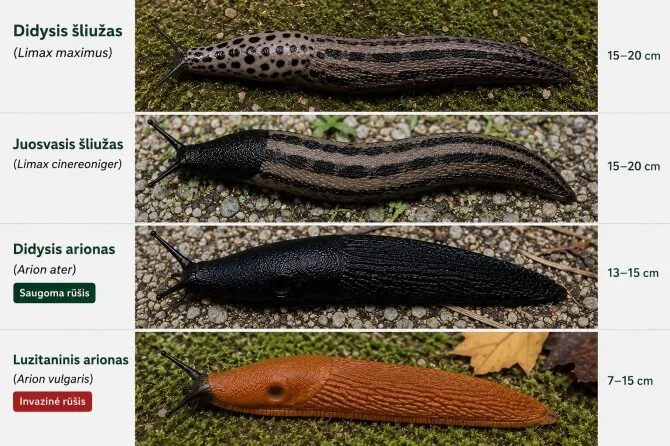
The large slug decorated with a gray mottled “leopard” pattern, the great slug (Limax maximus) and the ash-black slug (Limax cinereoniger) are often mistakenly considered invasive. In fact, their pattern is not always clearly visible – a contracted slug may appear almost monochrome.
The great slug mostly feeds on decaying organic matter, fungi, and plant remains, thus contributing to the decomposition of organic materials. It is not the slug that devastates vegetable gardens.
The ash-black slug is a forest dweller. It is most often found in damp old forests on or near fungi – fungi are one of this species’ favorite food sources. This species is almost never found in gardens or vegetable patches.
Read more “Boeing”: “new generation” aircraft will dominate in 2045
Even rarer is the great arion (Arion ater) – one of Lithuania’s protected species, listed in the Lithuanian Red Book. This large black slug lives only in a few locations in western Lithuania, in damp river valleys and springy meadows. One of the biggest threats to it is habitat loss and the spread of invasive arions.
If you spot the great arion, it must not be destroyed – on the contrary, please report the finding to the Protected Species Information System (SRIS) and thus contribute to the protection of this rare species.
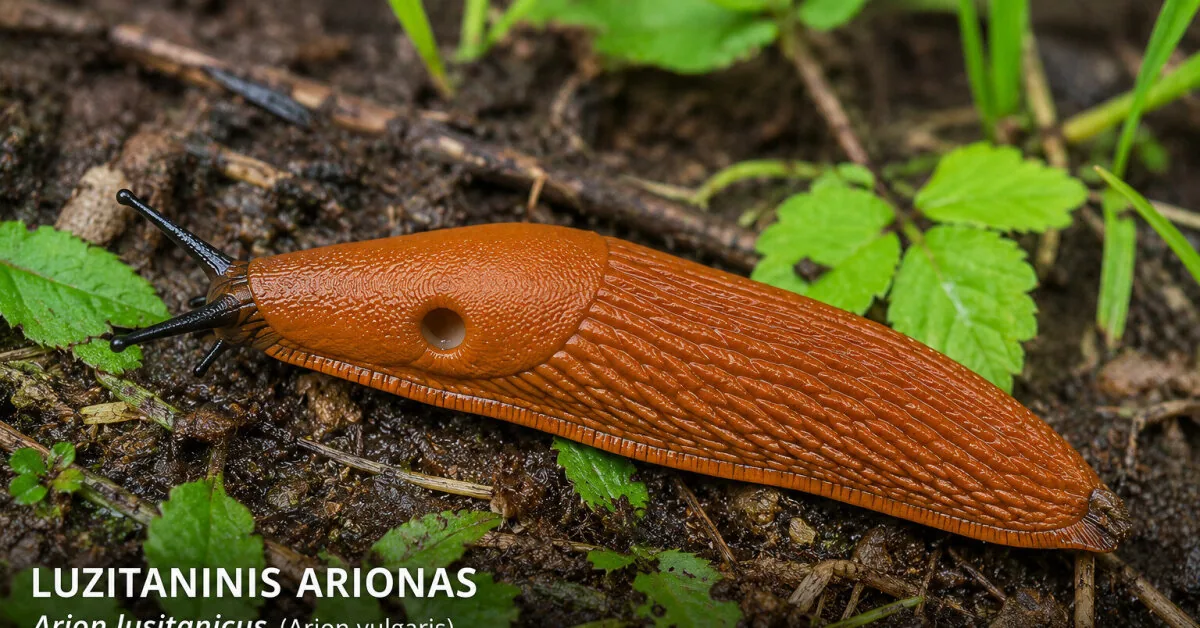
The Lusitanian (Spanish) arion (Arion vulgaris, often still called Arion lusitanicus) is quite another matter. It is an invasive species, first detected in Lithuania in 2008, and now widespread in most parts of the country.
Adult slugs grow 7–15 cm long, usually orange, brown, or brick-colored, monochrome, with a distinct breathing pore on the right side of the mantle. They especially like vegetable gardens, orchards, compost heaps, and other damp overgrown areas, where they feed heavily on vegetables, ornamental plants, fruits, and seedlings. This species reproduces very rapidly, can form large aggregations, and poses a threat not only to horticulture but also to native slug species and biodiversity.
Therefore, before taking eradication measures, carefully examine which slug you have found. Not every large slug is invasive – among them are also our native species, and one of them is even protected. By applying eradication measures only to invasive slugs, we will help protect Lithuania’s biodiversity rather than harm it.
Read more Media: Zelensky has 11 candidates for the new commander of the Ukrainian forces
Prepared based on information from the Dzūkija-Suvalkija Protected Areas Directorate