







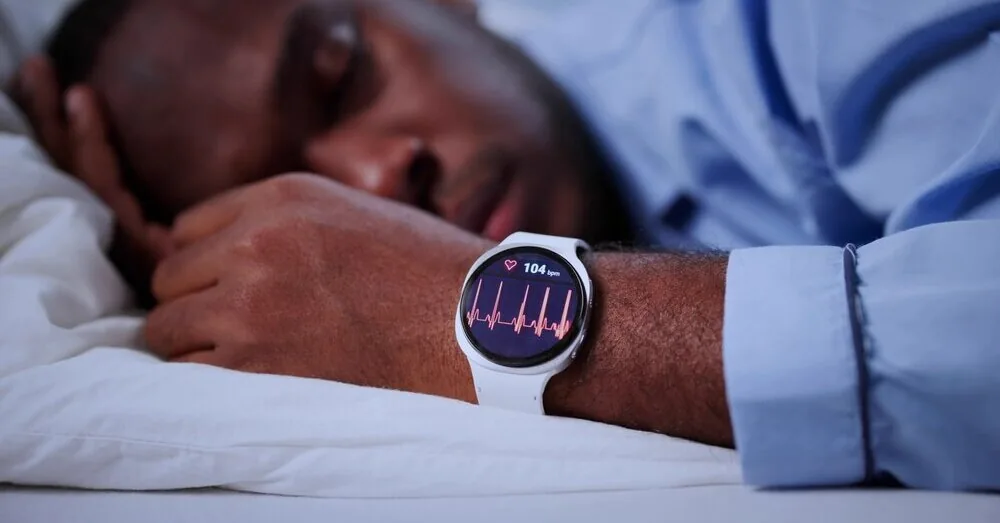
These popular devices can track how long you slept, but they may not capture data that shows whether you were satisfied with your sleep or how tired or rested you felt the next day. This is especially relevant for people suffering from insomnia.
Read more From 27 thousand euros in compensation to everyday breakdowns: what is worth insuring at home?
Pulmonologist Narat Srivali from Duke University and physician-scientist Wisitas Cheungpasitporn from the Mayo Clinic published their research results in the journal “Sleep Medicine”.
“For healthy people who track their overall health status, smart wearable devices can provide fairly accurate information about sleep duration and regularity. However, for people with sleep disorders or mental health problems, the poor agreement found in this review indicates that the information provided by the devices may be misleading and could delay proper medical evaluation and treatment,” the researchers say.
The systematic review analyzed data from five previous studies involving about 2,000 people.
It was found that a person’s subjective assessment of their sleep often does not match what the sleep tracking device shows.
Wearable devices explained only between 2.5 and 16.2 percent of the differences in subjective sleep quality – this is the kind of assessment currently used to diagnose insomnia.
Even if a person feels poorly rested, their sleep tracking device may show something completely different.
People participating in the review who rated their sleep quality poorly – for example, due to difficulty falling asleep, frequent awakenings, or fatigue the next day – did not necessarily receive poor results from their sleep tracking devices.
Read more After two years of chaos – a respite: 4 Zodiac signs will experience great relief
In fact, these devices “did not capture” people’s subjective sleep experience, especially in older adults and individuals with insomnia.
In several studies, data from wearable sleep tracking devices were compared with polysomnography (PSG) test results. PSG allows assessment of physiological changes during sleep, including time spent in light, deep, or REM sleep stages.
However, a person may show normal sleep duration and sleep efficiency according to PSG testing but still wake up feeling unrefreshed.
Therefore, PSG test results alone are not sufficient to diagnose insomnia. Instead, this sleep disorder is usually assessed based on patient-reported symptoms and their completed sleep diaries.
“The relationship between sleep tracking device data and patients’ own assessments of sleep quality ‘is still not sufficiently studied’,” say Narat Srivali and Wisitas Cheungpasitporn.
“Doctors increasingly encounter patients who monitor their sleep with commercial wearable devices and can provide the data collected by them. Our results indicate that such data, while potentially useful for long-term monitoring of changes in sleep duration, should not be considered an appropriate substitute for validated subjective sleep quality assessment tools,” the researchers write.
The authors of the review also emphasize that patients who report poor sleep quality, regardless of what their sleep tracking device shows, should undergo a more thorough medical evaluation rather than being reassured based solely on the device’s data.
Read more A tough weekend test: will you answer at least 6 out of 10 difficult general knowledge questions?