




During visits to Dotnuva Nursing Home and Šėta Social and Educational Center, it was checked how residents’ rights, dignity, privacy, independence, safety, and access to quality social and healthcare services are ensured.
Read more What really ages the facial skin the most?
Overcoming limitations on independence
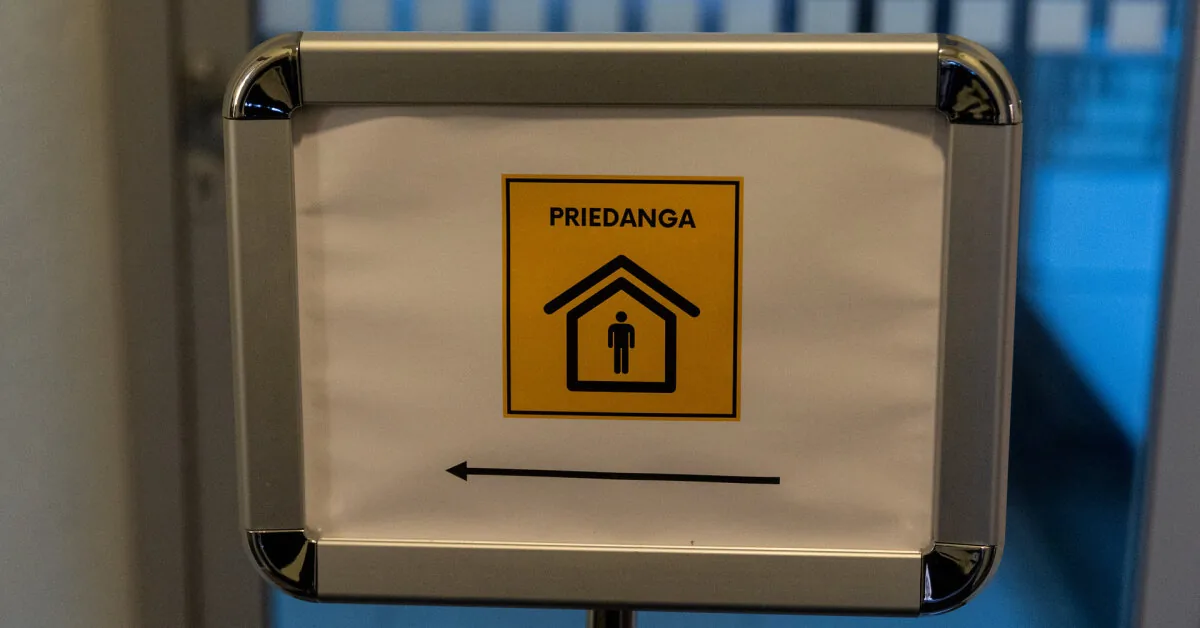
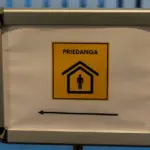
During inspections, various circumstances limiting individuals’ independence were recorded in both institutions. For example, there was a lack of clear directional signs, pictograms, and other visual orientation aids to help individuals independently recognize entrances to buildings and different common areas.
Moreover, it was forbidden to leave the institution’s premises without accompaniment even for those who could do so before entering, and specially adapted lifts were not allowed to be used independently.
Some interviewed residents said they felt somewhat defeated due to excessive staff care or prohibitions. Although both institutions tried to encourage individuals to minimally contribute to room tidying and personal hygiene, opportunities to maintain independence were limited in other areas.
According to residents, staff did not always knock or wait before entering living rooms. In no institution could individuals independently go to the store – usually, staff bought products upon requests, although some were used to shopping on their own. Several women at Dotnuva Nursing Home went shopping at a visiting store, while at Šėta Social and Educational Center, some service recipients were accompanied to the store by staff.
“Many individuals who have lived independently in the community all their lives move to nursing homes due to disabilities arising with age, such as Alzheimer’s disease or dementia. This significant life change should not come at the cost of independence. Independent living, the ability to take care of oneself and make decisions as much as individual circumstances allow, gives meaning and helps one feel better, so this aspect should receive greater attention at the institutional level,” says Parliamentary Commissioner Dr. Jolita Miliuvienė.
The Commissioner noted that the inspected institutions had approved a concept of empowering service recipients, but it is important to view independence more comprehensively and ensure consistent application of approved procedures in practice.
The variety of occupational activities and the opportunity for residents to participate according to their wishes were positively evaluated: opportunities are created to participate in creative, sports, cultural, and other activities, engage in handicrafts, play board games, and spend time outdoors.
Opportunities to receive psychological help are planned but unavailable
During the inspection, it was found that psychologist positions are not established at Dotnuva Nursing Home and Šėta Social and Educational Center. If needed, psychological help can be provided to residents in healthcare institutions. The report notes that in the past one and a half years, no psychological services were provided to residents of either institution, and only one person visited a psychiatrist, and only twice. Psychologists did not participate in assessing residents’ needs or preparing individual social care plans.
It is also important that residents understand when and how to seek psychological help. Conversations with them revealed that some did not sufficiently understand what psychological help is and in what cases it can be used. Staff also admitted that some residents might need such help.
Additionally, it should be noted that staff qualifications in psychological help were improved – they participated in training on ensuring psychological well-being, communication skills, and work psychology. However, the report emphasizes that training alone is not enough if residents’ psychological help needs are not systematically assessed and they are not informed in an understandable way about the possibility of receiving psychological help.
Experts from the Parliamentary Commissioners’ Office who conducted the inspection positively evaluated that residents trust the institution’s staff and know they are well-meaning. According to staff, when service recipients experience emotional difficulties or conflict situations, social and other staff help them; sometimes residents help each other or find support with their relatives.
“Overall, the inspection showed that in smaller, community-integrated institutions, residents feel more seen and heard, staff know them as individuals, not just as service recipients, so a relationship forms between staff and residents, which in itself is the most important condition for ensuring dignity. This reflects the sincere and daily efforts of staff to care for residents often under difficult working conditions and with limited resources,” says Dr. J. Miliuvienė.
Nevertheless, the Parliamentary Commissioner pointed out that a close and trust-based relationship between residents and staff cannot replace all necessary services.
“Without creating real opportunities to receive professional psychological services, the entire emotional support burden falls on current institution staff. On the one hand, this can contribute to their exhaustion and affect the overall quality of services provided. On the other hand, in some situations, professional psychological help may be necessary,” says Dr. J. Miliuvienė.
Recommendations for institution heads
The Parliamentary Commissioner provided detailed recommendations to institution heads, urging them to improve information accessibility for persons with different disabilities, ensure residents’ privacy, safety, and independence, create more opportunities to independently make and implement daily decisions. The necessity of involving residents in institutional decision-making processes was also emphasized. It was also recommended to improve information accessibility, psychological help provision, and strengthen staff competencies.
Read more The latest Apple devices are now in Lithuania: their official sale has begun