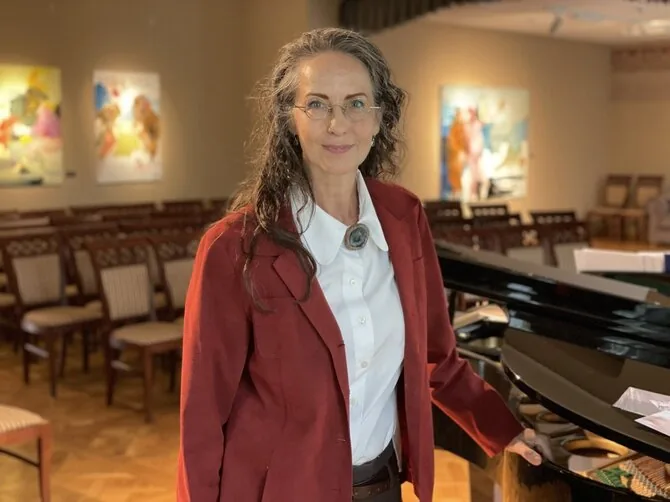
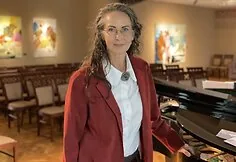
According to Lina Brogaitė-Kažemėkienė, head of the Dusetos Art Gallery branch in Antazavė Manor, it would be difficult to find so many different exhibitions in one place even in Vilnius.
Read more The Gap: Employees perceive the company culture quite differently than management
Therefore, it is worth starting your cultural journey precisely from Antazavė Manor.
Antazavė Manor and E. Pliaterytė
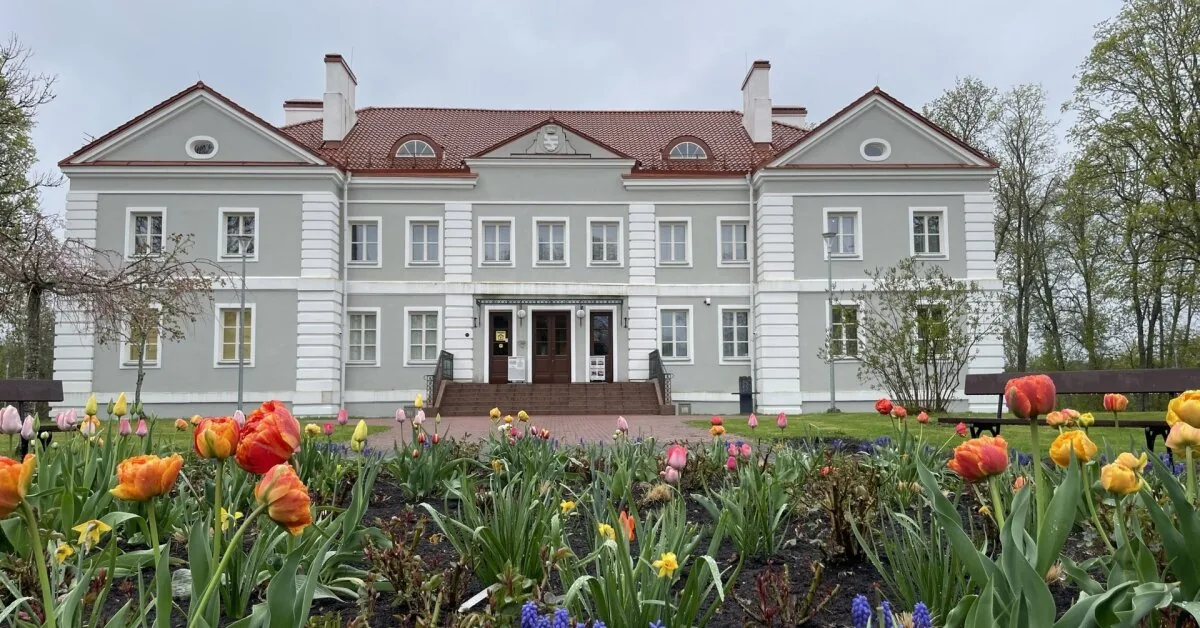
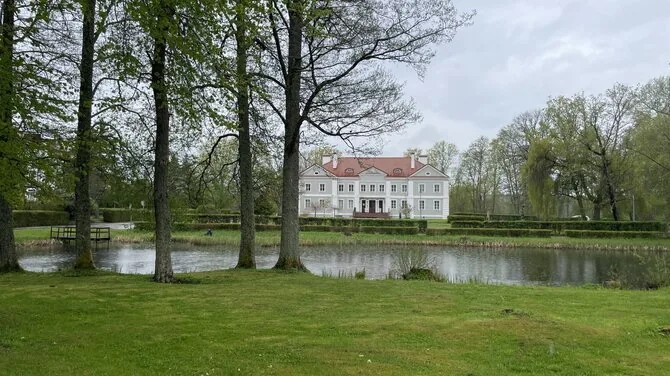
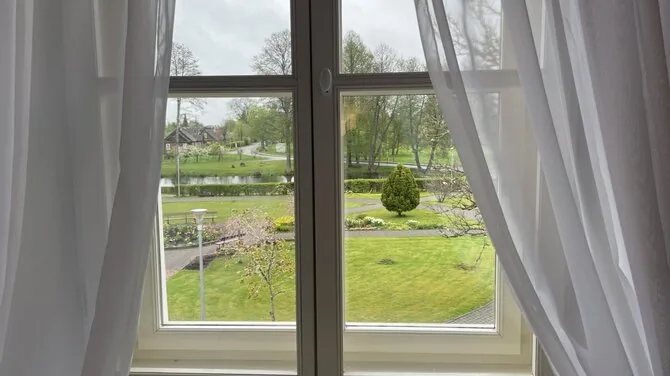
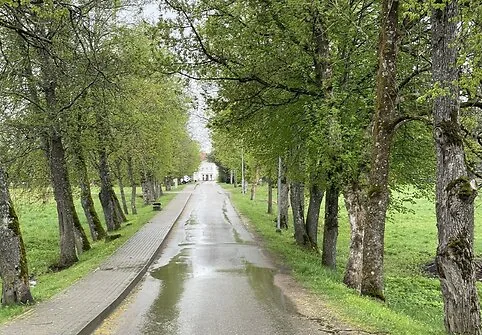
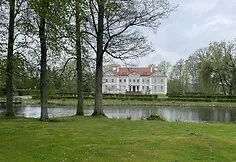
Antazavė Manor is located on the shore of Lake Zalvis, and its history dates back to the 17th century, when the lords of Dusetos Manor, the Rudaminas, established a farmstead here, which they named Antazalvė. A little later, the name Antazavė became associated with this area.
In 1686, Antazavė was acquired by Jonas Andrius Pliateris, the elder of Daugavpils and Livonia. From then until the first half of the 19th century, Antazavė belonged to the famous Pliater family of counts.
At the end of the 18th century, at the initiative of Liudvikas and Kunigunda Pliateris, the classical brick palace, which has survived to this day, was built. Liudvikas and Kunigunda were the grandparents of Emilija Pliaterytė, the heroine of the 1831 uprising.
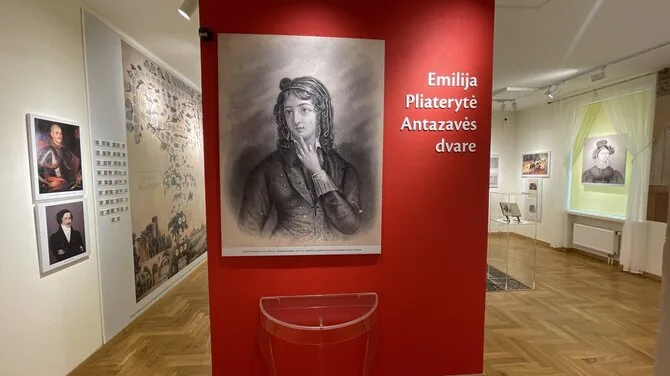
Although Emilija Pliaterytė was born in Vilnius, she had a close connection with Antazavė Manor – her father was born here, and Emilija herself often spent time at the manor. When the girl was eight, after her parents divorced, she and her mother settled in Liksna Manor, near present-day Daugavpils in Latvia, but often visited Antazavė to see her grandmother.
It was in Antazavė Manor in 1831 that Emilija wrote a statement voluntarily joining the uprising and pledged to fight for the freedom of her homeland. From here, she rode to Dusetos Manor (now Didžiadvaris village), where, together with her second cousin Cezaris Pliateris, she formed the first rebel detachment and joined the uprising.
Later, the manor belonged to the Ledochowski and Rop families, and its last owners – Mikalojus Voinarovskis and his wife – were exiled to Siberia in 1941. Around 1960, an orphanage was moved to the manor from Antalieptė.
“The orphanage was in one of the manor buildings, and a boarding school was established in the main one. Everything was demolished, nothing authentic was left inside. The first generation of students used to say that during their craft lessons, they carved items from old furniture,” says L. Brogaitė-Kažemėkienė.
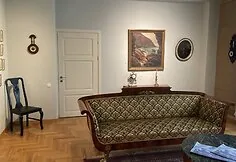
However, in 2022, the manor was fundamentally renovated and brought back to life. Now, the manor regularly hosts exhibitions by professional artists, concerts, creative meetings, and the historical spirit of the palace is enhanced by the furniture from Ramutis Petniūnas’ collection displayed here.
A Manor Breathing Culture
As L. Brogaitė-Kažemėkienė says, the journey to Antazavė is not short for residents of Vilnius or Kaunas, so exhibitions at the manor are not changed as often, allowing everyone to visit them.
“The current exhibitions will run until mid-September, so I suggest getting in the car and driving straight here. And if you want to stay longer – there are plenty of homesteads around, because one day might not be enough for everything,” she smiles.
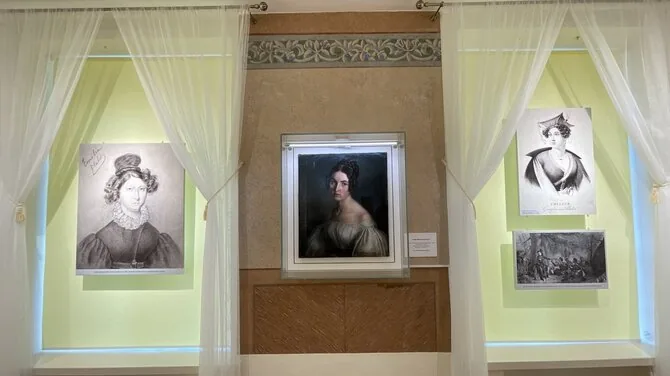
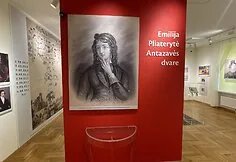
According to L. Brogaitė-Kažemėkienė, a contemporary atmosphere is created in the manor, but its history is also cherished. The memory of Emilija Pliaterytė is immortalized here – her portrait painted by artist Tadas Lukoševičius is exhibited.
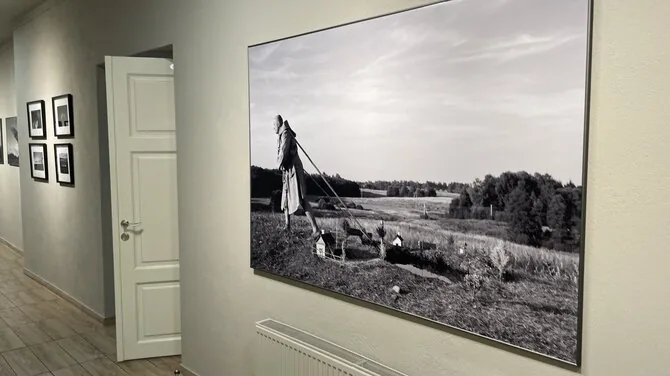
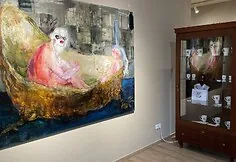
Upon entering the manor, visitors are greeted by Meda Norbutaitė’s painting exhibition “Identification”. On the second floor of the manor, works by Linas Leonas Katinas, laureate of the Lithuanian National Culture and Art Prize, are exhibited, whose double-sided paintings seem to invite dialogue, where one side asks a question, and the other provides an answer.
The manor also features works by the renowned artist Algis Griškevičius, artist Rūta Jusonytė, who has lived in France for more than two decades, Libertas Klimka’s collection of barometers, and a piano that belonged to composer Lionginas Abarius. “L. Abarius is a man from our region, who played the organ in Antazavė church,” shared L. Brogaitė-Kažemėkienė.
Read more Alytus police seeks help: man went into the forest and disappeared
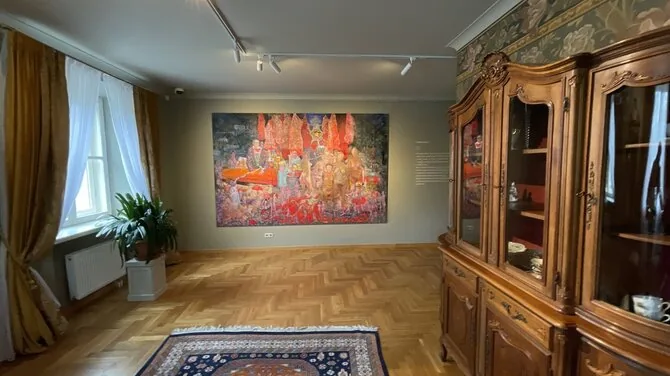
Of course, many eyes are drawn to Šarūnas Sauka’s impressively sized painting. “Š. Sauka divides Lithuania into two parts – those who like his work and those who can’t stand him. But in any case, everyone is curious to see his works and discuss them,” laughs L. Brogaitė-Kažemėkienė.
She says that she feels at home in the manor herself, and therefore tries to create such an atmosphere for guests. Moreover, Antazavė Manor is not just a gallery or a museum: civil marriages can be performed here. So some come for art, while others leave as a family.
Park of Bright People and the Brother of Stelmužė Oak
Although Antazavė Manor is the main attraction, it is certainly not the only one that will surprise you.
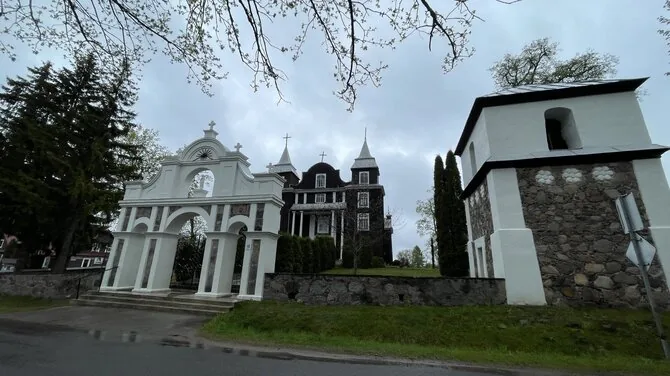
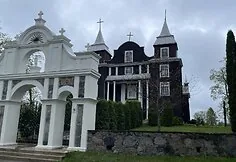
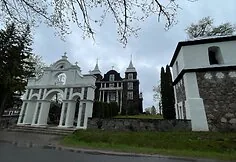
No less interesting is the wooden Antazavė Church of Divine Providence, located in the very center of Antazavė, which has features of Baroque architecture.
According to historian Šarūnas Subatavičius, the church was built in 1794, and its construction was financed and cared for by Countess Kunigunda Valavičiūtė-Pliaterienė, the owner of Antazavė Manor. The bell tower and gates next to the church were built much later – at the end of the 19th century. Today, the church attracts not only local residents – travelers are also discovering it more and more often.
And not far from the manor, just a few kilometers away, lies another unexpected discovery – the Park of Bright People.
Today, the church attracts not only local residents – travelers are also discovering it more and more often.
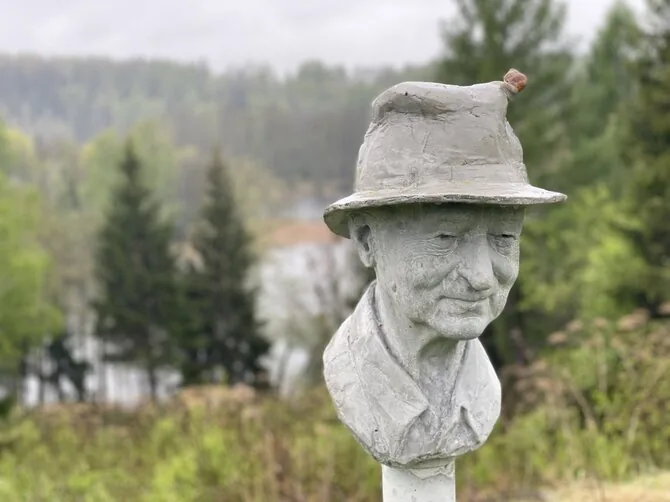
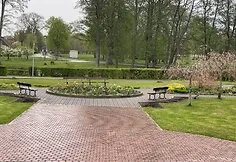
Here, cultural enthusiast Marius Lucka, together with sculptor Mykolas Sauka, “settled” five sculptures – dedicated to artist Jonas Mekas, poet Alfonsas Nyka-Niliūnas, “golden fish” Rūta Meilutytė, traveler Danas Pankevičius, and Šarukas Joneikis, vocalist of the rock band “Garbanotas”.
Nature lovers should also visit the 500-year-old Bradesiai Oak, known as the brother of the Stelmužė Oak. And the views of Lake Sartai from the nearby Bradesiai mound are simply captivating. When traveling through the region, it is also worth visiting the other nearby mounds of Pakačinė and Velikuškiai.
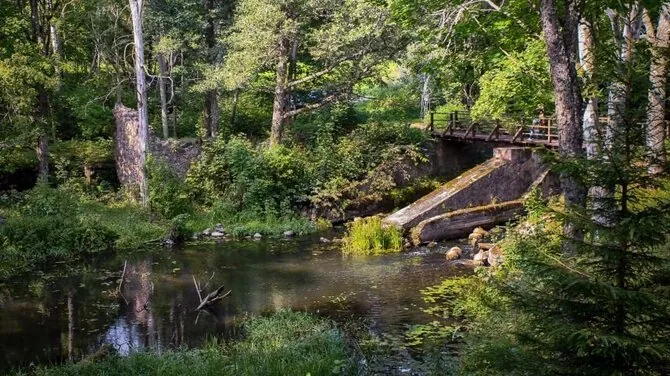
“The trip around Antazavė can also be supplemented by the Marimontas dam and the remains of a water mill – another reminder of the rich history of this region. The mill, sawmill, and carding mill operated even in the post-war years, but around 1946 or 1947, a fire broke out and everything burned down, leaving only the remains of the stone masonry and a section of the stone-paved old road to this day,” says the historian.
History enthusiasts should also visit Antazavė forest near Lake Vincežeris. Here, a part of the partisan bunkers has been preserved and restored – a place where in 1944, partisans of the Lokys detachment operated and one of the largest battles of that year took place in the Zarasai region. Today, it is a state-protected cultural heritage object, commemorating the struggles of Lithuanian partisans.
“It seems that small Antazavė can offer much more than you would expect. It is one of those places where you come for the manor, and leave realizing that one day is simply not enough for this region,” concludes Š. Subatavičius.
Read more 15,000 people evacuated in Spain due to new fire outbreak