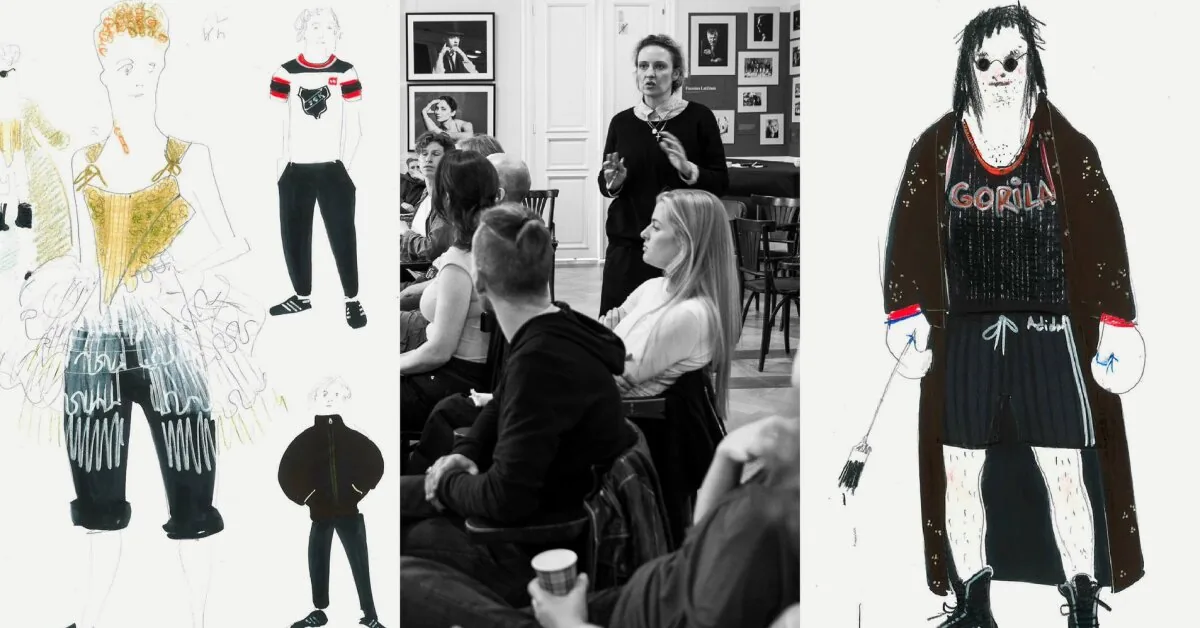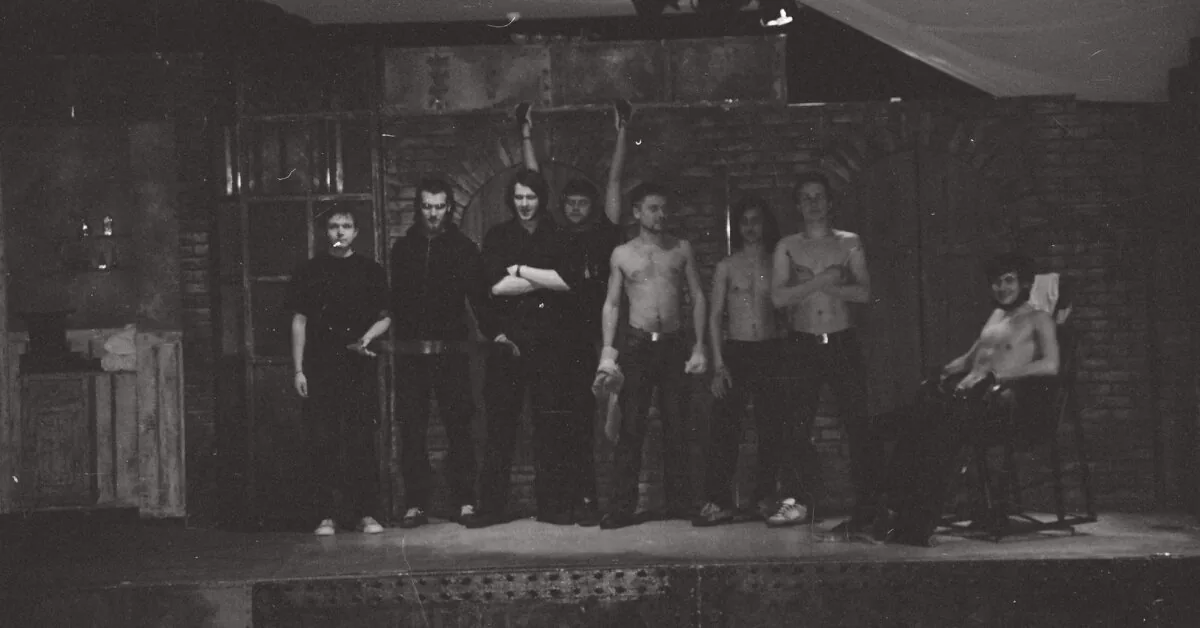








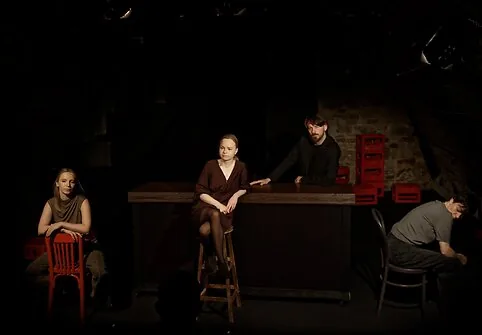
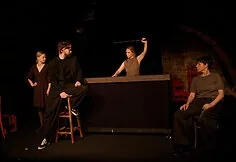
An adult puppet cabaret inspired by the work of Charles Bukowski, turning the small hall of Vilnius Theatre “Lėlė” into a damp basement bar for a few evenings.
Read more At an important energy meeting – US boasting about its power
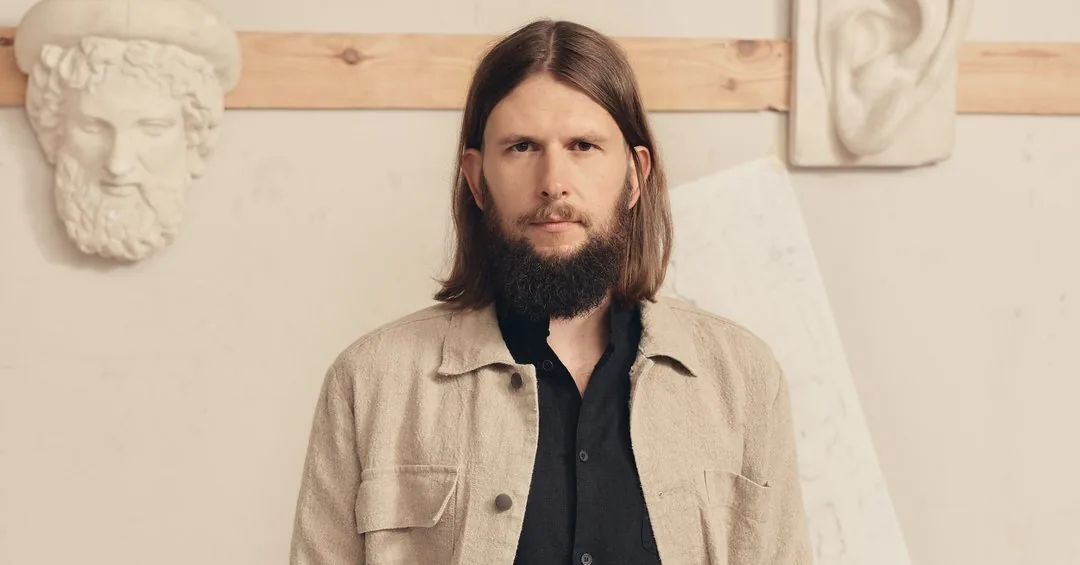
After the applause has died down, we invite you to pause and get to know more about the unexpected path of the artist’s work, the nurtured bunraku technique, and the challenges of adapting a British play for the Vilnius stage.
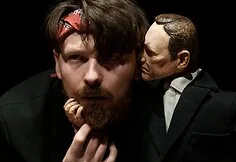
– You entered puppet theatre not by your own choice, but by chance – through an opera mass and another artist’s injury. Looking back, do you think the best creative paths often start just like that, unexpectedly?
– I think life has a very strange sense of humor. Sometimes we try for a long time to understand what we want, and then Mark Down, the puppet director who was in charge of the puppet at the time, sprains his ankle – and suddenly you become a puppeteer yourself.
I got into puppet theatre not because I dreamed of being a puppeteer. There was simply an empty spot that someone had to fill, and I happened to be nearby. But probably the most important thing is not the coincidence itself, but what you do with it.
Coincidence opens doors but does not force you to walk through them. I walked in without much thought and without really understanding how much it would shape both my creative and personal world. If I could choose other doors now, I would still choose the same ones.
And coincidences really know a little more about us than we do ourselves.
– Before becoming a puppeteer, you studied dance. The bodies of a dancer and a puppet obey very different rules – can you name one dancer’s instinct you had to consciously learn to forget for the puppet to come alive?
– A dancer learns to be seen. A puppeteer learns to be invisible. I always wanted to be a performer, to step on stage, but I often asked myself if I liked being seen. The puppet freed me. The ability to hide behind an object gives extraordinary creative freedom. It’s no longer me on stage; it’s a character created by my hands, a kind of shedding of responsibilities.
Hiding doesn’t mean hiding literally. Dance studies taught me to move as if I were hidden or as little visible as possible. Just as ballet is the foundation for a contemporary dancer, contemporary dance should be the foundation for a puppeteer.
Sometimes the best puppeteer performance is the one the audience doesn’t notice at all, even though it moves like a refined sculpture.
– Bunraku requires three puppeteers to control one puppet as one body, feeling each other without words. Have you ever worked in circumstances where that mutual trust was never achieved – and can the audience even notice such a deficiency on stage?
– It’s very similar to any relationship. You can perform all actions perfectly technically, but if there is no trust between people, the body betrays it.
The bunraku puppet becomes a kind of lie detector. If one person thinks “I’ll show now,” the other feels it. If one starts to control too much, the puppet suddenly becomes no longer a living being but an object pushed by three people.
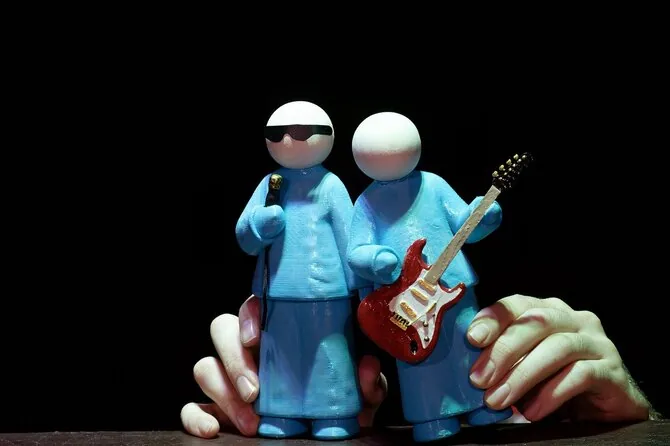
The audience might not say: “There is a lack of mutual trust here,” but they will feel it inside. They just won’t believe it – or might even go to the cloakroom to get their coat.
And in theatre, belief is a very fragile thing. Sometimes one wrong move is enough for the magic to switch off briefly.
Sometimes one wrong move is enough for the magic to switch off briefly.
And in puppet theatre, as in magic, you either believe or you don’t.
– This is the first time “Low Life” is staged not by “Blind Summit” but by another troupe, and the idea to bring the play to Vilnius came from you. What made you decide that this particular, and not another Blind Summit play, should live in Lithuania?
– “Low Life” is the play for which I fell in love with puppets. I saw theatre as I would like to create it myself. This is the first puppet play I acted in. It always seemed to me like a play that is not finished just because it has already been performed. I carried that feeling of incompleteness inside me for 20 years. Ultimately, if I fell in love, maybe someone else will fall in love with puppet theatre because of this play.
“Low Life” is the play for which I fell in love with puppets.
Also, “Low Life” seems very Vilnius-like in its nature. It has the darkness of night, the light of alcohol, loneliness, absurdity, temporary eternity. It is not just a London story.
– For Mark Down, “Low Life” was always like a jazz club – a play about alcohol, the underground, black humor. Do you believe that this atmosphere can live unchanged in another language and culture, or does it inevitably turn into something else as soon as it is transferred?
– We try to preserve the atmosphere one-to-one and achieve a very high technique that meets the standards of “Blind Summit” theatre. But the play will become Vilnius’ “Low Life” only when it matures. It needs the audience and to be shown as often as possible. Only they can help put all the details of the play into one picture. I strongly believe that over time it will only get better and inevitably become something else.
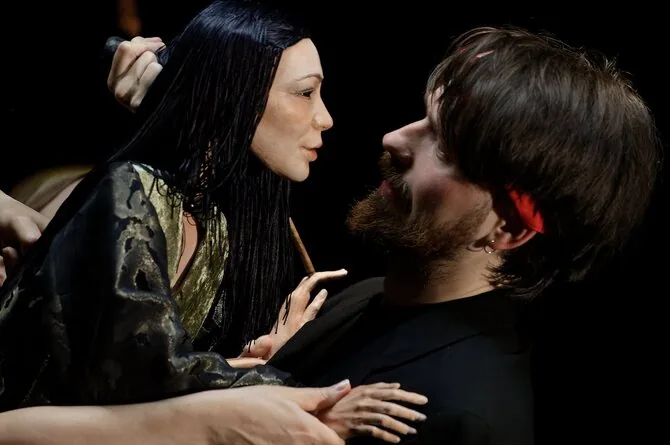
Black humor also has an accent. Some parts are funny because they are very British. Others start to amuse precisely because they sound a bit strange in the Lithuanian context. Moreover, the audience will encounter quite a bit of good Lithuanian black humor, which has found a great place in the play.
We try to see what happens when London and Vilnius meet one night in a bar.
Read more After Russian strikes on Ukrainian passenger trains – Zelensky’s decisions
So we are not trying to transfer London to Vilnius. We try to see what happens when London and Vilnius meet one night in a bar.
– A puppet cannot drink or show hangovers with its body as a live actor does. Do you think this limitation allows the puppet to talk about addiction differently than a person could?
– But the puppet can become a very cruel mirror to a person.
The puppet has never been drunk. It has no liver, does not experience hangovers or addiction. The puppet has no body that can actually be damaged. We create a character with our imagination, give it a name, and no longer call it a puppet. We even call the theatre workshop a hospital.
It’s a very strange mechanism: the less the puppet has, the more we give it.
And perhaps the theme of addiction thus becomes less about alcohol and more about emptiness.
And perhaps the theme of addiction thus becomes less about alcohol and more about emptiness.
– During rehearsals, you have been both the original performer of “Low Life” and the creator of the new Lithuanian version. Were there moments when you had to consciously restrain yourself from just showing how Mark Down did it and let the actor find their own way? How did you manage to detach from the familiar structure of the play and interpret it in your own way?
– That was one of the hardest parts of the process. Restraining from showing – not how Mark did it, but how I did it. I took over the role from Mark, and it was not the easiest path. Knowing what that path is, I really didn’t want to burden the actors. Did I manage to avoid that in the Lithuanian adaptation? Definitely not, because there is no single path.
When you know the play very well from the inside, an invisible “original policeman” appears in your head, constantly saying: “No, you must not stray.” I had to learn to distinguish what is necessary in the play. But if a choreographic decision does not change the essence and I feel playful that day, why not joke around?
I think adaptation becomes real when it starts to betray the original a little.
– The bunraku technique requires the puppeteer to “disappear,” so the audience believes the puppet is thinking. The cabaret genre, on the other hand, often thrives on the visible performer, their eye contact with the audience. How do these two essentially opposite logics coexist in one performance?
– I think that’s exactly why they work together.
Bunraku says: “Don’t see me.” Meanwhile, cabaret says: “Look me in the eyes.”
“Low Life” constantly walks between these two poles. Sometimes you see the person controlling the puppet. And a second later, you forget they exist at all. Another second later, that person becomes an actor, the puppet’s partner – and at the same time still controls the puppet.
It’s a kind of theatre trick: we allow the audience to solve the mystery and continue to believe in the illusion at the same time.
In life, we do the same constantly. We know there is a person in front of us, but we still try to believe in the role they create.
– If an audience member, leaving “Low Life,” would tell a friend about the play in just one sentence the next day – how should that sentence sound for you to feel that the play really succeeded in what you aimed for?
– “I don’t know why it was so funny to me because basically it was quite sad.”
I would like the audience to leave with exactly that feeling – laughing during the play, and then maybe on the way home remembering one moment and thinking: “Wait. That really wasn’t so funny.”
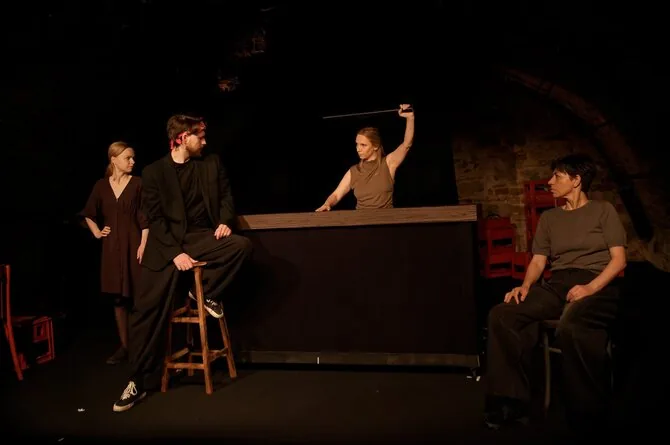
– If in twenty years someone dared to revive “Low Life” again, based not on the “Blind Summit” original but on your Vilnius adaptation – what would you want to keep in the play and what would you discard without regret?
– I hope they take the play’s DNA but not its clothes. Let them change the language, city, humor, pace, puppets, people. Let them throw out scenes that seem necessary to us today.
The only thing I would like to preserve is the principle that the puppet is not a decoration – it is a living partner. And that there must always be room for risk in theatre – for the moment when you don’t know if the audience will laugh or suddenly it will become awkwardly silent.
If in twenty years “Low Life” can still make people laugh at things they feel a little uncomfortable laughing at, then it is still alive.
Read more Astra Astrauskaitė acquitted in the case of riots near the Seimas, Antanas Kandrotas left imprisoned