



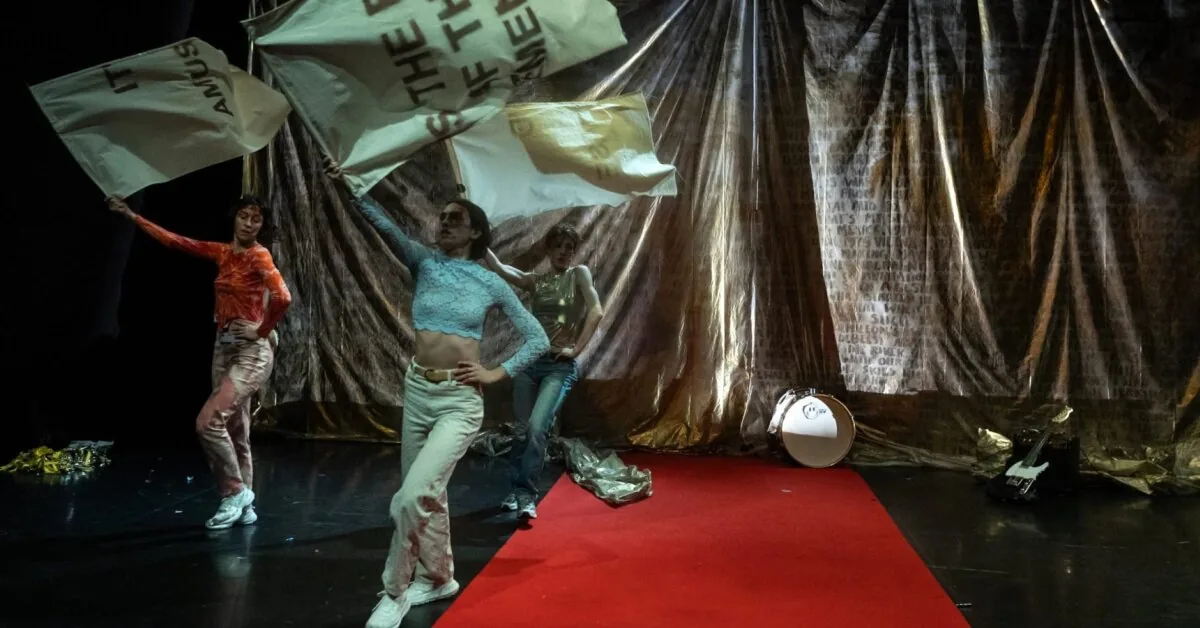
The choreographer, playwright, and dancer Chara Kotsali, who created it, looks closely but not without humor at a society in which we can have so much fun that we become exhausted from it ourselves, where history is constantly repeated because no one dares to turn off the music.
Read more JK dingusio 3 metų berniuko šeimai – confirmation of sad news
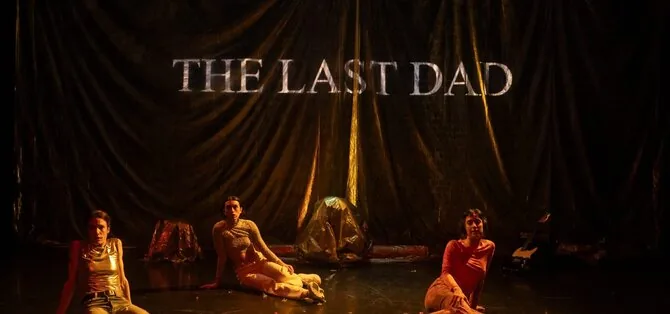
Three dancers on stage travel from personal stories to collective history, relying on their bodies and a rhythm that seems to force them to move in an endless dance marathon, an uncertainty reminiscent of the course of world history. Progress, exhaustion, burnout, and unfulfilled promises of the future are recurring motifs of the piece.
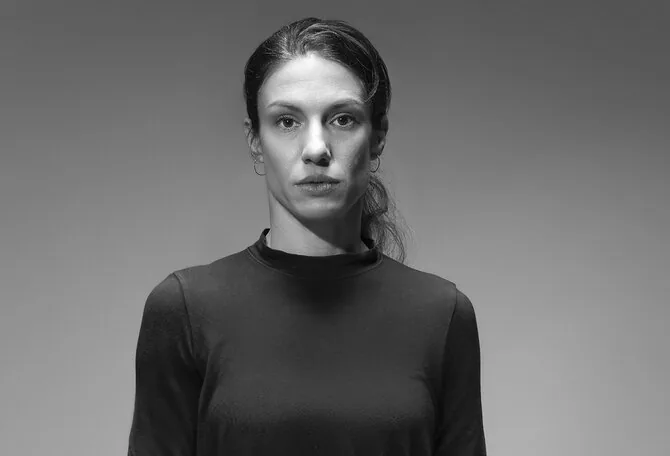
In an interview for Lithuanian readers, she talks about the themes of the piece, the annoying Western societal attitude that wars are over, and the different audience reactions to her performance in different countries.
– Your performance is called “The End of Amusement Phase.” What is this amusement phase? What is ending?
– The title was inspired by a rather complex economic article I read; I probably understood only half of it, but it discussed the so-called “productivity paradox”: that although technology advances, people have not been freed from physical labor, do not have more free time, and do not live better. By the way, despite rapid technological progress, production rates do not increase as fast as they should. At one point, it said: “this is the end of amusement,” and I just added the word “phase.”
The main challenge today is emotional and physical exhaustion.
I liked this phrase because it sounded as if there ever was an amusement phase at all. I grew up and live in Greece, so my access to these achievements of progress was not the same as the article’s author’s. However, I belong to a generation that grew up with a prevailing mood (even if they did not believe it) that things are getting better, that the worst is behind us, the great wars are over. This is a very Western perspective – it is said that the great wars ended as if nonsense does not happen in the rest of the world. But now it has become clear to everyone (even those who lived in illusions and believed it) that this historical phase has ended. This is neither good nor bad – just a statement of fact: we are already in a different reality.
– What scale of phase are you talking about? A century or a single time?
– I was born in 1984, so I grew up in the 1990s. It was a time of great upheaval in Europe, for example, the Berlin Wall fell. The narrative that life is improving dominated. I do not think so. Still, looking more broadly, these cycles of promises and failures constantly repeat in history, for example, the production boom before the Great Depression. There are always ups and downs, and I rely on that.
– What do you think causes the greatest anxiety for modern people?
– There is no such thing as this generation because the experiences of my generation, who lived in Southern Europe, and, say, people of the same generation living in Palestine, are completely different. I constantly question what this collective “we” is. It is just an illusion that we in Europe do not have war – we participate in genocide because we live on a continent that finances certain conflicts, we use smartphones made by children in Africa earning two dollars a month. Once I understood the price of progress, I live with an ambiguous feeling of guilt, fear, and privilege.
Speaking from my experience in Greece, the main challenge today is emotional and physical exhaustion. We are oversaturated with information, work many hours without even realizing it is work. We are emotionally exhausted trying to find hope, exhausted from work. Previously, people worked in factories, had a clear work schedule and a clear boss. Now we are our own bosses, have no workplaces, no offices, we are digital nomads working in cafes, working nonstop, and have become the product ourselves.
– In the performance, you use pop culture elements and song lyrics that sound cheerful but also ironic and sad. Why did you choose these texts?
– I do not like such music, but in childhood, I listened to both “Spice Girls” and, for example, very different music like “Nirvana.” Pop culture is interesting because it directly or indirectly reflects its era. Cultural researchers can find many things about a specific historical phase in pop songs. Now 2000s fashion and songs are back in style, young people copy our youth style and music, revive “Backstreet Boys” or Britney Spears; it’s strange, but it is what it is. When you listen again to these song lyrics, they gain a completely different context reflecting our history.
– The songs are full of language and metaphors about sex and sexuality, and there is a lot of that in your choreography as well.
– This is not the essence of the performance, but it is related to pop culture and how bodies are represented in the public space. There is a lot of body sexualization now on social networks, but there was a lot of it before as well. The performance is based on acting by three women and dances in which gender is sold in a sexualized way.
Besides references to pop culture, we use references to propaganda events of the 70s and 80s, where women’s and men’s bodies were depicted strictly according to gender roles: either strong male soldiers or very sweet submissive women or mothers representing the nation. Such images are often used in the Olympic Games as well.
– What do the three dancers represent in this performance? A large part of the performance they move in unison. Is it one body?
Read more Silent danger in the jar: experts reveal when homemade preserves can become poison
– There we act as ourselves. We are three women traveling and dancing through the flow of time and history, sharing personal experience. The viewer can see various images: a musical girl group, cheerleaders for athletes, members of the same party in a propaganda dance, or girls doing “TikTok” challenges. These images constantly change in the performance.
– Why did you choose exactly these two dancers Sofia Pouchtou and Christina Skoutela for this performance?
– Yes, good question. These colleagues of mine are very important. I already worked with one of them in a previous performance; the other was once my student. I invited them driven by instinct. I realized that we think similarly about political and social reality, although they are a bit younger than me. Besides the obvious fact that they are wonderful dancers, it was very important to me that we equally understand political and social reality. This value and experiential commonality was the main reason to invite them.
– Is there humor in the performance?
– Laughter is often caused not by the funny fact itself but by recognizing another person’s struggle or failure. Sometimes the audience laughs at the beginning recognizing popular song melodies we hum. Sometimes the audience is very serious from the start and does not laugh. I think finding humor in tragedies is very interesting. And I do that.
Also, humor helps reduce tension. For example, in the part where the stage is cleaned, someone laughs – it is such an interlude, the viewer relaxes and understands that it is just a performance. It gives a sense of relief.
– You wrote the texts for the performance yourself. They sound both like poetry and a manifesto.
– Thank you. I like it most when you call it poetry. Poetry can condense meaning. Yes, these are short texts, not long literary sentences. These texts are close to the spoken word genre, where rhythm and musicality are important, not just reading. Rhythm is very important, even if you lose meaning, because they are read very fast.
– Why did you need text in a dance performance? Did you feel that movement alone would not be enough to fulfill your vision?
– In my opinion, texts are used quite often in dance performances. It is definitely not rare. In contemporary choreography, there is a concept of “expanded choreography” – working with time and space, even if there is no direct movement. I worked with text as I would with movement.
I do not think movement was insufficient – I just really liked the idea that moving bodies have a voice. And I also really liked that the long movement that never stops turns into words. It is just the same expression transitioning to another medium, another form. I know that at “Sirens” two other Greek performances will be shown: Mario Banushi’s “Mami” and Dimitrios Karantzos’s “House.” If you look closely, they are also very choreographic, and there is not much text there either. Some might wonder – what kind of theater is this?
I know there are many creators who would say that the body is enough, that when you no longer know how to express yourself through movement, then you use words. I do not think so. The body is like text: you can see age, gender, social class in it. Sometimes you just want more concrete language. Sometimes with dancers, it is believed that dance is something sacred, you cannot mix anything in. No, we will talk, dance, play instruments, do what we want.
– The performance is traveling a lot now; right after Vilnius, you will go to Rome, before that Düsseldorf, Berlin. Do you notice differences in how audiences from different countries react to it?
– Yes, of course. The differences are big. Although it is the same Europe, each country has its historical sensitivities and comfort zones; different things annoy or excite different audiences. For example, in Berlin, the audience really latched onto the phrase “Go West, go West and fuck the rest,” they wondered “What’s wrong with the West?” In the Balkans, the reaction was completely different; they agreed with this statement. They have a very different experience with communism than we do in Greece. The reactions are very different, and it is very interesting. Therefore, it is important to bring your cultural background and create accordingly, not to build completely universal, identical works.
The Vilnius International Theatre Festival “Sirens” will take place from September 23 to October 8. It will present 10 Lithuanian works, 3 Greek performances (Mario Banushi’s “Mami,” Chara Kotsali’s “The End of Amusement Phase,” and Dimitrios Karantzos’s “House”) and a free performance by Ukrainian Rita Lyra near the Mo Museum. The full program is here.
Read more In Russia – the first Duma elections since the 2022 offensive: everyone gripped by huge fear