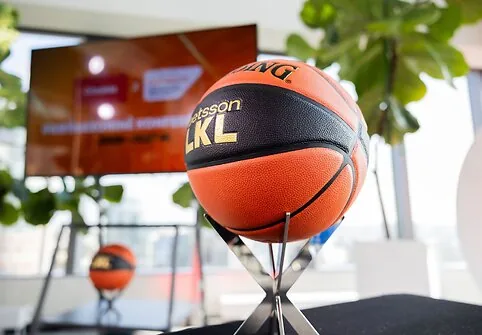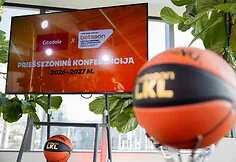







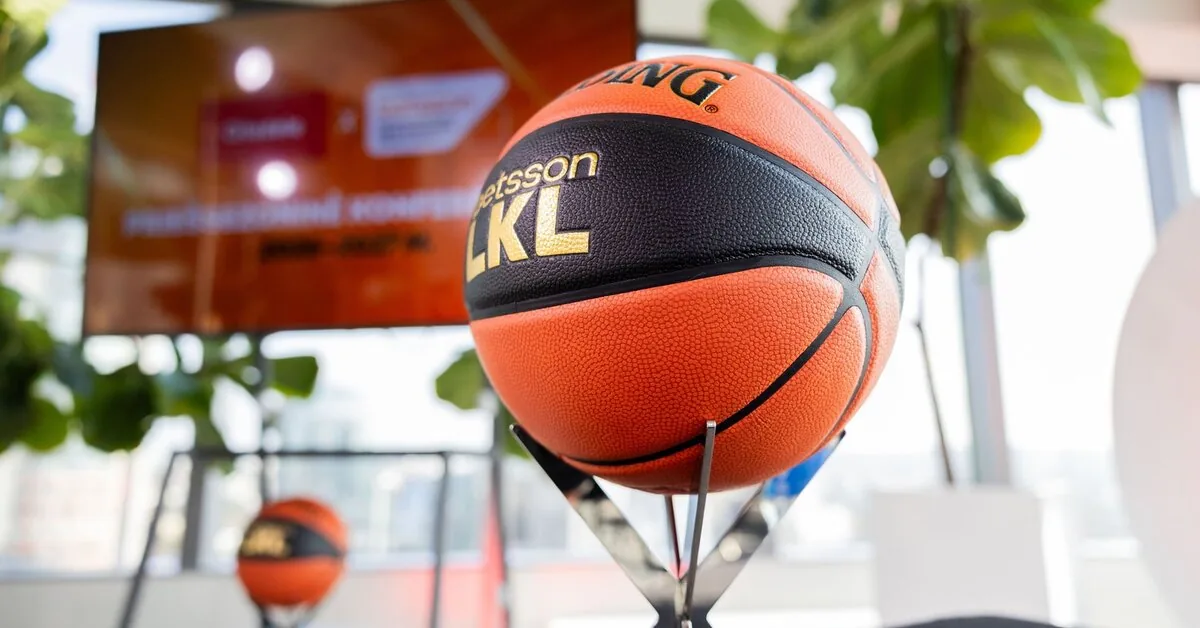
From the long-time LKL sponsor “Citadele” headquarters on the 18th floor of Konstitucijos Avenue, there is practically a panorama of the entire Vilnius, illuminated by bright sunshine on Wednesday morning.
The faces of the LKL leaders who gathered the media representatives for the press conference also shone brightly.
Unlike a year ago, when suddenly two league clubs were lost and only at the last moments was the 9th team found, this time the new LKL season is welcomed with a solid foundation underfoot.
It was confirmed last spring that the newcomer “Tauragė” joins the previous nine teams, so after a year’s break, 10 teams will again play in the highest basketball division in the country.
Except for “Jonava,” which, as usual, does not reveal its finances, it seems that all other teams plan budgets of at least 1 million euros and promise an intriguing season and a hot fight for the playoffs.
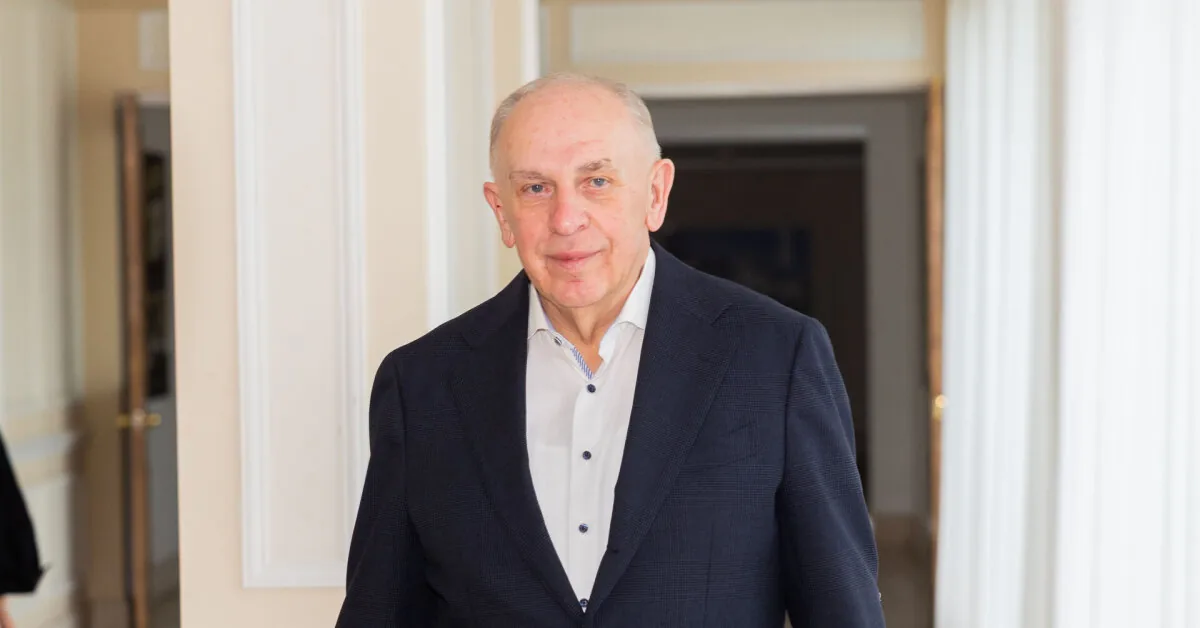
“The best thing is that we are back to ten again, we have 10 teams again,” rejoiced LKL president Remigijus Milašius. “Last year there was a moment when there could have been only 8 teams left, and I was criticized by the media, but you have to understand how many twists and turns there are in trying to establish a club, that it cannot be founded in a minute.”
- After a year’s break, 10 teams will again play in the LKL: Kauno “Žalgiris,” Utenos “Juventus,” Klaipėdos “Neptūnas,” Panevėžio “Lietkabelis,” Vilniaus “Rytas,” “Šiauliai,” “Gargždai,” “Jonava,” Kėdainių “Nevėžis,” and “Tauragė”;
- The Tauragė team will debut in the LKL – a team from this city has never played in the highest national division;
- All teams will play each other four times in the regular season. A total of 36 matches will be played. The top 8 teams will advance to the playoffs;
- The tournament will start on September 17 with a match between “Gargždai” and “Žalgiris”;
- The regular season will last until May 16, 2027. The playoffs should end no later than June 18, 2027.
As before, teams will play four rounds and 36 games each.
“We may receive comments that the format is boring or other remarks, but we have commitments to television and other partners and make a decision that is long-term. As long as those contracts are valid, the format will not change,” emphasized the league’s general director Rasa Liuimienė.
Previously, R. Milašius constantly repeated the ambition to have 12 teams in the LKL, but now, when asked about it, he referred to the second national division NKL.
“As I mentioned, it is not easy to create teams. This story is instructive. Until there is a strong National League… I think there are too many teams there. You will immediately say that Milašius wants so many teams. But there must be budgets, it must be done similarly to us, developing players. When I came, we never succeeded with NKL teams – I mean both Mažeikiai and Gargždai. Therefore, we concluded that future eleventh or twelfth teams need to be prepared. If people are not ready both in management and financially, then there is no point in doing it. This is not a kindergarten; these are serious men sitting here. <…> You need to plan several moves ahead and teams that could come to us through development. I don’t know if we need 12 teams. Our country is small, today we have a different methodology, and we will see how it goes,” said the LKL president.
R. Milašius noted that a huge mistake is that NKL is still under the association “Lithuanian Basketball.” Interestingly, he is the one most associated with taking over the association president position from Mindaugas Balčiūnas.
“I would like to rejoice that recently we see some NKL teams’ efforts to at least catch up a bit with the LKL. I am also happy about Jurbarkas, which won the NKL and had the opportunity to enter the LKL but did not meet and still does not meet the requirements. We also see Marijampolė’s efforts. For many years, Remigijus and I have been going to Marijampolė talking about the need for an arena and that the Marijampolė club would be needed in the LKL, and now we see that the first steps have been taken,” added R. Liuimienė.
She added that in the upcoming season, the LKL will again return to double broadcasts on Saturdays and Sundays on the BTV channel, and the remaining fifth round match will be shown on the “Telia” platform.
The King Mindaugas Cup format will also change. From now on, three teams not participating in international tournaments – “Gargždai,” Kėdainių “Nevėžis,” and “Tauragė” – will play in a qualifying stage for entry into the KMT quarterfinals, and the Jurbarkas team from NKL will join them.
“This year we will have a qualifying stage, and the main reason why this stage will be played is that three of our teams do not participate in international competitions. One game per week is far too little for professional clubs, so to ensure the workload, a qualifying stage will be held. We are glad that the “Jurbarko-Karys” team agreed to participate in the qualifying stage and test their capabilities by playing against Lithuanian Basketball League clubs,” said R. Liuimienė.
Read more At an important energy meeting – US boasting about its power
It was revealed that the KMT final four will take place in Kaunas in February 2027. This is the first time in this city since 2024.
A big emphasis was placed on rule changes.
“From this season, we are introducing a quick ball throw-in model. During preparation, our teams practiced, tried with referees how to adapt this rule faster in our competitions,” said R. Liuimienė.
LKL referees department head Algimantas Pavilonis commented more broadly on this and other changes.
“This is an innovation, the quick ball throw-in rule. It is not new worldwide; the Spanish ACB league already uses it, it has been tried in Sweden and Lithuanian regional and school leagues. What does it give? First, the game speeds up. The essence of the rule is that if the attacking team commits a violation in their zone, then the defending team can quickly grab the ball without handing it to the referee, throw it from out of bounds, and organize an attack. What does it change? Not only time is saved, but the game philosophy changes – less coach influence, the coach will not have time to say defend here or there. That speed, of course, causes more chaos, but the game becomes more interesting. It will also be an advantage for athletic, fast teams because you need to quickly orient yourself, grab the ball, and rush to attack,” explained A. Pavilonis.
This rule applies only for the first 38 minutes of the game. Sanctions will also be provided for players for grabbing and delaying the ball, preventing opponents from quickly throwing it out. In addition, in these cases, the coach’s “challenge” rule will not apply, and it will not be possible to take a timeout.
It is expected that games will be shortened by about 4-5 minutes due to this rule. However, according to LKL leaders, the rule was introduced not to shorten game broadcasts but to speed up the game.
LKL will also apply FIBA-introduced changes that will apply in other competitions where Lithuanian teams participate.
“They will apply everywhere – both in the Euroleague and our tournament. A technical foul is now divided into two categories: the first category is related to unsportsmanlike conduct towards opponents, referees, or secretariat. A technical foul is given for this, and after two such violations, the player is disqualified. The second category is related to the game, e.g., interference, delay, etc., and such fouls do not count towards the two fouls that lead to disqualification,” said A. Pavilonis.
“You need to forget the term unsportsmanlike foul. Now there will be two types of fouls: interfering, when a fast break is stopped, and a rough foul, when a player commits a serious foul against an opponent. As with technical fouls, an interfering foul will not count towards possible disqualification, but a rough foul will. Also, receiving a second category technical foul and a rough foul will disqualify the player.”
R. Liuimienė introduced three new referees who were tested during the preparation period and may be integrated into the LKL referees family during the season. They are Rytis Vitkus, Lukas Šaulevičius, and the first woman referee aspiring to become an LKL referee, Milita Stalaučinskaitė.
“For the first time in LKL history, we have invited Milita Stalaučinskaitė, who has had an international basketball federation license for several years, is evaluated in international competitions and the FIBA referees department. To our knowledge, she is a strong candidate for the FIBA black license, so we think we should give this young, promising referee the opportunity to work in the strongest Lithuanian basketball league,” said one of the LKL leaders.
They were also asked about money, but LKL leaders were not in a hurry to open up.
“We live well,” smiled R. Milašius when asked about the LKL budget and monetary prizes, adding that LNK television, with which a broadcasting contract is concluded, is not willing to disclose these amounts.
Read more After Russian strikes on Ukrainian passenger trains – Zelensky’s decisions