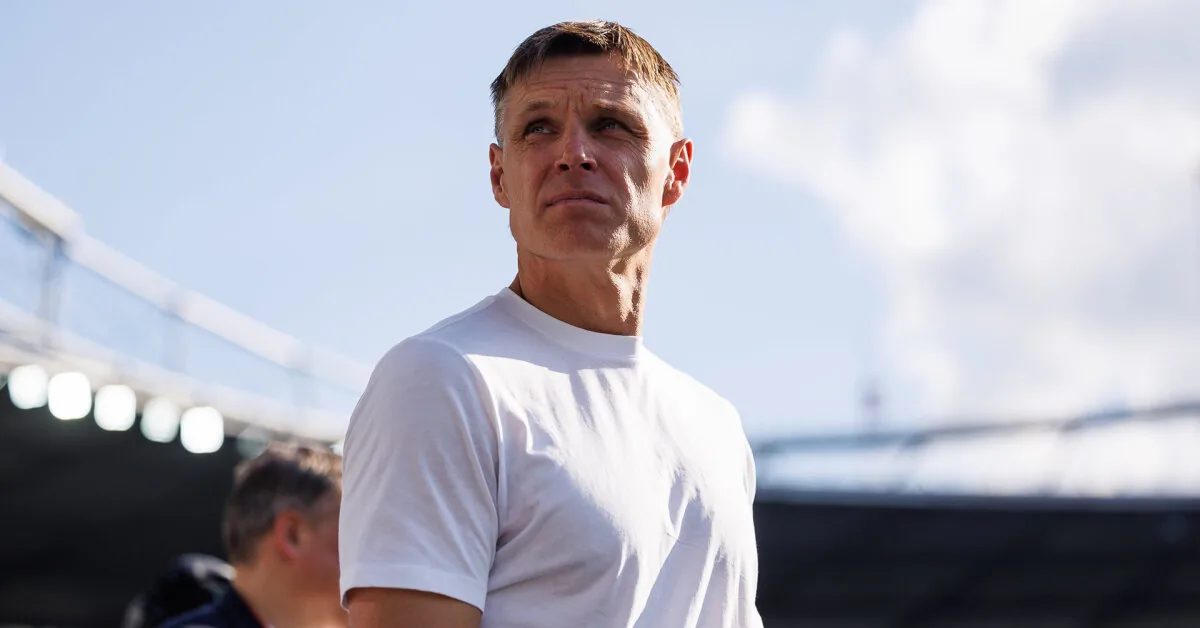
The last time our team could be called the strongest in the region was sixteen years ago, when Raimondas Žutautas was leading the national team.
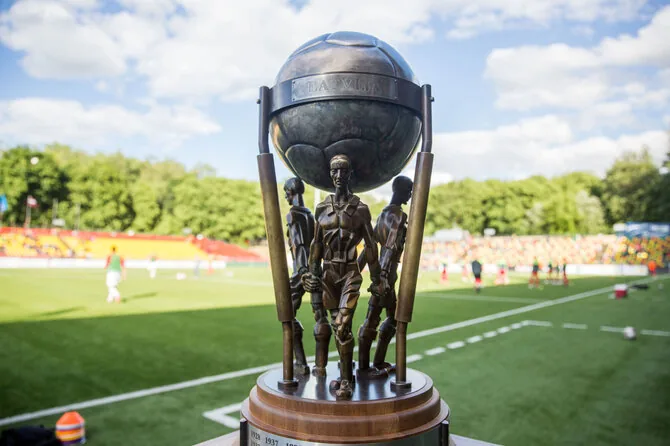
Since then, almost everything in Lithuanian football has changed, except for a few unpleasant details. If Lithuania ended the 2010s ranked 55th in the FIFA rankings, it now languishes at just 148th. Another disappointment – the Baltic Cup trophy has not returned to Lithuania since.
The Darius and Girėnas Stadium, where the title was won back then, today has a completely different face. Six different specialists have coached the national team during that time. Arūnas Klimavičius, who played in the starting lineup in the final that year, became the head of the Professional Footballers’ Association, Deividas Česnauskis became one of the country’s most influential agents, Darvydas Šernas founded a football academy, and Artūras Rimkevičius passed away.
Sixteen years have passed. Sixteen years of attempts, disappointments, new beginnings, old mistakes, and talks about faith and process – a magical word that in Lithuanian football sometimes sounds like a convenient synonym for defeat.
Now another attempt, and Lithuanian football hopes to finally end the dark period.
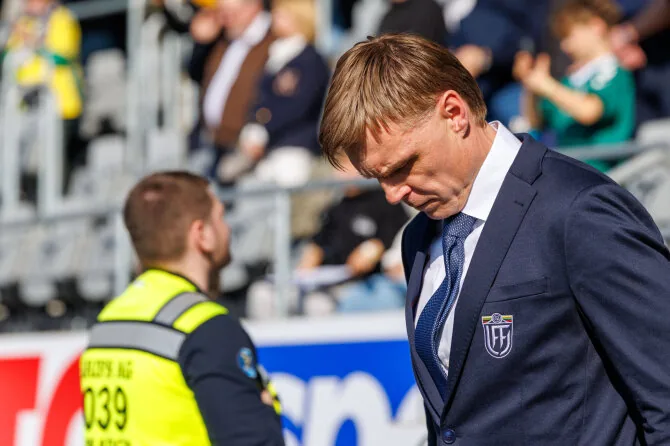
This tournament will also carry special weight for head coach Edgaras Jankauskas. Lithuanian Football Federation president Edgaras Stankevičius has set very specific goals for the strategist for 2026 – to reclaim the Baltic Cup and win the UEFA Nations League Division D.
In other words, romantics may talk about progress, ideas, and ever-improving contours of play. In the corridors of the Football Federation, it sounds much simpler: win or say goodbye.
If the Baltic Cup does not belong to Lithuania again, it is very likely that the national team will welcome autumn with a new coaching staff.
So the coming week for Lithuanian football is not just another attempt to measure up against neighbors, but an opportunity to silence, at least briefly, the uncomfortable echo that has lasted for eternity. And at the same time – a test for the coach who knows very well: this time the Baltic Cup can be not only a trophy. It can be a verdict.
“There is pressure, of course. If we haven’t been able to win the cup for sixteen years, it is not a coincidence. It is a combination of things, we are lagging behind, but we still want to win. We all live with it and go through it,” E. Jankauskas philosophically looked at the upcoming challenge.
On Thursday afternoon, E. Jankauskas revealed the cards and announced the footballers with whom he will try to accomplish this mission. The cards, it must be admitted, are not quite what one might have expected.
The list raises an eyebrow.
This time, the national team will be without even five players who have played important roles in recent years – goalkeeper Edvinas Gertmonas, Pijus Širvys, Paulius Golubickas, Gratas Sirgėdas, Kipras Kažukolovas, and Fiodor Černych.
These are not cosmetic changes. These are not just a few scribbles in the margins of E. Jankauskas’s notebook. These are sharp accents in a list that looks as if the coach has decided not to fix the old picture but to repaint it in at least a few places.
“Historically, the June window is the most difficult for us. Championships in other countries end earlier, players’ physical conditions vary. There are always many questions, you wonder whether it is better to play with those who play in the Lithuanian championship and have rhythm, or to choose ‘foreigners’ who had matches two or three weeks ago,” E. Jankauskas said. “We tried to vary. Final decisions were made after individual conversations. We have losses, but our team is formed according to a very clear algorithm: first – the desire to represent the national team, second – the ability to help it, third – logical explanations why one or another player should be here.”
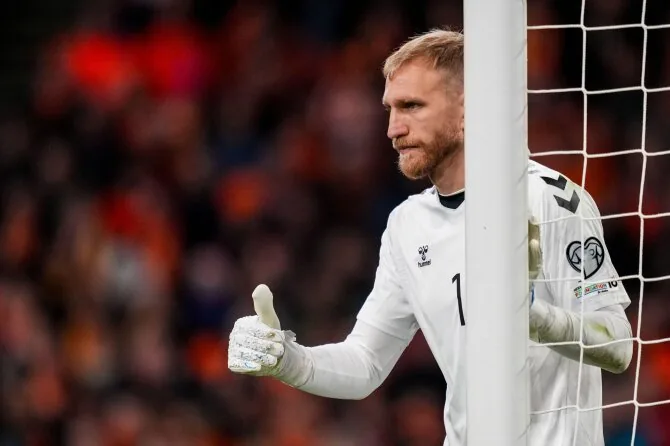
Perhaps the most painful loss is that of the main goalkeeper Edvinas Gertmonas. The best goalkeeper of the Romanian championship moved to Switzerland this week and will represent the “Servette” club.
“Edvinas finished the season early and did not have a contract. Earlier, he also had some health problems, so he decided to skip this window. I know there were some back problems, so apparently he decided to rest and prepare for the next season at a new club, but it would be better if he explained everything himself,” commented E. Jankauskas.
The strategist also had a firm opinion about his other choices.
“Širvys’s situation is similar – the season ended, his contract with Maribor ended, he has not yet signed a new contract, he is afraid to take risks, so he decided to skip this window. About Paulius Golubickas? I think other players are in better form, more prepared. Fiodor is injured, Gratas was also out of the lineup when we had to send the player list. I talked to both. The injuries are not very serious, but they had no minutes on the pitch, so we decided to choose players who played more. I believe the chosen players can give more benefit to the team. Kipras Kažukolovas also recently recovered from an injury, I talked to him, but too little time has passed, he does not feel strong,” explained the national team coach.
However, Arvydas Novikovas received an invitation to the national team.
The 35-year-old veteran has not worn the national team jersey since June 2024, when in the previous Baltic Cup final Lithuanians lost to the Estonians after a penalty shootout.
Recently, A. Novikovas tried to revive his career at Vilnius “Riteriai” club, which is balancing on the brink of bankruptcy – a place that currently resembles not a springboard to the national team but an intensive care ward.
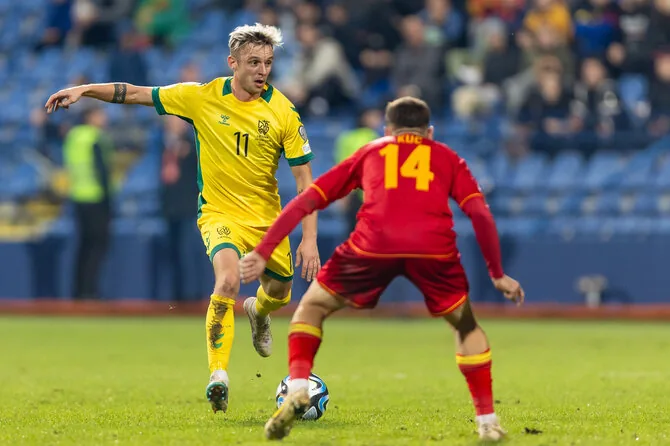
But A. Novikovas’s story still has appeal. The Vilnius native has worn the yellow national team jersey 96 times and scored 12 goals. He is still chasing one of the last career milestones – one hundred matches for the Lithuanian national team.
Throughout the history of Lithuanian football, only two players have achieved this – Saulius Mikoliūnas and Fiodor Černych.
A. Novikovas is four matches short of this club. The list published on Thursday by E. Jankauskas shows that the door is not yet closed. The only question is whether this is a sporting decision or a sentimental attempt to invite the veteran for one last dance.
“I think he deserves it both for his play and dedication. His experience will be useful both in the locker room and on the pitch. His leadership was especially tested during this painful club phase. Players play without salaries, sometimes they doubt whether it is worth going to the pitch and training at all. Arvydas was the one who pulled, pushed, and convinced this team that they need to do their work honestly. Such leadership will definitely be useful to us, and his football intelligence has not disappeared anywhere. He sees decisions that current team members do not understand, but that is because they are not at a similar level. The statistics in Toplyga may not be encouraging, but I believe it would be quite different if he had higher-skilled partners next to him. I believe he will have such players in the national team. I have closely followed his play, and I think he is in the form I remember from the last time he was in the national team – fast, not gained weight, healthy, positive on the pitch. We need this version of him,” E. Jankauskas is convinced.
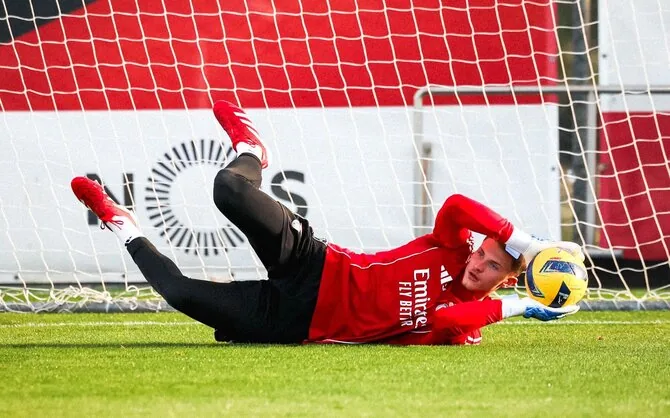
Besides him, Ignas Plūkas, Matijus Remeikis, and Vaidas Magdušauskas returned to the national team after a break, and the first invitations were received by goalkeeper Arnas Voitinovičius and midfielder Domantas Šluta, who previously represented the U21 team, as well as Ignas Venckus and Edvinas Kloniūnas, who are also having solid seasons.
“Arnas, despite being nineteen years old, has very great potential. Very good feedback comes from the Lisbon ‘Benfica’ club, but we have already seen his character, dedication, and courage here. Given these circumstances, this is a very good opportunity to see this player up close. We want him to feel the scent of the Lithuanian national team and get to know the environment. I think the future belongs to young players. The earlier we let them in, the better. This is also a good message to other young players that regardless of age, the doors are open to everyone. The most important thing is that the player is ready,” E. Jankauskas said.
The national team coach, who regularly attends Lithuanian championship matches, also praised other potential newcomers.
“Domantas Šluta is the kind of player we need in midfield, especially if we play with two defensive midfielders. He is aggressive, covers a lot of ground, is not afraid of physical contact, and does not avoid attacking. I think he is endowed with all these qualities, and you can also add his work ethic and mentality. Edvinas Kloniūnas is in very good form. He took the place of Dominykas Barauskas, who was in very good form but tore a muscle in the last match. We had to replace Edvinas Girdvainis, but he is also injured. Then we chose Kloniūnas because he plays solidly and confidently. Ignas Venckus is the top scorer in the Lithuanian championship. There was a dilemma – to invite him or Gytis Paulauskas, who is pushing into the team. We met with him in Vilnius and trained individually, but when making the final decision, I think it was fairer to give this spot to Ignas – he plays and has a goal-scoring instinct,” the strategist laid out his arguments.
E. Jankauskas’s charges will meet Latvian footballers in the Baltic Cup semifinals on June 6 in Kaunas. In the other pair, the Estonians will play against the Faroe Islands team in Tallinn.
The winners of the semifinals will fight for the title, and the losing teams will compete in the match for third place.
If the Lithuanians have to play Estonia in the second match – regardless of whether it is the final or the battle for third place – this meeting will take place in Tallinn. If Lithuania’s opponents are the Faroe Islands footballers, the match will be played in Lithuania.
The LFF promised the national team a bonus of 100,000 euros for the long-awaited victory.
However, according to the national team coach, his charges think least about this incentive.
“We have talked about it with the president, but I really don’t remember the amounts. That means it is not so important at the moment. Whether there will be bonuses or not will have no effect on the players’ dedication and preparation. Of course, it is always nice when work is rewarded, but no player comes to earn money. Nobody cares about the size of the bonuses. For us, it is not an additional motivator,” said E. Jankauskas.
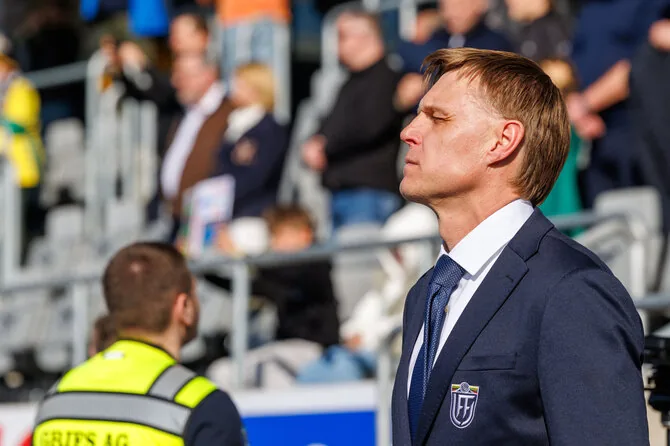
The Baltic Cup has been won most times by the Latvians – 13. Lithuania has 10 titles, Estonia has triumphed five times, and one title has been won by Iceland, who participated in the tournament as guests.
Read more Announcement about the closing of the famous Palanga restaurant – Roko Galvono’s latest news