Such changes raise questions for future students as well: when choosing future specializations, some graduates begin to doubt how AI development will change the nature of the work of informatics and IT specialists and what kind of specialist will truly be needed in the future. Will informatics and IT studies still remain such a promising choice in the future?
Read more The court postponed the decision in the Laisvės Alley fight case – will announce in July
It’s not the demand that’s changing, but the competencies of an IT specialist
Experts have no doubt – the demand for informatics specializations is not disappearing, but the role of the IT specialist itself is changing. If previously the greatest focus was often on technical programming, today the abilities to analyze, understand complex systems, work with data, and critically evaluate artificial intelligence solutions are becoming increasingly important. Previously, junior specialists performed simple tasks, but today their work in a company can start with the supervision and management of AI agents, so more and more knowledge and competencies are needed to start in the job market.
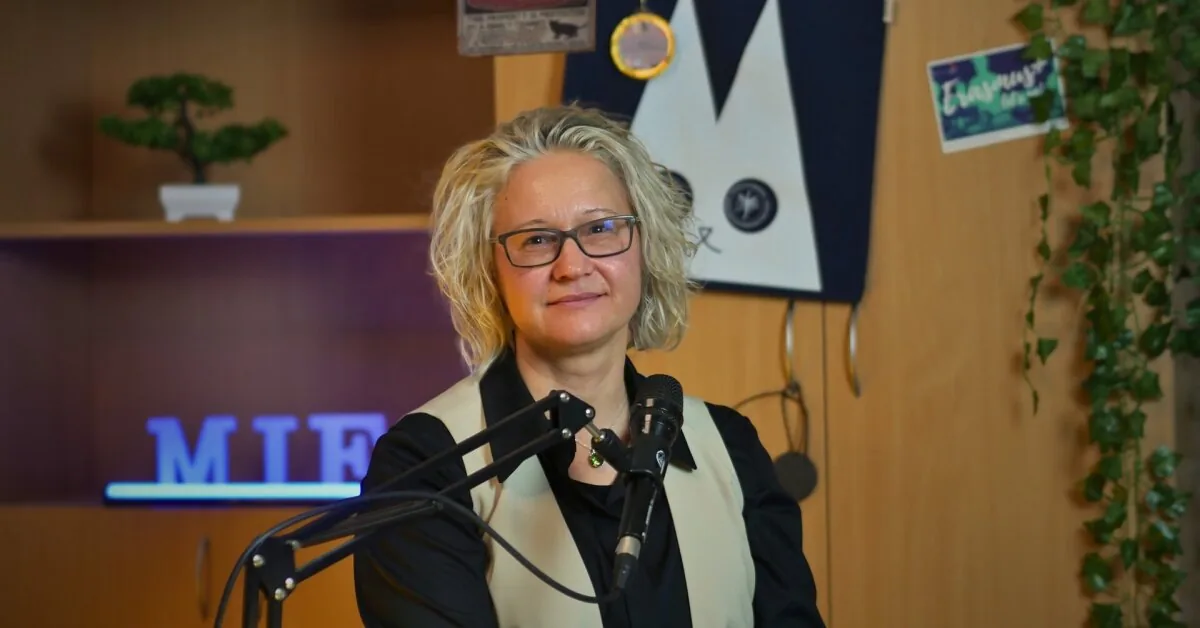
“Technologies are rapidly entering every area of life – they are becoming smarter, more complex, and intertwined. And who will be responsible for their creation, improvement, security, and reliability? Programmers and IT specialists, precisely. So it is likely that they will be needed no less, and perhaps even more – just different ones: not code writers, but true technology creators,” says Dr. Jolita Bernatavičienė, Senior Researcher at the Image and Signal Analysis Group of the Institute of Data Science and Digital Technologies, Faculty of Mathematics and Informatics, Vilnius University, and Chair of the Information Systems Engineering Study Programs Committee.
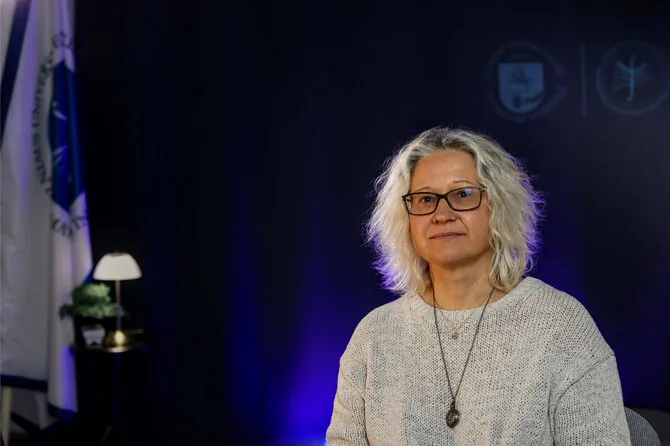
According to her, AI is most effective when used by a person capable of understanding not only the final result but also the entire process behind it. Therefore, in the technology sector, the role of an IT specialist is changing from an executor to a decision-maker.
“Previously, the model was clear: the programmer was responsible for working code, the systems architect for requirements, and the tester for quality. Today, a good IT specialist is someone who knows how to ask the right questions, not just find technical answers. They understand the organizational context, can communicate with non-technical colleagues, and take responsibility for the final solution, not just for their line of code,” states Dr. J. Bernatavičienė.
According to the expert, today not only the definition of an IT specialist is changing, but also the understanding of a programmer’s work. And AI is becoming a kind of litmus test, showing the complexity of this work and the need for broad-profile competencies.
“When routine code generation is automated, specialists can dedicate more time to system architecture, solving non-standard problems, and creating user experience – tasks for which there simply wasn’t time before. This is not job destruction – it is a qualitative change in job content. Moreover, history confirms – every major technological transformation, from the industrial revolution to the advent of the internet, eventually created more jobs than it destroyed,” Dr. J. Bernatavičienė is convinced.
According to the researcher from the Faculty of Mathematics and Informatics at Vilnius University, for these reasons, three competencies are becoming increasingly important: the ability to learn faster than technology changes, critical thinking when evaluating AI solutions, and a systemic approach – seeing not just the detail, but the whole.
Fear for the future is fueled by myths
Nevertheless, discussions about the impact of artificial intelligence on the field of informatics are still accompanied by a rather narrow understanding of what IT specialists actually do today.
“One of the most common myths is that an IT specialist’s job is boring: sitting alone, staring at a screen, repeating the same operations. But it’s enough to imagine one situation: a hacker has broken into the network – the solution must be lightning-fast, precise, and effective. Where’s the boredom here? This is one of the most creative and responsible areas of work – every problem is unique, and technologies change so quickly that boredom simply has no time to arise,” shares Dr. J. Bernatavičienė.
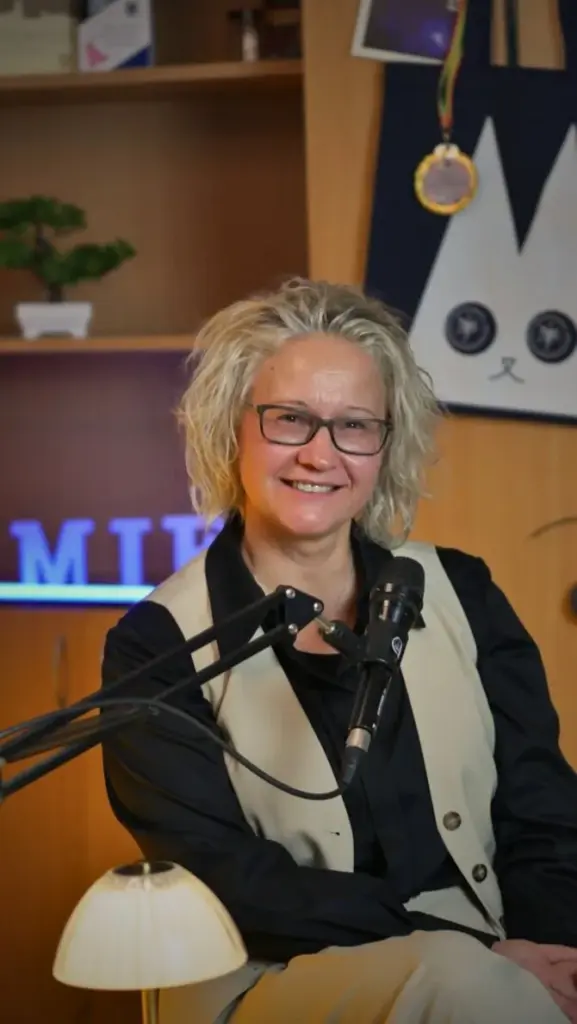
According to her, there is still no shortage of myths about IT specialists and informatics studies. The belief that only those who have been interested in programming since childhood can become IT specialists, that an IT specialist’s work is limited to computer repair, or that mathematics can be avoided in studies is still prevalent.
Read more Scenes like from a horror movie: In Spain, tourists ran from 20 m high flames
Recently, another theory has emerged – that informatics studies are becoming unnecessary because artificial intelligence will do everything.
“AI is a powerful tool in the hands of an IT specialist, but first, one needs to become an IT specialist. Knowing how to use a tool does not mean understanding how it works or being able to apply it responsibly. This is similar to the difference between a person who knows how to drive a car and an engineer who understands how that car is designed, why it works, where it might break down, and how to ensure its safety. Many will use automated solutions, but true specialists will be those who understand their operating principles, limits, and responsibilities,” says VU researcher Dr. J. Bernatavičienė.
The technology market will require increasingly broader competencies
As the world of technology rapidly changes, the directions of informatics themselves are expanding. Experts predict that in the coming years, the fastest-growing areas will be artificial intelligence applications, data analytics, cybersecurity, data engineering, intelligent system development, and process automation. AI ethics and technology management issues are also gaining increasing importance. Significant potential is seen in health technologies and education digitalization.
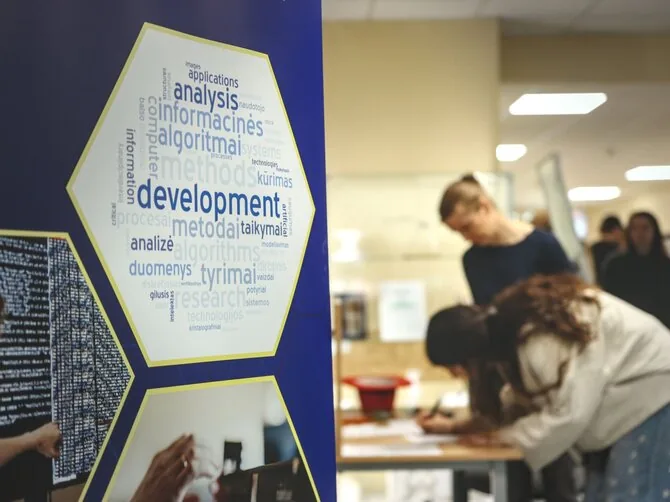
“IT has already entered almost all fields – medicine, education, logistics, agriculture, law, culture, public administration, and many others. Therefore, hybrid specialist profiles, where technological expertise is combined with knowledge of a specific field, are becoming increasingly important. The job market will need not narrow technology users, but specialists who can understand a problem, work with data, responsibly apply AI, ensure security, and create reliable information systems,” asserts Dr. J. Bernatavičienė.
According to her, the most promising directions will be those that develop not only technical skills but also systemic thinking, critical evaluation, and responsibility for the digital solutions being created. The interviewee is convinced that the technology market increasingly needs people who understand how systems work fundamentally – from data and networks to process architecture or cybersecurity.
The IT world needs more than just programmers
The informatics study directions offered at the Faculty of Mathematics and Informatics at Vilnius University today cover very different areas of technology – from Informatics, Software Systems, or Information Technologies to Information Systems Engineering and Bioinformatics. According to specialists, such a spectrum of directions allows students to delve not only into programming but also into data analytics, artificial intelligence, system development, cybersecurity, or the application of technologies in other fields.
As technologies change, what becomes increasingly important is not a specific tool, but the ability to adapt to a constantly changing technological environment. For informatics studies, the most important thing is not prior preparation as a perfect programmer, but curiosity, the ability to learn, and the desire to understand how technologies work.
“A good IT specialist today is someone who knows how to ask the right questions, not just find technical answers,” says Dr. J. Bernatavičienė.
You can read more about the Bachelor’s and Master’s study programs offered by the Faculty of Mathematics and Informatics at Vilnius University on the mif.vu.lt subpage „For Applicants“.
Read more Ignitis ON electric car competition – annual Baltic States’ charging infrastructure test