






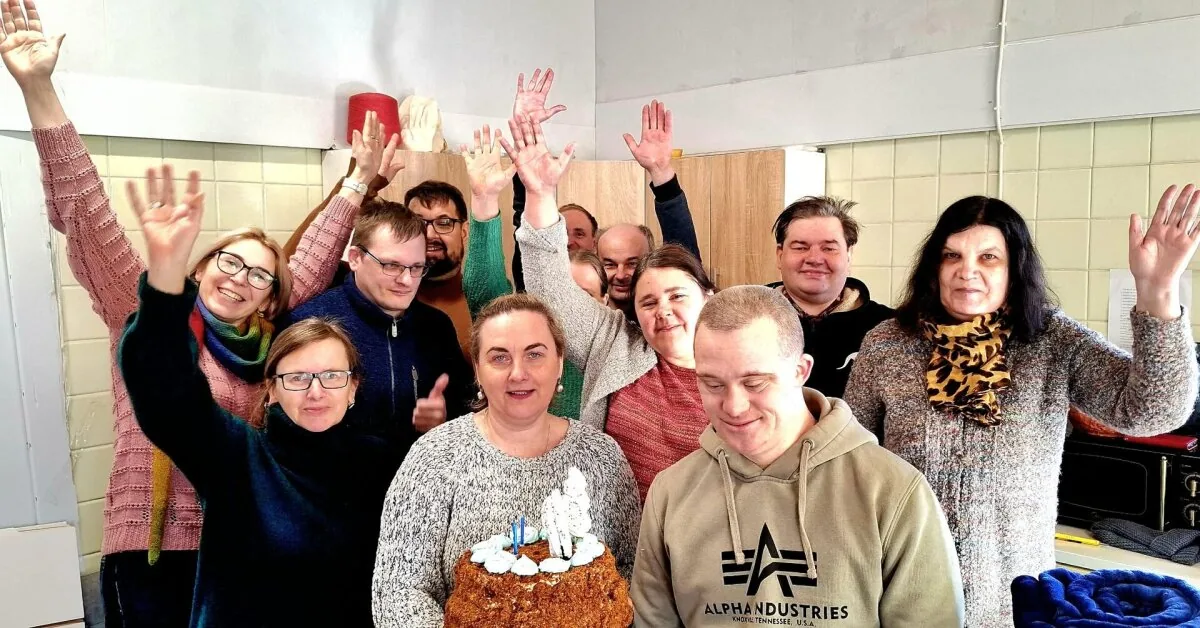
These workshops are implemented by the Molėtai Hope Community for People with Intellectual Disabilities, which has been operating since 1996. And although the project itself is still very young – celebrating its second birthday on May 8th – its participants do not hide their joy: the breakthrough is huge.
Read more Kyiv: four people killed in Russian strikes, nuclear waste storage facility damaged
Not to color, but to work
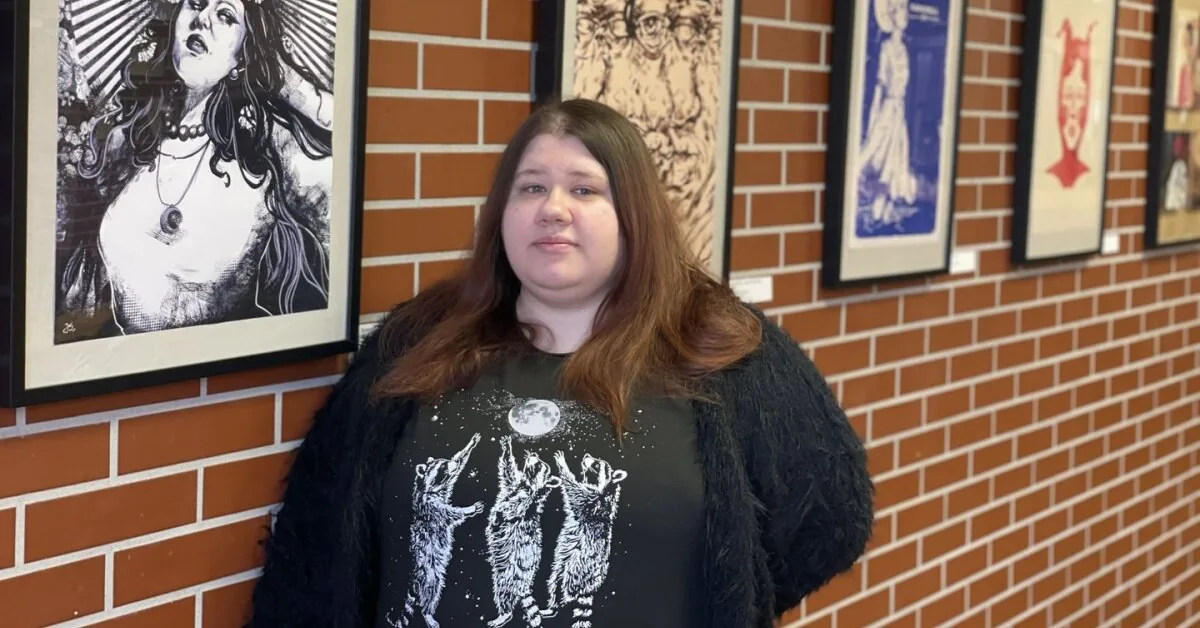
As Vaida Bacenskaitė, the head of the social workshops “Šlamučiai vėjyje”, tells the portal 15min, two years ago they started implementing the project with a clear goal: to change the established attitude towards people with intellectual disabilities.
“From ancient times, activities for people with disabilities were organized only through various handicrafts, drawing, and coloring. The aim of this project is to learn to work – so that a person learns to follow a routine, that at a certain time they need to come, at a certain time to have lunch, at a certain time to go home,” explains the social worker.
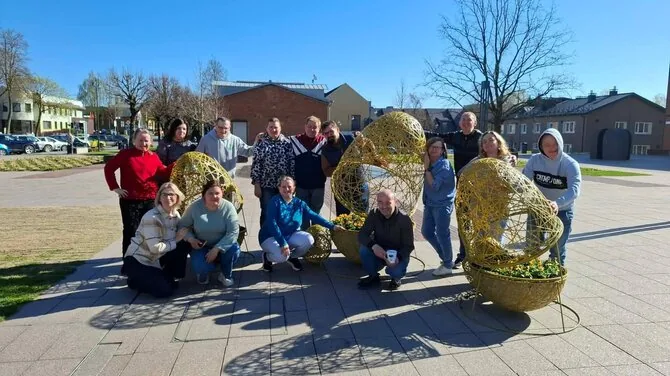
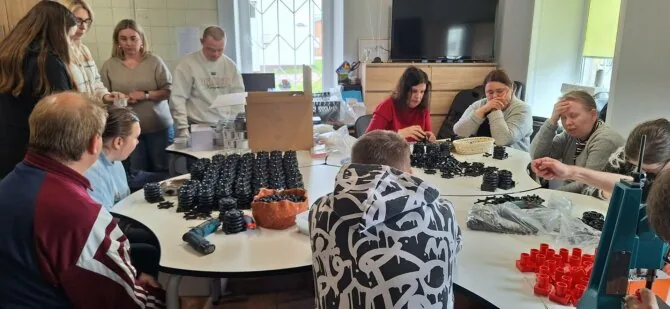
According to her, the tasks here are very specific. The workshops collaborate with two companies located in Molėtai: “Ventmann”, a manufacturer of gypsum air diffusers, and “Hoda”, which specializes in plastic product molding. Real orders come from them – to assemble sockets, twist screws, put together parts.
“Such a seemingly complex thing, but this activity is very suitable for people, it calms them down a lot. Like some kind of meditation,” smiles V. Bacenskaitė. She adds that truly impressive amounts of work are done here every month. For example, the project participants assemble almost 13,000 sockets alone.
The workshops receive excellent feedback from the mentioned companies. However, according to V. Bacenskaitė, the biggest achievement for her is the change she observes over time in the people participating in the project activities.
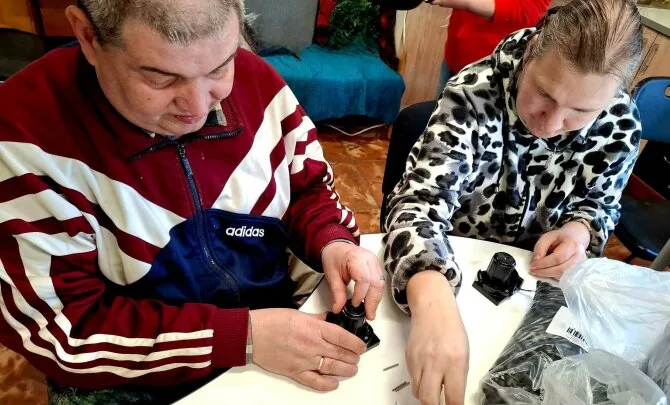
“Two years ago, a person would come with an accompanying person, and the accompanying person always had to stay nearby, never leaving. We couldn’t even wash a plate, or anything. But now the accompanying person brings them and leaves, relaxes, goes wherever they want, shops, and everyone is very happy,” assures the workshop manager.
They get not only work, but also a family
As the social worker notes, over time, not only the skills of people with disabilities have changed, but also their self-perception. In the workshops, a simple but telling sentence is heard more and more often: “How good it is that we don’t just have to draw, but have to go to work.” According to the interviewee, people genuinely enjoy what they do, and that their lives have gained significantly more color.
Read more Sigitas Tamkevičius. Gospel for Corpus Christi. «I am the living bread»
“Here, for example, Laimutis – our true president. In 2 years, he missed only one day – and that was because he had to go somewhere for business,” says V. Bacenskaitė.
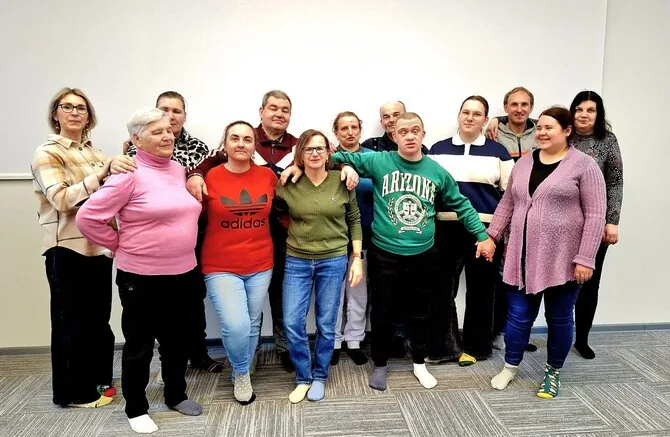
According to her, everyone finds their place here: some prefer to twist screws, others – arrange parts. Sometimes tasks are chosen according to desire, sometimes – according to what is needed at that moment. And although the days in the workshops have a clear structure, much more fits in between all of that.
“We have lunch together, drink coffee, celebrate birthdays. Of course, everything happens, just like in a real family. We rejoice and we grieve. We also spend time together after work: participants decide for themselves where they will go – to a pizzeria or a concert,” assures the social worker.
An important part of this whole process is the support of loved ones. Many participants come to the workshops daily from more distant areas, accompanied by parents or grandparents. For example, Žydrūnas’ mother drives him almost 20 km to Molėtai center almost every day.
Speaking about the future of “Šlamučiai vėjyje”, V. Bacenskaitė regrets that it is not clear. These social workshops operate under a project that will end in approximately 14 months. The interviewee and her team hope that the funding will be extended; the application has already been written.
“It would be a great pity if this activity ceased. We truly see a need for it,” assures the manager. No matter how fate turns out, the woman is glad that such initiatives truly help, albeit slowly, to change public attitudes about what people with mental disabilities can do.
“In the public sphere, I believe, the attitude towards people with disabilities is definitely changing. As I say, just as a person needs to get used to a piece of clothing, so too to another person. And the more visible people with disabilities are, the more accepted they are,” smiles V. Bacenskaitė.