Often called “mom,” “the main muse of the theater,” Garuolytė remained loyal to her theater’s routine. No major performance would take place for a long time without her; directors chose her when consistency and long hours of rehearsals were needed.
Read more “A sixth of the world will take a vacation”: why GTA VI is delayed and what is at stake
She began her work in the theater with director Henrikas Vancevičius, who was the chief director of the Lithuanian Academic Drama Theater for 24 years.


– Regina, you decided to leave the theater. You chose a very symbolic date – the last performance of “The Great Road.” Why?
– Everything has a beginning and an end. I have spent my whole life deciding how I live and what I do. I don’t know any other way. “The Great Road” is the end of the era I entered as its contemporary. Jonas Vaitkus, Eimuntas Nekrošius, Rimas Tuminas – they are my contemporaries.
It doesn’t matter that they are a bit older than me, but they are my generation, my theater, my psychology, my feelings. “The Great Road” is a very symbolic work for me in general.

During its rehearsals, I was born a second time: an aneurysm was unexpectedly discovered, and I had to undergo surgery. I remember that after the operation, doctors strictly forbade me from doing anything for at least ten days, but I went straight to rehearsals held in the Cinema cluster.
At that time, those rooms were not even heated. Vaitkus, like Tuminas or Nekrošius, is my skin, my body… That’s why I worked in the theater – because of such an understanding and vision of theater… That’s why I chose such a symbolic exit – a farewell with a director dear to me.
Vaitkus, like Tuminas or Nekrošius, is my skin, my body…
The farewell to Nekrošius’s “Boris Godunov” happened a bit earlier. And I will still keep “Atžalynas” under my care – I will return when it is performed.
– Could you characterize the main differences from the beginning of your life in this theater until now?
– When I pulled the handbrake, I realized I had spent more than half a century in the theater, and my hair stood on end. You could say I witnessed three different theaters.
When I came to the then Academic Drama Theater in August 1975, which was housed on Basanavičius Street due to its first reconstruction, I started working with director Vytautas Matula, who was rehearsing Aleksandr Vampilov’s “The Elder Son” at that time.
This play featured young actors: Vytautas Rumšas, Eglė Gabrėnaitė, Vaiva Mainelytė, Romas Ramanauskas, Jonas Braškys.
I clearly remember Jonas Kavaliauskas playing the Father and many other actors. This theater was my first step. I remember the empty theater because everyone was touring Lithuania at that time, leaving young Matula behind. That fall, the theater celebrated its 35th anniversary. It’s hard now to accept how quickly those years passed. This year is already the 87th season!
You could say I witnessed three different theaters.
Although at that time this theater was still quite young, in spirit it was a true academic, “court” theater. It had the strictest subordination; the chief director was the god of gods, Zeus. No objections to him.
If anything was even slightly wrong, it was just a nod of the head, no matter if you were a commoner or a People’s Artist. At that time, Irena Bučienė and Algirdas Lapėnas were staging plays. They were gods in their productions, but not in the theater. The youth generally walked on the sidelines. When an elder came, you stopped, let them pass, bowed your head… At that time, it was fashionable to kiss a woman’s hand when meeting her. It was mandatory.

During the theater-court period, the service staff never participated at the common table after premieres; no one invited them. They partied separately in the basement.
On tours, no hotels were assigned to them; they stayed overnight in the theater on folding beds or “mattresses.”
Everything changed after one discussion. In the rest room, the team was discussing Henrikas Vancevičius’s “Rats” premiere (1988), Regimantas Adomaitis stood up and said to the director: “Your train has already left.”
Regimantas Adomaitis stood up and said to the director: “Your train has already left.”
It was like a bomb explosion. To say such words to the chief director! And it was the beginning of the Sąjūdis era. A “revolution” began in the theater. The theater became very divided. Tuminas had not yet founded the Small Theater, although he had already stepped aside with his actors. But some actors did not want him to become the chief director.
Then Vaitkus was invited. After his successful creation of Antanas Škėma’s “Awakening” and the tour of this play in America, some actors thought one way, others another. A rebellion – a “revolution” – began, even with its leader.
When the troupe split, anarchy began in the theater. Reorganization started: with the ministry’s knowledge, the troupe was dismissed, loyal ones returned, and the proud left. Since only half returned and there were many positions, over 70, Vaitkus invited his students to the empty spots. At that time, a complete revival began in the theater. The structure remained old, values also remained, but freedom to speak, think, act, and say appeared… There was a great atmosphere for creativity.
When the troupe split, anarchy began in the theater.
The third period began when actors became leaders. This is just my opinion. I have nothing against actor-leaders, especially since they are all my friends. But something is definitely wrong. Some kind of family affairs begin.
Once again, we received a breath of fresh air. But now young people rush and hurry so much that they are afraid to stop and reflect. Creativity is impossible in a hurry. If an artist stops to reflect, another will jump over and take their place. That is the time now. Maybe it is the reflection of the era because theater is the pulse we feel beyond its walls.
Creativity is impossible in a hurry.
– I came to this theater when you not only worked until late at night but also managed to prepare some treats for the actors on premiere day. Was this a tradition passed down from generation to generation, or your personal attention?
– I never dreamed of theater; I did not go there myself. I grew up with ballet, opera, and from the age of 10 I was obsessed with operetta… My favorite theater was the Kaunas Musical Theater.

I had not seen a single drama play. In Rokiškis, I saw one children’s play, but it did not interest me at all. But my authorities appeared who saw an actress in me. You could say I ended up in the theater by accident, so I went step by step. When I started working, I thought: “just one season,” and so every year.
I was needed by the theater, not the other way around. I never understood why they praised me so much, why they invited me… I remember that in my second year of work, when the theater received an assignment for an artist to study directing in Moscow, director Pranas Treinys sent me to study. But as soon as I arrived, I argued about national issues and then continued working as a director’s assistant.
I remember when in 1977 Petras Bielskis staged the play “We Play Cats,” and all the primadonnas worked there: Kazimiera Kymantaitė, Monika Mironaitė, Marija Rasteikaitė, Lidija Kupstaitė, Aldona Kupstaitė, Janina Berūkštytė, and other “dragon heads.” Poor director had no easy time. Lots of text, doubles for all roles, so great competition, strong internal passions…
I worked with pleasure, telling everyone everything, not fearing them because I knew I would leave the theater at the end of the season. And I remember that after the premiere, I was invited to the buffet at the actors’ table; I didn’t have to go down, and everyone just thanked me for the work, thanked me…
Henrikas Vancevičius was afraid of me, but when staging the Soviet author Leonid Leonov’s play “The Golden Carriage” (1982), he was very nervous and appointed me his assistant. In the finale, I again received great thanks.
Read more Asked 4 dietitians which fruit best lowers blood pressure: they all gave the same answer
Therefore, the impression that I was needed by the theater lasted a long time. And now I remember how I was afraid to work with Vaitkus or Koršunovas. But both found opportunities to invite me to their plays. I remember when Oskaras, passing by the side, said: “Regina, we need you.”
I remember when Oskaras, passing by the side, said: “Regina, we need you.”
And I made salads for the actors after premieres only when I felt the situation, just when I understood it was needed. I don’t like cooking; my mother didn’t teach me, but if needed, I made it. The most important thing was to have a good atmosphere, so everyone was satisfied.
– Although your position is “director’s assistant,” you often “advocated” for the actors. How did you divide your attention between them?
– A lot of diplomacy was needed because I served both directors and actors. The most important thing in the theater is the creative atmosphere. And there were cases when an actor had to be literally saved so they wouldn’t be thrown out of the theater.
Sometimes I got up at six in the morning and caught the director to defend an actor because I knew it might be too late later. Everything happened. I remember well when I gave painkillers to one actor because he got so badly hurt during rehearsals. And I did all this so that creativity would happen.
I remember well when I gave painkillers to one actor because he got so badly hurt during rehearsals.
Sometimes actors wanted to say something to the director through me. Once I advised one to address directly, and I got the answer: “You are the gray cardinal of the theater, so they listen to you better.” Actors called at night, and I called when needed.
Especially to directors who used to put sticks in their colleagues’ wheels. Then I reminded them how they themselves recently suffered from similar things.
– Previously your position was “director’s assistant.” Why did the title change when the essence did not?
– Before leaving the theater, Vancevičius established the chief assistant position. Later, Vaitkus called everyone just assistants. But trusting them, he burdened them with additional tasks – writing adaptations, selecting actors “from the street,” etc. Vaitkus rehearsed some scenes alone, and I simultaneously “worked through” others and handed them over to him. That’s where it all started; it was the rehearsals of “The Brothers Karamazov.”
An assistant is someone who performs more technical tasks. Although they sit in rehearsals, they are just assistants. But assistants do independent introductions; actors trust them. They like to rehearse together. The assistant knows what the director wants. Only knowing the director’s requirements can you give an actor a remark.
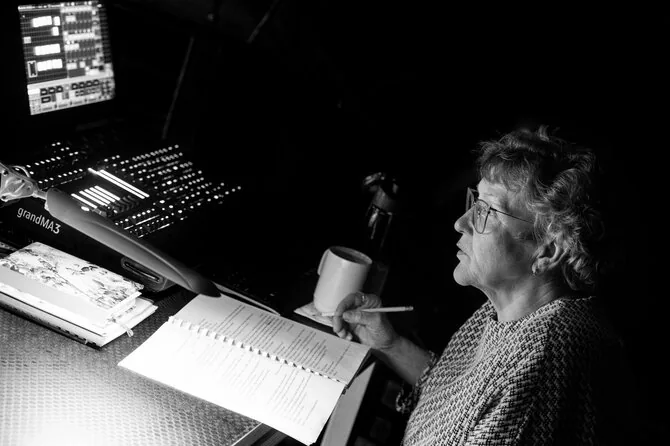
– Could you explain when and why the major shifts in the concept of theater happened?
– Now plays are not created but staged. You cannot stage a work. The smallest play requires 3–5 months to create. All actors should participate in rehearsals. Everyone gathers, discusses, and only then do creative ideas arise. But now – everyone rushes.
Now plays are not created but staged.
– What kind of theater do you believe in?
– I worked in the theater only for rehearsals because many miracles and surprises happened during them. I always expect a miracle in the theater: visual, musical – one that causes a vibration. I feel very sorry for the young creators now who do not experience true catharsis. I remember premieres when tears flowed from that goodness – “it happened!”
I always expect a miracle in the theater: visual, musical – one that causes a vibration.
– Which of your theater colleagues do you think about most often? Which artists are closest to you and why?
– I was always a “safety wall” in the theater. I looked at everything a bit from the side. To me, everyone on stage is equal. “Love or hate” does not exist for me. I feel like a mother hen, so I answer for everyone.
– You diagnose actors very accurately. It seems the actor is still very young, but you predict their future as if hitting the mark exactly. Is this all related to your experience?
– I was an only child, very loved by my parents. They were wonderful people, very creative, so I had to participate everywhere. At ten months old, I participated in huge weddings. Sometimes, when I ended up only at adult parties, I was given huge albums of various photos, and I constantly looked at them. I still remember some portraits from those albums.
I also remember teachers who conducted lessons by showing pictures. And those were the greatest lessons for me. I learned to see and distinguish.
Now everything happens intuitively, so some directors immediately trust me. If an introduction is needed, they immediately say – “tell us what you suggest.” I am very interested in the person himself, so the actor is very interesting.
– You have created several roles and also directed many plays and readings, but you remained loyal to your duties. Why did you not pursue a different career?
– Fear of publicity. I really dislike publicity. I never liked journalists’ calls and various questions after some directing works. I find rehearsing the most interesting.
– You were offered several times to become the troupe leader, but you always refused. Why?
– For the same reason. Many times offered, but I always refused.
– You are the assistant of the Main Stage. How do theater spaces affect you?
– Spaces don’t seem to affect me, but I noticed that on the Main Stage I can breathe widely. “Demons,” “Dream,” “The Very Beginning of the Beginning,” “An Enemy of the People” – many mass scenes… These are my plays; I knew them down to the smallest details.
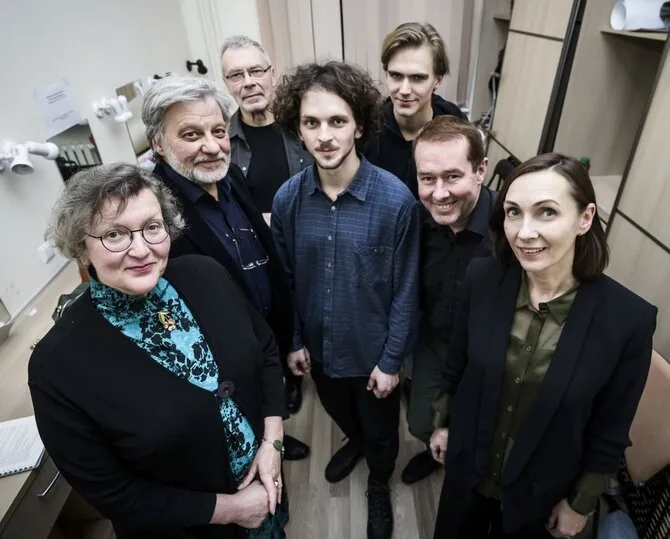
It is very difficult to take over another assistant’s plays. Plays can be simple, but if you did not work on them from the beginning, the responsibility later is completely different. For example, when taking over “The Expulsion,” I watched the play’s recording six times, and then when introducing several actors, I watched their individual scenes many times.
Working from the start, the play becomes “yours.” I know every detail, how everything should be. Working from the first minute, you feel the play very well.
– Is it sad to leave the theater? What will you miss the most?
– I am very sad that old age is coming. Some say: “I am not afraid of old age.” But it is really sad knowing that you have to say goodbye to everything.
So I thought I have to say goodbye to the theater beautifully and without going crazy.
Leaving the theater, retiring – it is a farewell to life. You can work until death, joke – and die on stage. But I thought it is indecent. Maybe beautiful, but I know what burden it puts on the young person next to you. I once cared for older actresses. So I thought I have to say goodbye to the theater beautifully and without going crazy. You can’t escape that. Of course, I made this decision painfully, but I have gradually come to terms with it.
Read more Mexican officials detained eight migrant smugglers to the USA