According to the article, if in the spring of 2025 the large-scale tariffs announced by D. Trump caused multi-billion dollar losses on the stock exchange and forced more than 75 countries to start negotiations with Washington, then after 16 months the world’s reaction became much more restrained.
Read more More than 800 thousand Lebanese displaced by the war are returning home
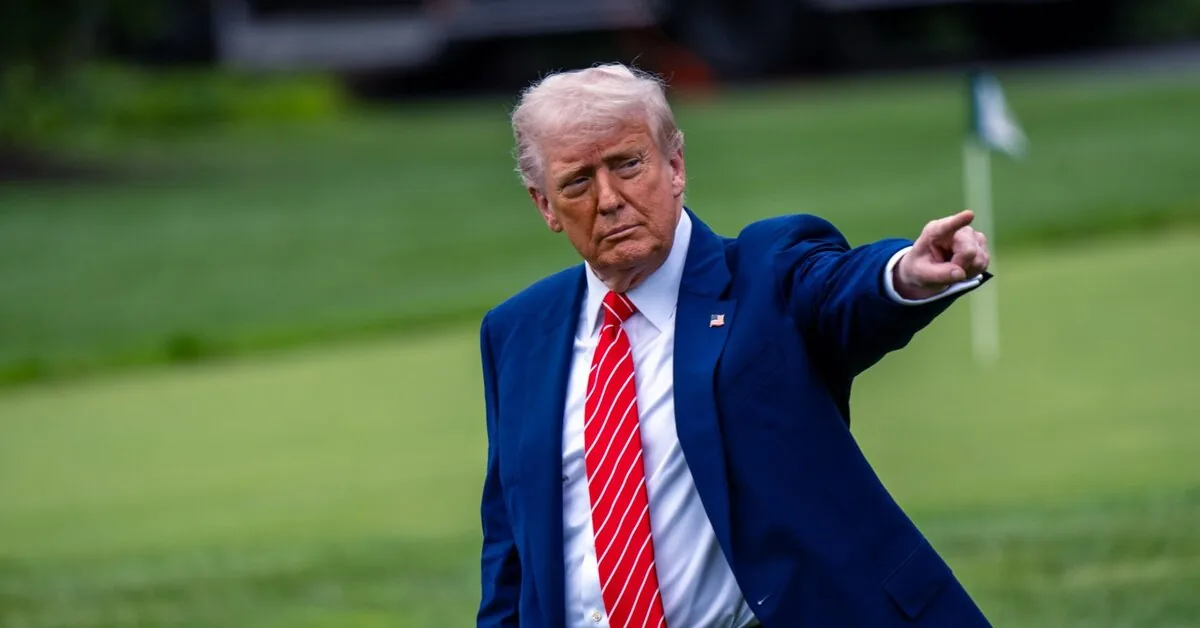
During his second term lasting less than a year and a half, US President D. Trump repeatedly threatened new tariffs, the country’s withdrawal from NATO, the annexation of Canada and Greenland, as well as tough actions against Iran.
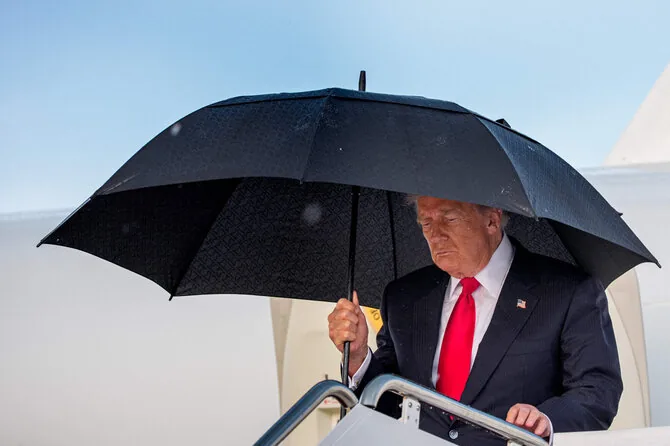
However, the more often he threw threats and ultimatums, the more calmly the heads of states reacted to his feverish statements and did not consider them inevitable decisions.
As noted by The Washington Post, when last month the American leader announced a new wave of impending tariffs, the world markets barely reacted.
The governor of the French central bank called their economic impact insignificant, the United Kingdom stated that its exporters would practically not suffer, and the Mexican Minister of Economy described the situation as “a simple replacement of one tariff with another.”
“We are already used to it”
The head of the European Parliament delegation for relations with the US, Brando Benifejus, commented that the constant statements of the US president no longer have the same impact as before.
“We are already used to these daily statements. We no longer take them so seriously,” he said.
The article’s authors noted that even within the United States, D. Trump faces increasing challenges. Court decisions, the position of Congress, and political resistance limit the implementation of some of his initiatives.
China, Iran, and Europe have started to resist
Analysts pointed out that a significant number of countries have already realized: a tough stance often forces D. Trump to retreat.
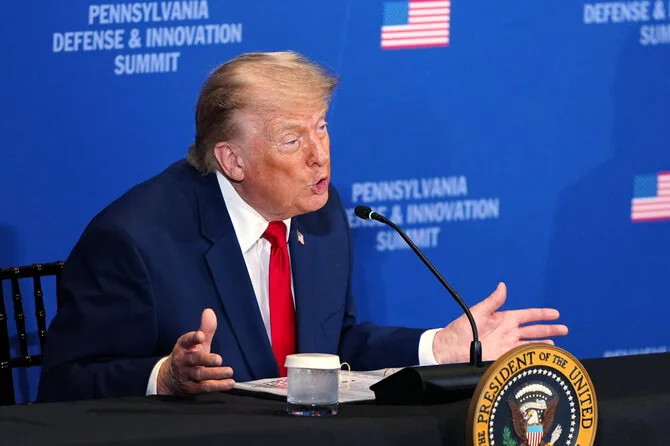
For example, China responded to US threats to impose tariffs with its own tariffs and used control over the supply of rare earth metals and the volume of soybean purchases from the US as leverage.
European countries also increasingly dare not to yield to Washington’s demands. Threats regarding Greenland or demands to impose trade sanctions on Spain did not produce the desired result for the US.
The article’s authors cite Iran as one of the most striking examples of this political trend. Many ultimatums issued to Tehran also failed to achieve their goal.
Despite a large-scale US and Israeli military campaign and dozens of D. Trump’s threats and ultimatums, Tehran refused to comply with Washington’s demand to open the Strait of Hormuz. Later, the US president essentially changed his initial goals.
Former US ambassador Ronald Neumann believes that such tactics only reveal the weakness of the head of state.
“Between threats, bombings, and subsequent retreats, he radiates his desperation to the Iranians,” said the American diplomat.
“Seeing how Trump negotiates, I wouldn’t give him money to go to a carpet market,” he added ironically.
Learned to distinguish rhetoric from politics
The executive director of Eurasia Group, Mujtaba Rahman, noted that European capitals no longer react to every sharp declaration of the US president.
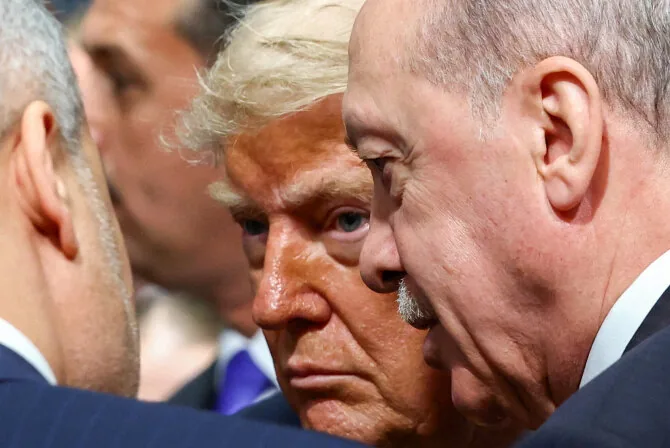
“Europe is noticeably less prone to panic. European governments are better distinguishing Trump’s rhetoric from the politics that ultimately takes shape,” he assessed.
According to diplomats, European leaders can still use praise during personal meetings with D. Trump, but are increasingly less willing to make political concessions just because of his public statements.
At the same time, experts emphasize that the fact that threats have less impact does not mean that the US president will become less dangerous.
The stockbrokers’ slogan “TACO” – “Trump Always Chickens Out” – has begun to take hold in more and more world capitals, noted Jeremy Shapiro, head of the US program at the European Council on Foreign Relations’ analytical center.
“I was somewhat surprised that his threats were effective until now,” said the expert.
According to him, it was effective because it relied on “impressive US power and deep, long-accumulated diplomatic capital” – reserves that, he said, D. Trump “has finally begun to deplete.”
“Officials are beginning to notice that he is a kind of bully who is quite easy to scare,” J. Shapiro stated.
The analyst believes that if the Republicans lose control of Congress, D. Trump would likely be able to take even more unilateral decisions.
“This could be especially dangerous. Trump is not one to quietly step aside. He will look for other ways to risk US power,” J. Shapiro concluded.
The Washington Post reminds that D. Trump has already shown several times that he is ready to take action.
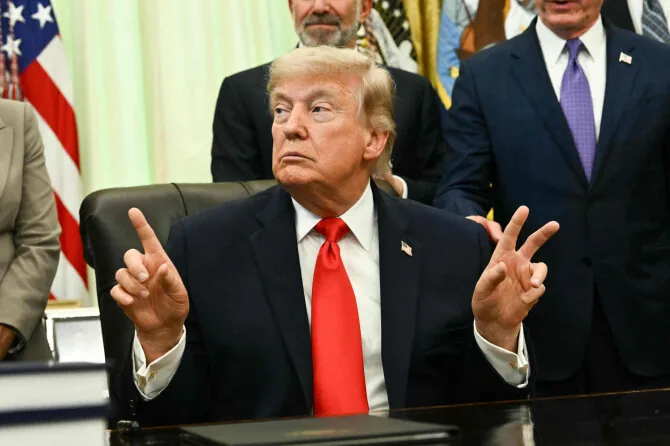
Surprising his “America First” supporters who did not expect adventurism, he used US military forces abroad more aggressively than any other recent president.
In January, during a special operations forces raid, he detained Venezuelan President Nicolas Maduro, bombed Tehran a month later, and ordered dozens of deadly strikes against suspected drug trafficking ships in the Caribbean Sea and the Pacific Ocean.
In the United States, he sent National Guard soldiers to patrol Washington, and his strict immigration measures caused chaos in American cities when masked federal agents raided workplaces and courthouses – these raids sometimes ended in death and sparked protests.
However, even the willingness to use force no longer commands the fearful respect it once did. Increasingly, officials and politicians both at home and abroad are ready to challenge D. Trump’s threats – or ignore them, the article’s authors conclude.
Read more Palanga showed another side of itself: a new trend challenges the noisy part of the resort