The Munich District Court ordered “Suno AI” to cease the unlawful use of works, disclose revenues related to the infringements, and compensate for damages. Although the decision is not yet final and can be appealed, it is considered one of the most significant European court rulings related to generative artificial intelligence and copyright.
Read more Official: «Žalgiris» has signed a contract with Keenan Evans
No exceptions apply
The court ruled that the US company “Suno AI,” which created the artificial intelligence tool “Suno” that generates complete musical works based on text commands (prompts), violated US copyright law by using musical works represented by GEMA for training its AI tool, employing technologies that extracted recordings from the YouTube platform, circumventing technical protection measures designed to prevent content downloading. In this case, the court decided that the “fair use” exception cannot be applied. This is the first court decision indicating that providers of generative artificial intelligence cannot rely on the existing US “fair use” doctrine for training AI models, and such use is considered a violation of reproduction rights.
In examining the case, the court found that the disputed works were actually stored in the “Suno” AI models, which were kept on servers in Germany. Therefore, in the court’s opinion, the US company also violated German copyright law by storing copyrighted works in AI models, and their elements were reproduced in AI-generated music. The exception for text and data mining (TDM), commonly used to legitimize the use of copyrighted works for AI model training, also does not apply to such storage and reproduction of works.
Used songs by “Boney M” and “Alphaville”
During the case, GEMA presented evidence that the “Suno” system generates audio recordings whose melody, harmony, and rhythm partially coincide with six well-known works: “Daddy Cool” (authored by Frank Farian, performed by “Boney M.”), “Rasputin” (authored by Frank Farian, Fred Jay, and George Reyam, performed by “Boney M.”), “Forever Young” and “Big in Japan” (authored by Marian Gold, Bernhard Lloyd, and Frank Mertens, performed by “Alphaville”), “Atemlos durch die Nacht” (authored by Kristina Bach, performed by Helene Fischer), and “Mambo No. 5” (authored by David Lubega (Lou Bega) and Christian Pletschacher, performed by Lou Bega). GEMA told the court that the authors of these works had not given permission to use their works for AI model training and had not received compensation for it.
Original and AI-generated works can be compared here: https://www.gema.de/en/news/ai-and-music/ai-lawsuit/audio-samples-suno.
This is already the second GEMA case related to artificial intelligence. In the first case against “OpenAI,” GEMA claimed that the tool “ChatGPT” created by this company could reproduce lyrics of well-known songs. In that case, the Munich District Court also issued a ruling favorable to GEMA in November 2025, and the case is currently being further examined by the Munich Higher Regional Court.
Read more Fresh food even cheaper: named the differences between old and new usual prices at «Maxima»
A decision relevant to the entire authors’ community
GEMA, representing about 103 thousand composers, lyricists, and music publishers, like the Lithuanian collective copyright management organization LATGA, belongs to the International Confederation of Societies of Authors and Composers (CISAC), which unites 225 authors’ societies from 110 countries worldwide.
CISAC’s Director General Gadi Oron welcomed the decision on behalf of the global community of collective copyright management organizations, stating that the significance of this court ruling is much greater than it seems, as it is the first case of this kind brought against an AI music platform for using copyrighted works without a license by a collective copyright management organization – a CISAC member.
“Music created by artificial intelligence does not come from nowhere. It is based on original human creativity, according to which these systems are trained. This creativity must be respected, protected, and fairly compensated. Today’s court decision sends an important message to the AI market: technological innovations do not eliminate copyright. When creators’ works are used to create commercial AI services, permission must be obtained. The principle is clear: no use without permission and no commercial success without a fair share of compensation to those creators whose works made it possible,” G. Oron wrote on his LinkedIn account on the same day the court decision was announced.
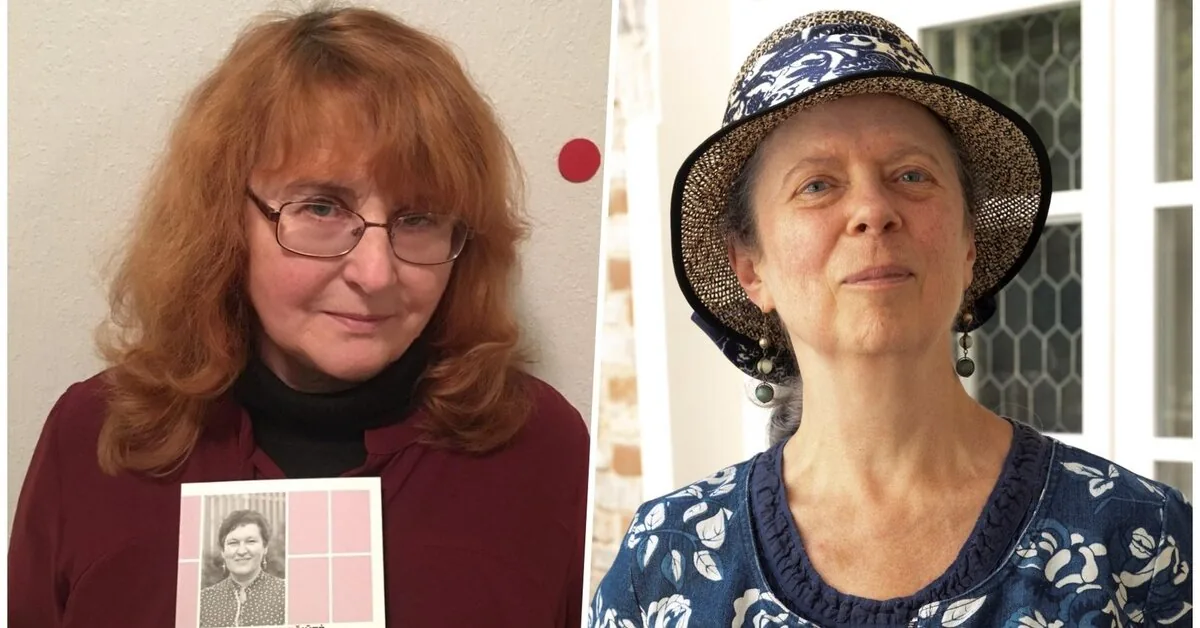
“Our position is the same as CISAC’s: to use authors’ works, a license must be obtained and compensation paid. It can be said that this court decision is like a tectonic shift regarding the regulation of relations between AI tool developers and authors and their rights defenders. It is likely that after this court decision, negotiations between AI tool developers and authors’ representatives will gain greater momentum,” said LATGA director Laura Baškevičienė.
Read more „Rokiškio Grand Rally“ participants assigned start numbers: favorites also face qualification