





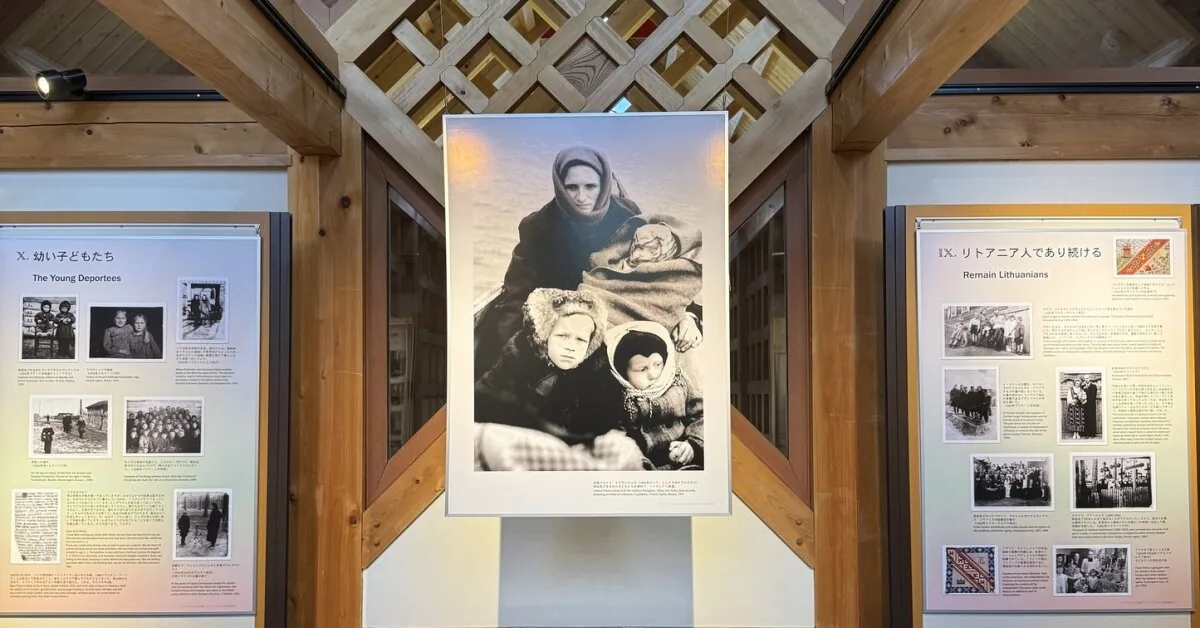
The exhibition tells the story of the political repressions of the Soviet occupation regime against the people of Lithuania – arrests, imprisonment in Gulag camps, and mass deportations to the most remote regions of the then Soviet Union. The exhibition is prepared for the Japanese audience.
Read more As parliamentary elections begin in Russia, reports emerge of downed Ukrainian drones
According to the LNM Director General Dr. Rūta Kačkutė, the relationship between Lithuania and Japan has more than one historical layer.
“Although we most often remember the Japanese consul Chiune Sugihara, the fates of our peoples also met in Siberia. It is important for LNM to present this exhibition in Japan and thus open a lesser-known part of Lithuanian history and present the experiences of those who survived exile. We believe that people’s stories and surviving photographs can become a link that allows a better understanding of each other’s experiences,” says LNM Director General Dr. Rūta Kačkutė.
From the first arrests to the return to the homeland
During the years of mass repressions (1940–1941 and 1944–1952), more than 270,000 residents of various nationalities were forcibly deported from Lithuania. 142,000 of them were imprisoned in camps, 132,000 settled in special exile settlements. Women and children made up 70 percent of all deportees. About one-third never returned to Lithuania.
The exhibition route is chronological and thematic. The first part is dedicated to the repressions that began immediately after June 15, 1940, and the June 14, 1941 deportation, during which about 17,000 people were arrested in a few days. Nearly 4,000 men were separated from their families and sent to camps. In 1942, some of the exiles settled in the Altai region – mostly women with small children and men unable to work – were deported to northern Yakutia, beyond the Arctic Circle.
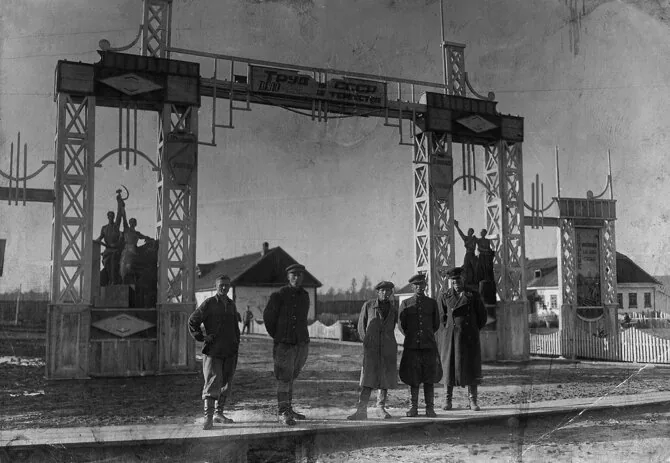
The second part tells about post-war arrests and mass deportations from 1945 to 1952. The largest deportation operation, codenamed “Spring,” was carried out on May 22, 1948: within a few days, 40,000 people were deported from Lithuania, including more than 12,000 children. During the “Wave Strike” operation from March 25–28, 1949, 29,000 people were deported. In total, at least 34 deportation operations were conducted.
The third part shows visitors scenes of forced labor in logging, mining, construction, and fishing, the daily life of exile, and through them, efforts to preserve language, faith, and national traditions. A separate stand is dedicated to the youngest exiles. From 1941 to 1952, nearly 40,000 children were deported from Lithuania, and about 5,000 under the age of sixteen died in exile.
Connections between Japan and Lithuania
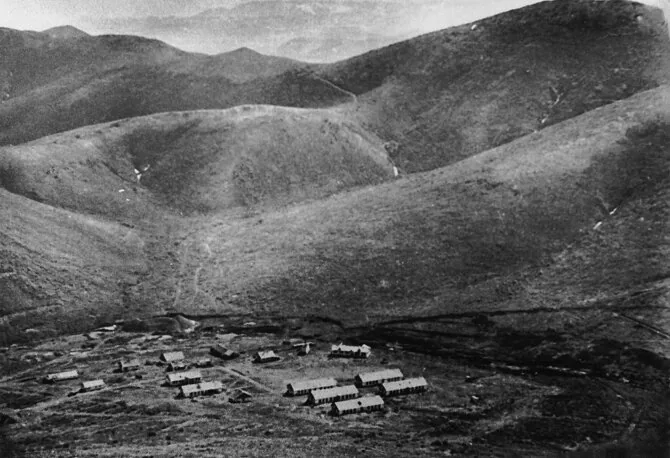
After World War II, Lithuanians and Japanese were connected by Soviet camps: Lithuanian political prisoners and Japanese prisoners of war were used as cheap labor and were often buried side by side in remote forests and wastelands. The exhibition features a photo of the Klyuchi settlement in Krasnoyarsk Krai – a barrack built by Japanese prisoners of war and where the families of Juozas and Alfonsas Voldemaras and six other exile families were housed. More such cases are mentioned in the memories of Lithuanian exiles.
Read more Ask a lawyer: can unmarried individuals share property registered in the name of one of them?
In one camp, two political prisoners met – Veronika Mockuvienė from Lithuania and Tamara Mori-Miyadzava from Japan. In 1995, Tamara Mori visited her exile-time friend in independent Lithuania.
History preserved in photographs
The exhibition presents not only images of exile preserved in photographs but also stories of people’s daily lives. Visitors will see drawings, handicrafts, and documents created in exile, including a bread ration card, handicrafts embroidered with the Columns of Gediminas, and photographs of children’s schooling and daily life in exile.
A special place in the exhibition is occupied by children’s stories. Their photographs, moments of school life, and drawings created in exile are exhibited. One of them is Gintautas Martynaitis’s drawing “In the Train Car,” created many years later from childhood memories. The exhibition also shows photographs from children’s schools and daily life in exile, and in one frame – children by a Christmas tree decorated with toys they made themselves.
The curator of the exhibition “Surviving Siberia: The History of Lithuanian Exile,” Virginija Rudienė, says that photography reveals a vivid and unique image of the exile period.
“When preparing the exhibition, it was important to look at the photographs not as a collection of individual images but as a narrative in which each becomes a testimony of history. We wanted to show not only the places of exile and the harsh daily life but also the people – their families, relationships, community, moments in which humanity remained even in very difficult circumstances. Photography allows bringing this story closer to today’s person – to look at a specific face, moment, and try to understand the story behind it. At the same time, it is a story about people who, despite what the Soviet regime took from them, tried to preserve their family, language, faith, culture, and dignity,” shares V. Rudienė.
The exhibition’s narrative is complemented by the interactive animation of the film “Purga” by directors Gintarė Valevičiūtė-Brazauskienė and Antanas Skučas, and the animated film “Purga” itself will be shown, whose story is based on the memories of exile Dalia Grinkevičiūtė.
The Lithuanian National Museum (LNM) exhibition “Surviving Siberia: The History of Lithuanian Exile” will be held at the Chiune Sugihara Memorial Museum in Yaotsu, Japan, from September 18 to November 29.
Read more The Bank of Japan raised interest rates to the highest level in 31 years