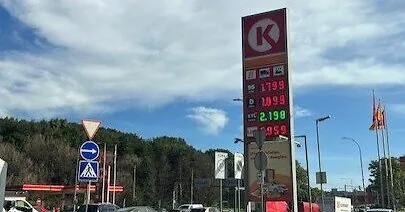
„The price of oil gradually decreased and in June reached the pre-war level. Now oil has become more expensive and fuel prices have risen. Not necessarily oil itself (oil extraction companies – BNS) participates in the entire market price fluctuation, but exchanges, which engage in not entirely good activities – selling at higher prices, creating additional demand to maintain higher prices,“ V. Šukys said to LRT radio on Wednesday.
Read more Athens «Panathinaikos» is seriously targeting the main point guard of Kaunas «Žalgiris»
As data from the portal oilprice.com shows, at the beginning of June the US benchmark WTI price was 68.6 US dollars per barrel, and on Wednesday the price of a barrel of this oil is 19.5% higher – 82 US dollars.
Meanwhile, the price of a barrel of Brent oil grew by 21.8% during the same period – from 71.6 to 87.2 US dollars.
Finance Minister Taurimas Valys said on Wednesday that a specific plan to control high fuel prices is being prepared, which would include both tax and non-tax measures. According to the minister, there is currently no reason to apply it.
Last week T. Valys stated that a diesel excise tax relief could be considered if the oil price again reached 100 US dollars per barrel.
As BNS wrote, Prime Minister Mindaugas Sinkevičius earlier said that if high fuel prices persist for a longer time, the Government will take measures to mitigate them.
Energy Minister Lukas Savickas said in an interview with BNS last week that temporary price control instruments would be considered if prices deviate from European or regional trends for a longer period.
When the conflict flared up in the Middle East in mid-April, the diesel excise tax in Lithuania was reduced by 6 cents for two months – the next day the price per liter of fuel dropped by 5 cents. The decision was made by the former government of Inga Ruginienė.
At the beginning of summer, after preliminary agreements between the US and Iran were announced, the situation stabilized for a while, but with the resumption of shelling, shipping in the Strait of Hormuz essentially stopped again.
Read more Žilvinas Šilgalis leaves the position of Head of the Šiauliai Regional Waste Management Center