It turned out that one Ukrainian arms factory delivered thousands of defective mortar shells to the military. The influential head of the arms factory, Leonid Shyman, was eventually arrested and charged in one of the most publicly discussed defense industry fraud cases since the start of the large-scale war.
However, as government audit data obtained by The New York Times shows, even when officials noticed that weapons were being supplied with defects, the Ukrainian defense procurement agency continued to sign new contracts with Shyman’s factory.
This case illustrates a recurring scenario in Ukraine.
Based on government audit documents, court records, and reports in the Ukrainian media obtained by the newspaper, 7 out of 10 of Ukraine’s largest military contractors won new orders despite ongoing investigations into fraud, failure to fulfill previous contract obligations, or arrests of executives on corruption charges.
For example, when Shyman received his first contract, he was already the subject of investigations by several anti-corruption agencies, including inquiries into embezzlement and fraud. The man had recently been released on bail in a corruption case when the government signed a deal with him worth $280 million.
Confidential reports from the State Audit Office and the Ministry of Defense’s internal audit department reveal that the military procurement system is engulfed in complete chaos and negligence. The documents also show that warning signs are simply ignored, and there are almost no consequences for price inflation or undelivered weapons.
In 2024 alone, Ukraine lost about $1.2 billion due to fraud, waste, and negligence.
Companies received contracts without proving they could supply weapons or without having licenses to deliver them. Auditors found that 18 companies signed contracts despite failing to fulfill previous agreements. Six of those companies did not fulfill a single contract.
Through this system, military industry contractors worldwide amassed wealth – from the richest arms dealer on Earth to companies in Ukraine and the United States.
Government internal audits revealed that in 2024 alone, Ukraine lost about $1.2 billion due to fraud, waste, and negligence.
The losses, which were not publicly disclosed, accumulated even as President Volodymyr Zelensky appealed to allies for more weapons and financial aid.
“The army is not getting what it needs, and the budget is shrinking due to undelivered goods and overpayments,” said Tamerlan Vahabov, a former advisor to the Ukrainian defense procurement agency, in an interview. “As a result, we have no funds to order more weapons. We also lack the necessary amount of ammunition. And this pattern keeps repeating.”
Bypassing cheaper offers and overpaying for weapons resulted in a loss of about $126 million. According to auditors, contracts were signed without legal grounds. In one case, companies are still involved in a legal battle over the disappearance of at least $100 million in advance payments for a failed deal.
The audit reports obtained by The New York Times cover 2024 and 2025. It is unclear what actions, if any, the Defense Procurement Agency took in response to these reports. Moreover, these reports are classified and have never been publicly reviewed.
The head of the procurement agency, Arsen Zhumadilov, declined to comment. He resigned on August 31.
Over nearly five years of combat, the Ukrainian government remained unbroken, and the country’s military fought despite unfavorable force ratios. Soldiers resisted a larger Russian army and redefined the modern battlefield with drones and robots. The Cabinet withstood the loss of support from its largest ally—the United States—by securing financial backing in Europe.
However, the same public procurement process that allowed Ukraine to continue fighting and laid the foundation for the drone revolution became a vulnerability that shook domestic politics to its core.
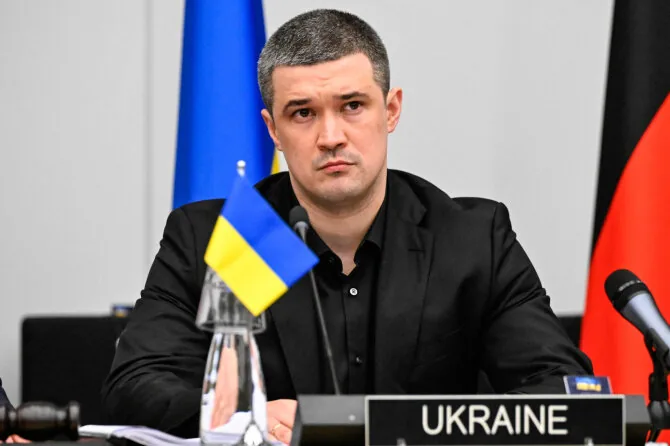
Former Defense Minister Mykhailo Fedorov tried to reform the system and emphasized that defense contractors pushed him out of office because of it.
“There is a lot of corruption,” Fedorov admitted after his dismissal. His firing sparked the largest protests since the start of the large-scale war. Meanwhile, Zelensky claimed he dismissed the minister because he disagreed with military commanders.
Zelensky failed to reform the public procurement system, and the problems reached his closest circle. Last year, anti-corruption officials secretly recorded Zelensky’s former business partner urging officials to buy bulletproof vests that failed safety tests. Investigators say the man fled Ukraine during the investigation. Zelensky has not been charged and has stated his support for the investigation.
Government audits are akin to an autopsy of the military procurement process. They allow a close and detailed look at local and foreign actors who profited from this war.
“In Ukraine, anything that isn’t nailed down will be stolen,” said James Wasserstrom, an American anti-corruption expert who has tried to draw attention to fraud in the defense industry since the war began. “It’s a long-established tradition.”
Failures, multimillion-dollar contracts, and more failures
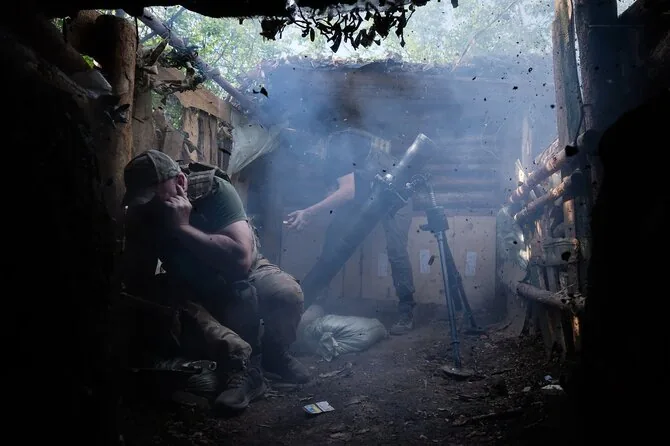
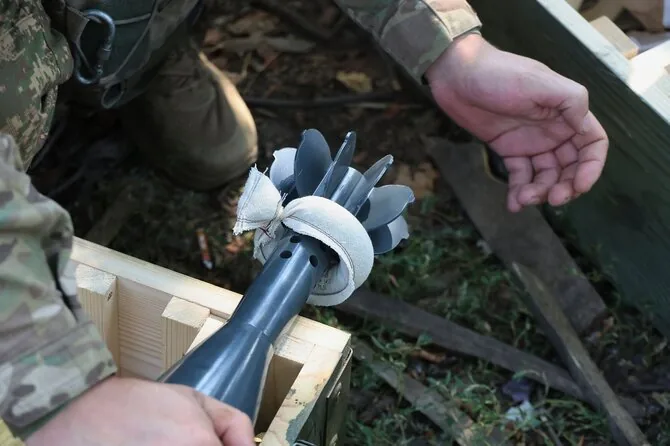
The defect in mortar shells and mines became a highly publicized embarrassing battlefield incident in Ukraine.
This news was revealed by the Ukrainian news portal Censor.net. The parliament then conducted an investigation, and in April 2025, the police arrested factory director Shyman. He was charged with fraud worth about $68 million—the cost to inspect and replace tens of thousands of defective mortar mines.
According to court documents provided by Ukrainian data analysis company YouControl, the court later found that Shyman’s company, Pavlohrad Chemical Plant, sold the military 233,000 mortar mines unfit for use, many of which had defective fuzes or powder charges.

Pavlohrad is a state-owned enterprise, but chemical engineer Shyman has been its head since the 2000s. He was nicknamed the king of explosives in Ukraine. Parliament even included his name in one of the industry’s laws, citing him as an authority.
The man owned numerous real estate properties and lived very lavishly by Ukrainian provincial standards. Investigators said they found that $9 million was transferred through a Liechtenstein bank account linked to Shyman’s wife.
On the factory grounds, he kept a herd of bison, as well as deer and moose. According to Shyman, the animals were kept to prove that his factory does not pollute the environment. However, anti-corruption activists have their own version: they believe the animals are there so company executives can hunt them.
When auditors checked the company’s contract for mortars, they noticed something strange. Initially, Pavlohrad claimed it did not have the capacity to fulfill the order. Later, without any explanation, it changed its assessment of production capacity, and the government signed the deal.
Moreover, auditors found no evidence that anyone tried to verify whether the factory could actually fulfill the order. When poor-quality mortars began reaching the front, auditors said the public procurement agency “did not draw the appropriate conclusions.”
On the contrary, it gave Pavlohrad even more orders, including a 2025 contract to supply almost all 122 mm artillery ammunition needed by the military.
Read more After the break, Keenan Evans led the «Lions» to the friendly tournament final
Unfortunately, the audit reports do not specify who decided to award these contracts to the company and why. Company representatives declined to comment.

Last month, Shyman was sentenced to five years in prison in another case for organizing a corruption scheme to sell explosives at artificially inflated prices.
His lawyer, Oleksandr Protas, said the defendant intends to appeal the verdict and claims to be innocent in the mortar case.
In the arms business, according to Protas, “nothing is just black or white; it’s all shades of gray.”
The richest arms dealer in the world
In 2024, the Defense Procurement Agency announced a tender for rocket artillery worth hundreds of millions of dollars.
Three companies responded. One claimed it could supply rockets at about $4,200 per unit. Another asked for $4,600. The third quoted a price of $5,100.
All rockets were identical—manufactured at the same factory in Turkey. Only the price differed.
Turkish manufacturer Arca Defense offered the lowest price, proposing to sell directly from the factory.
However, auditors found that the contract was awarded to the bidder with the highest price—a subsidiary of the large Czech holding company Czechoslovak Group. Instead of buying directly, the government decided to pay the Czech company for intermediary services.
According to auditors, “there is no justification for this decision.” Previous audits repeatedly warned against buying through intermediaries. But the government ignored this advice.
Based on an analysis of competing bids described in audits conducted by The New York Times, this decision increased Ukraine’s rocket bill by about $130 million.
The rocket supply contract was just one of many Ukrainian deals that helped Czechoslovak Group become a global defense industry giant. The company went public this year, and its 33-year-old main owner, Michal Strnada became the richest arms manufacturer on the Forbes billionaire list.

This was the largest initial public offering in the defense industry’s history. The company told investors that a “supercycle” of military spending driven by wars in Europe and other regions brought it financial benefits. In 2024, more than 40% of the company’s revenue came from sales related to Ukraine.
Czechoslovak Group’s press representative, Andrej Cirtek, said that the government should answer questions about the tender. The audit report contains no allegations that the company did anything illegal.
“We are not involved with other bidders’ offers and do not have access to their commercial terms, contractual provisions, or the procuring entity’s evaluation,” he wrote in an email.
Despite auditors’ expressed doubts, Ukraine considered signing another contract with Czechoslovak Group, this time to replace its Kalashnikov rifle arsenal with a NATO-caliber rifle model designed in the Czech Republic. No deal was announced.
The company’s press representative added that the group is diversifying sales to European countries and the United States but noted that Ukraine remains an important client.
Warning signs and a contractor in America
Documents show another case where Ukraine, despite warning signs, continued a complicated arms procurement process only for the deal to collapse.
In 2024, the Defense Procurement Agency wanted to purchase Soviet-type rockets from a Serbian manufacturer. Due to Serbia’s pro-Russian policy, Ukraine relied on a chain of intermediaries to obtain the rockets.
The government signed a contract with Ukraine’s state arms intermediary company Spectechnoexport. According to auditors, this company had previously failed to meet obligations.
As indicated by HACC Decided—a platform created by Transparency International Ukraine to monitor high-profile corruption cases—anti-corruption institutions also publicly announced investigations into former company executives for possible embezzlement and money laundering.
Among other things, auditors noted that Spectechnoexport did not have a Serbian export license for the rockets. Documents show that instead of a license, the company provided a “guarantee letter” issued by Ukraine’s military intelligence service.
Auditors said such exceptional favor had no legal basis and was granted despite the company’s previous record of unfulfilled obligations.
The company did not respond to repeated messages and calls from The New York Times.
Spectechnoexport signed a subcontract with the U.S. arms company Regulus Global. This company, led by former Merrill Lynch stockbroker William Somerindyke Jr., had previously supplied weapons to Ukrainian armed forces and U.S.-backed rebels in Syria. However, this deal was supposed to be particularly complex.
This contract was one of several between Regulus and Spectechnoexport, totaling $1.7 billion. Their goal was to channel weapons to the war zone. Somerindyke Jr. said in an interview that this partnership ensured the delivery of critically important weapons, benefiting both Ukraine’s defense and U.S. foreign policy.

But the rocket deal began to fall apart.
Then Ukrainian Defense Minister Rustem Umerov wanted to remove intermediaries from Ukraine’s arms business. Somerindyke Jr. recalled that the minister asked Regulus to deal directly with the government procurement agency, effectively eliminating Spectechnoexport.
The deal collapsed, and by early 2025, Spectechnoexport became the largest debtor of the arms procurement agency—auditors found that this company had more unfulfilled contracts than any other supplier.
Following this scandal, the Ukrainian government filed a lawsuit against the company for penalties and interest. In turn, Spectechnoexport demanded money from Regulus.
Somerindyke Jr. assured that his company did nothing wrong and simply became a “pawn” in the reform of Ukraine’s procurement system.
Read more In front of Igno Sargiūnas – „Fenerbahçe“ returns to the Champions League
This article was published in The New York Times.
© 2026 The New York Times Company