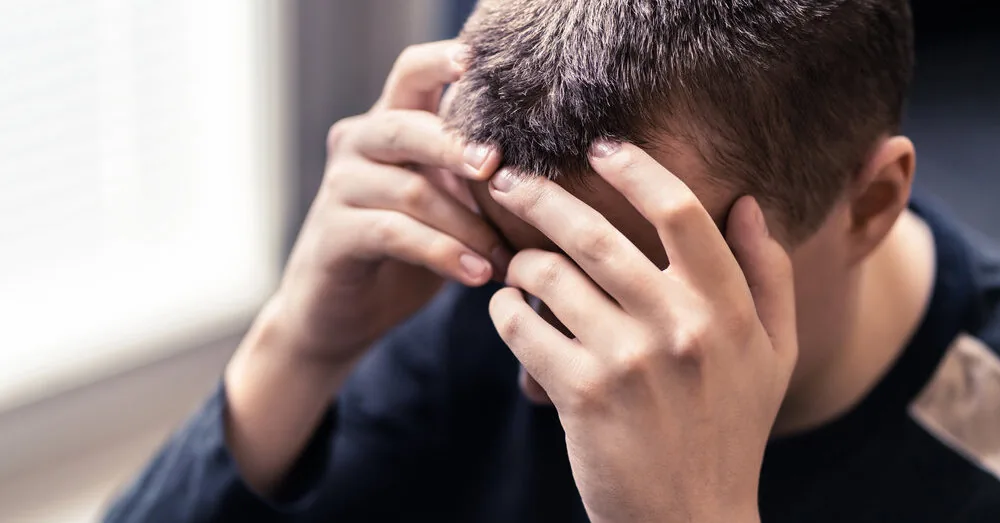
The most common reason for such behavior is often blamed on adolescence itself, lack of upbringing, or simply excessive pampering. Rarely do we consider that the causes of their behavior may be social fatigue and loneliness, according to a press release.
Read more UAE: Iran fired on ADNOC tanker in the Strait of Hormuz, no casualties reported
What exhausts teenagers?
“Teen social fatigue is a state of emotional and psychological exhaustion that arises after intense communication, social pressure, or constant presence among people. It is not simply an unwillingness to talk or antisocial behavior. More often, it means that the teenager simply has no emotional strength left,” says Agnė Gurskytė, a child and adolescent psychologist at the Neuromeda Mental Health Center.

According to her, such fatigue can manifest after classes, parties, group chats, social media use, or even after a regular day when the teenager feels constantly seen and evaluated. After all, teenagers are learning how to fit in, be accepted, understand others’ expectations, resolve conflicts, and create their identity. All of this can be emotionally challenging.
The psychologist emphasizes that a teenager may want connection but be too exhausted to maintain it. In such cases, time is needed to withdraw, recover, and regain strength.
A. Gurskytė notes that social fatigue usually arises when a teenager’s social world becomes too demanding compared to their emotional capacity at the time. She identifies several reasons.
One important reason is constant social evaluation. “Teenagers often feel watched, compared, and judged. They may wonder how they look, what they said, whether they acted strangely, if they are interesting enough, or if they are being rejected. Even if nothing bad is happening, this constant self-monitoring is very tiring,” explains the specialist.
Another reason is social overload. A teenager spends the whole day at school, and when they return home, they often continue communicating via messages, social networks, group chats, or gaming platforms. There is almost no real break. Previously, social life often ended when the child came home, but now it continues throughout the evening.
A. Gurskytė also mentions emotional stress. This includes conflicts with friends, bullying, fear of rejection, academic pressure, family tension, perfectionism, anxiety, or low self-esteem. She notes that for some teenagers, a lot of energy is spent constantly trying to hide their true feelings or difficulties to appear “normal,” happy, or socially successful from the outside.
Signs that a teenager is not rude but simply emotionally exhausted
Teenagers themselves, according to A. Gurskytė, do not call their state social fatigue; they simply say: “I’m tired of everyone,” “I don’t want to talk,” “People annoy me,” “I want to be alone,” “I don’t have the energy to reply,” or “I don’t know what’s happening to me.”
“Some teenagers recognize well that after school, events, or intense communication they need time for themselves. However, some do not understand what is happening and start blaming themselves. They may think they are lazy, rude, strange, bad friends, or too sensitive,” explains the psychologist.
She notes that social fatigue can manifest in emotions, behavior, thinking, and the body. Emotionally, a teenager may become irritable, sensitive, quick to anger, appear indifferent or distant. Sometimes parents may think the teenager is cold, rude, or unwilling to communicate, while in reality, they may simply be exhausted.
Behaviorally, withdrawal is often seen. “The teenager spends more time alone, avoids replying to messages, cancels meetings, shows less interest in activities they previously enjoyed. They may come home from school and go straight to their room. This is not necessarily laziness or disrespect – sometimes it is a way to recover. It may also be harder to concentrate, think clearly, follow conversations, or make decisions,” lists the specialist.
Physically, social fatigue can manifest as headaches or stomach aches, muscle tension, constant tiredness, changes in sleep or appetite.
A. Gurskytė draws attention to disproportionate reactions: “A simple message, invitation, or question from parents may seem unbearable to a teenager. This does not mean they are dramatizing. It may indicate that their nervous system is already overworked.”

Desire for connection and fear of being misunderstood
The psychologist emphasizes that social fatigue is related to loneliness – the feeling that a person is invisible, misunderstood, or emotionally alone. These feelings can reinforce each other – a teenager may withdraw because communication is exhausting, but once withdrawn, they may start feeling lonely, forgotten, or rejected.
A. Gurskytė stresses that loneliness is not related to the number of friends but to the quality of connection. Sometimes a teenager is socially included but emotionally invisible. They may laugh with others, participate in activities, write on social networks, but inside feel that no one knows what they are truly experiencing.
Loneliness is also strengthened by the feeling that one must play a certain role – be cheerful, successful, attractive, easy to communicate with, or always available. If a teenager is afraid to show sadness, anxiety, or vulnerability, relationships may become superficial.
Read more Swedbank internet banking and app service was disrupted
“When a teenager says they feel lonely, it is not helpful to respond: ‘But you have so many friends.’ It is much more useful to say: ‘It seems that right now you don’t feel fully understood or supported.’ This opens the space for a more genuine conversation,” advises the psychologist.

The illusion of connection helps or exhausts
A. Gurskytė has a nuanced view of communication on social networks. They can help maintain connections, find like-minded people, express oneself, and feel less lonely. However, social networks can also increase social fatigue because the teenager remains socially reachable almost all the time. Messages, notifications, comments, likes, and group chats create a feeling that one must constantly respond, compare, and keep up. This is emotionally exhausting.
Social networks also reinforce comparison. Teenagers see selected and beautified moments of others’ lives and compare them with their inner struggles. This can increase feelings of inadequacy, isolation, or loneliness.
Artificial intelligence, according to the psychologist, also has two sides. It can be useful as an aid, for example, to help organize thoughts, practice communication, better identify emotions, or get general information. For a teenager who finds it difficult to talk to a person, a conversation with artificial intelligence may seem safer.
However, artificial intelligence cannot replace human connection. “The risk arises when a teenager increasingly chooses artificial intelligence instead of talking with parents, friends, or specialists. It can provide comfort, but it does not know the teenager as close people do, does not observe their daily functioning, and does not take responsibility for their safety,” explains the specialist.
She emphasizes that digital tools can help maintain connection, but they should not replace sleep, physical activity, live communication, emotional expression, and support from safe people.
When emotional burden becomes dangerous
A. Gurskytė points out that excessive emotional burden is seen not only in words but also in the body and behavior. Sleep disturbances, constant fatigue, headaches or stomach aches, nausea, appetite changes, muscle tension, increased heart rate, panic symptoms, or frequent complaints of poor well-being without a clear medical cause are noticeable.
Behaviorally, school avoidance, refusal to participate in social activities, isolation in the room, loss of interest in hobbies, neglect of hygiene, unusual irritability, more frequent crying, anger outbursts, or emotional “shutdown” may be observed. A teenager may stop replying to messages, avoid friends, or suddenly spend much more time online.
Changes in learning are also important: worsened results, failure to complete tasks, strong procrastination, perfectionist overexertion, or fear of going to school.
The specialist emphasizes that attention should be paid not to a single bad day but to a change from the teenager’s usual behavior. Especially serious signals are hopelessness, talk about not wanting to live, self-harm, risky behavior, psychoactive substance use, very strong withdrawal, or statements like “everyone would be better off without me.” In such cases, it is important not to delay and seek help.
How to talk so that a teenager feels seen, not judged
“Many teenagers withdraw not because they do not want help, but because help quickly turns into advice, remarks, or interrogation. Instead of asking ‘Why are you always in your room?’ one can say: ‘I noticed that you look very tired after classes. Do you want to be alone more, or does it feel like everything is just too much?’ Such a question shows care but does not blame,” explains the psychologist.
She emphasizes that it is important first to acknowledge the teenager’s feeling and only then offer solutions. For example: “It’s understandable that you feel exhausted if you’ve been around people all day.” Only then can you ask: “Maybe we can think together about what could make evenings easier?” Parents should avoid phrases that sound motivating but may feel like pressure to the teenager: “Just go out more,” “Don’t be so sensitive,” “Everyone has problems,” “You have no reason to feel lonely.”
It is important to separate the teenager from the problem. Not “you are lazy,” but “it seems your energy is very low.” Not “you are rude,” but “I see you are exhausted, but it is still important to talk respectfully.” It is also possible to offer specific options: quiet time after classes, fewer questions immediately after coming home, agreed phone-free time, help maintaining routine, or shared time without pressure to talk a lot.
According to A. Gurskytė, specialist help is needed when loneliness, social fatigue, or emotional stress begin to interfere with daily life and do not go away after rest, support, or routine adjustment.
Important signs are constant sadness, anxiety, irritability, withdrawal, changes in sleep or appetite, school avoidance, panic symptoms, loss of interest in usual activities, frequent crying, emotional numbness, or noticeably worsened daily functioning. Help should also be sought when a teenager says they feel hopeless, worthless, constantly depressed, or unable to cope.
A. Gurskytė emphasizes that seeking a specialist should not be presented as a punishment or a sign that something is wrong with the teenager. It is better to frame it as support: “I see you have been through a lot lately. Let’s try to find someone who can help us better understand what is going on.”
Read more EU urges «Meta» and «TikTok» to strengthen monitoring and fact-checking